7 Signs of a Failing Hot Water System: Your Central Queensland Checklist
Imagine stepping into the shower on a Monday morning, turning the tap, and being met with a blast of icy water instead of the usual warmth. It's a frustrating way to start your day, yet this sudden failure is rarely as "sudden" as it seems. Most units give off subtle warnings long before they finally give up the ghost.
We understand that you probably don't spend much time thinking about your tank until it causes a problem. Whether it's a minor leak or a strange rumbling sound, these issues are easy to ignore when life gets busy. However, learning to spot the early signs of failing hot water system can save you from a flooded laundry and the steep costs of an emergency weekend call-out.
In this guide, I'll share my professional checklist for diagnosing a dying unit. You'll learn how to tell if your system just needs a new sacrificial anode or if it's time to plan for a replacement. We'll cover everything from water discolouration to fluctuating temperatures so you can make an informed decision before the hot water disappears for good.
Key Takeaways
- Understand why the age of your unit is the biggest risk factor for a burst tank, especially once it passes the ten-year mark.
- Identify the physical signs of failing hot water system like rusty-coloured water or grit in your bathtub before they lead to a major leak.
- Learn to recognise performance red flags, including strange rumbling noises and the "cold shock" caused by fluctuating shower temperatures.
- Use the "Rule of 10" framework to decide if a quick repair is a smart move or just a temporary fix for a terminal problem.
- Discover why hiring a QBCC licensed plumber is essential for maintaining your home insurance and ensuring your installation meets Australian standards.
Understanding the Lifespan of Your Hot Water System
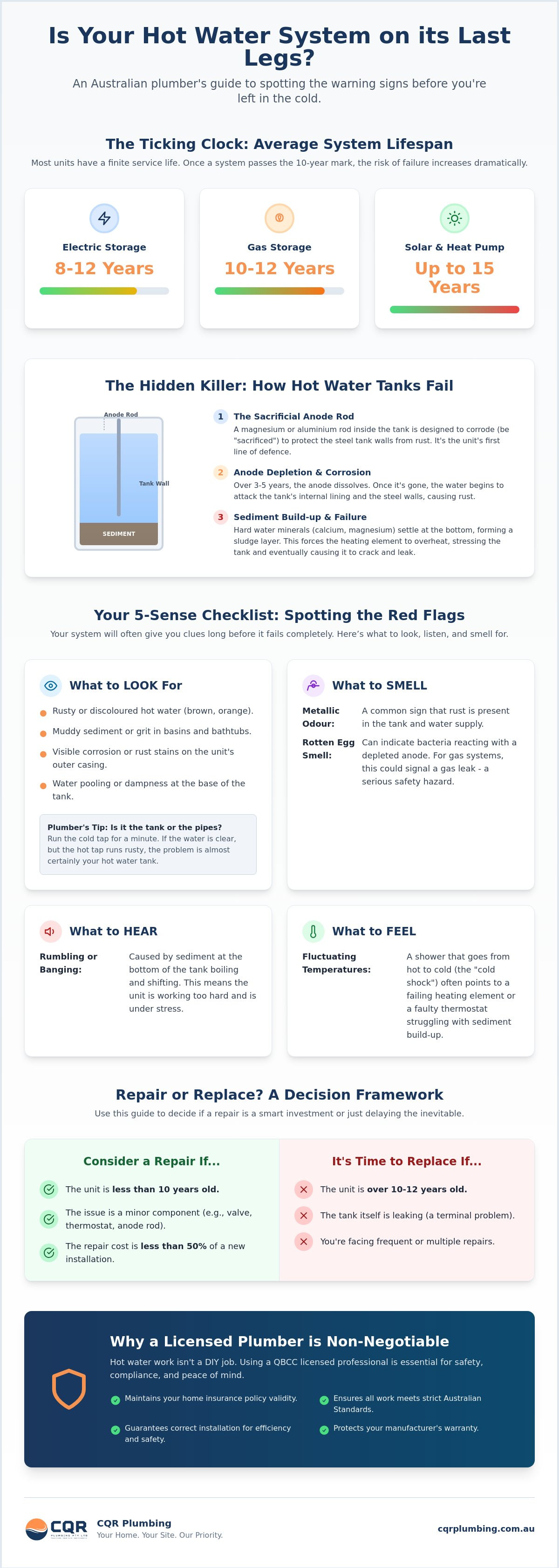
Every storage water heater has a finite service life. While high-quality brands are built to last, the harsh conditions in Central Queensland often mean units reach their limit sooner than expected. On average, a standard electric storage system lasts between 8 and 12 years. Gas units typically fall into the same 10 to 12-year bracket, while solar and heat pump systems might push toward 15 years if the tank is made of stainless steel. However, once your system crosses that ten-year milestone, the age itself becomes one of the primary signs of failing hot water system reliability.
The main reason these tanks eventually fail is internal corrosion. Most tanks are made of mild steel lined with vitreous enamel. To stop the steel from rusting, manufacturers install a sacrificial anode rod. This magnesium or aluminium rod is designed to corrode so the tank doesn't. If this rod isn't replaced every few years, the water begins eating the tank walls instead. In regions like Gracemere, where the water is notoriously "hard" with high mineral content, this process accelerates. Minerals like calcium and magnesium settle at the base of the tank, creating a layer of sediment that forces the heating element to work harder and eventually causes the tank to overheat and crack.
How to find the age of your unit
If you aren't sure how old your system is, look for the compliance plate on the side of the outer casing. This metal or plastic sticker contains the model and serial number. Most Australian manufacturers, such as Rheem or Dux, encode the manufacture date within the serial number. For example, a serial number starting with "12" often indicates it was built in 2012. If your unit is older than 12 years, it is effectively a ticking time bomb. Even if it looks fine on the outside, the internal lining is likely brittle and nearing total failure.
The impact of local Central Queensland water
Water quality varies significantly between Rockhampton, Yeppoon, and the surrounding areas. In Yeppoon, coastal salt air can lead to external corrosion on the casing and valves, while Rockhampton's supply can carry fine sediment that accumulates in the bottom of the tank. This build-up acts as an insulator, trapping heat and causing the metal to fatigue over time. We often see elements burnt out prematurely because they are buried in five centimetres of sludge. Regular flushing of the tank through the cold water expansion valve can help, but for many older systems in the region, the damage from years of mineral accumulation is already done. If you're concerned about your unit's health, our team at CQR Plumbing can perform a quick inspection to check your anode and overall tank condition.
Physical Warning Signs: What to Look and Smell For
If you've noticed a brownish or orange tint in your bathwater, you're likely looking at one of the most common signs of failing hot water system components. This discolouration usually indicates that the internal lining of your tank has breached, allowing the steel walls to rust directly into your water supply. While following basic Water Heater Maintenance Tips can delay these issues, once the internal tank wall begins to flake away, there is no reversing the damage. You might also find muddy sediment or fine grit accumulating in the bottom of your basins. This is often a mixture of rust flakes and mineral scale that has broken loose from the heating element or the tank floor.
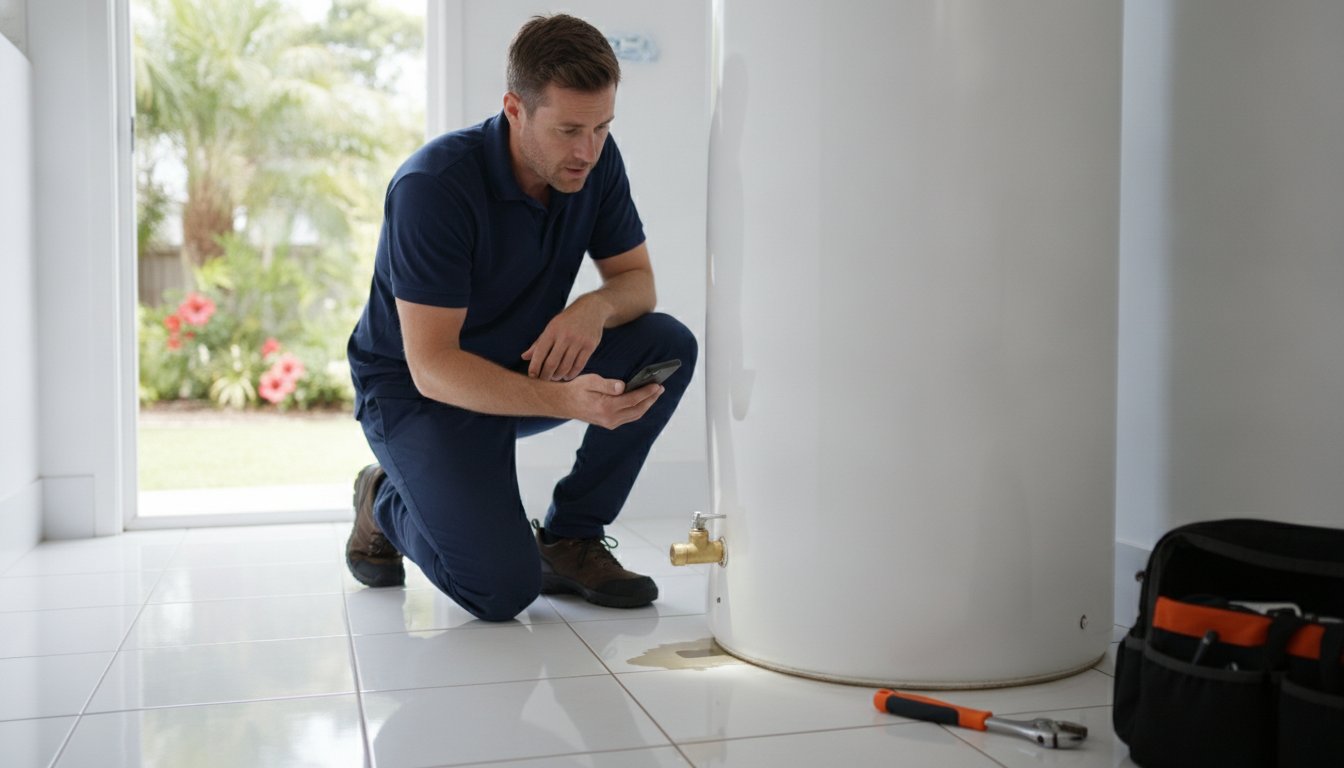
Smell is another powerful diagnostic tool. A metallic odour is common when rust is present, but a "rotten egg" smell is more concerning. This scent can be caused by a specific type of bacteria reacting with a depleted sacrificial anode rod. However, if you have a gas system, that same sulphur-like smell could indicate a gas leak, which requires immediate attention. Beyond the water itself, look for visible corrosion on the outer casing or around the pipe connections. If you see water pooling at the base of the unit, check it immediately. A small puddle today is often the precursor to a catastrophic tank burst tomorrow.
Identifying tank corrosion vs pipe issues
It's easy to mistake old galvanised pipes for a failing tank. To diagnose this, run the cold water tap for a minute. If the water is clear on the cold side but rusty on the hot side, the problem is almost certainly your hot water tank. If you see rust concentrated specifically around the Pressure Temperature Relief (PTR) valve, it might just be a failing valve. However, if the rust is weeping from the bottom seam of the jacket, the internal cylinder is likely compromised.
Gas-specific warning signs
Gas units have their own set of unique red flags. Check the pilot light or burner flame through the viewing window; it should be a crisp, stable blue. A yellow or flickering orange flame suggests improper combustion, often caused by a build-up of soot or a faulty burner. Look for scorching or dark soot marks on the outside of the casing. These are signs of "back-drafting," which is a serious safety risk. If you ever smell gas strongly near the unit, turn off the gas supply at the meter and call a licensed plumber immediately.
If you've spotted any of these physical red flags, it is worth having a professional inspect your system before a minor drip becomes a major flood.
Performance Red Flags: Temperature and Noise Issues
Have you noticed your morning shower getting shorter lately? While a total loss of heat is a binary failure, a gradual reduction in capacity is one of the more subtle signs of failing hot water system health. If you once enjoyed three back-to-back showers but now struggle to get through one, your system is likely losing its efficiency. This often happens because sediment has displaced the water volume in the tank, or an internal component is struggling to maintain temperature. You might also experience the "cold shock," where the water temperature fluctuates wildly from hot to icy while you are still using the tap.
Reduced water pressure specifically on the hot side is another common performance red flag. If your cold water pressure is fine but the hot water has slowed to a trickle, you likely have a blockage or a failing valve. This is often caused by mineral deposits breaking loose and clogging the outlet or the tempering valve. These issues rarely fix themselves and usually point toward a system that is reaching the end of its functional life. If you are experiencing these fluctuations, it is worth checking our hot water services to see if a repair is still viable.
Why is my hot water system making noise?
If your tank sounds like a boiling kettle or someone is hitting it with a hammer, it is likely experiencing "kettling." This occurs when minerals from our local Central Queensland water supply settle at the bottom of the tank, forming a thick layer of scale. Steam bubbles get trapped under this sediment and pop loudly as they escape. While a small clicking sound from thermal expansion is normal, loud banging or rumbling is a sign that your system is overheating. This sediment acts as an insulator, forcing the heating element to run longer and wasting significant amounts of energy.
The mystery of the lukewarm shower
Finding yourself under a lukewarm stream is frustrating, but the cause is not always a dead tank. In Queensland, all new installations must have a tempering valve to limit water to 50°C. If this valve fails, it can restrict the flow or mix in too much cold water. However, if you have a twin-element electric system, a "half-hot" shower often means the bottom element has burnt out while the top one is still trying to keep up. You should also check your Pressure Temperature Relief (PTR) valve. A steady drip during the heating cycle is normal, but a constant, heavy stream means the valve is faulty or the system is over-pressurising. Addressing these small faults through regular tap and toilet servicing can sometimes extend the life of your unit, provided the tank itself remains sound.
Repair or Replace? The Homeowners Decision Framework
Deciding whether to sink money into an old unit or invest in a new one is a common dilemma for homeowners in Rockhampton and Yeppoon. I usually recommend the "Rule of 10" as a starting point. If your system is over ten years old and requires a repair costing more than a few hundred dollars, you are likely better off replacing it. Older electric storage units are often inefficient 2-star models that chew through electricity. By contrast, modern 5-star gas systems or high-efficiency heat pumps can significantly reduce your household energy consumption. While "patching" a leaking tank might seem like a clever budget fix, it is usually a band-aid on a terminal problem. Once the structural integrity of the steel cylinder is compromised, a total burst is only a matter of time.
Common repairs that are worth the money
Not every fault requires a brand-new tank. If your cylinder is still in good condition, several component repairs are highly cost-effective. Replacing a burnt-out heating element or a faulty thermostat is a routine task that can restore your hot water in a single visit. Swapping out a dripping PTR valve or a seized tempering valve is also standard maintenance that keeps the system safe and compliant with Australian standards. If your unit is middle-aged, around five to seven years, replacing the sacrificial anode rod is the smartest investment you can make to stop the signs of failing hot water system corrosion from taking hold.
Signs that replacement is your only safe option
There are certain red flags that make a repair impossible or unsafe. If I find fractures or pinhole leaks in the main cylinder jacket, the unit is finished. These leaks indicate the internal enamel lining has failed completely. Heavy rust on the tank base or structural supports is another deal-breaker, as it suggests the metal has thinned to the point where it can no longer hold the pressure of the mains water. Additionally, if you have an obsolete unit where manufacturers no longer supply spare parts, searching for second-hand components is a false economy. In these cases, a modern hot water installation is the only way to ensure long-term reliability.
If you are unsure whether your unit has another five years left or is about to give up the ghost, it's best to get an expert's eyes on it. You can request a quote for a professional system assessment to find the most cost-effective path forward.
Professional Hot Water Solutions in Rockhampton and Yeppoon
Dealing with the signs of failing hot water system components is stressful enough without worrying about the quality of the workmanship. At CQR Plumbing, we've spent years on the tools across Central Queensland, diagnosing everything from simple thermostat faults to major structural failures. We don't guess; we use our local experience to provide a clear answer on whether your unit is safe to keep or needs to go. Every job we undertake is performed by a QBCC licensed plumber. This is vital for your home insurance validity. If an unlicensed person installs a tank and it bursts, your insurer will likely reject any claim for water damage to your carpets or cabinetry.
We also know that hot water emergencies don't wait for business hours. Our 24/7 response ensures that if your tank lets go at midnight on a Sunday, you aren't left with a flooded house. We provide transparent, fixed-price quotes for all replacements. You'll know exactly what the job costs before we pick up a spanner, which removes the anxiety of unexpected hourly rates or hidden fees. Our goal is to provide a permanent solution that gives you peace of mind for years to come.
The CQR Plumbing approach to hot water
Our process is designed to be as frictionless as possible. From the moment you call us, we prioritise getting you back into a steaming hot shower. We ensure every new system complies with the AS/NZS 3500 plumbing standards, including the mandatory installation of a tempering valve to prevent scalding. Once the new unit is commissioned and tested, we handle the heavy lifting. We take the old, corroded tank away for proper disposal so you don't have to worry about a rusty eyesore sitting on your nature strip.
Request a quote for your hot water system
Is your system making strange noises or running cold? Catching a problem early is always cheaper than dealing with a burst tank in the middle of the night. A preventative inspection allows us to identify failing anodes or leaking valves before they cause a catastrophic failure. Whether you need hot water system repairs in Yeppoon or are ready to book a hot water system installation in Rockhampton, our team is ready to help. Contact us today to ensure your home stays warm and dry.
Protect Your Home From Hot Water Emergencies
Your hot water system is one of the most hardworking appliances in your home. By keeping a close eye on its age and being alert for the physical signs of failing hot water system reliability, you can make an informed choice before a minor leak turns into a major disaster. Remember that while a quick repair might solve a thermostat issue, a rusting tank is a signal that it's time to plan for an upgrade.
At CQR Plumbing, we pride ourselves on being the local Rockhampton and Yeppoon experts you can depend on. Our team of fully licensed QBCC gas fitters and plumbers is ready to provide honest advice and a 24/7 emergency hot water response if things go wrong. We focus on transparent, fixed pricing so you can manage your household budget without any nasty surprises.
Don't wait for a cold shower or a flooded laundry to take action. Get a Fixed Quote for Your Hot Water Replacement today and enjoy the peace of mind that comes with a reliable, efficient system. We're here to keep the hot water flowing for your family.
Frequently Asked Questions
How long should a hot water system last in Central Queensland?
A standard electric storage unit in Central Queensland typically lasts between 8 and 12 years. Factors like the mineral-heavy water in Gracemere or the coastal salt air in Yeppoon can influence this lifespan. If your system is over a decade old, it's wise to start planning for a replacement before an emergency occurs. Regular maintenance can extend this, but age remains a primary risk factor for a sudden tank burst.
Is it normal for my hot water system to leak a little bit?
It's normal for the Pressure Temperature Relief (PTR) valve to drip slightly while the water is heating, but constant leaking is a problem. A steady stream from the valve or water pooling around the base of the tank are clear red flags. These issues suggest either a faulty safety component or a breach in the internal cylinder that requires immediate professional attention to prevent property damage.
Why is my hot water system making a loud banging noise?
Loud banging or rumbling sounds are usually caused by a build-up of mineral sediment at the bottom of the tank. This process, known as kettling, happens when steam bubbles get trapped under the sludge and pop as they escape. It forces your system to work harder, wastes energy, and can eventually lead to the tank overheating and cracking under the pressure of the expansion cycle.
Can I replace a hot water system myself to save money?
No, you cannot legally or safely replace a hot water system yourself in Queensland. All installations must be performed by a QBCC licensed plumber to ensure they meet Australian standards and safety regulations. Attempting a DIY replacement is dangerous, voids your manufacturer's warranty, and will almost certainly lead to your home insurance claim being rejected if the unit fails or causes water damage later.
What is the most common reason for a hot water system to fail?
Internal corrosion is the most frequent cause of total system failure. Most tanks rely on a sacrificial anode rod to prevent rust, but once this rod is depleted, the water begins to eat the steel tank walls. This leads to the common signs of failing hot water system performance, such as discoloured water, fine grit in your taps, and eventually, pinhole leaks in the cylinder jacket.
Will a failing hot water system increase my electricity or gas bill?
Yes, a struggling system will definitely drive up your energy costs. When sediment coats the heating element or the tank floor, the unit has to run for much longer to reach the set temperature. Similarly, a leaking valve means you are paying to heat water that is simply running down the drain, which can add significant costs to your quarterly electricity or gas bills.
How often should I have my hot water system serviced by a plumber?
You should have your hot water system professionally serviced every three to five years. During this visit, a plumber will check the condition of the sacrificial anode, test the safety valves, and ensure the tempering valve is still limiting the temperature correctly. This preventative maintenance is the most effective way to avoid the expense and stress of a sudden, total system failure during a busy week.
What should I do immediately if my hot water tank bursts?
You must immediately turn off the water supply at the isolation valve and shut down the power or gas to the unit. The isolation valve is usually located on the cold water inlet pipe near the bottom of the tank. Once the system is safe, call a licensed plumber for an emergency response to drain the tank and organise a rapid replacement to protect your home from flooding.
Disclaimer
The information in this article is provided for general educational purposes only and should not be relied upon as professional plumbing, gasfitting, or legal advice. Every property and plumbing system is different, and the information may not be applicable to your specific circumstances. CQR Plumbing recommends that all plumbing and gasfitting work be inspected and carried out by a licensed professional in accordance with applicable Australian Standards and Queensland regulations. If you require advice specific to your property, please contact CQR Plumbing for an assessment.
