
Backflow Prevention Device Testing Yeppoon: Your Guide to Water Safety and Compliance
Have you ever stopped to wonder if the water flowing from your kitchen tap is actually as clean as it looks? While we often take our local supply for granted, a single faulty valve can turn a safe system into a serious health hazard in seconds. For property owners across the Capricorn Coast, staying on top of backflow prevention device testing Yeppoon isn't just about ticking a box for the Livingstone Shire Council; it's the primary line of defence for our community's drinking water.
It's completely normal to feel a bit frustrated by the mandatory annual costs or confused by the technical jargon in council notices. You shouldn't have to spend your time worrying about potential contamination or the threat of non-compliance fines. My goal is to ensure your property meets every Queensland health standard with expert testing and seamless reporting, so you can get back to business without the paperwork headache.
In this guide, I'll explain exactly why these annual checks are required under the Plumbing and Drainage Act 2018. We will look at common device faults, the process of lodging a Form 9 within the required ten business days, and how a proactive maintenance schedule keeps your water safe and your property fully compliant.
Key Takeaways
- Learn why annual testing is a mandatory legal requirement under Queensland regulations to protect your property's drinking water from contamination.
- Discover what to expect during professional backflow prevention device testing Yeppoon, including how long your water supply will be interrupted.
- Understand how Yeppoon’s unique coastal environment, such as salt air and mineral deposits, can lead to premature device failure.
- Demystify the Form 9 submission process and the strict timelines required by Livingstone Shire Council to avoid potential non-compliance fines.
- Explore how a managed maintenance programme can handle all your council reporting and technical checks without any administrative hassle.
Understanding Backflow Prevention Device Testing in Yeppoon
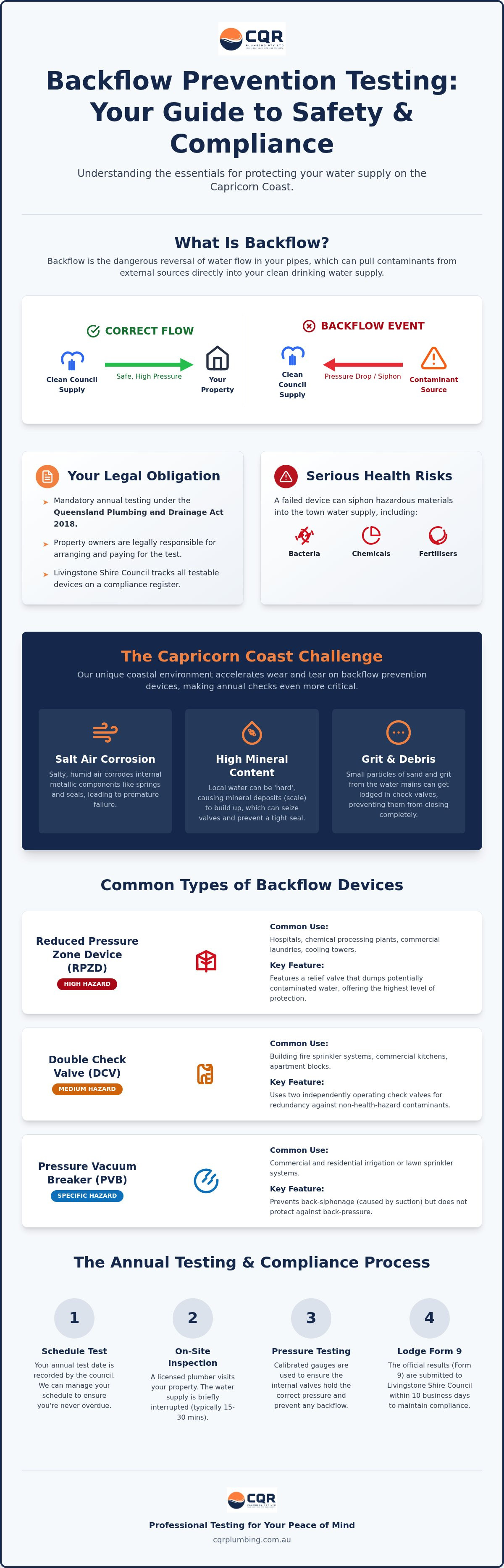
Backflow is essentially what happens when water flows the wrong way through your pipes. Instead of clean water moving from the mains into your property, a pressure change causes it to reverse, pulling potentially contaminated water back into the drinking supply. This usually occurs at a "cross-connection," which is any point where your potable water meets a non-potable source. If you have a garden hose submerged in a pond or a commercial wash-down bay, you have a cross-connection that needs protection.
A Backflow prevention device is a mechanical valve that acts as a one-way gate to stop this reversal. In our coastal environment, these valves face unique challenges. The salt air and mineral-heavy water around the Capricorn Coast can cause internal components to corrode or seize much faster than they would inland. When we perform backflow prevention device testing Yeppoon, we often find that while a valve looks perfect on the outside, the internal seals have been compromised by grit or salt-induced pitting.
The Legal Obligations for Livingstone Shire Residents
The Queensland Plumbing and Drainage Act 2018 is very clear: if your property has a "testable" backflow device, it must be inspected by a licensed professional every 12 months. Livingstone Shire Council maintains a register of these devices to track compliance across the region. This isn't just a requirement for heavy industry. It applies to caravan parks, shopping centres, and even residential properties with certain irrigation or greywater systems. As the property owner, the legal responsibility to arrange this annual test rests with you, ensuring the device remains effective and the council register stays up to date.
Health Risks of Unchecked Backflow
The risks associated with a failed device are significant. When a water main bursts or there's high demand during a local fire emergency, the pressure in the street pipes drops suddenly. This creates a siphoning effect that can suck bacteria, fertilisers, or industrial chemicals directly into the clean water lines. We view our role as the first line of defence for community health. By using calibrated testing kits to measure the pressure zones within your valve, we can identify a failing seal before it allows contaminants to reach your kitchen tap. Regular backflow prevention device testing Yeppoon ensures that your private plumbing system never becomes a public health liability.
Common Types of Backflow Devices and Why They Fail
Most property owners are surprised to learn that their water meter already contains a non-testable dual check valve. However, for higher-risk connections, Australian standards require testable devices that can be mechanically verified. These units must comply with AS/NZS 2845.1:2022, which dictates their design and performance requirements. When we carry out backflow prevention device testing Yeppoon, we generally encounter three main types of valves, each suited to a specific level of hazard.
RPZD, Double Check, and Pressure Vacuum Breakers
The Reduced Pressure Zone Device (RPZD) is the heavyweight of the group. It's used for high-hazard scenarios where a backflow event could lead to serious illness or death, such as in chemical plants, cooling towers, or hospitals. If the pressure fluctuates, the RPZD is designed to dump water out of a relief valve rather than letting it back into the mains. Double Check Valves are more common in medium-hazard areas, like fire service lines or commercial kitchens. Finally, Pressure Vacuum Breakers (PVB) are often found in irrigation systems. They're effective against back-siphonage but can't handle back-pressure, making them a specific tool for a specific job.
Why Do Valves Fail Their Annual Test?
A failed test doesn't necessarily mean you need a brand-new device. In fact, most "fails" are simply a sign that the internal components need a service. In the Yeppoon region, our coastal air and local water chemistry play a big role in device longevity. Small particles and grit from the water main can get lodged in the check valves, preventing them from sealing tightly. Over time, the O-rings and rubber seals inside the valve become brittle or swollen, which is common given the mineral content in our local supply. Additionally, the internal springs that hold the valves shut can lose their tension after years of constant pressure.
If your device fails, we can usually strip it down, clean the internals, and replace the rubber "guts" to bring it back to full compliance. It's a straightforward process that saves you the cost of a full replacement. If you've received a notice from the council and aren't sure which device you have on-site, you can request a quote for a professional inspection and test.
The Professional Backflow Testing Process: What to Expect
Many property managers see the plumber arrive with a heavy case and wonder what actually happens during the inspection. The process of backflow prevention device testing Yeppoon is a methodical sequence of pressure readings and mechanical checks. It's important to prepare for a brief water interruption. We typically need the water turned off for about 10 to 20 minutes to perform the test accurately. This allows us to isolate the device and use calibrated differential pressure gauges to measure the performance of the internal springs and seals against Australian plumbing and drainage standards.
Step-by-Step: From Connection to Certification
We start the procedure by flushing the test cocks. This clears out any sediment or grit that might have settled in the valve body, which is vital for protecting our sensitive gauges. Once connected, we check the first check valve to ensure it is "drip-tight" under back-pressure. We then repeat the process for the second check. For Reduced Pressure Zone Devices, we also measure the relief valve opening point. This ensures the valve will dump water to the atmosphere if the pressure differential drops below a safe threshold, effectively preventing any risk of siphoning.
Maintenance and On-the-Spot Repairs
If a valve fails to hold the required pressure, we don't just pack up and leave. We adopt a "clean as you go" approach. Often, a tiny piece of debris is preventing a seal from seating correctly. We can usually strip the device, clean the internal faces, and re-test on the spot. If components are genuinely worn, we only use genuine manufacturer spare parts. Using generic seals might save a few dollars initially, but they often fail prematurely and can void your compliance status.
After the test is complete and the device passes, we carefully re-pressurise the system. This is a critical step to ensure no air is trapped in the lines. Trapped air can cause "water hammer" or annoying vibrations in your pipes, which can lead to joint failures over time. Our goal is to leave your system in better condition than we found it, with a passed test certificate ready for council lodgement.
Compliance Management: Council Reporting and Form 9s
Once the physical test is finished, the administrative work begins. The Form 9 is the official Queensland Government document that serves as your report on inspection and testing. In my years on the tools, I've seen many property owners fall into the trap of thinking the job is done once the plumber packs up. However, for backflow prevention device testing Yeppoon, the law requires that this form be lodged with the Livingstone Shire Council within 10 business days of the test. If you're in the Rockhampton Regional Council area, the same strict timeframe applies. Late lodgement isn't just a paperwork issue; it can trigger reminder notices, council fines, or even water restrictions if the device remains unverified.
Livingstone Shire Council Specifics
Navigating the requirements of the Livingstone Shire Council can be tricky if you aren't familiar with their local register. They keep a strict database of every testable device in the region to ensure the town's water supply remains protected. For commercial premises, it's a legal requirement to maintain an on-site testing logbook. This provides a clear audit trail if a council officer visits for a high-risk site inspection. We regularly coordinate with council departments to ensure all technical data is accurate, preventing the administrative back-and-forth that often frustrates property managers. Our goal is to handle the entire process so you never have to worry about a "non-compliance" letter appearing in your mailbox.
Automated Reminders and Preventative Maintenance
We believe in a "set and forget" approach to compliance. By joining our preventative maintenance schedule, you don't have to track expiry dates or wait for a council warning letter. We manage the entire cycle, from the physical test to the final digital lodgement. This service is often integrated with TMV testing for our commercial and health-care clients, ensuring all your safety valves are serviced in a single visit. For more detailed advice on managing your facility's water systems, check out our guide on Commercial Plumbing and Compliance in Yeppoon.
Why Choose CQR Plumbing for Your Yeppoon Backflow Testing?
Selecting a provider for backflow prevention device testing Yeppoon is a decision that impacts your property's safety and your legal standing with the council. We pride ourselves on being more than just technicians; we are partners in your facility management. Our team consists of licensed and endorsed specialists who have spent years on the tools across the Capricorn Coast. We understand that compliance can feel like a burden, so we've designed our service to be as transparent and efficient as possible. When we identify a fault, we don't just hand you a bill for a replacement. We show you the worn seal or the trapped debris and explain the "why" behind the repair so you can make an informed decision.
Our Local Expertise in Yeppoon and Rockhampton
Yeppoon’s unique geography, from the beachfront to the hilly residential pockets, creates significant variations in local water pressure. These fluctuations can put extra stress on check valves and relief ports, leading to premature fatigue. Our deep understanding of these site-specific issues allows us to diagnose problems that less experienced plumbers might overlook. We have built strong relationships with Real Estate & Strata Managers throughout the region, who rely on our punctuality and professional conduct. Whether it's a single residential device or a complex commercial site with multiple high-hazard valves, we arrive on time and get the job done with minimal disruption to your tenants or business operations.
Request a Quote for Your Annual Compliance
Don't wait for a reminder notice or a potential fine from the Livingstone Shire Council to land in your letterbox. Getting ahead of your annual deadline is the best way to ensure your water supply remains uninterrupted and your paperwork is processed without a hitch. If your property has multiple testable devices, ask us about our bundled service options. We can often synchronise your backflow prevention device testing Yeppoon with other mandatory maintenance to save you time and administrative hassle. Our commitment to the community includes a reliable 24/7 response for any emergency leaks or device failures, giving you peace of mind that professional help is always available when you need it most.
Securing Your Property’s Water Compliance
We have explored the mechanical necessity of annual testing and the strict ten-day reporting window required by Livingstone Shire Council. You now understand that a device failure is often just a sign that a professional service is due, particularly given how our local coastal environment impacts the longevity of internal valve components. Protecting your property requires more than just a quick check; it requires a systematic approach to maintenance.
Staying on top of your backflow prevention device testing Yeppoon is the most effective way to protect your drinking water and avoid council penalties. As Fully Licensed QBCC Plumbers and Specialists in Livingstone Shire Compliance, we provide the Detailed Asset Reporting for Commercial Clients that you need to stay organised and audit-ready throughout the year. We take the technical and administrative burden off your shoulders.
Don't let compliance become a complication. Taking a proactive approach to your plumbing maintenance means one less administrative headache to manage each year. We are ready to help you keep your water safe and your property fully compliant.
Frequently Asked Questions
How often does my backflow prevention device need testing in Yeppoon?
Your testable backflow device must be inspected and tested at least once every 12 months. This is a strict legal requirement under the Plumbing and Drainage Regulation 2019. For property owners across the Capricorn Coast, regular backflow prevention device testing Yeppoon ensures that mechanical components haven't seized or corroded. We recommend setting a recurring reminder to ensure you never miss a deadline and stay compliant with the Livingstone Shire Council register.
Will my water be turned off during the backflow test?
Yes, we will need to isolate the water supply to your property for a short period, typically between 10 and 20 minutes. This isolation is necessary to connect our calibrated testing gauges and measure the pressure zones within the device. We always coordinate with you before turning the tap off to ensure minimal disruption to your daily operations or household activities. Once the test is complete, we re-pressurise the system slowly to prevent air locks.
What happens if my backflow device fails the annual inspection?
If a device fails, it usually means the internal seals are worn or debris is preventing a tight closure. In most cases, we can perform an on-the-spot service by stripping the valve, cleaning the internals, and replacing rubber O-rings or springs. If the valve body is cracked or heavily corroded beyond repair, a full replacement is required. We always provide a clear explanation of the fault and a quote for the necessary repairs before proceeding.
Who is responsible for the cost of backflow testing in a rental property?
The legal responsibility for backflow prevention device testing Yeppoon rests with the property owner, not the tenant. Because these devices are considered part of the property's essential infrastructure and are required for council compliance, the landlord must arrange and pay for the annual inspection. It's similar to smoke alarm testing or council rates. We often work directly with property managers to handle these compliance checks across their rental portfolios to ensure no property falls behind.
Can any plumber perform backflow prevention testing?
No, only a licensed plumber who holds a specific backflow prevention endorsement from the Queensland Building and Construction Commission (QBCC) can perform this work. This endorsement requires additional training and certification beyond a standard plumbing licence. Using an uncertified plumber means your Form 9 will not be accepted by the council, and your property will remain non-compliant. Our team consists of endorsed specialists with extensive experience in Central Queensland compliance standards.
What is a Form 9, and why is it important for my compliance?
A Form 9 is the official Queensland Government "Report on inspection and testing of backflow prevention devices." It serves as the legal proof that your device has been tested and passed by a qualified professional. We lodge this form with the council on your behalf to update the regional register. Without a correctly filed Form 9, the council has no record of your compliance, which can lead to unnecessary fines or water supply restrictions.
What are the signs that my backflow valve might be leaking or faulty?
The most obvious sign of a fault is water constantly dripping or discharging from the relief valve port. While some occasional dripping is normal during pressure fluctuations, a steady stream indicates a failing seal or trapped grit. You might also notice a drop in water pressure throughout the property or strange vibrating noises, known as water hammer, coming from the pipes. If you spot these signs, it's best to call for a professional inspection immediately.
Is backflow testing required for residential homes in Livingstone Shire?
Backflow testing is only required for residential properties that have a testable device installed. Most standard homes use non-testable dual check valves which don't require annual reporting. However, if your home has a large-scale irrigation system, a swimming pool connected directly to the mains, or a dedicated fire service, you likely have a testable valve. If you've received a notice from the council, it means your property is on the register and testing is mandatory.
Disclaimer
The information in this article is provided for general educational purposes only and should not be relied upon as professional plumbing, gasfitting, or legal advice. Every property and plumbing system is different, and the information may not be applicable to your specific circumstances. CQR Plumbing recommends that all plumbing and gasfitting work be inspected and carried out by a licensed professional in accordance with applicable Australian Standards and Queensland regulations. If you require advice specific to your property, please contact CQR Plumbing for an assessment.