
Backflow testing cost Rockhampton: 2026 pricing and legal requirements
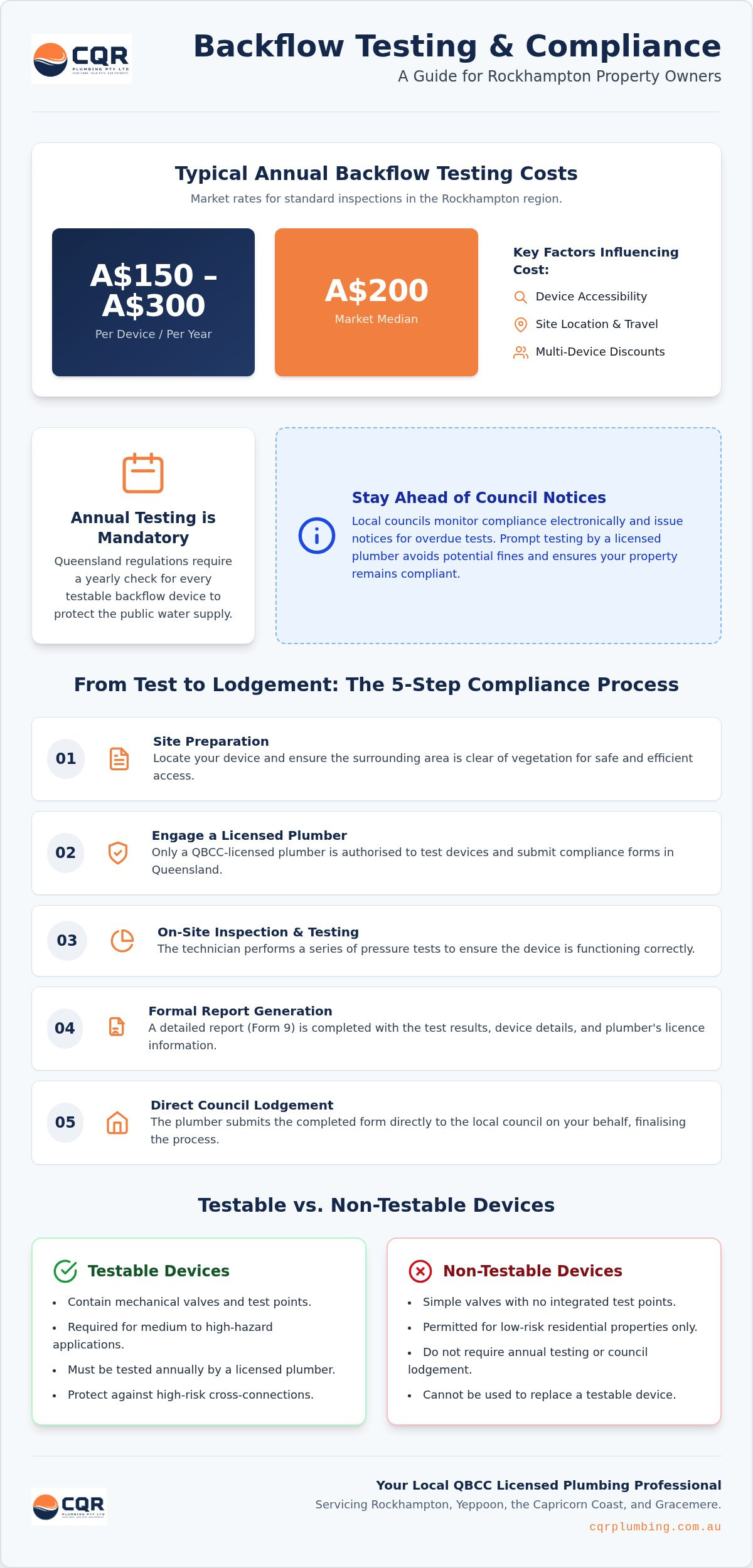
Backflow testing cost Rockhampton property owners face sits in a clear band: annual tests typically range between A$150–300 (market median A$200) according to market listings. Exact pricing depends on device accessibility, site location, and whether multi-device discounts apply during inspection. Booking a licensed plumber (QBCC licensed professional) ensures your property meets local compliance standards efficiently, so your core decisions stay practical: when you test, how you group devices on one schedule, and whether repair or replacement keeps you compliant longer.
Key Takeaways: Backflow testing cost in Rockhampton typically ranges from A$150 to A$300 per device, with a market median of A$200 for standard annual inspections.
- Annual testing is a legal mandate for all testable devices under Queensland plumbing regulations.
- Except when high-hazard ratings apply, low-risk residential properties may use non-testable valves to avoid testing.
- Group multiple valves on a single service visit to reduce per-unit logistics and travel fees.
- The market pricing table in this article shows how regional travel impacts total service costs.
Prepare your site and lock in a predictable compliance budget
Three situations come up often before a yearly check (annual testing). On a single domestic valve with clear access, book a standard inspection and keep vegetation cut back so labour stays inside the quoted band. On several commercial valves in one shopping precinct, put them on one visit so reduced setup time lowers the per-unit fee. On a regional outskirts device (for example toward Emu Park), confirm safe access early and expect a travel allowance in the scope.
Preparing your property for that yearly check supports full compliance without hidden surprises. Site access delays increase total labour time significantly. Keeping the area around your backflow device clear lets the technician inspect components efficiently.
Every backflow prevention device requires regular testing to protect the local water supply from a potential cross-connection (where clean water meets contaminated sources). Booking your site inspection for backflow and TMV testing supports compliant reporting submitted directly to your local council.
Before your technician arrives, review this quick site checklist:
- Locate your valve.
- Clear surrounding vegetation.
- Ensure safe site access.
Proper preparation avoids extra service time. Preventative maintenance keeps your system safe, operational, and compliant with Queensland regulations.
Backflow testing cost Rockhampton: rates fall when you group multi-site valves
Local service rates reflect travel times between regional properties, so commercial location is the primary driver of routine testing expenses. Regional charges sit in the same pricing band outlined in the opening for a single device.
Managing multiple backflow prevention devices across distinct commercial locations needs a strategic schedule. Testing five valves at a single shopping precinct takes less setup time than visiting five separate domestic sites across Yeppoon or Emu Park. Plumbing contractors pass these logistics savings back to property managers through reduced per-unit fees.
| Location Scope | Service Type | Logistics Impact |
|---|---|---|
| Single Site | Yearly check | Standard setup and travel |
| Suburb Cluster | Multi-valve inspection | Reduced per-unit transit time |
| Regional Outskirts | Remote device testing | Travel allowance applies |
Booking an isolated yearly check in outer areas like Emu Park carries extra travel overheads. You can review regional compliance options through backflow testing services and coordinate your schedule from there. When every backflow device sits on a single master register, a certified contractor completes the task far more quickly. Transparent service delivery helps you make informed choices for your commercial sites.
Tip: Group annual inspections for multiple backflow valves on the same property to reduce per-unit service charges.
Among CQR Plumbing's Google reviews, one client (5★) wrote:
"We had some issues with our Gas hot water and Joel turned up very fast (Same Day). He found and fixed the problem straight away was very easy to listen to as he explained to us the situation and how he fixed it. Highly recommend"
That feedback maps to a clear compliance arc: a sudden fault or overdue notice creates downtime risk, a QBCC-endorsed technician attends the same day with a plain explanation of the fault and the fix, and you return to service without a drawn-out outage. Fast response times and clear explanations help commercial property owners meet compliance obligations without unnecessary downtime.
How often does a backflow prevention device need to be tested in Queensland?
Queensland regulations mandate a yearly check for every testable backflow prevention device installed on your property. Local councils issue mandatory compliance notices with strict deadlines to prevent drinking water contamination.
Local councils monitor every compliance date electronically, so a late filing frequently brings swift monetary fines. Annual testing serves as a safety check for plumbing networks, spotting worn seals before contaminated water reaches the public mains.
To keep the system safe, a qualified technician needs to conduct the test and send the results straight to local authorities. Book your annual inspection through Yeppoon backflow guidance so the submission stays on the compliant path.
What's the difference between testable and non-testable backflow devices?
Testable devices include integrated mechanical valves built for ongoing performance checks, while non-testable units have no test points at all.
Property owners sometimes assume they can swap freely between these options to cut cost. You cannot legally change a testable assembly to a non-testable version if local council regulations mandate high-hazard protection.
Testable units, such as reduced pressure zone valves, protect municipal supplies against severe health hazards. Non-testable options, like dual check valves, only suit lower-risk situations. Maintaining compliant protection requires a licensed plumber with the right endorsement to assess your hazards accurately.
Non-testable valves need no yearly check, yet they offer no mechanical testability. A non-testable valve behaves like a sealed fuse: when it fails, you replace the entire unit. Testable models work more like a circuit breaker that an expert can test, service, and reset.
High-risk commercial sites must use testable units. Low-risk residential homes can suit non-testable valves where the hazard rating allows it. Your compliance rating sets the hardware you may install.
Hire a QBCC plumber so Council lodging sticks the first time
You must engage a QBCC-endorsed plumber to submit official backflow test reports directly to the Rockhampton Regional Council.
Across commercial properties in Gracemere and Yeppoon, standard lodging forms are rejected when the installer lacks the proper endorsement. Verifying that your contractor holds an active backflow endorsement protects your property from compliance notices.
Always insist on transparent pricing (upfront cost) before any testing begins on site. Choosing a certified local technician helps your test results lodge correctly the first time. DIY submissions are illegal. Failing to submit an annual test report risks heavy council fines and potential water supply disconnection.
CQR Plumbing provides transparent service reports and manages the full lodging process so you have a clear paper trail. Ask for a scoped quote before the visit if you want the inclusions and exclusions in writing.
Five steps that turn a local backflow test into a lodged report
Local compliance needs a systematic approach to verify that your backflow prevention device works correctly. A faulty relief valve can waste thousands of litres of drinking water before anyone notices a leak on site, so proper field procedures protect public health across Rockhampton and Gracemere.
- Site visual inspection: Your technician checks the physical condition and valve access.
- Pressure gauge testing: Calibrated test kits measure differential pressure across internal check valves.
- Component cleaning: Water lines are flushed to clear internal debris that affects performance.
- Defect repairs: Worn seals or springs are swapped out immediately.
- Form 9 council submission: The completed test report goes straight to local council registers.
Each step is documented so the Form 9 lodgement matches what was found on site.
When device replacement beats repeated seal rebuilds
Replacing a backflow device becomes wiser than rebuilding seals when body corrosion or pitted internal seats stop new parts from sealing reliably.
From client work, valves fail test after test when the internal brass casing has worn thin over time. Replacing old hardware prevents recurring service visits: you fit a sound assembly once instead of paying for seals that cannot hold on a degraded body. A new assembly suits owners who want longer service intervals without continual call-outs.
A QBCC-endorsed plumber can assess the valve casing during a yearly check and confirm whether internal damage is present. Paying for repeated internal rebuilds on a degraded body wastes money when transparent pricing shows that a full unit replacement gives you a clean compliance path. New hardware resolves persistent leaks without another round of partial rebuilds.
Avoid council fines with prompt backflow repairs
Failing a test or missing your submission deadline risks heavy municipal fines and potential water disconnection at your commercial site.
In field work around Rockhampton, council inspectors actively follow up overdue compliance reports. Ignoring those notices usually triggers formal enforcement action.
A failed backflow device allows contaminated water to siphon back into the public supply through a cross-connection (a point where clean water can contact a potential contaminant source). Local water authorities take this risk seriously.
If your valve fails, arrange prompt fixes with a QBCC-endorsed plumber so you stay compliant. Standard maintenance often means replacing internal seals or springs rather than fitting a completely new valve. Regular yearly check prevents these regulatory penalties and keeps your site running.
Frequently asked questions
What is a backflow prevention device and when is it required?
A backflow prevention device stops contaminated water from flowing backward into your clean drinking supply. Local councils mandate these mechanical valves whenever a cross-connection (a point where clean water can contact pollutants) exists on your property.
How often should backflow testing be done?
A yearly check is legally required for all testable backflow valves in Queensland. A QBCC-endorsed plumber must inspect the internal mechanisms, submit the test results to council, and confirm the valve functions correctly to protect public health.
What's the difference between testable and non-testable backflow devices?
Testable assemblies contain moving parts and test ports that need regular maintenance, whereas non-testable devices offer basic protection without inspectable internal components. Your property hazard rating determines which style the law requires.
What is backflow and why is it a concern?
Backflow happens when pressure changes reverse the flow of water, drawing stagnant or contaminated liquid into the main drinking line. That reversal creates serious health risks by pulling chemicals, bacteria, or waste toward your taps.
What is a thermostatic mixing valve (TMV)?
A thermostatic mixing valve blends hot and cold water to deliver a safe, controlled temperature at the outlet. It reduces scalding risk in homes, aged care facilities, and commercial buildings.
Secure compliant water systems for your property
Organising a yearly check with a QBCC-endorsed plumber keeps your potable supply safe from high-hazard risks. The CQR Plumbing team provides straightforward reporting and a clear scope of work for commercial sites across Rockhampton in 2026. Acting on your test dates early limits costly water-main issues and keeps local council compliance on track. For a clear scope of work and professional endorsement, request a quote with CQR Plumbing.
Disclaimer
The information in this article is provided for general educational purposes only and should not be relied upon as professional plumbing, gasfitting, or legal advice. Every property and plumbing system is different, and the information may not be applicable to your specific circumstances. CQR Plumbing recommends that all plumbing and gasfitting work be inspected and carried out by a licensed professional in accordance with applicable Australian Standards and Queensland regulations. If you require advice specific to your property, please contact CQR Plumbing for an assessment.