Blocked Bathroom Sink in Rockhampton: Causes, Safe Checks and Plumbing Help
A bathroom sink that drains briefly after a quick fix may still be blocked further down the pipe. If water is sitting in the basin or draining slowly, finding the cause matters. For a blocked bathroom sink in Rockhampton, the right fix depends on what is restricting the waste, not just how slowly the water is moving.
It’s frustrating when a blockage returns, and it’s not always clear which checks are safe to try. Hair, soap scum, toothpaste and small items can build up in the waste, but chemical drain cleaner may damage pipes or create a safety risk.
This guide explains common causes and warning signs, then outlines simple checks you can make without dismantling plumbing. In Queensland, unblocking a drain is regulated work that must be carried out by a QBCC-licensed plumber. You’ll also learn when to arrange professional help in Rockhampton and what to expect when a plumber investigates the problem and explains the work before starting.
Key Takeaways
- Notice whether the basin drains slowly, stays full or improves only briefly. The pattern can help indicate where the restriction may be.
- A blockage may sit near the plug, in the trap or further along the drain, so the repair should match the cause.
- Only remove visible debris around the plug if it’s easy and safe to reach. Leave dismantling and drain-clearing work to a plumber.
- When a plumber attends, expect them to discuss the symptoms, inspect accessible parts and explain their findings before you agree to the work.
- For a blocked bathroom sink in Rockhampton, consider professional assessment if symptoms return or safe checks don’t help. The next step may involve a suitable drainage inspection or clearing method.
Blocked bathroom sink in Rockhampton: what the symptoms can tell you
A slow-draining basin can disrupt everyday bathroom use, especially when water is still sitting in the bowl while you’re washing or brushing your teeth. A blocked bathroom sink has restricted water flow through the basin waste or connected pipework. The restriction may be close to the plug or further along, so one symptom alone won’t identify the cause.
What does a slow-draining bathroom sink indicate?
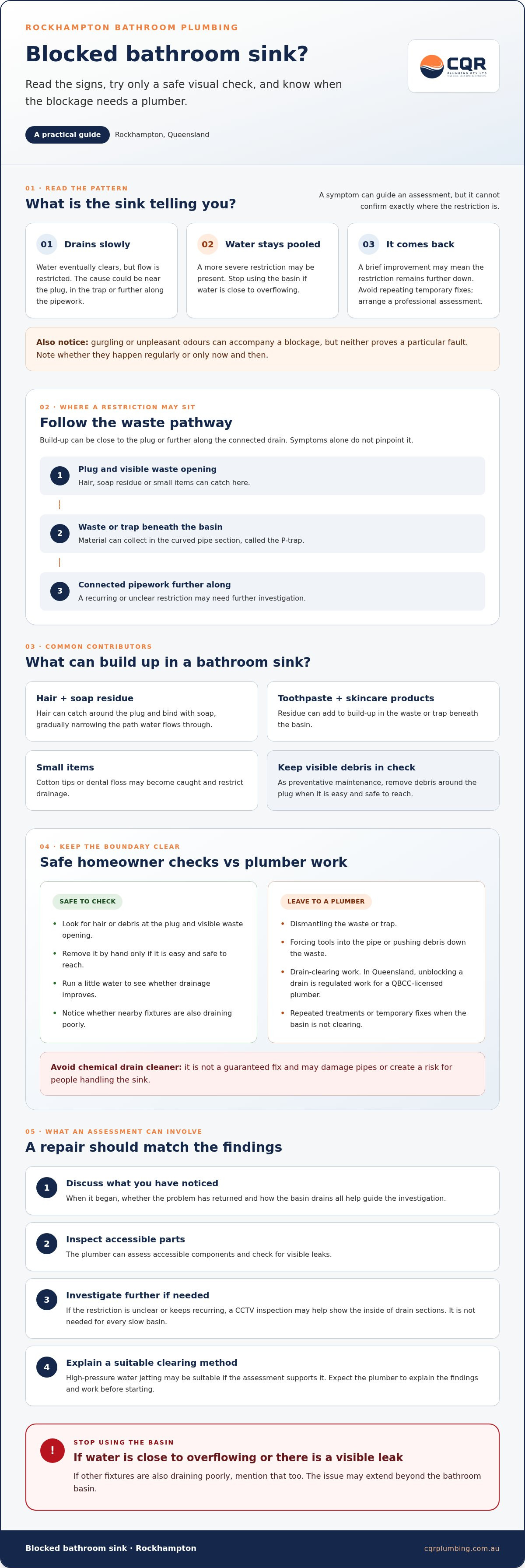
If water drains slowly but eventually clears, flow is restricted rather than fully stopped. If water remains pooled in the basin, the restriction may be more severe. Either way, it could be near the waste, in the trap beneath the basin or further along the connected pipework. The P-trap is the curved pipe section beneath many sinks. Material can collect there, but symptoms alone can’t confirm that’s where the problem is.
Gurgling or unpleasant odours may also accompany a blockage, but neither proves a particular fault. Notice whether these signs occur every time you use the basin or only occasionally. A one-off slow drain may settle, while symptoms that persist, worsen or return after a temporary improvement deserve closer attention.
When could a sink blockage need prompt attention?
Stop using the basin if water is close to overflowing or continued use could cause water damage. Visible leaks beneath the basin also need attention. If the blockage quickly returns after a basic check, avoid repeating temporary fixes and arrange a professional assessment instead.
A single slow basin doesn’t necessarily mean there’s a wider drain problem. If other fixtures are also draining poorly, the issue may extend beyond the bathroom basin. For broader drainage concerns, see blocked drain repairs. For local support, find details about Rockhampton plumbing services.
Common bathroom sink blockage causes and how plumbers investigate them
Hair and soap residue commonly contribute to a restricted basin, but a blockage can sit close to the plug or further along the drain. How the sink drains, whether other fixtures are affected and whether the problem returns can all help guide an assessment. The cause shouldn’t be assumed from one symptom alone.
What commonly builds up in a bathroom sink waste?
Hair can catch around the plug and waste opening, binding with soap residue, toothpaste or skincare products. Gradual build-up narrows the path water flows through. Small items such as cotton tips or dental floss may also become caught. As simple preventative maintenance, regularly remove visible debris around the plug if it’s easy and safe to reach.
Build-up may also collect in the waste or trap beneath the basin. Chemical drain products aren’t a guaranteed fix and can pose risks to pipes or people handling the sink, so don’t assume they’re a safe answer.
How can a plumber identify where the blockage is?
A plumber can ask when the issue began, whether it has returned and how the basin drains. They can then assess accessible parts and check for visible leaks. If the restriction remains unclear or keeps recurring, a CCTV inspection may help show the inside of drain sections. It isn’t needed for every slow basin.
High-pressure water jetting may be suitable if the assessment supports it. The repair should match the findings rather than rely on repeated temporary fixes. If you’ve searched for “blocked bathroom sink Rockhampton” because the problem keeps returning, share what you’ve noticed when you request plumbing help.
DIY checks versus a plumber: which blocked sink fixes are sensible?
A quick visual check can help you spot an obstruction at the plug, but it won’t show what’s happening further along the pipework. Keep homeowner checks simple. Don’t dismantle the waste or trap, force tools into the pipe or keep trying treatments if the basin isn’t clearing.
What can you safely check before calling a plumber?
Look at the plug and visible waste opening for hair or other debris. If you can remove it easily and safely by hand, clear it away and run a little water to see whether drainage improves. Don’t use sharp objects or push debris down into the waste.
Notice whether nearby fixtures are also draining poorly. This detail can help a plumber understand whether the problem appears limited to the basin. Stop using the sink if it’s close to overflowing, leaking or not responding to simple checks.
Which DIY approaches can make the problem worse?
Don’t mix drain chemicals or apply one product after another. Chemical cleaners can create harmful fumes or burns, and some can damage pipework. If you’ve already used a product, follow its label instructions and tell the plumber what it was before they start work.
Forceful probing can damage fittings or push an obstruction further into the pipe. Plunging and household mixtures may not clear every type of blockage, so don’t treat them as reliable fixes. If water drains briefly after an attempt but the problem soon returns, repeated treatment may mask the symptom without addressing the cause.
In Queensland, unblocking a drain is regulated work that must be carried out by a QBCC-licensed plumber. Homeowners can make safe visual checks, but leave drain clearing and work requiring plumbing tools to a licensed professional. If the blockage persists or returns, CQR Plumbing’s blocked drain repair service can assess the problem and determine a suitable approach.
When you request plumbing assistance, share what you’ve noticed, including any leaks, products used or trouble with nearby fixtures. That information helps the plumber understand the issue before discussing the next step.
What to expect when a Rockhampton plumber attends a blocked bathroom sink
A useful visit starts with a conversation, not an assumed fix. The plumber will ask how the basin has been draining, when the issue began and whether it has returned after earlier attempts to clear it. These details help guide the inspection and avoid treating a recurring restriction as a one-off problem.
What information should you give the plumber?
Before the visit, note what you’ve observed. You don’t need to diagnose the fault. Clear details are more helpful than a guess about what’s wrong.
- When the sink first slowed down and whether it blocked again after improving.
- Any visible leaks, overflow, gurgling or unpleasant odours.
- Whether other fixtures are draining poorly too.
- Any drain products or DIY methods you’ve already tried.
If you used a chemical product, tell the plumber which one, if you know, and when you applied it. This lets them take that into account before inspecting or working on the waste.
How should the repair scope be explained?
The plumber will inspect accessible parts of the basin and drainage, then explain what they’ve found. Ask where they believe the restriction is and what supports that assessment. The repair depends on the location and nature of the blockage, so there isn’t one method that suits every sink.
A CCTV inspection or high-pressure water jetting may be considered if the assessment indicates it’s suitable, but neither is automatically needed for a blocked basin. Before work starts, ask for a clear scope of work: what task is proposed, why it’s recommended and whether further steps may be needed if the obstruction isn’t where expected. You should understand the plan before agreeing to proceed.
If you’re arranging help for a blocked bathroom sink in Rockhampton, sharing the symptoms and what you’ve already tried can make the initial discussion more useful. It also helps set expectations: the plumber needs to assess the restriction before confirming the appropriate repair.
Local help for a blocked bathroom sink in Rockhampton
A simple visual check is reasonable if you can see debris around the plug and remove it safely. Arrange a professional assessment if the basin stays slow, the blockage returns after clearing or more than one fixture is affected. Those patterns may point to a restriction a surface check can’t resolve.
When should you arrange professional sink and drain help?
Don’t keep using a basin that’s overflowing or leaking. Stop using it and seek help if water is escaping or could damage cupboards, flooring or nearby surfaces. A slow drain on its own doesn’t automatically mean an emergency, but a persistent or recurring problem is worth investigating before it gets worse.
When you contact a plumber, describe what you’ve observed rather than trying to identify the fault yourself. Mention whether other fixtures are affected, what checks you’ve made and whether you’ve used a drain product. This information helps guide the next step.
How can CQR Plumbing help with a blocked sink?
CQR Plumbing provides blocked drain repairs in Rockhampton and surrounding Central Queensland communities, including Yeppoon, the Capricorn Coast, Gracemere and Emu Park. The work starts with an assessment: the location and nature of the restriction help determine an appropriate approach. A CCTV inspection can be considered when viewing the inside of a drain would help investigate a recurring or unclear problem. High-pressure water jetting may be suitable in some cases, but it isn’t an automatic step for every bathroom basin.
Before work begins, ask what the assessment has found, what repair is recommended and what the agreed scope includes. Clear communication helps you understand why a particular method is proposed and whether further investigation may be needed. For more about the local service area, see Rockhampton plumbing services.
If safe checks haven’t resolved the blockage, or it keeps returning, you can request help without assuming the cause or repair in advance.
Arrange the right help before the blockage returns
With a blocked bathroom sink in Rockhampton, a visible obstruction may be suitable for a careful, simple check. If the basin stays slow, the blockage returns or other fixtures are affected, professional assessment can help identify where the restriction is. Stop using the basin if it’s leaking or at risk of overflowing.
Note when the problem began, what you’ve tried and whether you’ve noticed unusual sounds or drainage issues elsewhere. Those details help the plumber assess the situation. The repair should follow the findings rather than rely on repeated temporary fixes.
CQR Plumbing provides blocked drain repairs across Rockhampton and surrounding Central Queensland communities. Depending on the assessment, drainage solutions may include a CCTV inspection or high-pressure water jetting. These methods aren’t required for every basin. Ask what the plumber has found and agree on a clear scope of work before repairs begin.
With the symptoms clearly explained and the work discussed upfront, you can make an informed decision about the next step.
Frequently Asked Questions
Why is my bathroom sink draining slowly?
Hair and soap residue commonly collect around the plug, waste opening or trap, gradually restricting water flow. Toothpaste and skincare products can add to the build-up, while an obstruction may also sit further along the connected pipework. If water drains slowly but eventually clears, flow is restricted; standing water suggests it isn’t clearing. Neither this behaviour nor a sound or odour alone confirms the blockage’s location.
Can I use a plunger on a blocked bathroom sink?
Don’t rely on a plunger to clear every sink blockage. It may shift some material, but the restriction can remain or return if it’s further along the pipework. Avoid forceful or repeated attempts, which may cause splashing or fail to address the cause. A safe visual check around the plug is a better first step.
Is it safe to use chemical drain cleaner in a bathroom sink?
Chemical drain cleaner isn’t a universally safe option, and it can pose risks to you and your plumbing. Some products can release harmful fumes, cause chemical burns or damage pipes. Never mix drain chemicals or apply one product after another. If you’ve already used a cleaner, follow its label instructions and tell the plumber what product you used before they inspect the drain. Don’t assume the chemical has cleared the underlying blockage.
What should I do if my bathroom sink keeps blocking?
If the blockage returns, arrange an assessment rather than repeating temporary treatments. Recurrence can mean material remains in the waste or trap, or the restriction is further along the drain. Note how soon the sink slows again, whether water ever fully clears and what you’ve already tried. Share those details with the plumber. The repair should be based on where the obstruction is and what the inspection finds.
Can a blocked bathroom sink affect other drains in the house?
A blockage limited to the basin may not affect other fixtures, but poor drainage at several fixtures can suggest a wider drainage issue. Check whether nearby basins, the shower or other fixtures are also slow, and tell the plumber what you notice. This pattern doesn’t identify the fault by itself, but it helps guide the initial assessment. If only one sink is affected, the restriction may be closer to that basin.
When should I call a plumber for a blocked sink in Rockhampton?
For a blocked bathroom sink in Rockhampton, contact a plumber if the restriction persists, quickly returns or affects more than one fixture. Seek help promptly if water is leaking or overflowing, and stop using the basin if it could cause water damage. A slow drain alone doesn’t automatically mean an emergency. CQR Plumbing provides blocked drain repairs in Rockhampton and surrounding Central Queensland communities.
How does a plumber find a blockage in a bathroom sink drain?
A plumber will ask about the symptoms and check the basin, waste and accessible drainage points. They’ll consider whether the blockage has returned, how the water drains and whether there are visible leaks. If the location remains unclear, a CCTV inspection may help show the inside of drain sections. High-pressure water jetting may also be suitable, depending on the assessment. Neither method is required for every blocked sink.
Disclaimer
The information in this article is provided for general educational purposes only and should not be relied upon as professional plumbing, gasfitting, or legal advice. Every property and plumbing system is different, and the information may not be applicable to your specific circumstances. CQR Plumbing recommends that all plumbing and gasfitting work be inspected and carried out by a licensed professional in accordance with applicable Australian Standards and Queensland regulations. If you require advice specific to your property, please contact CQR Plumbing for an assessment.