Blocked Toilet Repairs in Rockhampton: What to Expect
What if the blockage isn’t in the toilet at all? A toilet that won’t clear can leave the bathroom unusable, and repeated flushing may cause an overflow. With blocked toilet repairs Rockhampton homeowners can find out whether the problem is in the pan, the connecting pipe or a shared drain, rather than trying to force it through.
It’s understandable to want to try a quick fix, but not every method is safe for your toilet or pipework. Stop flushing if the water level is rising, and avoid chemical drain cleaners. You can make a few simple observations, but clearing blocked pipework calls for a licensed plumber in Queensland.
This guide explains common causes, what you can safely check and when to call a plumber. You’ll also learn how CQR Plumbing assesses a blockage, including when CCTV inspection or high-pressure water jetting may help. The findings guide the repair, and the proposed scope is explained before work begins. CQR Plumbing serves Rockhampton and nearby communities, including Yeppoon, the Capricorn Coast, Gracemere and Emu Park.
Key Takeaways
- Stop flushing if the bowl rises or drains slowly to reduce the risk of an overflow.
- Check whether nearby fixtures are affected. This can help indicate whether the problem may extend beyond the toilet.
- Simple observations are safe, but clearing a blockage in pipework is work for a licensed plumber.
- With blocked toilet repairs Rockhampton residents can expect the plumber to assess the drainage and explain the proposed work before starting.
- The blockage location guides the clearing method. If the problem returns, further investigation may be needed.
Blocked toilet in Rockhampton? Recognise the symptoms and prevent an overflow
Stop flushing if the bowl rises or drains unusually slowly. Let the water settle, then keep the toilet out of use while you check what else is happening. A weak flush can be an early sign of a blockage. Repeated flushing may push the water closer to the rim without clearing the restriction.
A blocked toilet means flow is restricted in the toilet or connected drainage. The symptoms can offer clues about the location, but they don’t confirm it. One toilet flushing poorly may point to a local issue; gurgling or several fixtures backing up can suggest a wider drainage problem. For general background on toilet types and function, it helps to understand how the toilet’s components work together.
Which blocked toilet symptoms need attention first?
A slow flush that clears without the water rising is different from water climbing towards the rim. If the bowl is close to overflowing or water has spilled onto the floor, don’t flush again. Another flush adds water to a system that isn’t draining properly and can make the overflow worse.
Keep children and pets away from water that may have come from the toilet. Avoid touching it directly. If you can do so safely, move towels, bath mats and belongings away from the affected area. Take care on a wet floor to avoid slipping. You can note whether the water level changes on its own, but don’t keep testing the flush.
Could the blockage affect more than one fixture?
Check whether the bathroom sink, shower or another toilet is also draining slowly, gurgling or backing up. Don’t run extra water to test the system if fixtures are already affected. Similar symptoms in different parts of the property can point to a restriction in shared drainage, rather than an isolated problem in one toilet.
If other fixtures are working normally and only one toilet is affected, the issue may be closer to that toilet. It’s a useful observation, not a diagnosis. A plumber needs to assess the drainage to locate the restriction. Wider symptoms may call for blocked-drain repairs, with the findings guiding the right approach.
When arranging blocked toilet repairs Rockhampton residents can help the assessment by describing when the symptoms started and which fixtures are affected. CQR Plumbing serves Rockhampton, and its Rockhampton plumbing service includes toilet and drainage work. Mention any symptoms in other fixtures so the plumber can consider the wider drainage from the outset.
How a Rockhampton plumber diagnoses a blocked toilet
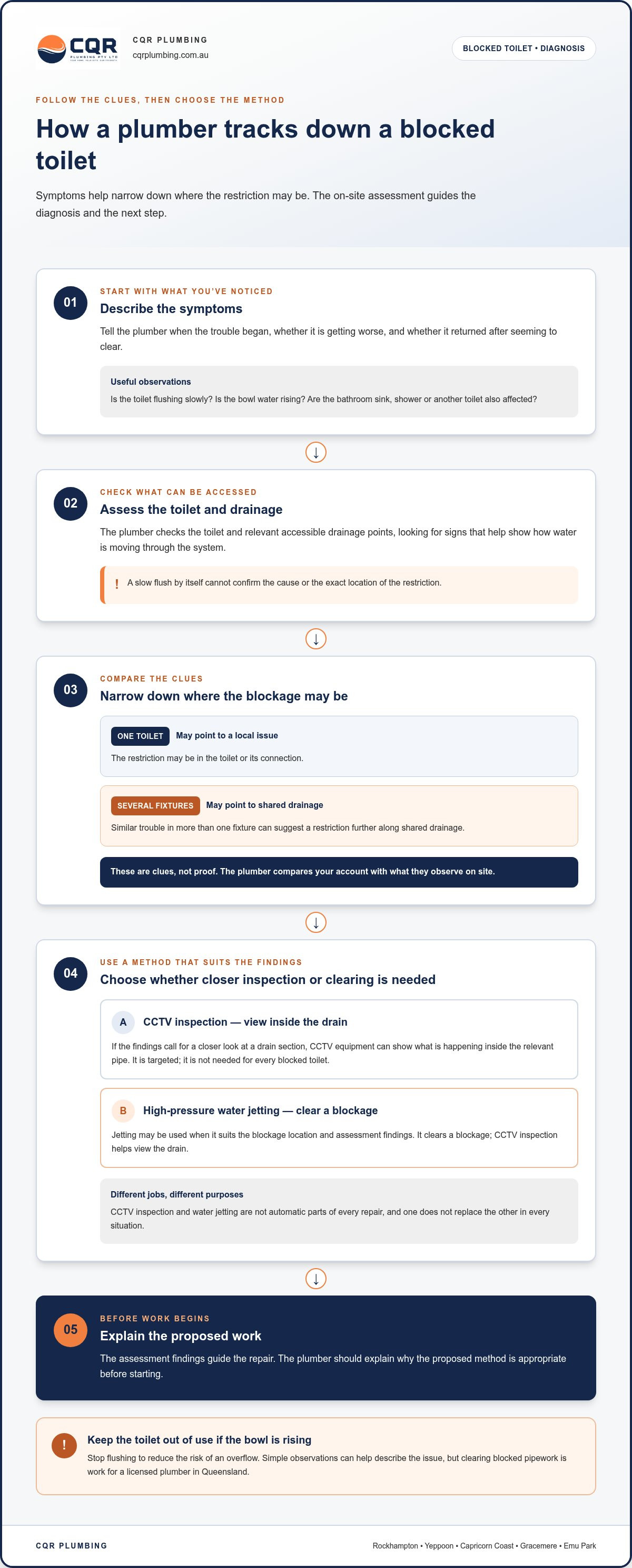
Diagnosis involves checking the toilet and relevant connected drainage to locate the restriction before choosing how to clear it. The plumber will ask when the trouble began, whether it’s getting worse and whether other fixtures are affected. Explain what you’ve noticed, including whether the problem started suddenly or returned after seeming to clear.
The plumber then assesses the toilet and accessible drainage points. They may look for signs that the issue is in the pan or nearby, and use suitable checks to understand how water is moving through the system. The conditions at the property guide the investigation. A CCTV inspection isn’t needed for every blocked toilet.
Is the blockage in the toilet or further along the drain?
If only one toilet is affected, the restriction may be in the toilet or its connection. If other fixtures show similar trouble, the plumber will consider whether it could be further along in shared drainage. Symptoms in several fixtures can help indicate a shared drainage blockage. They’re a clue, not proof of the blockage’s exact position.
The plumber compares your account of the symptoms with what they observe on site to narrow down the likely location. A slow flush alone can’t confirm the cause. The restriction could be in different parts of the drainage, so the plumber uses the assessment to guide the diagnosis. This matters because a method suited to a local obstruction may not resolve a problem further along the drain.
When might CCTV inspection or water jetting be used?
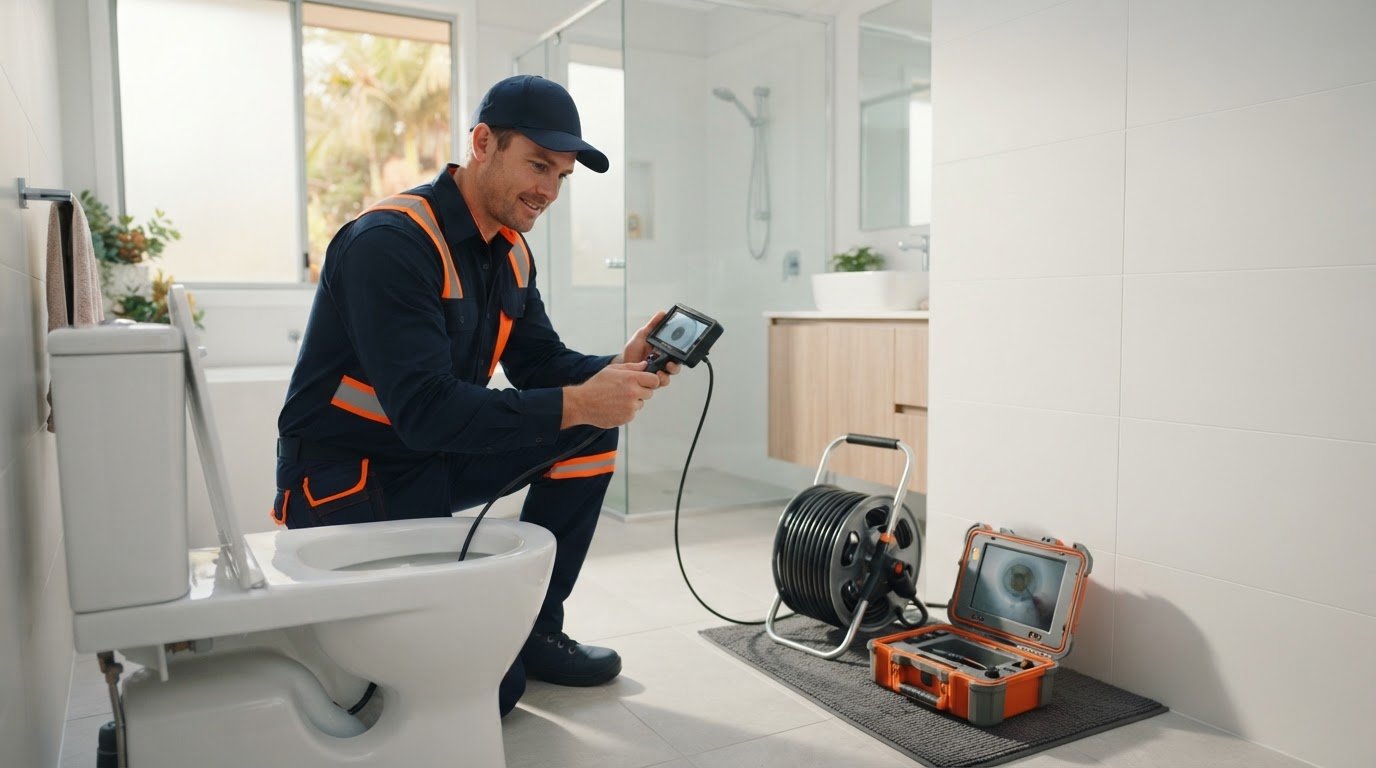
If the findings suggest the restriction is in a drain section that needs closer inspection, CCTV equipment can show the inside of the relevant pipe. This helps the plumber see what’s happening beyond the toilet and decide what work is appropriate. It’s a targeted diagnostic option, not an automatic part of every job.
High-pressure water jetting may be used to clear a blockage when it suits the location and the assessment findings. Jetting clears a blockage, while CCTV inspection helps view the drain. One method doesn’t replace the other in every situation. The plumber should explain why a particular method is appropriate before work begins. For information about the wider plumbing profession, see the Institute of Plumbing Australia.
CQR Plumbing’s drainage work can include CCTV inspection and high-pressure water jetting, with the method chosen to suit the findings. For recurring blockages or symptoms beyond the toilet, its blocked-drain repairs address wider drainage issues. You can request a plumbing assessment. This approach to blocked toilet repairs Rockhampton helps match the repair to the likely location instead of treating every blockage the same way.
DIY checks or professional blocked toilet repairs in Rockhampton?
You can safely observe what’s happening, but avoid trying to force a blockage through. Check whether the bowl’s water level settles and whether the basin, shower or other toilets are draining normally. If flushing could make the bowl rise, leave the toilet out of use. These checks help you describe the issue; they don’t locate or clear a restriction in the pipework.
Safe observation
Watch the water level without flushing again. Note whether other fixtures are affected, and keep the toilet unused if the bowl is slow to drain.
Arrange an assessment if the toilet overflows, the blockage returns, or several fixtures are backing up or draining poorly.
Work for a licensed plumber
Clearing blocked pipework and checking connected drainage require the right assessment and equipment. Don’t dismantle plumbing or force tools into the toilet.
What can you safely check before calling?
Look for clues without adding more water. Has the level in the bowl settled? Are other fixtures behaving normally? Keep people away if water has escaped, and move belongings only if you can do so safely. Don’t touch contaminated water. If it’s spreading, limit access rather than trying to clean it up while the source is unresolved.
When should a licensed plumber take over?
Leave the job to a licensed plumber if the toilet has overflowed, the blockage keeps returning or other fixtures are affected. Don’t dismantle the pan or connected pipework, and don’t use forceful improvised tools that could crack the toilet or damage its fittings. CQR Plumbing provides toilet servicing and blocked-drain repairs.
A plunger may help with a simple obstruction close to the toilet, but it won’t necessarily reach or clear a restriction further along the drain. If the toilet improves briefly and blocks again, repeated plunging can hide a deeper issue without fixing its cause. Stop if the water level rises, the blockage persists or you’re unsure whether the toilet is safe to use.
For blocked toilet repairs Rockhampton, share what you’ve observed and leave the toilet unused if further flushing could cause an overflow. That gives the plumber a useful starting point for assessing the problem and choosing a suitable repair, rather than relying on repeated DIY attempts.
What to expect from a blocked toilet repair visit in Rockhampton
A repair visit follows a clear sequence: you describe the symptoms, the plumber assesses the site, explains the proposed work, then completes and checks the appropriate repair. The findings guide the method. A blockage close to the toilet may need a different approach from a restriction further along connected drainage.
- Describe the symptoms. Explain what changed, when it began and whether the problem has happened before. Mention any other fixtures that are draining poorly or backing up.
- Assess the site. The licensed plumber checks the toilet and relevant drainage, taking account of your observations and what can be seen or tested on site. Access to the affected toilet and nearby fixtures can help the assessment.
- Explain the scope. Before starting, the plumber describes the observed issue and the proposed work. If further investigation is needed, they explain how it may help locate the restriction.
- Complete and check the work. Once the agreed work is done, the plumber checks the relevant flow or operation and explains any findings that affect what happens next.
What information helps the plumber assess the problem?
Think back to when the toilet first slowed, overflowed or stopped flushing properly. Note whether other toilets, sinks or showers have shown similar symptoms, and whether the blockage returned after an earlier repair. You don’t need to work out the cause yourself. A clear account of what happened helps the plumber compare your observations with the conditions at the property.
How are findings and repair scope explained?
The plumber should describe what the assessment has revealed and outline the proposed work before starting. A clear scope of work is a detailed description of the tasks to be performed, given to you before work begins. If the blockage location or access changes what’s needed, the repair plan can be explained in light of those findings.
Disruption and time on site vary. Access to the affected drainage, the location of the blockage and the work required all influence the visit. A straightforward restriction near the toilet may call for a different process from a problem that needs further drainage investigation. The plumber’s assessment gives you a more realistic idea of what the work involves than a fixed timeframe before the cause is known.
CQR Plumbing provides Rockhampton plumbing services for local toilet and drainage issues. For blocked toilet repairs Rockhampton residents can expect an explanation of the findings and proposed scope before suitable work begins.
Arrange blocked toilet repairs with CQR Plumbing in Rockhampton
If the toilet remains blocked after being left unused, or the same symptoms return, arrange an assessment rather than continuing to flush or force a DIY fix. A recurring blockage can have a different cause from a one-off problem, and the right repair depends on what the plumber finds at the property.
CQR Plumbing provides plumbing and drainage services for Rockhampton customers, including toilet servicing and blocked-drain repairs. An assessment helps establish whether the issue is limited to the toilet or involves connected drainage, so the proposed work can match the problem. The plumber explains the findings and work required before starting.
Why choose a local Rockhampton plumbing team?
Local service matters for household repairs as well as work at commercial and managed properties. CQR Plumbing serves Rockhampton and nearby Central Queensland communities, including Yeppoon, the Capricorn Coast, Gracemere and Emu Park. CQR Plumbing provides 24/7 emergency plumbing response. If an overflow or affected fixtures make the situation urgent, describe that clearly when requesting help.
For blocked toilet repairs Rockhampton residents can expect the plumber to consider the symptoms, inspect relevant drainage and explain the repair approach. The scope may differ depending on whether the blockage appears close to the toilet or further along the drain. Clear communication helps you understand the assessment and proposed work, without assuming every blockage needs the same equipment or method.
What should you include in your service request?
A useful request gives the plumber a clear picture before the visit. Include:
- What the toilet is doing, such as flushing slowly, not clearing or rising towards the rim.
- Whether the problem has recurred and whether there has been an overflow.
- Whether nearby toilets, sinks or showers are also draining poorly or backing up.
- Any access details that could help the plumber reach the toilet or relevant drainage points.
If water has spilled, say so and keep the affected area clear. If the toilet is still blocked, leave it out of use and mention that in your request. These details help the plumber understand the issue, but the on-site assessment determines the repair plan. You don’t need to identify the cause yourself.
Describe the symptoms when requesting an assessment. CQR Plumbing will explain the scope of the proposed work before it begins.
Get a clear next step for your toilet
A toilet problem can be disruptive, but your next step needn’t be guesswork. If the fault returns or you’re unsure whether the toilet is safe to use, an assessment can establish what’s happening before another flush adds to the problem. For blocked toilet repairs Rockhampton, share the pattern you’ve noticed and let the findings guide the repair.
After the work, ask what caused the restriction and whether any practical steps may help reduce the chance of another blockage. Advice should relate to the issue found at your property; there isn’t one preventative measure that suits every drain. Knowing whether the issue was limited to the toilet or involved connected drainage gives you a useful basis for what to watch for next.
Include any recurrence or changes you’ve noticed in your request. That context helps CQR Plumbing assess the issue and explain the proposed work, so you can decide on the next step with a clearer picture.
Frequently Asked Questions
Can I keep flushing a blocked toilet?
No. If the bowl is slow to empty or the water level is rising, stop flushing. Another flush adds water without resolving the restriction and may cause an overflow. Keep the toilet out of use and let the water settle naturally. If you share the bathroom, tell others not to use it until the problem has been assessed, particularly if the bowl is close to spilling.
What usually causes a toilet to block?
Common causes include too much toilet paper at once, wipes, sanitary products or other items that shouldn’t be flushed. These materials can catch in the toilet’s internal passage or connected pipework and restrict flow. Even products labelled flushable may not break down like toilet paper. If a blockage follows an object being dropped into the pan, tell the plumber what it was and whether it may still be there.
How do I know if the blockage is in the toilet or the main drain?
You can’t confirm the location from one symptom alone. If other toilets and fixtures work normally, the restriction may be closer to the affected toilet. Similar drainage problems elsewhere can point to a shared drain. A licensed plumber considers these clues alongside an on-site assessment before deciding where to investigate. Don’t lift covers or try to inspect underground drainage yourself.
Is it safe to use chemical drain cleaner in a blocked toilet?
It’s best not to pour chemical drain cleaner into a blocked toilet. The product may not reach or clear the restriction, and liquid left in the bowl can create a splash or contact hazard during later work. Don’t mix drain products or add another chemical if one has already been used. Tell the plumber what product you used so they can take it into account.
What happens during a blocked toilet repair?
The plumber asks about the fault, examines the toilet and checks relevant drainage to work out where the restriction may be. Depending on the findings, clearing the blockage may be enough, or further investigation may be appropriate. Once the work is complete, the plumber checks how the toilet is operating and explains what they found. Access to the affected area can influence how the job proceeds.
Can a blocked toilet affect other drains in the house?
Yes. If the toilet and a nearby shower, sink or another toilet share drainage, a restriction may affect more than one fixture. You might notice slow drainage, gurgling or water backing up. Don’t run taps or flush other toilets to test the system if several fixtures are already showing symptoms. Tell the plumber which fixtures are affected and what you observed.
Does CQR Plumbing provide blocked toilet repairs in Rockhampton?
Yes. CQR Plumbing assesses blocked toilets and connected drainage to determine where the restriction may be. If you’re arranging access on behalf of a tenant or property manager, include the site contact’s details and any entry instructions with your request. For blocked toilet repairs Rockhampton customers can describe the fault and request an assessment through CQR Plumbing.
Disclaimer
The information in this article is provided for general educational purposes only and should not be relied upon as professional plumbing, gasfitting, or legal advice. Every property and plumbing system is different, and the information may not be applicable to your specific circumstances. CQR Plumbing recommends that all plumbing and gasfitting work be inspected and carried out by a licensed professional in accordance with applicable Australian Standards and Queensland regulations. If you require advice specific to your property, please contact CQR Plumbing for an assessment.