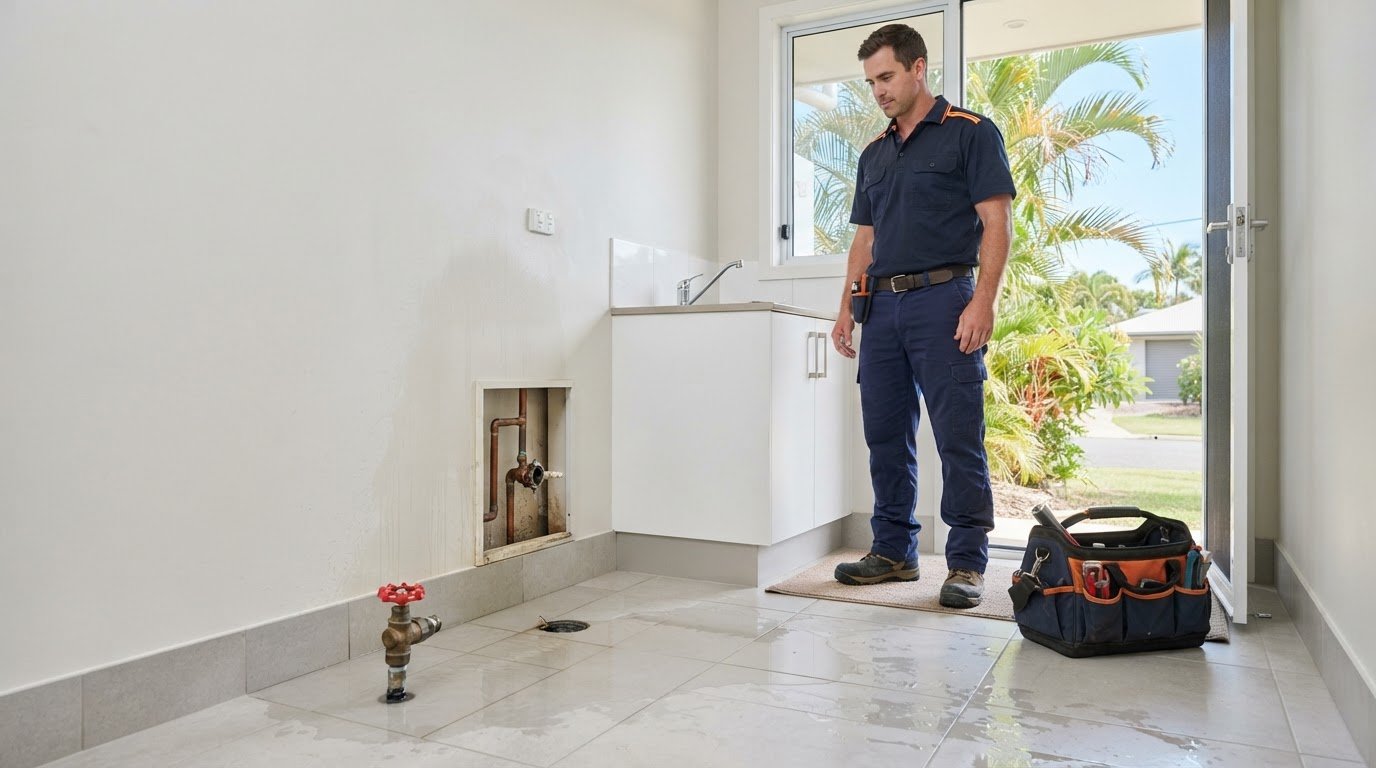
Burst Pipe Emergency in Yeppoon: What to Do Now
What if the fastest way to limit damage isn’t finding the leak, but stopping the water first? A burst pipe emergency Yeppoon households face can spread quickly, especially when the source is hidden or the isolation valve isn’t obvious. Shut off the property’s main water supply if you can do so safely, and keep people clear of wet areas near electrical equipment.
It’s understandable to worry about property damage, electrical hazards and getting help. Once the immediate risk is under control, a licensed plumber can trace the leak, assess the affected pipework and explain suitable repair options before work begins.
This guide covers what to do first, where to look for the water isolation valve and when to leave the area alone. You’ll also learn what a plumber may inspect, how the repair process works and what to expect when arranging emergency plumbing in Yeppoon. CQR Plumbing is QBCC Licensed, and all work is completed to Australian Standards by fully licensed QBCC plumbers.
Key Takeaways
- Pooling water, new damp patches or water continuing after fixtures are off can signal an urgent leak rather than a minor drip.
- For a burst pipe emergency Yeppoon residents should prioritise people’s safety, then use the property’s water isolation valve only if it’s safe to reach.
- A licensed plumber assesses the symptoms, visible water and accessible pipework to locate the affected section and check whether isolation has reduced the flow.
- The repair approach depends on whether the damaged pipe is accessible or concealed, and whether the damage extends beyond the visible area.
- CQR Plumbing provides 24/7 emergency plumbing in Yeppoon, with work completed to Australian Standards by fully licensed QBCC plumbers.
Burst pipe in Yeppoon: how to recognise an urgent plumbing emergency
A sudden, uncontrolled release of water is different from a small drip beneath a tap. A fitting that drips slowly into a container still needs attention, but water spreading across a floor, appearing on a wall or continuing when fixtures are off can point to a more serious leak. You don’t need to identify the exact fault before treating active, spreading water as urgent.
A burst-pipe emergency is an uncontrolled leak from a damaged water pipe that’s releasing enough water to threaten people, property or nearby electrical equipment. Water can travel under flooring or through wall cavities before it becomes visible, so the wettest spot may not be beside the failed section. The general effects of water entering a building are outlined in this overview of water damage.
Look for pooling water, flooring that feels wet underfoot, fresh damp patches, bubbling paint or new staining. A steady hiss, rushing or trickling sound when taps and appliances are off can also be a clue. These signs help describe what’s happening, but they don’t confirm where the pipe runs or which section has failed.
Which signs suggest a pipe has burst?
Notice whether water is still appearing or the affected area is growing. For example, a damp plaster patch may show below a bathroom, while the leak is in pipework behind the wall or beneath the floor. Water can also run along a surface from another location. Don’t open walls, pull apart fittings or disturb pipework to investigate. That can cause further damage and expose you to hazards.
If you can do so without entering a wet or unsafe area, note which fixtures were in use and whether the water flow changes when they’re turned off. That information can help a plumber assess the symptoms. Avoid walking through standing water to reach a suspected leak, particularly if you can’t tell whether electrical equipment or wiring is affected.
When should you treat a leak as urgent?
Focus on the behaviour and location of the water. Uncontrolled flow, water spreading beyond its original area, or water close to power points, appliances or electrical equipment calls for urgent action. Keep children, visitors and pets away from wet or unsafe areas. Don’t touch electrical items or switches where there’s a risk of contact with water. Arrange emergency plumbing once you’re clear of immediate danger.
A small, contained drip is different from a leak that worsens or soaks nearby surfaces. Still, a contained leak can develop, and hidden dampness may signal a problem even when no pipe is visible. In a burst pipe emergency Yeppoon residents should describe what they can see and hear without trying to expose the pipe. CQR Plumbing provides Yeppoon plumbing services. The next section explains safe first actions when water is actively escaping.
Burst Pipe Emergency in Yeppoon: Safe Steps to Take
A burst pipe emergency Yeppoon residents are dealing with calls for a calm, safety-first response. Don’t rush towards the leak or try to reach a valve through standing water. First make sure people can move away from the affected area safely. Then reduce the water flow only if the isolation valve is accessible without putting anyone at risk. Contact a plumber when it’s safe to do so.
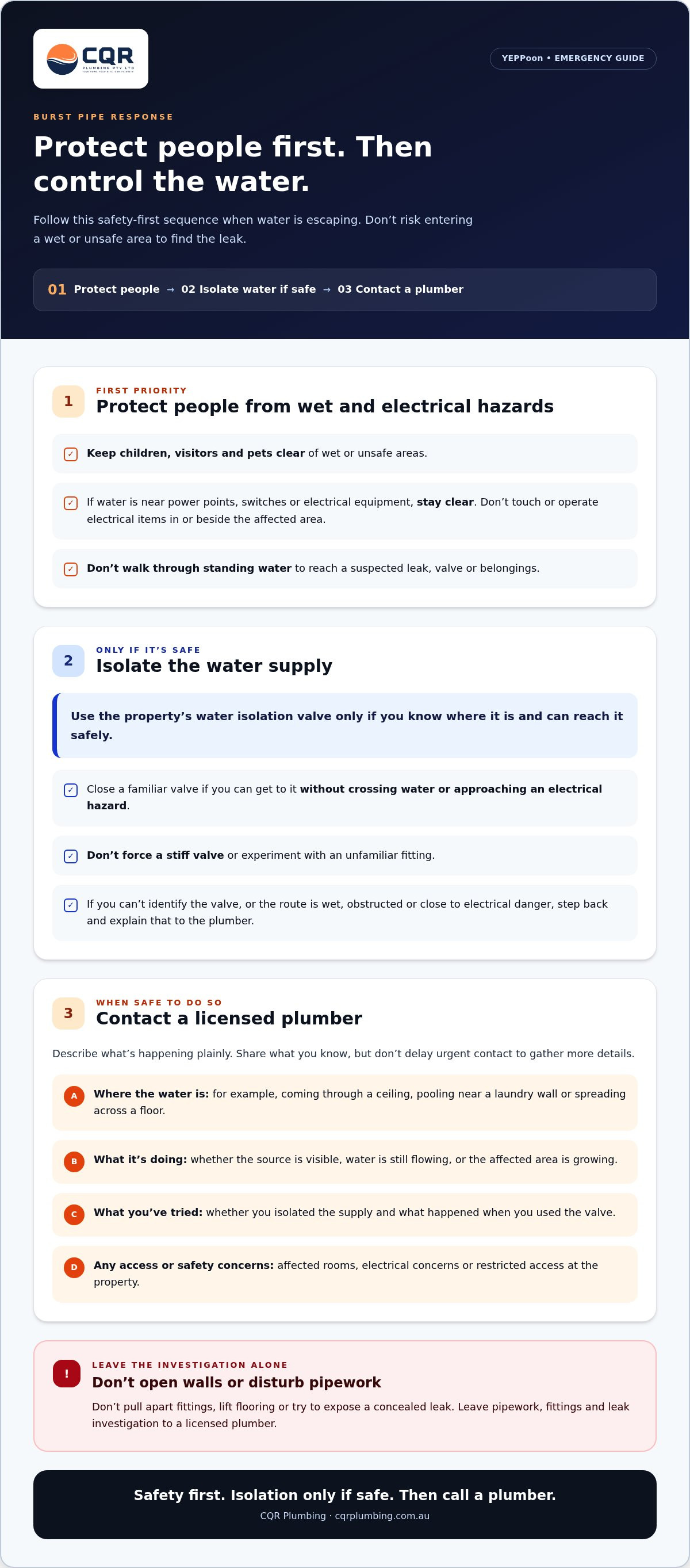
Remember this sequence: protect people, isolate the water if safe, then contact a plumber. These are immediate steps to control risk, not a repair. Leave pipework, fittings and investigation of concealed leaks to a licensed plumber.
- Protect people. Keep children, visitors and pets out of wet or unsafe areas. If water is near electrical equipment, power points or switches, stay clear. Don’t touch or operate electrical equipment in or beside the affected area.
- Isolate the water if safe. Use the property’s water isolation valve only if you know where it is and can reach it without crossing water or approaching an electrical hazard.
- Contact a plumber. Explain what’s happening and whether you’ve been able to shut off the supply. Don’t delay the call to search for the leak or move belongings.
How can you limit water flow safely?
If the valve is familiar and safely accessible, close it to stop the property’s water supply. Don’t force a stiff valve or experiment with an unfamiliar fitting. If you can’t identify the valve, or the route to it is wet, obstructed or close to electrical danger, step back and tell the plumber when you call. Include whether you tried the valve and what happened.
Move furniture, rugs or other belongings only if they’re easy to reach from a dry, safe area. Don’t walk through pooling water to rescue possessions, lift wet items near electrical equipment or pull up flooring to find the pipe. Your safety comes first, and disturbing building materials can make it harder to assess where the water has travelled.
What information should you give the emergency plumber?
Give the property’s Yeppoon location and describe the leak plainly. For example, say water is coming through a ceiling, pooling near a laundry wall or still flowing despite the taps being off. Say whether the source is visible, whether you’ve isolated the supply and which rooms are affected. Mention electrical concerns, restricted access or anything that may help the plumber approach the property safely. Share what you know, but don’t delay urgent contact to gather more details.
CQR Plumbing provides emergency plumbing for urgent burst-pipe problems. If the immediate danger is controlled and you need to arrange follow-up work, you can request plumbing assistance. A plumber can assess the affected pipework and explain the proposed work before starting.
How a licensed plumber diagnoses a burst pipe
Once the immediate situation is under control, the plumber’s first task is to work out where the water is escaping and which section of pipework is affected. The assessment starts with what you reported, what’s visible and what can be reached safely. A damp ceiling or wet patch gives useful clues, but it doesn’t prove the pipe is directly behind that spot.
Diagnosis identifies the leak source and affected pipework before the plumber sets out suitable repair options. Water can travel along a floor, inside a wall or beneath a fixture before it emerges. The location of the damage and the condition of nearby pipework help determine the next steps.
What does the plumber assess first?
The plumber considers the reported symptoms, visible water, accessible pipework and safe access to the suspected leak. They’ll check whether the flow has reduced after the water supply was isolated and ask which rooms or fixtures were affected. Your observations, such as when the leak began or whether water continued after taps were off, can help narrow down the likely area.
The plumber compares the signs rather than relying on one damp patch alone. For example, water appearing below a bathroom may have travelled from pipework elsewhere in the room or building. They’ll assess what can be seen and reached, then explain whether the source is clear or needs further investigation.
During a burst pipe emergency Yeppoon residents may notice that a leak’s visible effects don’t match its source. A wet floor beside a kitchen cabinet, for instance, could come from pipework behind the cabinet rather than the nearest tap. The reported location, water pattern and accessible connections help the plumber distinguish the likely fault from nearby fixtures that may be unaffected.
The assessment also considers whether water is still escaping and whether the suspected section can be safely accessed. If the water has stopped after isolation, that’s useful information, but it doesn’t identify the failed pipe by itself. If water continues, the plumber takes that into account when assessing which parts of the system may be involved.
Why does the repair scope depend on the pipe and damage?
An exposed pipe with a clearly visible damaged section is different from pipework concealed behind a wall, under flooring or within a ceiling. The plumber needs to assess the affected section and surrounding pipework before deciding what work is appropriate. Hidden damage may need further assessment, so the full scope might not be clear from the first visible sign alone.
The extent of water impact also informs the work discussed with you. CQR Plumbing explains a clear scope of work before starting, so you understand what the proposed repair covers. If access to concealed pipework reveals that the affected area differs from what was initially visible, the plumber can explain the findings and any further work to be discussed.
This step-by-step assessment bases the repair on the actual condition of the pipework, not assumptions about the leak’s location. CQR Plumbing provides emergency plumbing for urgent burst-pipe repairs, with clear communication about the diagnosis and proposed work.
Burst pipe repair options and what happens after isolation
Once the water is isolated and the affected pipework inspected, the plumber can explain which repair approach suits the location and condition of the damage. A visible break on accessible pipework may allow the work to focus on that section. A leak behind a wall, beneath flooring or in a ceiling can require further access and assessment before the full scope is clear.
A wet patch shows where water has appeared, but not necessarily how far it has travelled or whether nearby pipework is affected. The repair plan should follow the inspection rather than assume every leak needs the same fix.
How is the repair approach decided?
The plumber considers the pipe’s condition, the position of the damaged area and how safely it can be reached. If the damaged section is exposed, the repair may be limited to that area. If the pipe is concealed or damage extends beyond the visible section, further access or work may need to be discussed.
Replacing more pipework isn’t automatic, and a temporary repair isn’t suitable in every situation. The appropriate option depends on what the inspection reveals. The plumber can explain what’s known, what remains hidden and how those details affect the proposed work.
Water can affect nearby building materials without making the full extent obvious. Plumbing repairs address the leak and affected pipework. Drying, cleaning or repairing water-damaged walls, flooring and belongings are separate restoration tasks unless the agreed scope explicitly includes them.
What should you expect before work begins?
CQR Plumbing explains the issue and the clear scope of work before starting. The scope sets out the proposed plumbing tasks, such as repairing an accessible damaged section or carrying out further work to reach concealed pipework. You can ask for the steps and limits to be explained so you understand the work before it proceeds.
After the repair, the plumber can check the repaired section as the water supply is restored and look for signs of continued leakage. This helps assess the repaired area, but doesn’t establish the condition of concealed pipework that wasn’t inspected. If further signs appear, report them so the affected area can be considered.
Each repair is guided by the inspection findings and the work discussed with you.
Arrange burst pipe emergency plumbing in Yeppoon
Once the immediate risk is under control, arrange local plumbing help. CQR Plumbing provides 24/7 emergency plumbing in Yeppoon and surrounding Central Queensland regions, including Rockhampton, Gracemere and Emu Park. When you get in touch, describe where the water is appearing and whether you’ve been able to isolate the supply. This gives the plumber a clear starting point without assuming a particular arrival time.
For a burst pipe emergency Yeppoon residents can expect clear communication about the reported issue and proposed work. After assessing the pipework, the plumber explains the scope before starting so you understand what’s involved.
What to expect from CQR Plumbing in Yeppoon
The first conversation helps clarify the symptoms and any access concerns. After assessing the pipework, the plumber can explain what they’ve found and what repair work is proposed. You’ll receive a clear scope of work before work begins, so you can make an informed decision.
Service is available in Yeppoon and surrounding Central Queensland regions, including Rockhampton, Gracemere and Emu Park. The repair plan depends on the pipe’s location, condition and access. If the inspection reveals that the affected area differs from what was first visible, the plumber can discuss the findings and any changes to the proposed work. Arrival times and repair durations depend on the situation.
For urgent plumbing support, CQR Plumbing’s emergency plumbing service is available around the clock. To arrange help, share the property location, where water is showing and whether you’ve isolated the supply. Mention electrical concerns or access issues, but don’t put yourself at risk to gather details.
How to request emergency plumbing help
Call 0448 517 773 or submit the online request form. Explain what you can see, which areas are affected and whether the leak’s source is visible. If you’ve safely shut off the water, say so. If you couldn’t reach or identify the valve, let the plumber know. These details help clarify the situation without asking you to diagnose the fault.
After the initial discussion, the plumber can assess the pipework and explain the proposed scope before starting. Keep people away from unsafe areas while arranging assistance.
Take the next step with confidence
Once the immediate leak has been dealt with, consider the longer-term condition of the pipework around the repair. Ask what the inspection showed and whether there are signs that other sections may need attention. That conversation can help you decide whether preventative maintenance is sensible, rather than waiting for another leak to reveal a possible issue.
A burst pipe emergency Yeppoon property owners face can be unsettling, but you don’t need to diagnose the plumbing yourself. Share what you’ve noticed, keep clear of hazards and let the plumber assess the affected pipework. Clear information helps establish a practical next step.
If water is still escaping or you’re ready to arrange an assessment, send through the details of the issue.
With the right information and a careful assessment, you can move from uncertainty towards a clear plan for the property.
Frequently Asked Questions
Can I turn off the water if I think a pipe has burst?
You can close the property’s water isolation valve if you recognise it and can operate it safely. If it’s stiff, unfamiliar or difficult to turn, don’t force it. Note whether the water stopped, slowed or continued, as that can help the plumber understand the situation. Tell CQR Plumbing what happened when arranging emergency plumbing, including whether you turned the valve or left it untouched.
What are the signs of a burst water pipe behind a wall?
A new stain, peeling paint or a persistent water sound can point to a possible hidden leak, but won’t confirm where a pipe runs. Note when you first noticed the change and whether it has spread. That timeline can help the plumber assess the symptoms. Similar marks may have other causes, so avoid cutting into a wall or removing a fitting to check.
Is water near an electrical fitting dangerous?
Water close to an electrical fitting should be treated as a safety concern. Don’t touch the fitting, nearby switches or appliances, and don’t try to test whether they still work. Keep people out of the affected area and tell the plumber which fitting is involved and where the water is visible. Leave any electrical assessment or work to an appropriately qualified professional. Focus your report on the location and what you’ve observed.
What should I do if I cannot find the water isolation valve?
Don’t search through an area where water is spreading or access is unsafe. Valve locations vary with property layout, so there isn’t one position that applies to every home. Let the plumber know the valve hasn’t been located, then describe where the water is coming from and whether its flow is changing. For emergency plumbing in Yeppoon, call CQR Plumbing on 0448 517 773.
Can tenants arrange a burst pipe repair in Yeppoon?
Tenants can promptly notify their property manager or landlord and provide clear details about the problem. Describe which room is affected, where water is appearing and whether the flow has changed. If you arrange immediate plumbing help, give the property address and explain any steps already taken. Keep a record of who you notified and when, so the owner or manager has a clear account of the report.
Should I document water damage after a burst pipe?
Yes, if documenting it is safe and won’t delay urgent action. Photos from a dry, accessible area can show the visible extent of the impact. Brief notes can record which rooms or belongings are affected and when you noticed the damage. Share this information with the property owner or manager when discussing next steps. Don’t move heavy or wet items just to photograph what’s underneath them.
Disclaimer
The information in this article is provided for general educational purposes only and should not be relied upon as professional plumbing, gasfitting, or legal advice. Every property and plumbing system is different, and the information may not be applicable to your specific circumstances. CQR Plumbing recommends that all plumbing and gasfitting work be inspected and carried out by a licensed professional in accordance with applicable Australian Standards and Queensland regulations. If you require advice specific to your property, please contact CQR Plumbing for an assessment.