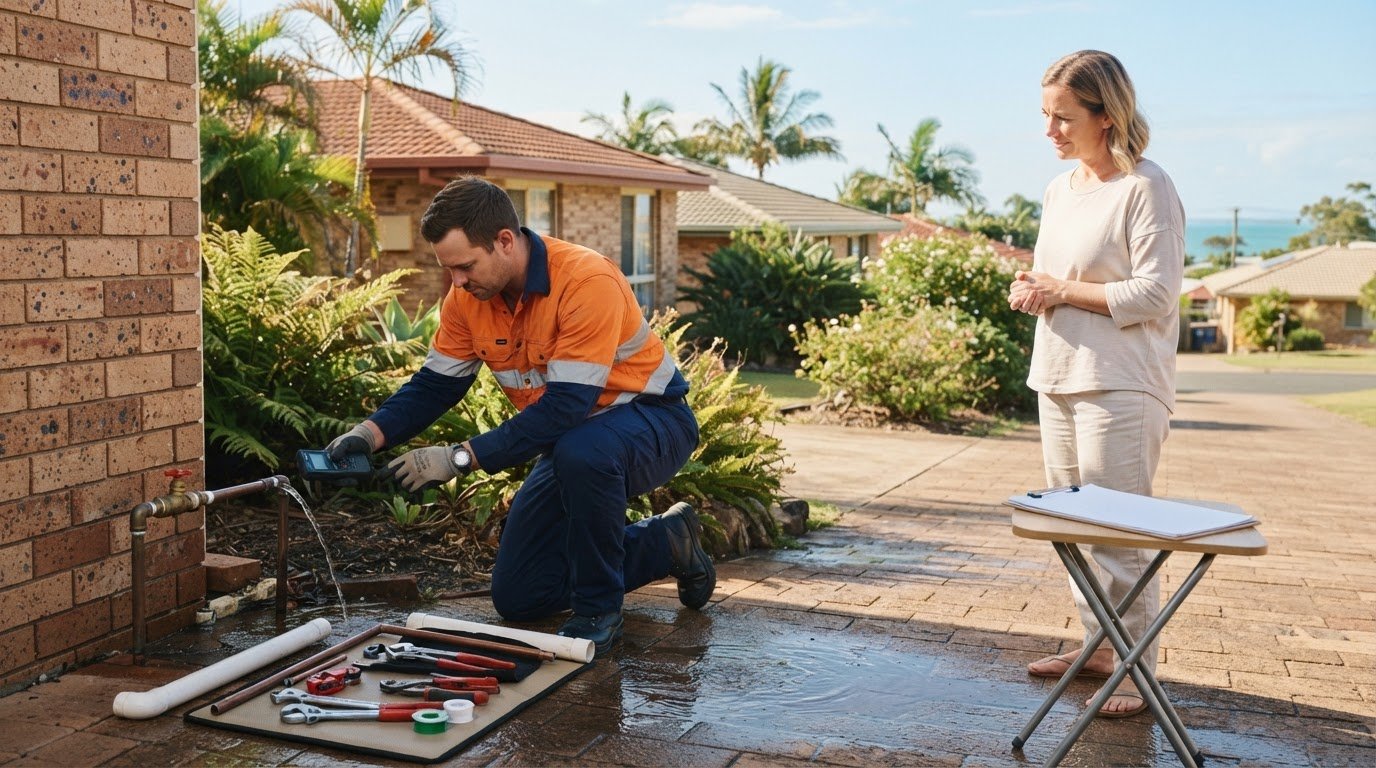
Burst pipe repair cost in Yeppoon and insurance cover
Home insurance may cover damage from a burst pipe, but it may not cover problems caused by neglect. The cost to fix a burst pipe in Yeppoon depends on where the pipe failed, how accessible it is and how far the damage has spread. Your policy wording also matters, particularly when distinguishing the plumbing repair from damage to walls, floors or belongings.
A burst pipe is stressful enough without uncertainty about the repair or an insurance claim. It’s reasonable to want a clear explanation of what needs fixing, what the estimate includes and what information your insurer may need.
This article explains what affects a burst-pipe repair, how to read your policy and what to look for in a written estimate. It also covers how a concealed leak can affect the work and what to document while arranging a repair.
Key Takeaways
- Shut off the water supply if you can do so safely, then note where the leak is and what it may have affected.
- Insurance cover can depend on the cause of the leak and your policy wording, so keep records of the damage and repair work.
- Access affects the repair scope: a visible leak is different from a pipe hidden behind a wall or beneath a slab.
- Read the written estimate for a clear scope of work, including leak detection, access, repair and any reinstatement.
- For plumbing issues involving hot water systems, taps or toilets, CQR Plumbing can explain the work and the repair options.
How Much Does Burst or Leaking Pipe Repair Cost in Australia?
In Yeppoon, the work needed for a burst or leaking pipe depends on the fault and the repair method. First, shut off the water safely and limit further damage. Then have the damaged section assessed before deciding whether repair or replacement is appropriate.
Local homes have different pipe materials and layouts, so the same visible symptom can call for different work. Plumbing services in Yeppoon can assess the fault and explain the proposed repair steps.
Repair and Clean-up Work
The work may involve isolating the water supply, repairing the damaged pipe and dealing with water around the affected area. These steps matter because continuing water flow can spread into cupboards, flooring and nearby rooms.
If a pipe under a sink splits, turn off its isolation valve if it is accessible and safe to do so. Move belongings away and use towels to contain the water. A plumber can inspect the pipe and fittings, complete the repair and check that the water supply is functioning properly. Drying and restoring damaged surfaces are separate from plumbing work.
Factors That Shape the Repair
The pipe material, length of damage and location of the fault all affect the work. Copper, PVC and galvanised steel have different characteristics, so the repair method needs to suit the existing pipework.
A failed connection may need a different repair from a split in the pipe itself. The plumber will also consider the condition of nearby fittings and whether the damage is limited to one section. In an older home, deterioration around the break can affect whether a local repair or broader replacement is the practical option.
Localised and Broader Repairs
A localised repair addresses a specific fault, such as a damaged fitting or short split in accessible pipework. It can limit disturbance when the surrounding sections remain serviceable.
Broader replacement may be appropriate if the damaged section is part of a deteriorated pipe run. The plumber should explain why the chosen option suits the pipe’s condition and identify which sections will be replaced. This helps you understand the repair plan before work begins.
DIY Repairs and Professional Help
You can safely shut off an accessible water valve and move belongings away from a leak. A temporary clamp may slow a small leak, but it won’t show the full extent of the damage or confirm that the surrounding pipe is sound.
A complex repair can make a leak worse if unsuitable materials or fittings are used. Have a licensed plumber assess and repair damaged water pipework, particularly if the leak continues or involves concealed services. Keep the work area clear and tell the plumber where water appeared and when you first noticed it.
Does home insurance cover burst pipe repairs?
Home insurance may cover sudden pipe failures, but the policy wording determines how the insurer assesses them. A sudden split in a water line differs from damage linked to long-term deterioration or neglected maintenance. Check the policy sections on escape of water, gradual damage and maintenance to understand how each situation is treated.
Your policy may distinguish between repairing the failed pipe and repairing damage to the building or belongings. For example, a burst connection in a laundry may require plumbing work, while damaged cabinetry is considered under the building cover. Read the relevant definitions rather than assuming one decision applies to every part of the claim.
If a burst happens after hours, emergency plumbing can address an active leak and limit further disruption. The immediate work may differ from the permanent repair, especially if the pipe is concealed or needs further assessment. Keep your insurer informed about urgent work and follow its instructions on approvals before arranging non-urgent repairs.
For a rental or strata property, notify the property manager or body corporate as well as the insurer. They may need to coordinate access, approvals and responsibility for shared pipework. A leak in a unit’s private bathroom, for instance, may affect a neighbouring lot or common area, so identify which parts of the property are involved.
- Check whether the policy distinguishes sudden failures from gradual deterioration.
- Find out how the policy treats the pipe repair and resulting building damage.
- Follow the insurer’s process for emergency work and any further repairs.
- For a rental or strata home, notify the responsible property contact promptly.
Insurance decisions depend on the circumstances and policy terms. A plumber’s description of the failed component can help explain whether the issue involved a sudden break, a failed fitting or deterioration along the pipe. Keep the repair report with claim correspondence, and note any insurer instructions about further work before closing an access point.
To find a licensed plumber in Yeppoon, search the Queensland Building and Construction Commission (QBCC) licence register and match the licence details to the plumber doing the work. CQR Plumbing is QBCC Licensed, and all work is completed to Australian Standards by fully licensed QBCC plumbers.
If you need to arrange plumbing work, you can request assistance with a plumbing issue.
Water damage and insurance considerations
Yes. Water damage, wall repairs and excavation are separate from repairing the failed pipe. A concealed leak may require an opening for access, followed by drying and reinstatement after the plumbing repair. The sequence matters: assess the surfaces before closing or refinishing them.
An untreated leak can keep wetting building materials even when there’s no visible puddle. Water behind a wall may soak plaster, insulation or cabinetry, while a slow leak beneath flooring can leave boards swollen or discoloured. Corrosion around a fitting can also point to ongoing deterioration. A musty smell, bubbling paint or a recurring damp patch deserves investigation.
Leak detection helps locate water escaping from concealed pipework and narrow down where access is needed. For example, a damp patch on a hallway ceiling may come from a bathroom pipe above, rather than a roof leak. Recording the suspected source and affected areas in the plumber’s report helps clarify the damage and the work that follows.
An insurer may assess the cause of a leak and the resulting damage separately. The policy wording guides how it treats the incident, including damage associated with gradual deterioration or maintenance. A report describing the failed pipe, its condition and affected building materials can help explain the findings. Avoid presenting a suspected cause as certain until it has been inspected.
- Ask the plumber to identify the failed pipe or fitting and note its condition.
- Keep a record of rooms and materials affected, including damage that appears later.
- Ask which access openings need reinstatement after the plumbing work.
- Keep drying, plumbing and building repairs clearly identified in job documents.
Excavation may be needed if a leaking pipe sits beneath a concrete slab. The work can involve reaching the pipe and restoring the opened surface after the repair. For a leak inside a wall, access and plaster reinstatement are separate tasks. Knowing which stage is plumbing and which involves building restoration helps you follow the process and discuss the work accurately with your insurer.
If a leak appears while you’re away on holiday, the time between discovery and inspection can affect how far moisture has travelled. Tell the plumber when the area was last known to be dry and when you first noticed the damage. That timeline, alongside the inspection findings, helps distinguish fresh water damage from older signs such as established corrosion or repeated staining.
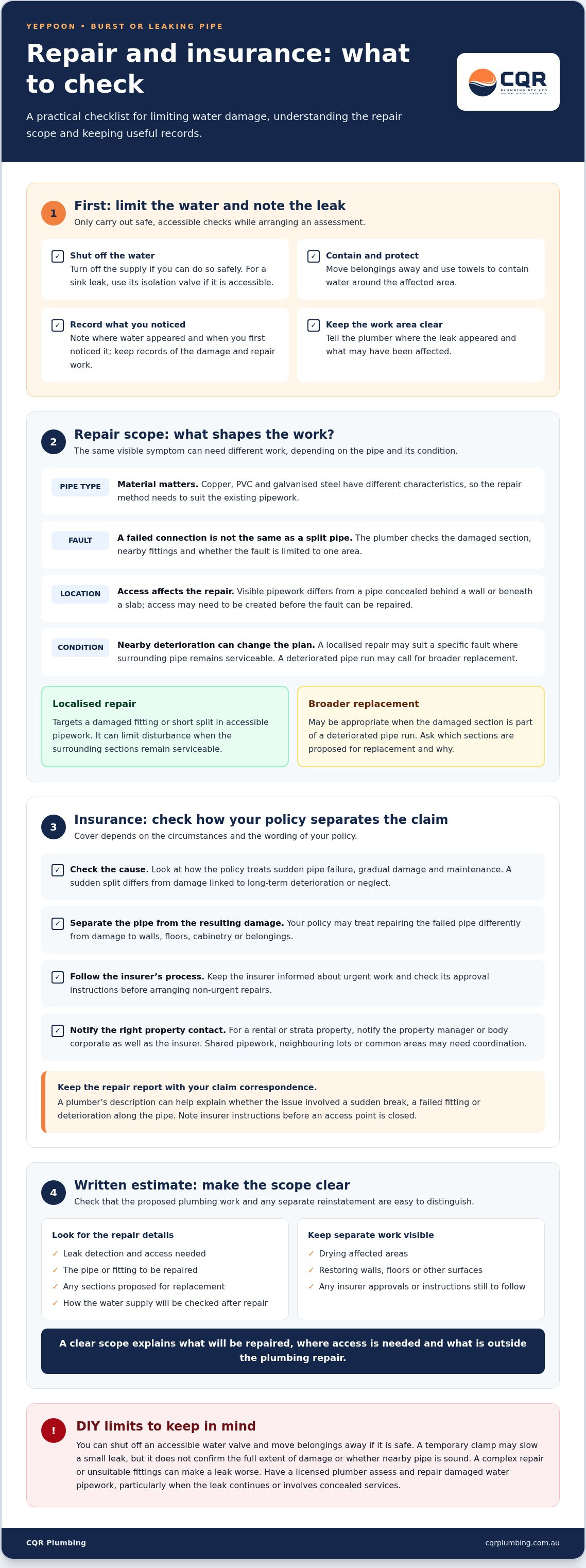
Finding the burst pipe and accessibility
A plumber locates a burst by tracing visible signs, checking the water system and narrowing down the likely pipe route. In a Yeppoon home, a damp patch may appear far from the actual leak, so the first stain isn’t always where the pipe has failed.
Start with safe observations. Note whether the water meter continues moving when taps and appliances are off, and check for damp flooring, bubbling paint or a running sound behind a wall. Don’t cut into plaster or lift flooring to investigate; hidden electrical cables and other services may be nearby. Owners can share these observations to help focus professional detection.
For exposed pipework, a visual inspection may reveal a split, corroded section or failed fitting. A concealed pressurised leak may call for acoustic detection, which listens for leak noise, or tracer gas detection to help trace escaping water. Thermal imaging can also identify temperature changes around a suspected leak. These methods help narrow the search before opening a wall or floor.
Accessibility affects the work. A pipe beneath a laundry sink is easier to reach than one behind bathroom tiles or under a concrete slab. If a wall opening is needed, its position and size affect how much material must be removed and later reinstated. Accessing a pipe under a slab may also involve breaking concrete and restoring the surface.
Repairs to pipes inside walls or under concrete slabs typically take 3 to 6 hours. That time reflects access and repair work, not necessarily drying or rebuilding affected surfaces. Ask which areas need opening, how the pipe will be reached, and what reinstatement is included in the scope.
Detection can help determine the repair method. A plumber may expose only the failed section for replacement, or recommend replacing a longer section if corrosion or damage extends along the pipe. Localised replacement limits disruption, while broader replacement can address several weak points. The visible leak and condition of nearby pipework inform that decision.
Before an inspection, clear access to the meter, hot water unit and visible pipe routes. Share photos of damp patches and note when they appeared, especially if the leak worsened while the household was away. Older galvanised steel pipework can corrode internally, so tell the plumber if you know the pipe’s approximate age or material.
Keep the affected area accessible and avoid running taps or appliances if water continues to escape. These details help the plumber trace the fault, choose an access point and explain the work before repairs begin.
Written estimates and pricing transparency
A written estimate should explain the proposed repair before work begins. For a burst pipe, it should identify the suspected fault, the access required and the tasks included. This helps you compare the proposed work with what you can see at home, such as a damp wall or leaking fitting.
Check that the scope separates the main stages. A clear document may list leak detection, pipe repair, testing and reinstatement as distinct tasks. If a concealed pipe needs access through a wall or floor, look for that work to be described separately. Ask which tasks are included and which may need further assessment.
On the Capricorn Coast, a visible leak near a sink differs from a concealed leak beneath tiled flooring. The estimate should explain why the chosen repair suits the pipe’s location and material. Replacing one damaged section, for example, differs from replacing a longer run affected by corrosion. The reason for the selected approach matters as much as the task description.
Before approving work, check these details:
- The address and the location of the reported leak.
- The fault identified, or the investigation planned if its source remains hidden.
- Labour, materials, access work, testing and reinstatement listed separately.
- Any assumptions, exclusions or further work that could change the scope.
- Who will explain and record any variation before the work proceeds.
Ask how changes will be handled if opening a wall reveals more damage. For instance, the plumber may find that corrosion extends beyond the visible split. A revised scope should explain the additional work and why it’s needed before you decide how to proceed. Keep the original estimate and any updated version together.
Make sure the document identifies the licensed plumber responsible for the work. CQR Plumbing is QBCC Licensed, and all work is completed to Australian Standards by fully licensed QBCC plumbers. You can also check the licence details through the Queensland Building and Construction Commission (QBCC).
Separate unrelated work from the burst-pipe scope. A hot water system fault, whether electric or another type, may need its own diagnosis rather than being bundled into a pipe repair without explanation. If water damage also requires wall repairs, ask for those tasks to be recorded separately. This makes the repair record easier to follow and share with an insurer.
Read the estimate before work starts, and keep a copy with photographs and claim correspondence. A written scope gives you a practical record of what was discussed, what the repair covers and what changed during the job.
CQR Plumbing: Hot water system installations
CQR Plumbing can help if a leak involves a hot water system or the system needs replacement. Its services include hot water system installations and Hot Water System Repairs, so you can have the fault assessed and understand the work required before proceeding.
A burst pipe connected to a hot water system may need attention beyond the pipe itself. Ongoing leaks, damaged connections or a system that no longer works properly can affect the repair plan. Keep the area accessible and share what you’ve noticed, including whether the leak continues when the system isn’t in use.
For other household plumbing concerns, CQR Plumbing also provides Blocked Drain Repairs and Tap and Toilet Servicing. Contact CQR Plumbing to discuss the issue at your property.
Take the next step with a clear repair plan
Use the written scope as your working record while the repair and any insurance claim proceed. Keep updated notes together, especially if you agree to further work after access reveals more damage. This gives you a clearer basis for discussing the cost to fix a burst pipe in Yeppoon with your insurer and tracking what has been completed.
If the leak is active, focus first on making the area safe and preventing further damage. For planned work, share the estimate, photographs and relevant claim details when arranging plumbing assistance. CQR Plumbing provides plumbing support across Yeppoon, Rockhampton, Gracemere, Emu Park and surrounding Central Queensland regions, including hot water system installations, Blocked Drain Repairs, and Tap and Toilet Servicing.
A well-documented repair gives you a practical starting point for your next decisions. Take them one step at a time.
Frequently Asked Questions
What You Need to Know?
Keep your repair documents, insurer correspondence and photographs together. Note when you first noticed the leak, which rooms were affected and what changed after the water was isolated. For a rental or strata property, promptly tell the property manager or body corporate so access and repair decisions can be coordinated. These records can clarify the sequence of events and the work completed.
What is the average cost to repair a burst pipe in Yeppoon, Queensland?
There’s no standard repair figure for every Yeppoon property. The work depends on the failed pipe, how easily it can be reached, and whether detection or reinstatement is needed. A visible connection beneath a basin is a different job from a leak under a tiled floor. Ask for a written scope explaining the proposed work and separating any access or restoration tasks.
How much do plumbers in Yeppoon charge for call-out fees and hourly labour?
Call-out arrangements and labour charges vary by job, so ask how attendance and work will be charged before proceeding. Clarify whether the quoted labour covers diagnosis, repair and testing, or only time on site. For example, a plumber investigating a hidden leak may need to locate the fault before defining the repair scope. A written estimate helps distinguish those stages.
What factors affect the cost of fixing a burst pipe in Yeppoon?
The main factors are pipe material, fault location, access and the extent of the damage. A split in exposed pipework may need less investigation than a leak concealed beneath concrete. The repair can also change if nearby pipework is corroded or the damaged section needs replacement rather than a local fix. Tell the plumber when the leak began and what signs you’ve noticed.
How much does emergency or after-hours burst pipe repair cost in Yeppoon?
Emergency attendance outside normal business hours can involve different call-out and labour charges from a planned daytime repair. Before work starts, ask which urgent tasks will stop the leak and which further work needs a separate estimate. If water is entering a room, move belongings only when it’s safe and record the damage. Tell your insurer urgent work is underway and keep the repair documentation.
Do Yeppoon plumbers provide fixed-price quotes or free inspections for burst pipes?
Don’t assume an inspection is free or that every burst-pipe repair can be quoted as a fixed amount before diagnosis. The plumber may need to locate a concealed fault before defining the full scope. Ask what the written estimate covers, including investigation, access, repair and testing. CQR Plumbing provides clear pricing and transparent scopes of work before proceeding, so you can understand the proposed job.
Does home insurance in Australia cover burst pipe repairs and resulting water damage?
Home insurance may cover some burst-pipe incidents and resulting damage, while problems caused by neglect may not be covered. Your policy wording determines how the claim is assessed. A sudden pipe failure and a leak left unrepaired over time, for example, may be treated differently. Notify your insurer, keep the plumber’s findings and record when you discovered the leak and what action followed.
What should you do immediately when a pipe bursts in a Yeppoon home?
First, turn off the water at the main meter or a safe, accessible isolation valve. Keep clear of wet areas near electrical fittings, then move belongings away from the leak if it’s safe. Contact a licensed plumber and explain whether water is still flowing, where you see damage and whether the pipe is exposed. Take photographs before cleanup and keep your insurer’s claim details handy.
Disclaimer
The information in this article is provided for general educational purposes only and should not be relied upon as professional plumbing, gasfitting, or legal advice. Every property and plumbing system is different, and the information may not be applicable to your specific circumstances. CQR Plumbing recommends that all plumbing and gasfitting work be inspected and carried out by a licensed professional in accordance with applicable Australian Standards and Queensland regulations. If you require advice specific to your property, please contact CQR Plumbing for an assessment.