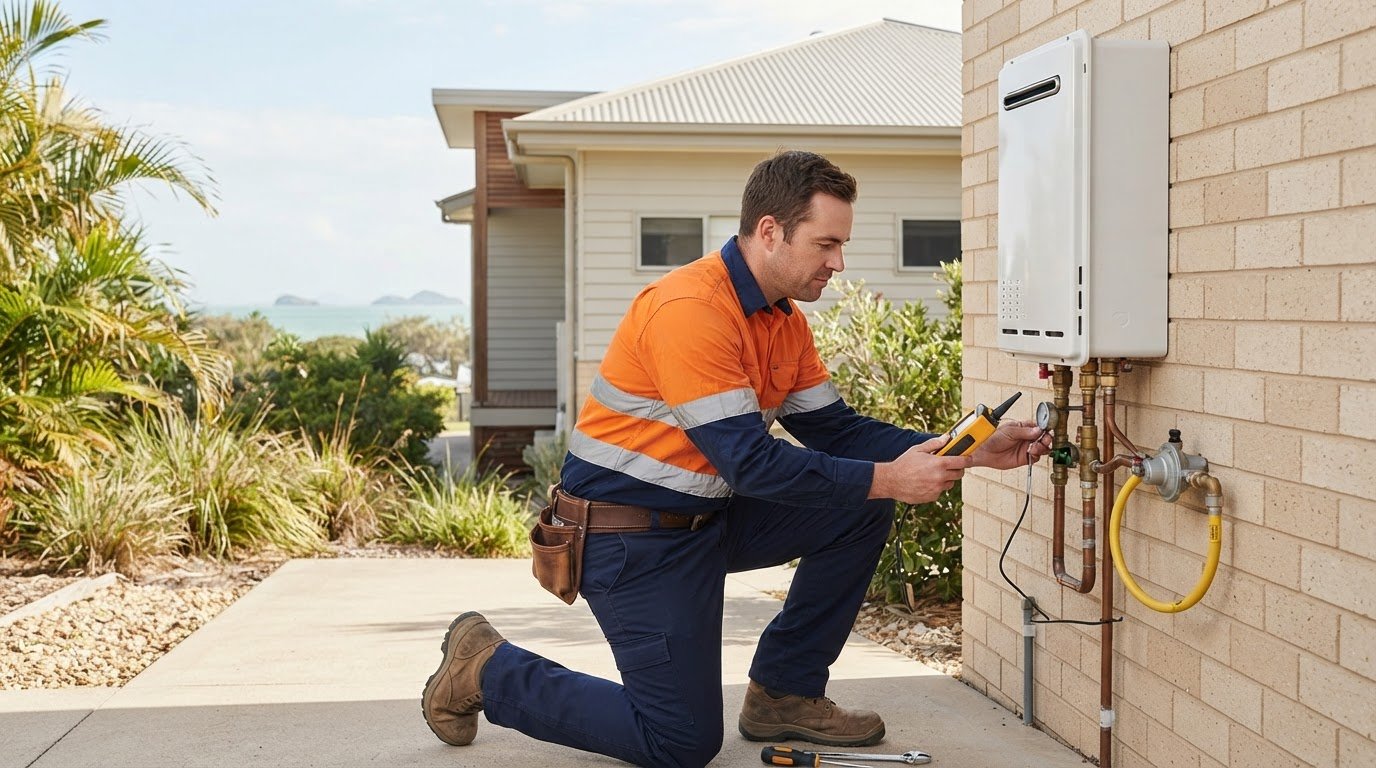
Certified gas fitter services and maintenance in Yeppoon
A certified gas fitter in Yeppoon can install gas appliances and pipework, diagnose faults and carry out maintenance. In Queensland, gas work must be completed by a licensed gas fitter, who issues a gas compliance certificate for the work, including LPG work. Knowing what the job involves helps you recognise when to arrange professional help and what to expect.
Gas appliances need careful attention. A fault may affect safe operation, while poor installation can leave connections or pipework at risk of leaks. If you’re planning an installation, unsure whether an appliance needs servicing, or comparing local gas fitting services, this guide explains the practical signs to look for and the questions that matter. It covers maintenance, installation, safety concerns and gas fitting services across Yeppoon and Rockhampton, helping you understand when a licensed professional should take over.
Key Takeaways
- Plan annual inspections and maintenance for gas appliances, and watch for changes such as unusual smells, sounds or unreliable operation.
- Gas installation and other gas work in Queensland must be carried out by a licensed gas fitter, with compliance documentation provided for the work.
- Installation planning should account for the appliance, its connections and the property’s gas supply before work begins.
- When comparing local tradies, look for clear explanations of the work and request a current certificate of currency for public liability insurance.
- Learn how local service options apply to gas appliance and hot water system needs across Yeppoon and Rockhampton.
How often should gas appliances be inspected and maintained?
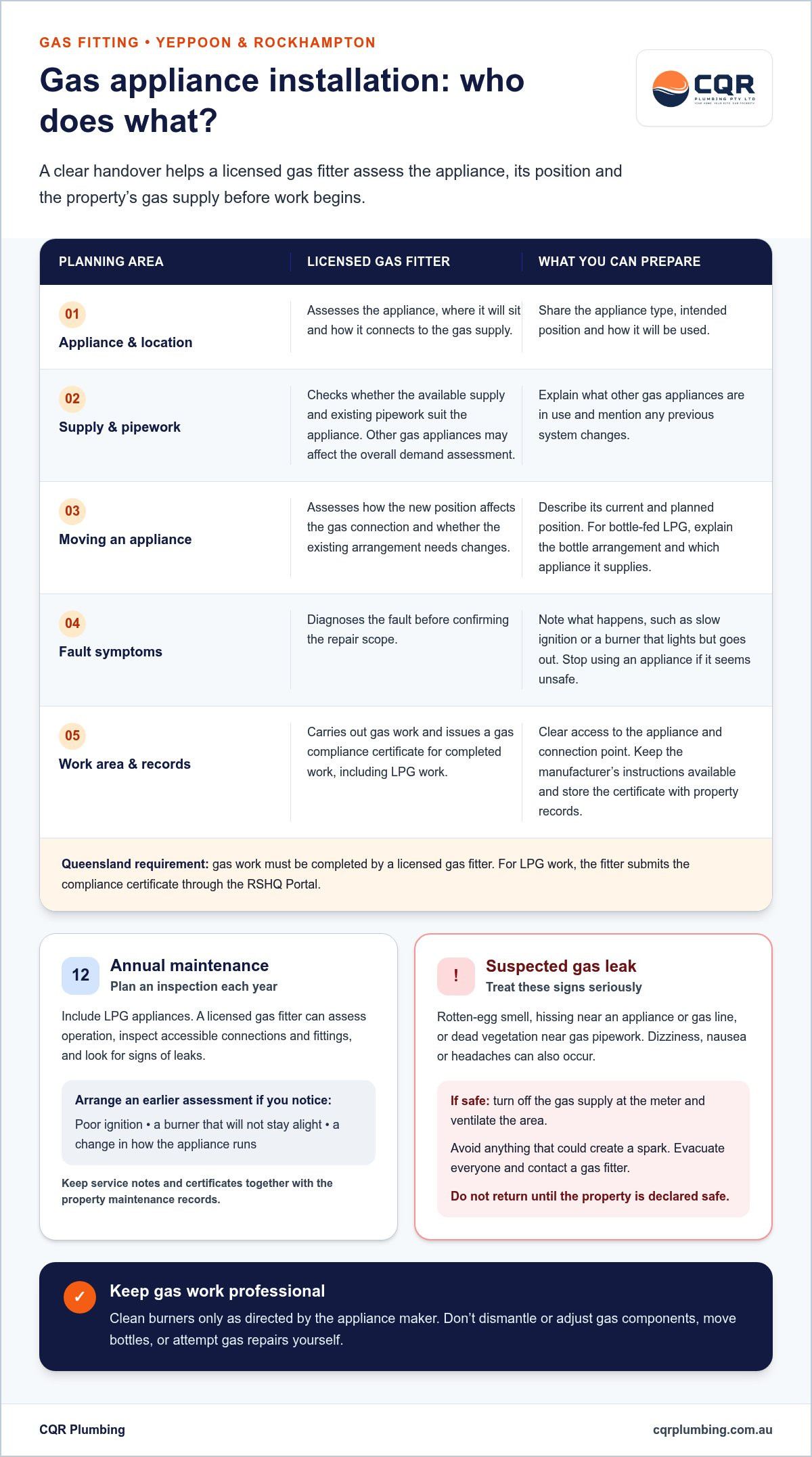
Arrange annual inspection and maintenance for gas appliances. This gives a licensed gas fitter a regular opportunity to assess how appliances operate, inspect accessible connections and fittings, and identify developing faults. Include LPG appliances in a regular maintenance plan. The supply type does not change Queensland gas compliance requirements.
A service involves more than a quick look at the burner. The fitter can assess whether the appliance operates correctly, inspect accessible connections and fittings, and check for signs of leaks. Poor ignition, a burner that will not stay alight, or a change in how an appliance runs are reasons to arrange an assessment sooner. Don’t dismantle or adjust gas components yourself.
Queensland gas work requires compliance documentation. A licensed gas fitter issues a gas compliance certificate for gas work, including work on LPG systems in Yeppoon. For LPG work, the fitter submits the certificate through the RSHQ Portal, as with reticulated gas work. The certificate records compliance for the completed work. Keep it with the appliance and property maintenance records.
This paperwork matters when a cooktop, hot water system or gas connection is installed or altered. Ask for the certificate after the work and make sure it identifies the job. If the appliance has been replaced but the property file contains only older documents, add the new certificate to the records. It helps owners and property managers track what changed and when.
For a rental or holiday home, give the property manager or caretaker a clear maintenance record. Note the appliance, service date and any repair or follow-up advised by the fitter. A holiday home may sit unused between bookings, but a quiet period doesn’t replace the annual inspection. Arrange servicing before regular occupancy if the last recorded inspection is due, and make access arrangements clear.
- Record the annual inspection date for each gas appliance.
- Store certificates and service notes together for the property.
- Arrange an earlier inspection if an appliance’s operation changes.
- Use a licensed gas fitter for gas work, not a general DIY repair.
Act promptly if you notice a rotten-egg smell, hissing near an appliance or gas line, or dead vegetation near gas pipework. Dizziness, nausea or headaches can also occur when a gas leak is suspected. If safe, turn off the gas supply at the meter, ventilate the area, avoid anything that could create a spark, and evacuate everyone. Contact a gas fitter and don’t return until the property is declared safe.
Property owners arranging maintenance in Yeppoon can find local context on the Yeppoon service area page. Keep certificates accessible for the next inspection or property handover.
Gas system and appliance installation
Gas installation work starts with understanding the appliance, its location and the property’s existing supply. These details shape the scope, including whether pipework or connections need attention. A licensed gas fitter assesses the setup before work begins instead of assuming an appliance can connect to any existing point.
For a new appliance, provide its type and intended position. The fitter can assess whether the available supply and pipework suit its requirements. If other gas appliances operate at the property, overall demand may also affect the assessment. This planning helps determine whether the existing arrangement is suitable or needs changes.
Moving an appliance can involve more than shifting it across a kitchen. Even a small change in position may affect how it connects to the gas supply. Tell the fitter where the appliance is now and where you want it moved. For bottle-fed LPG, describe the bottle arrangement and the appliance it supplies. Don’t move bottles or alter connections yourself.
For a new cooktop, heater or gas hot water system, prepare the work area and clear access to the appliance and connection point. Keep the manufacturer’s instructions available if you have them. Tell the fitter about previous system changes or recurring operating issues. This information helps clarify the work before installation starts.
Between professional visits, limit maintenance to safe, simple checks. Keep burners clear of food debris and follow the appliance maker’s cleaning instructions. Note changes such as slow ignition or a burner that fails to stay alight. Don’t remove covers, adjust fittings or attempt to repair gas components. Describe the symptoms so the fault can be assessed accurately.
A faulty appliance may need diagnosis before its repair scope is clear. Record which appliance is affected, what happens during operation and whether the issue is consistent. For instance, note if a burner lights but goes out, rather than repeatedly trying to relight or dismantle it. Stop using an appliance if its operation seems unsafe.
- Share the appliance type, location and intended use.
- Describe any planned move or change to the connection point.
- Keep appliance instructions accessible for the fitter.
- Record fault symptoms without attempting gas repairs yourself.
When arranging installation or repair work, describe the appliance and property setup. This gives the fitter a clear starting point and helps define the work before it proceeds.
Finding and comparing local tradies
When comparing gas fitters in Yeppoon, consider how clearly they understand the job and explain their approach. Look beyond availability to communication, diagnostic steps and follow-up.
Comparing local gas tradies
Describe the appliance, its location and the symptoms you’ve noticed. A useful response should reflect those details rather than offer a one-size-fits-all explanation. For example, a cooktop that clicks without lighting presents a different diagnostic picture from one burner that lights and then goes out.
Notice whether the fitter explains what they’ll inspect and how they’ll report their findings. Clear explanations help you understand the work before it starts. If the issue affects a rental or strata property, agree who will arrange access and receive updates. That keeps tenants, owners and managers informed.
Comparing communication and job planning
Before confirming a visit, explain any access limits, appliance location and relevant property arrangements. Ask how the fitter will handle a fault that differs from your initial description. A clear process for discussing findings and agreeing next steps helps keep the work focused and avoids misunderstandings.
Compare the proposed approach, not just the wording of each response. One fitter may explain the inspection sequence in detail, while another may need more information about the appliance first. Share the model details or instruction booklet if available, and mention recent changes to the appliance or its surroundings.
For a property with several appliances, identify which ones are affected and which still operate normally. That distinction can help narrow down the issue. For example, if one cooktop burner is unreliable but the others work as usual, describe that clearly instead of reporting only that the cooktop is faulty.
For rental and strata work, agree how updates will reach the property manager and who can approve follow-up work. CQR Plumbing’s real estate and strata maintenance is relevant when coordinating property maintenance. Keep the job notes with the property record so future maintenance can refer to what was reported and addressed.
- Describe the appliance and its symptoms specifically.
- Share access details and property arrangements before the visit.
- Ask how findings and proposed next steps will be explained.
- Record the outcome for the owner or property manager.
A well-planned appointment starts with accurate information. Explain what you’ve observed, what access is available and who needs updates. Then compare fitters by how clearly they communicate and how well their proposed approach fits the job.
Gas fitting services in Yeppoon and Rockhampton
A gas fitter’s response time in Yeppoon depends on the reported danger, location, access and current demand. If you suspect a leak, leave the area and contact emergency services or a gas fitter from a safe location.
Gas supply varies across the local area. Yeppoon commonly uses LPG delivered by bottle exchange or bulk tanker, while Australian Gas Networks’ documented Northern Region network includes Rockhampton and Gladstone. Tell the fitter whether your property uses LPG bottles or reticulated gas. That detail helps them understand the system before attending.
Local gas fitting work can include installing an appliance, connecting pipework, diagnosing a fault and checking a gas system after work. The job depends on the property and appliance. A cooktop installation, for example, may require checking the connection and whether the existing supply suits the appliance. A bottle-fed property’s LPG arrangement also needs to be considered.
For a gas leak, treat a rotten-egg smell or hissing near an appliance as a warning. Dizziness, nausea or headaches can also occur when a leak is suspected. Don’t operate switches, light flames or create sparks near the suspected leak. Move everyone away from the property before arranging help.
- Turn off the gas supply at the meter if you can do so safely.
- Ventilate the area if safe, and avoid creating sparks.
- Evacuate everyone and contact a gas fitter from outside.
- Stay away until the property has been declared safe.
These steps matter in Yeppoon and Rockhampton, regardless of gas supply type. Don’t re-enter to retrieve belongings or restart an appliance. A gas fitter needs to identify the leak source and assess the system before it is used again. If anyone feels unwell, seek urgent medical assistance.
When arranging non-emergency work, give the fitter the suburb, appliance type and a clear description of the fault. For instance, say whether one burner fails or several appliances are affected. Explain whether the home uses LPG bottles or reticulated gas, and mention recent changes to appliances or pipework. These details help focus the visit.
For rental homes and strata properties, access arrangements can affect when a fitter can begin. Tell the property manager which appliances are affected and whether occupants have reported an odour, sound or operating fault. Keep appliance details and records of previous gas work available for the attending fitter.
Across the Capricorn Coast and Rockhampton, the right response starts with clear information and safe actions. Treat suspected leaks as urgent and leave gas system repairs to a licensed gas fitter. For routine installations or faults, describe the issue accurately so the work can be assessed against the property’s actual setup.
Response time depends on the reported danger, location, access and current demand. If you suspect a leak, move everyone away and contact emergency services or a gas fitter from a safe location.
What is the typical call-out fee and hourly rate for a gas fitter in Yeppoon?
A written work scope should explain the gas fitting task in practical terms. It can identify the appliance or system involved, the reported issue, the planned inspection and the proposed work. Read it before the appointment so you can spot missing details, clarify access arrangements and understand what the fitter intends to do.
Check that the scope matches your request. For an appliance installation, it should describe the appliance and intended location. For a fault, it should record the symptom being investigated. If you’ve reported several issues, make sure each one appears rather than assuming a general description covers everything.
A useful scope can clarify:
- The appliance or gas system included in the work.
- The inspection or diagnostic steps proposed.
- Any access or preparation needed at the property.
- What documentation will be supplied after gas work.
- How additional work will be discussed before proceeding.
Pay attention to exclusions and assumptions. A scope might cover inspecting one appliance but not investigating another fault elsewhere. If the tradie’s description doesn’t match what you asked for, request a plain-language explanation before confirming the work. That conversation can prevent confusion about which appliance or task is included.
Agree how the fitter will report findings if the inspection identifies a different issue. For example, a fault may involve a component or connection beyond the part you first described. Ask them to explain the proposed next step before changing the agreed work.
For rental and strata properties, the scope should make clear who is arranging access and receiving updates. Property managers can keep the written scope with the maintenance record, alongside any certificate or service notes provided after completion. This creates a useful reference for owners and future maintenance decisions.
Before the visit, gather appliance details, note the symptoms and identify any access restrictions. Once the scope is clear, keep a copy of the agreed description and compare it with the completed work. If anything differs, ask the fitter to explain the change and update the record.
Clear written instructions help organise gas work from the initial report through to completion. They provide a shared reference for the task, communication and documentation, without relying on assumptions about what was discussed.
CQR Plumbing: Hot water system installations
CQR Plumbing installs hot water systems and repairs existing units. A new system may be needed when a unit fails, no longer meets household demands, or forms part of planned plumbing work. The right installation depends on the property and the hot water system selected.
Before arranging the work, note the current system type, where it is located and what issue you’ve noticed. For example, record whether the hot water has stopped completely or become unreliable. These details help explain the job and establish a clear scope before work begins.
To arrange a hot water system installation or repair, contact CQR Plumbing to discuss the work and next steps.
Plan your next gas service
Decide what you need before arranging gas work. You may want an appliance assessed, a replacement installed or existing system documentation brought up to date. A certified gas fitter in Yeppoon can assess the gas work involved and explain the practical next step for your property.
For a useful first conversation, note what you want the appliance or system to do, what has changed and whether household routines depend on it. If you manage a rental or holiday property, consider how access and occupant arrangements affect the visit. Clear priorities keep the discussion focused on your needs.
CQR Plumbing provides gas fitting for appliances, including cooktops, heaters, hot water systems and bayonet points, as well as leak repairs. Gas work is performed by licensed gas fitters. Describe the outcome you’re seeking and review the proposed scope before work begins.
A well-planned job starts with clear priorities and straightforward communication. Take the next step when you’re ready.
Frequently Asked Questions
What services do gas fitters provide?
Gas fitters install and connect appliances, assess gas pipework, diagnose appliance faults and carry out repairs. For example, a cooktop that won’t ignite may need fault diagnosis, while a new heater needs suitable connections. Gas work can also involve leak repairs and testing after installation. The tasks depend on the appliance, gas supply and condition of the existing setup.
How can I schedule a gas fitting service appointment?
Contact the service provider and explain the job, property location and gas supply type. Include the appliance make or type, its location, and symptoms such as failed ignition or interrupted hot water. For CQR Plumbing, you can call 0448 517 773 or use its request-a-quote form. If you suspect a leak, leave the property and seek help from a safe location rather than arranging a routine booking.
How can I tell if I have a gas leak in my home?
A rotten-egg smell, hissing near an appliance or gas line, or dead vegetation beside external pipework can indicate a possible leak. Dizziness, nausea or headaches may also occur. Don’t use switches, flames or anything that could create a spark. Move everyone outside, ventilate the area only if safe, and turn off the gas supply at the meter only if you can do so safely.
Is it safe to perform gas fitting work myself, or should I hire a professional?
Use a licensed gas fitter for appliance connections, pipework changes and repairs. A DIY attempt can leave a leak or unsafe connection that isn’t obvious during ordinary use. You can note symptoms, keep appliance instructions handy and clear access to the work area. Leave gas components, including valves and fittings, untouched, and don’t keep operating an appliance that appears faulty.
How do I find a licensed gas fitter in Yeppoon, Queensland?
Choose a gas fitter who explains the work, provides relevant licence details and gives you a clear scope before starting. For a Yeppoon property, say whether the appliance uses LPG bottles or reticulated gas. Ask how completed gas work will be documented and what records you’ll receive. A current certificate of currency for public liability insurance is also useful to request.
How can I verify a gas fitter's Queensland licence and qualifications?
Ask the gas fitter for their current licence details and relevant authorisation. Check that the details match the person or business doing the work and that the gas work falls within the licence scope. You can check the details through the relevant Queensland government registers. Request the gas compliance certificate after regulated gas work is completed.
Which certified gas fitters service Yeppoon and nearby areas?
CQR Plumbing provides gas fitting in Yeppoon, Rockhampton, Gracemere, Emu Park and the surrounding Central Queensland regions. The service includes appliance installation and fitting for residential and commercial properties. Describe the appliance, fault or installation you need and the property location. This helps clarify the work involved and whether it concerns gas fitting or another plumbing need.
What gas fitting services do Yeppoon contractors offer?
Gas fitting in Yeppoon can include installing cooktops, heaters, hot water systems and bayonet points, as well as diagnosing faults and repairing leaks. CQR Plumbing provides these gas fitting services through licensed gas fitters. Tell the fitter what appliance you have and what you need, such as replacing a heater or investigating a connection fault.
Disclaimer
The information in this article is provided for general educational purposes only and should not be relied upon as professional plumbing, gasfitting, or legal advice. Every property and plumbing system is different, and the information may not be applicable to your specific circumstances. CQR Plumbing recommends that all plumbing and gasfitting work be inspected and carried out by a licensed professional in accordance with applicable Australian Standards and Queensland regulations. If you require advice specific to your property, please contact CQR Plumbing for an assessment.