Dealing with a Blocked Stormwater Drain in Yeppoon: A Homeowner’s Guide
Imagine a heavy tropical downpour hitting the Capricorn Coast, but instead of flowing away, water is pooling inches from your sliding door or bubbling up through the lawn. It's a stressful sight for any homeowner, especially when you're worried about structural damage to your foundations or the potential cost of an emergency call-out. Dealing with a blocked stormwater drain in Yeppoon is often a race against the next storm, and knowing exactly what's happening underground is the only way to find a permanent fix.
We agree that the local soil conditions and rapid runoff make drainage a constant priority for Queensland properties. This guide will help you identify the signs of a blockage, distinguish your stormwater system from the sewer, and determine the best course of action to protect your home. You'll learn how to diagnose common issues like silt build-up and root intrusion, when it's safe to attempt a DIY fix, and how professional tools like CCTV inspections provide long-term peace of mind without the guesswork.
Key Takeaways
- Understand the critical distinction between your stormwater and sewer systems to avoid costly mistakes and ensure compliance with Livingstone Shire Council regulations.
- Learn how Yeppoon’s unique coastal environment, including wind-blown sand and intense tropical downpours, contributes to a blocked stormwater drain Yeppoon homeowners often face.
- Discover safe, practical methods to inspect your own gutters and downpipes for surface-level obstructions before calling in a licensed professional for underground issues.
- Compare modern repair techniques like high-pressure water jetting and CCTV drain cameras against traditional methods to ensure a transparent, long-term fix.
- Establish a simple seasonal maintenance routine and explore protective upgrades to keep your drainage system clear before the summer storm season arrives.
Understanding Your Blocked Stormwater Drain in Yeppoon
Many residents think that if the rain stops and the puddles eventually disappear, the problem is solved. It isn't. When you have a blocked stormwater drain Yeppoon weather will eventually find the weak spot. Stormwater is simply the system designed to collect rainwater from your roof, patio, and driveway and direct it safely away from your house. Understanding what a stormwater drain is and how it functions on your property is the first step in preventing serious water damage.
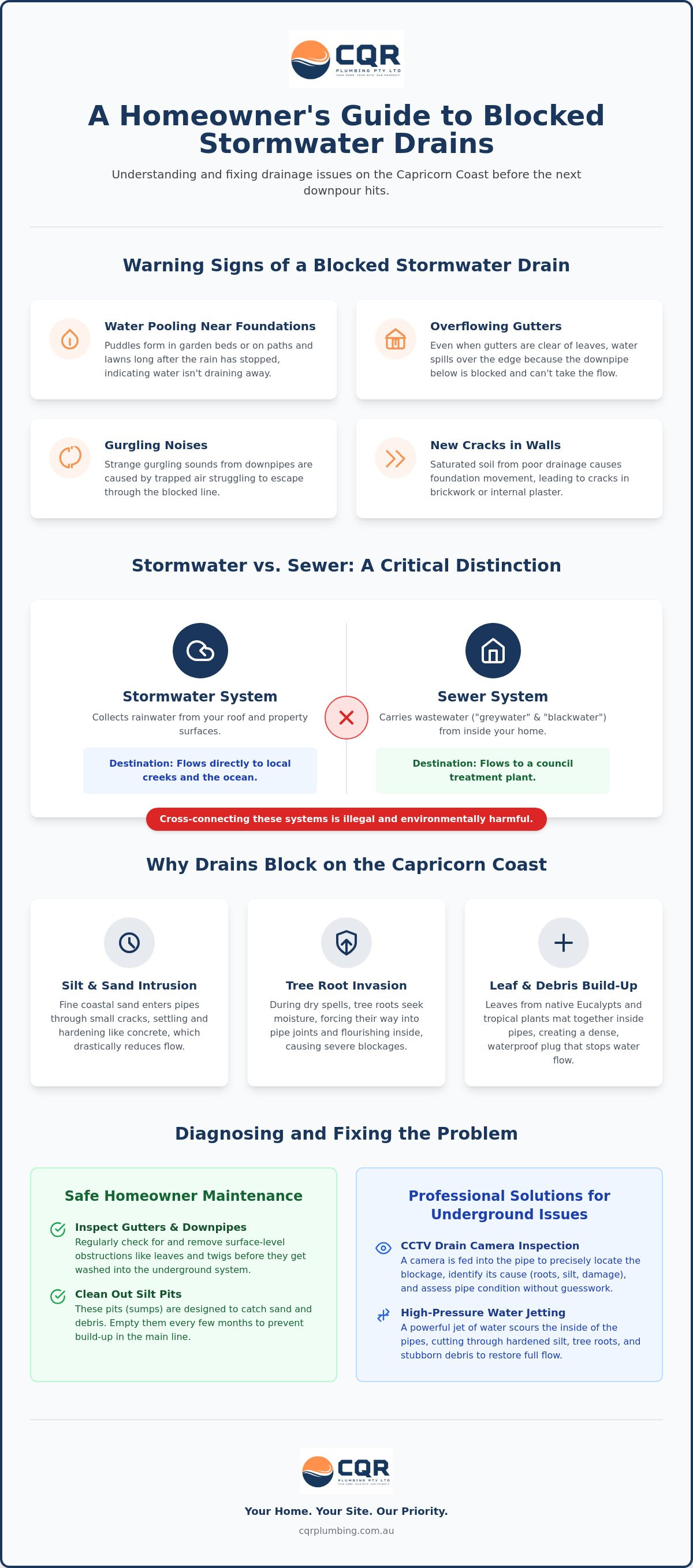
Watch for these common warning signs during the next downpour:
- Water pooling in garden beds or near the slab long after the rain stops.
- Gutters overflowing even when they appear clear of leaves.
- Gurgling sounds from downpipes as air struggles to escape the line.
- New cracks appearing in external brickwork or internal plaster.
Ignoring these signs is risky. In Central Queensland, our coastal soils can be highly reactive. When water saturates the ground around your foundations instead of draining away, the soil expands and puts immense pressure on the structure. This leads to foundation movement, cracked floor tiles, and persistent mould growth in the subfloor or wall cavities. Waiting for the ground to "dry out" usually just allows the damage to settle in.
Stormwater vs. Sewer: Why You Must Not Mix Them
It's vital to remember that your stormwater and sanitary sewer are two completely separate networks. Your sewer carries "blackwater" from toilets and "greywater" from sinks to a treatment plant. Stormwater, however, flows directly into local creeks or the ocean. Cross-connecting these systems is illegal in Queensland and carries heavy fines because it can cause treatment plants to overflow during storms. As a homeowner, you are responsible for maintaining all pipes within your property boundary up to the point of connection with the Livingstone Shire Council infrastructure.
The Role of Downpipes and Silt Pits
Your drainage starts at the roof. Rain travels through the gutters into downpipes, which then connect to underground PVC or older earthenware pipes. Many modern homes in the region feature silt pits, also known as sumps. These are small concrete or plastic boxes with a grate on top designed to catch sand and leaves before they enter the main underground line. If these pits aren't cleaned out regularly, they become the primary cause of a blocked stormwater drain Yeppoon plumbers are called to clear. To find where your water is supposed to go, look for a pipe outlet at the street kerb or a "bubble-up" pit near the property boundary.
Why Stormwater Drains Block on the Capricorn Coast
Yeppoon isn't like the suburbs of Brisbane or Sydney. Our unique coastal conditions mean a blocked stormwater drain Yeppoon homeowners face is often caused by environmental factors specific to the Capricorn Coast. We deal with fine, wind-blown sand that finds its way into every crevice, combined with the extreme "flash flooding" intensity typical of Central Queensland. When a tropical cell dumps a month's worth of rain in an hour, a system that isn't at 100% capacity will fail every time. Debris from native Eucalypts and large-leafed tropical plants also plays a huge role; these leaves don't break down quickly and often mat together inside a pipe, creating a waterproof plug.
Siltation and Coastal Sand Intrusion
Sand is the silent killer of local drainage systems. It enters the underground network through tiny hairline cracks or unsealed joints, which are especially common in older earthenware pipes. Once sand gets in, it settles at the lowest points of the run and creates a "cementing" effect. This silt hardens over time, significantly reducing the pipe's internal diameter. A standard garden hose simply doesn't have the pressure or flow to shift this heavy, compacted sediment. Understanding practical stormwater solutions for homes, such as regularly clearing out your silt pits and sumps, is the best way to prevent this build-up from becoming a permanent obstruction.
Tree Root Invasion in Stormwater Lines
During our long dry spells, the roots of Eucalypts, Paperbarks, and even common garden palms go hunting for moisture. They can detect the condensation on the outside of your PVC or earthenware pipes and will force their way through the smallest gaps in search of a drink. Once a single hair-like root gets inside, it flourishes in the nutrient-rich environment. It's a seasonal cycle we see constantly in the Rockhampton and Yeppoon climate; the roots expand during the dry months, then act as a structural dam when the rain finally returns. These root masses catch every bit of debris that washes down the gutter, turning a minor issue into a total blockage. If you suspect your pipes are under attack from nearby vegetation, you can request a professional inspection to assess the health of your lines before the next storm hits.
The combination of these factors makes maintenance a necessity rather than an option. When silt, roots, and tropical debris converge, the structural integrity of your drainage is put to the test. Regular visual checks of your yard's gully pits can often give you an early warning that things are starting to slow down underground.
How to Safely Diagnose a Blocked Drain
Before you grab a shovel or call out the cavalry, there are several safe checks you can perform yourself to identify the source of the problem. Safety is the absolute priority here; never enter a confined space like a deep pit or manhole, and never dig on your property without first checking for underground services through the "Before You Dig Australia" service. Most issues with a blocked stormwater drain Yeppoon homeowners experience can be narrowed down with a simple visual walk-around and a bit of common sense.
A practical way to confirm a blockage is the "bucket test." Find your property's discharge point, usually at the street kerb or a designated bubble-up pit. Pour a large bucket of water into a gully pit or downpipe opening and watch for it to appear at the outlet. If the water takes more than a minute to show up, or if the pit overflows, you've confirmed an obstruction in the underground line.
One thing you must never do is pour chemical drain cleaners down a stormwater line. Unlike your kitchen sink, which connects to the sanitary sewer, stormwater drains lead directly to our local waterways and the Great Barrier Reef. These chemicals are highly toxic to marine life and are completely ineffective against the sand, silt, and tree roots that typically cause a blocked stormwater drain Yeppoon residents deal with. They can also damage older earthenware pipes, making a simple blockage much more expensive to fix.
Step 1: Inspecting the Roof and Guttering
Start at the highest point of the system. During dry weather, use a ladder safely to check your gutters for leaf mats, tennis balls, or bird nests blocking the downpipe entry. Look for "watermarks" or dark staining on your fascia boards and eaves. These are tell-tale signs that water is backing up and overflowing because it can't enter the downpipes fast enough. If your gutters are sagging, rusted, or pulling away from the house, you may need professional roof plumbing Rockhampton services to ensure water is correctly directed into the drainage network.
Step 2: Checking Silt Pits and Grates
Many modern homes feature surface grates or silt pits designed to catch debris. Put on some heavy-duty gloves and lift the grate to see what's happening inside the sump. If the pit is full of standing water, the blockage is located "downstream" in the underground pipework. If the pit is dry but your yard is flooding, the blockage is likely "upstream," perhaps in the downpipe "shoe" or the short run of pipe connecting the house to the pit. Clearing out visible sand and leaves by hand can often restore flow immediately, but if the water remains stagnant after you've cleared the pit, the problem is deeper in the system.
Professional Solutions: CCTV and High-Pressure Jetting
When your own visual checks and bucket tests confirm the obstruction is deep underground, it is time to move beyond basic homeowner methods. For a stubborn blocked stormwater drain Yeppoon properties often require a combination of high-pressure water jetting and CCTV camera technology to achieve a permanent fix. In years past, the industry standard was the "electric eel," a mechanical cable that spun a cutting head through the pipe. While eels are still useful in some specific scenarios, they often just punch a small hole through a blockage or get tangled in heavy root masses. Modern hydro-jetting is a far more effective and efficient alternative.
The Power of High-Pressure Water Jetting
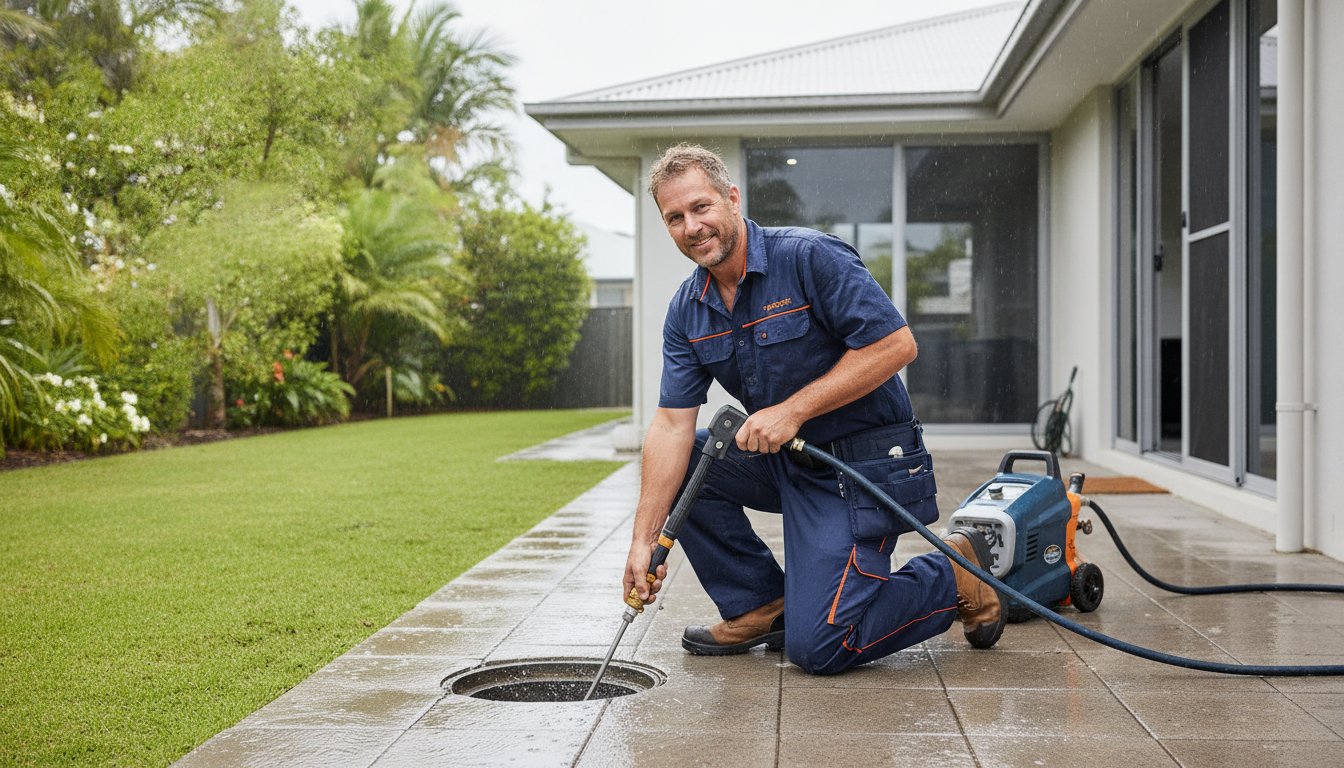
High-pressure water jetting uses specialised pumps to deliver water at pressures exceeding 5000 PSI through a flexible hose. Unlike a mechanical snake, the jetter features various nozzles designed to either cut through solid tree roots or create a "scouring" effect on the pipe walls. This is a critical distinction: we aren't just clearing a path for water; we are cleaning the pipe. The high-velocity water flushes out the compacted sand, silt, and salt deposits we discussed earlier, restoring the line to its full internal diameter. This thorough cleaning ensures the blockage won't simply reform a few weeks later. You can learn more about how we use this technology alongside blocked drains Rockhampton techniques to manage complex underground issues.
Why CCTV Inspections Save You Money
The "gold standard" for any drainage professional is the CCTV drain camera. We feed a high-definition, waterproof camera into your lines to see exactly what is happening in real time. This eliminates the expensive and destructive practice of "guessing" where a blockage might be. By seeing the internal condition of the pipe, we can identify if you have a simple root intrusion, a misaligned joint, or a total pipe collapse.
This visual proof is invaluable for several reasons:
- Precision Locating: We use a sonar transmitter on the camera head to pinpoint the exact location and depth of a problem from above ground, preventing unnecessary digging in your garden or driveway.
- Insurance and Sales: We can provide recorded footage of the inspection, which is often required for insurance claims or as part of a pre-settlement building report.
- Informed Decisions: Seeing the damage allows us to discuss honest repair options, such as localised patches or preventative maintenance schedules, rather than suggesting a full system replacement.
Using technology to diagnose the issue correctly the first time is the most cost-effective way to manage your property's infrastructure. If you're tired of temporary fixes and want to see exactly what’s happening underground, you can request a quote for a CCTV inspection to get a clear, professional assessment of your drainage health.
Preventing Stormwater Issues in Your Yeppoon Home
The best way to manage a blocked stormwater drain Yeppoon homeowners face is to stop it from happening in the first place. In our tropical climate, prevention isn't just about convenience; it is about protecting the structural integrity of your slab and foundations. Establishing a regular maintenance routine before the summer storm season arrives ensures your system can handle the massive volumes of water we see during a typical Central Queensland deluge. While underground pipes are out of sight, simple surface-level care can prevent 90% of the debris that eventually causes a total system failure.
One of the most effective upgrades you can make is installing high-quality gutter mesh or leaf guards. However, be aware that these are not "set and forget" solutions. Even with guards, fine silt and organic matter can still pass through the mesh and settle in your pipes. We recommend choosing a metal mesh over plastic, as it withstands the intense local UV levels much better. Additionally, consider your landscaping. Avoid planting aggressive species like Ficus or large Eucalypts within three to five metres of your drainage lines, as their roots will inevitably find any moisture source during our dry winter months.
The Pre-Storm Season Checklist
We suggest performing this simple checklist every September to prepare for the wet season:
- Clear the Roof: Remove all leaf litter, sticks, and bird nests from your gutters and valleys.
- The Hose Test: Run a garden hose down each downpipe for five minutes. If water backs up or drains slowly, you have a restriction that needs attention before the heavy rain hits.
- Silt Pit Service: Lift your surface grates and clear out any accumulated sand or mud by hand. Ensuring these sumps are empty gives your system the best chance to catch new debris.
- Check the Kerb: Inspect the kerb adaptor at the street. These are often crushed by cars or clogged with grass clippings from mowers, which can cause water to back up the entire line.
When to Call a Professional Maintenance Plumber
If you find yourself clearing the same silt pit every few weeks, or if you notice water bubbling up from the ground even during light rain, you likely have a structural issue. Recurring blockages usually indicate that a pipe has shifted, cracked, or been invaded by roots. A professional "drain health check" is especially valuable for older Yeppoon properties where earthenware pipes are reaching the end of their functional lifespan. We can use CCTV technology to identify these hidden faults before they turn into an expensive emergency during a midnight storm. To secure your property against water damage, you can request a quote from CQR Plumbing for a comprehensive drainage assessment and preventative maintenance plan.
Protect Your Home from the Next Tropical Downpour
Managing a blocked stormwater drain Yeppoon residents encounter requires a combination of regular homeowner maintenance and advanced professional technology. By understanding how coastal sand, tropical rain intensity, and invasive roots impact your pipes, you can take action before a standard storm turns into a flooding emergency. Remember that your stormwater system is the primary line of defence for your home's foundations; keeping it clear is essential for long-term property preservation.
As a locally owned and operated business in Central QLD, CQR Plumbing provides the specialised expertise needed to navigate these coastal challenges. We are CCTV inspection specialists, using high-definition footage to provide honest, transparent diagnoses without unnecessary digging. Whether you need a routine seasonal health check or a 24/7 emergency response during a heavy deluge, we are ready to help. Don't wait for the next storm to test your drainage limits.
Get your stormwater drains flowing again with CQR Plumbing and ensure your home stays dry and secure. Taking a proactive approach today will save you from the stress and significant expense of water damage tomorrow.
Frequently Asked Questions
Is a blocked stormwater drain an emergency in Yeppoon?
Yes, a blockage becomes an emergency when heavy rain is forecast or if water is already pooling near your house foundations. In Yeppoon, our tropical storms dump huge volumes of water quickly. If your drains can't cope, that water has nowhere to go but under your slab or into your home. We offer a 24/7 emergency response because we know that a blocked stormwater drain Yeppoon residents face doesn't always happen during business hours.
Who is responsible for the stormwater pipe between my house and the street?
You are responsible for all stormwater infrastructure within your property boundary up to the point where it connects to the council's network. This includes the gutters, downpipes, underground pipes, and the kerb adaptor at the street. Livingstone Shire Council generally only maintains the main pipes located under the road or in public easements. If the blockage is on your side of the connection, it's a private plumbing matter.
Can I use a pressure washer to clear my own stormwater drain?
You can use a domestic pressure washer for very shallow blockages near the surface, but it's rarely effective for deep underground issues. Professional hydro-jetters operate at much higher flow rates and pressures, using specialised heads that pull the hose down the line. A standard garden pressure washer lacks the "thrust" to travel long distances and the volume of water needed to flush out heavy silt and sand from the line.
What is the difference between a silt pit and a gully trap?
A silt pit is a stormwater component designed to catch sand and debris before it enters your main underground lines. It usually has a dry bottom when it isn't raining. A gully trap, however, is part of your sanitary sewer system. It holds a water seal to prevent sewer gases from entering your home. If you see a pit with a constant water level and a curved pipe, that's likely a sewer gully rather than stormwater.
How much does it cost to clear a blocked stormwater drain professionally?
The cost of clearing a blocked stormwater drain Yeppoon homes often require depends on the severity of the obstruction and the technology used. A simple clearance with a high-pressure jetter is generally more affordable than complex jobs requiring extensive CCTV diagnostics or root cutting. We provide transparent assessments after viewing the site to ensure you only pay for the specific equipment and time needed to resolve the issue properly.
Will my home insurance cover repairs for a blocked stormwater pipe?
Most standard home insurance policies don't cover the cost of unblocking or repairing pipes due to general wear and tear, siltation, or tree root intrusion. These are usually classified as maintenance issues. However, you might be covered for the "resulting damage," such as water damage to your carpets or walls caused by a sudden pipe burst or overflow. It's always best to check your specific Product Disclosure Statement for details.
How often should I have my stormwater drains professionally inspected?
We recommend a professional inspection every two to three years for most properties. If you live on a block with large Eucalypts or have older earthenware pipes, an annual check before the summer storm season is a safer bet. Regular CCTV inspections allow us to catch hairline cracks or minor root entries before they turn into a total system collapse, which is far more expensive and disruptive to repair.
Why does my stormwater drain smell like rotten eggs?
This smell is usually caused by stagnant water and decaying organic matter, like leaves and garden mulch, trapped in a silt pit or a low point in the pipe. As the debris breaks down in the heat, it releases hydrogen sulphide gas. If the smell is persistent and occurs near your house, it could also indicate a cross-connection where sewer gases are escaping through the stormwater system, which requires immediate professional attention.
Disclaimer
The information in this article is provided for general educational purposes only and should not be relied upon as professional plumbing, gasfitting, or legal advice. Every property and plumbing system is different, and the information may not be applicable to your specific circumstances. CQR Plumbing recommends that all plumbing and gasfitting work be inspected and carried out by a licensed professional in accordance with applicable Australian Standards and Queensland regulations. If you require advice specific to your property, please contact CQR Plumbing for an assessment.