Discoloured Hot Water in Yeppoon: Causes and What to Do
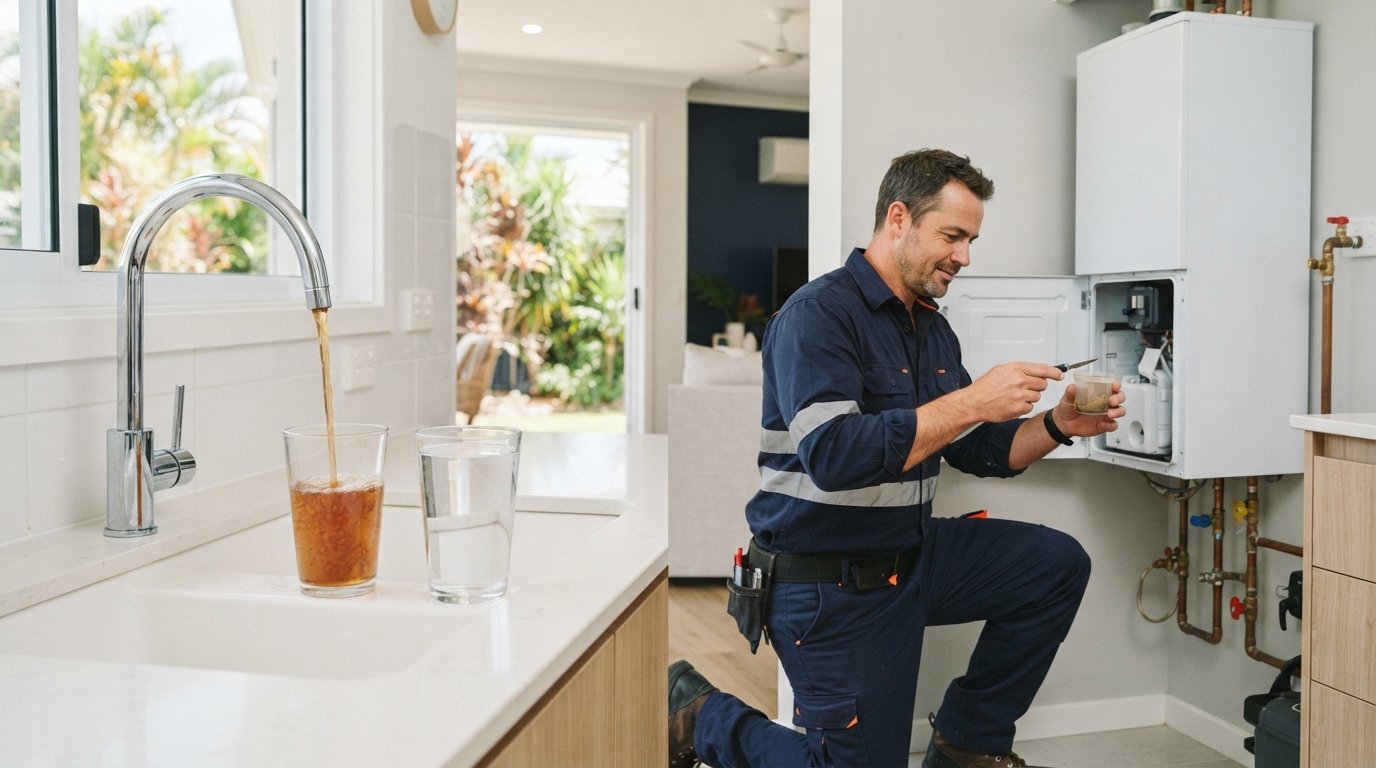
Discoloured hot water from a tap in Yeppoon, especially when cold water runs clear, usually points to an issue in the hot-water system. Rust or sediment can build up inside a storage tank, turning the water brown or leaving visible particles. If both hot and cold water are discoloured, the cause may instead be in the household pipework or water supply.
Brown water at the tap is unsettling, and it can be confusing when it starts after a new hot-water system is installed. Colour alone won’t identify the fault, but comparing hot and cold taps and noting when the change occurs can help narrow down the source.
This article covers common causes, what to do if discolouration follows an installation, and how to flush a tap when the supply may be disturbed. It also explains what rust, sediment and laundry stains can indicate, and when persistent discolouration needs closer attention.
Key Takeaways
- Compare hot and cold taps to help work out whether the discolouration is coming from the hot-water system or elsewhere in the supply.
- Rust and sediment can point to corrosion or build-up inside a storage tank, while laundry stains may signal particles in the water.
- Learn how flushing taps can help clear water affected by a supply disturbance, and when the colour needs further attention.
- If discolouration starts after a hot-water system installation, note whether it continues or returns and consider what that may indicate.
- Persistent brown water, visible particles or signs of corrosion can help identify when hot-water system repairs or servicing may be needed.
What if discoloured water stains your laundry?
When discoloured hot water from a tap in Yeppoon reaches the washing machine, rust or sediment can stain fabric. The pattern of affected taps can help show whether particles may be coming from the hot-water system or elsewhere in the supply.
Sediment and corrosion behind laundry stains
Sediment is material that settles in a water system, while corrosion is the deterioration of metal that can release particles. Both can colour water and stain light-coloured clothing, towels or sheets. If hot taps produce rusty water but cold taps stay clear, the hot-water system may be involved. Particles at several hot and cold outlets suggest a different source.
Rust and sediment can also stain or contribute to blockages in washing machines and dishwashers. Note which taps are affected and whether you can see particles. These observations will help you describe the problem if it continues.
Where sediment builds up or gets stirred
Minerals and sediment can settle at the bottom of a storage tank. Storage-tank systems are more prone to sediment build-up and corrosion than continuous-flow systems. Flushing a tank may remove some settled material, but it won’t address corrosion itself. Increased water flow can also stir sediment through supply pipes.
Discoloured water is most common in early spring and summer, when water use rises. If the water changes colour at this time, note whether hot and cold taps are both affected. This pattern can help distinguish a possible supply disturbance from an issue limited to the hot-water system.
If a wash becomes stained, stop the cycle and act promptly. Soak the affected items straight away and don’t let them dry, as dried sediment marks can be harder to remove. Check the garment care label before applying stain treatment, and avoid using a hot dryer until the marks have lifted.
Can sediment in the hot-water system cause discoloured hot water from a tap in Yeppoon? Yes. Sediment or corrosion inside a storage tank may colour the hot water. Storage-tank systems are more prone to sediment build-up and corrosion than continuous-flow systems.
Is discoloured hot water safe to drink, cook with or bathe in? Sediment-related discolouration may be harmless, but avoid using visibly discoloured water for drinking, cooking, bathing or laundry until the cause has been assessed. Take extra care if the water contains particles or its source is unclear.
Livingstone Shire Council provides water services in Yeppoon. Report discoloured water to the Council, and describe which taps are affected, whether cold water is also discoloured, and when the change began.
Contact the local water provider if both hot and cold water are affected across the property. If only hot water remains discoloured or particles keep returning, arrange an assessment by a licensed plumber. A storage tank typically lasts 8-12 years; leaks, dampness, banging noises or visible corrosion are warning signs to report.
A sacrificial anode may help protect a storage tank from corrosion. For local information about plumbing in Yeppoon, note whether the symptoms point to the household system or the wider supply.
Why Is Brown Water Coming Out Of My Hot Water Tap?
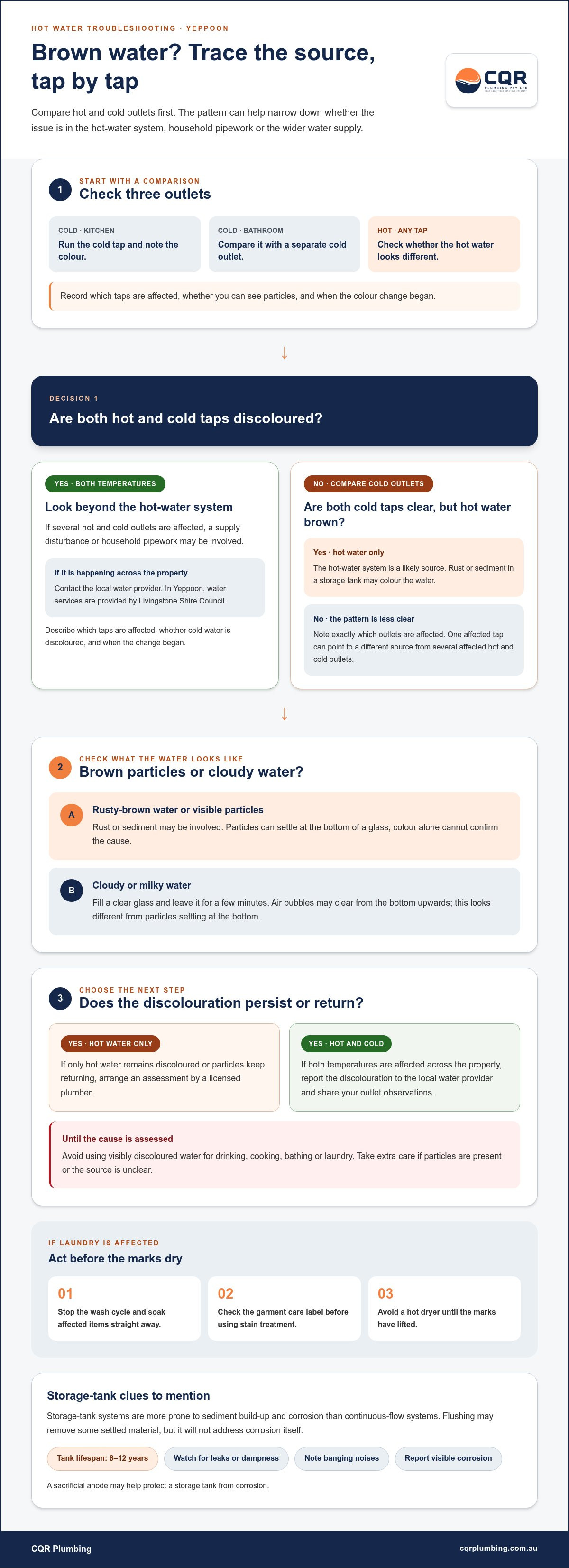
Compare hot and cold outlets first. If only hot water is brown, the hot-water system is a likely source. If both are affected, the cause may be elsewhere in the property or supply.
Checking cold-water outlets
Compare cold water from separate taps before drawing conclusions about the hot-water system. Run the cold tap at the kitchen sink, then compare it with a bathroom cold tap and a hot tap. If both cold outlets look clear but hot water is brown, the issue is more likely isolated to the hot-water system.
If cold water is discoloured at several taps, a supply disturbance or household pipework may be involved. Note which outlets are affected, whether the colour appeared suddenly, and whether you can see particles. These details help distinguish a local hot-water fault from an issue affecting hot and cold water around the property.
Reading colour as a clue
Water colour can offer a useful clue, but it can’t identify the cause by itself. Yellow or rusty-brown water with visible particles may indicate rust or sediment. If brown water comes only from hot taps, corrosion or sediment in the hot-water system is one possible source.
Cloudy or milky-white water differs from rusty-brown water. Air bubbles can make water look cloudy, and it may clear after sitting in an open glass for a few minutes. Watch the glass: bubbles clear from the bottom upwards, unlike particles that settle at the bottom.
Causes of discoloured tap water
Discoloured tap water can result from sediment stirred up in supply pipes, rusting household pipework or corrosion inside a storage hot-water system. The pattern matters: one affected hot tap suggests a different source from several affected hot and cold outlets. Check whether nearby taps show the same colour before deciding where the fault may lie.
A sudden change across hot and cold taps may follow a disturbance in the water supply. Discolouration limited to hot water, particularly when particles are present, points more towards the hot-water system. These are diagnostic clues, not a substitute for inspecting the system or pipework if the problem persists.
Record the colour, whether particles are present, and which taps are affected. For example, clear cold water at the kitchen and bathroom taps alongside brown water from both hot taps narrows the likely source to the hot-water side. If both temperatures are affected, note that pattern instead.
Cloudiness that clears in a glass differs from persistent brown water that leaves visible residue. Take a clear glass of cold water and another of hot water, then compare them in good light. Let each stand briefly. Air-related cloudiness may clear, while rust or sediment can remain visible or settle.
If the colour continues, returns after clearing, or restricts flow, arrange an assessment rather than relying on appearance alone. A licensed plumber can inspect the hot-water system and household pipework to identify corrosion, sediment or another fault. For persistent hot-water discolouration in Yeppoon, request a plumbing assessment.
Clearing discoloured water by flushing a tap
Flushing can clear sediment stirred through the supply, but it won’t repair corrosion inside a hot-water system. Compare hot and cold water first, then choose the flushing step that matches the affected outlets.
If cold water is discoloured, avoid using hot water until the supply clears. Otherwise, the hot-water system could fill with discoloured water. If brown water appears only at hot taps while cold water runs clear, flushing the cold supply is unlikely to address the cause. Note which outlets are affected before you start.
For discolouration affecting the supply, use this sequence:
- Run the garden tap closest to the water meter for 2 minutes.
- If the colour remains, run at least two taps for several minutes, using cold water.
- Check the water in a clear glass and note whether particles remain.
A tap may clear after running at full flow for a few minutes. Stop if the water remains brown, particles continue to appear or the flow changes noticeably. If flushing doesn’t clear the discolouration, repeating it may not resolve the underlying issue.
Cloudy water needs a different check. Fill an open glass and leave it to stand for a few minutes. Trapped air can make water look milky, then clear from the bottom upwards as bubbles rise. If the water stays brown or particles settle in the glass, the change isn’t simply the same air-bubble effect.
How much hot-water-system flushing, repair or replacement is needed in Yeppoon? It depends on the cause. A supply disturbance may call for tap flushing, while an issue isolated to the hot-water system needs the unit assessed.
Flushing a tap moves water through the supply pipes; it doesn’t remove material settled inside a storage tank. Tank flushing involves the hot-water system itself. If brown hot water returns after the taps run clear, have the system assessed rather than assuming another tap flush will fix it.
Don’t use visibly discoloured water for drinking, cooking, bathing or laundry until the cause has been assessed. If cold water remains clear but hot water stays brown, arrange an assessment of the hot-water system. Describe which outlets are affected, whether particles remain and what happened when you flushed the taps.
For a persistent hot-water fault, request a plumbing assessment and explain the symptoms you’ve observed.
Discolouration from rusting internal pipes
Rust inside household plumbing can release particles that turn water yellow or rusty-brown. In Yeppoon homes, the age and material of the pipes can help guide the investigation.
Rust from ageing galvanised pipes
Galvanised iron pipes are metal pipes coated with zinc, and ageing pipework can corrode and release rust into water. Homes with plumbing installed in the 1970s or earlier may still have galvanised pipes. Rust particles can cause brownish water and visible specks, so a glass sample can help you record what comes from a tap.
Rusty-brown water at several taps, for example, can suggest the issue extends beyond one fixture. Note whether the colour appears after the water has sat unused or continues while it runs. These observations help a plumber assess the pipework rather than assume the hot-water unit is the only possible source.
Corrosion in plumbing pipes
Corrosion is the gradual deterioration of metal pipework, which can release small particles into flowing water. Discolouration may look yellow or rusty-brown, and particles can remain visible in a clear glass. Persistent changes matter because flushing a tap may clear loose material temporarily without addressing corroded pipes.
Where the colour appears can narrow the investigation. If one outlet is affected, the nearby pipe or fitting may need inspection. If several outlets show the same particles, more of the property’s plumbing may be involved. A local plumber can assess the affected pipework and identify suitable repairs.
Before arranging an assessment, record three details: which taps show discolouration, whether particles are visible and whether the problem persists. For example, note if the kitchen cold tap and bathroom basin both produce rusty-brown water. This gives a clearer picture than simply describing the water as “dirty”.
A short-lived change and a recurring pattern call for different investigations. If the water clears and stays clear, record when it happened and which outlets were affected. If rust-coloured particles return from the same taps or persist across several outlets, arrange a plumbing assessment rather than repeatedly flushing without finding the source.
Repairs depend on what an inspection finds. A plumber may locate corrosion in one section of pipework or identify a broader issue with ageing pipes. Replacing a confirmed corroded section can address a local fault, while more extensive deterioration may require a wider repair plan. The affected pipe material and condition guide that decision.
Don’t assume replacing the hot-water system will solve rusty water if galvanised pipes are releasing particles. Likewise, one brown sample doesn’t prove that every pipe needs replacement. A local plumber can assess persistent discolouration, trace the affected plumbing and explain repair options based on the condition found.
Discolouration after hot water system installation
Brown water after a new hot-water system is installed can be alarming, but the timing alone doesn’t prove the new unit is faulty. Check whether the colour comes only from hot taps, whether cold water is clear and whether the discolouration persists after the system has been used.
Installation work can change water movement through nearby pipework. Increased flow may stir sediment that has settled in supply pipes and carry particles towards taps. For example, brown water on the first hot-water draw after work may differ from colour that keeps returning. Note when it appears, which outlets are affected and whether visible particles settle in a glass.
Compare a hot tap and a cold tap at the same sink, then repeat the check at another outlet. If hot water alone is discoloured, the issue is isolated to the hot-water side, though the system and its connections still need assessment. If both temperatures show colour, household pipework or the wider water supply may be involved.
A relatively new storage heater can still contain sediment. Flushing the tank with cold water may remove sediment, but this involves the system itself, not simply running a tap. Don’t open valves or dismantle fittings unless you know their purpose; incorrect handling can cause leaks or affect system operation. A plumber can assess the unit and determine whether sediment removal is appropriate.
Until the water is assessed, avoid using visibly discoloured hot water for bathing, cooking or laundry. For example, don’t fill a bath or start a wash while brown particles are coming from the hot tap. Keep a clear glass sample and note whether the colour clears, stays suspended or settles at the bottom.
If discolouration persists or appears intermittently, contact your water provider for assistance. Describe when the system was installed, whether hot and cold taps are affected, and whether the colour returns after running the tap. This information helps distinguish a possible supply issue from a problem confined to the household hot-water system.
Keep the installer’s paperwork and record the date the change began. If the water was clear before installation but became discoloured afterwards, that sequence is useful during an assessment. Include any other symptoms, such as reduced flow, fluctuating temperature, dampness near the unit or a leak, rather than assuming colour alone identifies the fault.
A proper assessment should establish whether sediment needs flushing, a connection needs attention, or a separate fault requires repair. If the new system is sound but the colour continues, investigation may need to include the pipework or supply. If discolouration continues, request an assessment based on which outlets are affected and whether the colour settles or persists.
CQR Plumbing: Hot water system installations
CQR Plumbing can assess persistent discolouration from a hot-water tap and determine whether the system needs repair or replacement. If corrosion, sediment or a component fault is affecting the unit, Hot Water System Repairs may address the problem. Installation is an option when replacement is needed.
For discoloured hot water from a tap in Yeppoon, note whether cold water stays clear, when the colour appears and whether particles settle in a glass. These details help clarify the issue and the work required. CQR Plumbing can explain the findings and proposed scope before starting.
If the problem continues, contact CQR Plumbing to discuss an assessment or visit hot water system services.
Take the next step with confidence
If you’re dealing with discoloured hot water from a tap in Yeppoon, focus on identifying the source rather than masking the colour. Keep the affected tap accessible and avoid dismantling fittings. A clear account of when the issue occurs gives the plumber a useful starting point and helps keep the assessment focused.
Before work begins, ask for the findings and proposed scope to be explained in plain language. Understanding what needs attention and why helps you make a considered decision about the next step for your home. Keep notes or photographs of changes together so you can refer to them during the discussion.
A clear diagnosis makes it easier to decide what to do next. With the right information, you can make a practical choice and move towards getting your water back to normal.
Frequently Asked Questions
Sediment or Corrosion?
Sediment is loose material that settles in a system, while corrosion is the deterioration of metal that can release rust particles. Sediment may appear after water movement stirs it up; corrosion can cause recurring rusty discolouration. Note whether particles settle in a glass or the colour returns from the same outlet. This pattern can help distinguish loose material from an ongoing pipe or tank problem.
What causes it?
Brown hot water can result from sediment or corrosion inside a storage tank, or from rusting pipework. A supply disturbance can also stir sediment through mains pipes, affecting more than one outlet. Cloudy water has a different possible cause: tiny air bubbles can make it look milky. Compare samples in clear glasses and record whether colour, cloudiness or particles appear in hot water, cold water or both.
How can I tell whether discoloured water is coming from the hot-water system or the water mains?
Compare hot and cold water at separate sinks, such as the kitchen and bathroom. If colour affects hot and cold outlets around the house, the mains supply or household pipework may be involved. If it appears only in hot water, the hot-water system becomes a stronger suspect. Record which outlets are affected and whether the change starts suddenly, then share those details with Livingstone Shire Council or a plumber.
What should I do if only the hot tap runs brown or rusty water?
Stop using visibly discoloured hot water for drinking, cooking, bathing or laundry, and collect a clear sample to show the colour and particles. Check whether another hot tap behaves the same way, then note any change in temperature or flow. If brown water continues or returns, arrange an assessment of the hot-water system. Avoid opening valves or attempting tank work yourself, as incorrect handling can cause leaks or damage.
How long should I flush a tap after hot water turns discoloured?
If a supply disturbance has affected the water, run the garden tap closest to the water meter for 2 minutes. If discolouration remains, run at least two taps for several minutes and check the water again. This can clear sediment from the supply, but it won’t fix a hot-water system producing brown water while cold water stays clear. Don’t keep flushing without end if particles or colour persist.
Could a rusty or failing hot-water tank cause brown water, and what are the warning signs?
Yes. Internal tank corrosion can release rust into hot water, particularly as a storage system ages; these systems typically last 8-12 years. Warning signs include water pooling around the unit, fluctuating hot-water temperatures, popping or banging noises, dampness, leaks or visible corrosion. A system aged 10+ years that produces discoloured water may need replacement. Have recurring brown water and these changes assessed together.
Disclaimer
The information in this article is provided for general educational purposes only and should not be relied upon as professional plumbing, gasfitting, or legal advice. Every property and plumbing system is different, and the information may not be applicable to your specific circumstances. CQR Plumbing recommends that all plumbing and gasfitting work be inspected and carried out by a licensed professional in accordance with applicable Australian Standards and Queensland regulations. If you require advice specific to your property, please contact CQR Plumbing for an assessment.