DIY vs Professional Drain Cleaning: Which is Right for Your CQ Home?
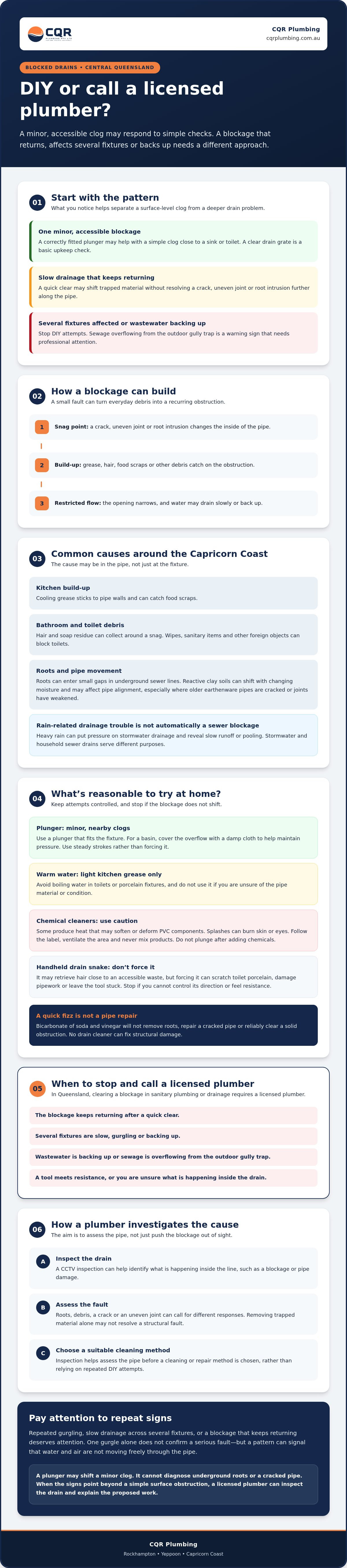
The quickest DIY fix can be why a blocked drain keeps returning. When weighing DIY vs professional drain cleaning, distinguish simple upkeep, such as clearing a drain grate, from work on a blocked sanitary drain, which must be done by a licensed plumber in Queensland.
A plunger may help with a minor, accessible blockage. Recurring slow drainage, several affected fixtures or wastewater backing up can point to a deeper fault. Chemical cleaners are not a reliable answer, particularly if you are unsure about the age or condition of your pipes.
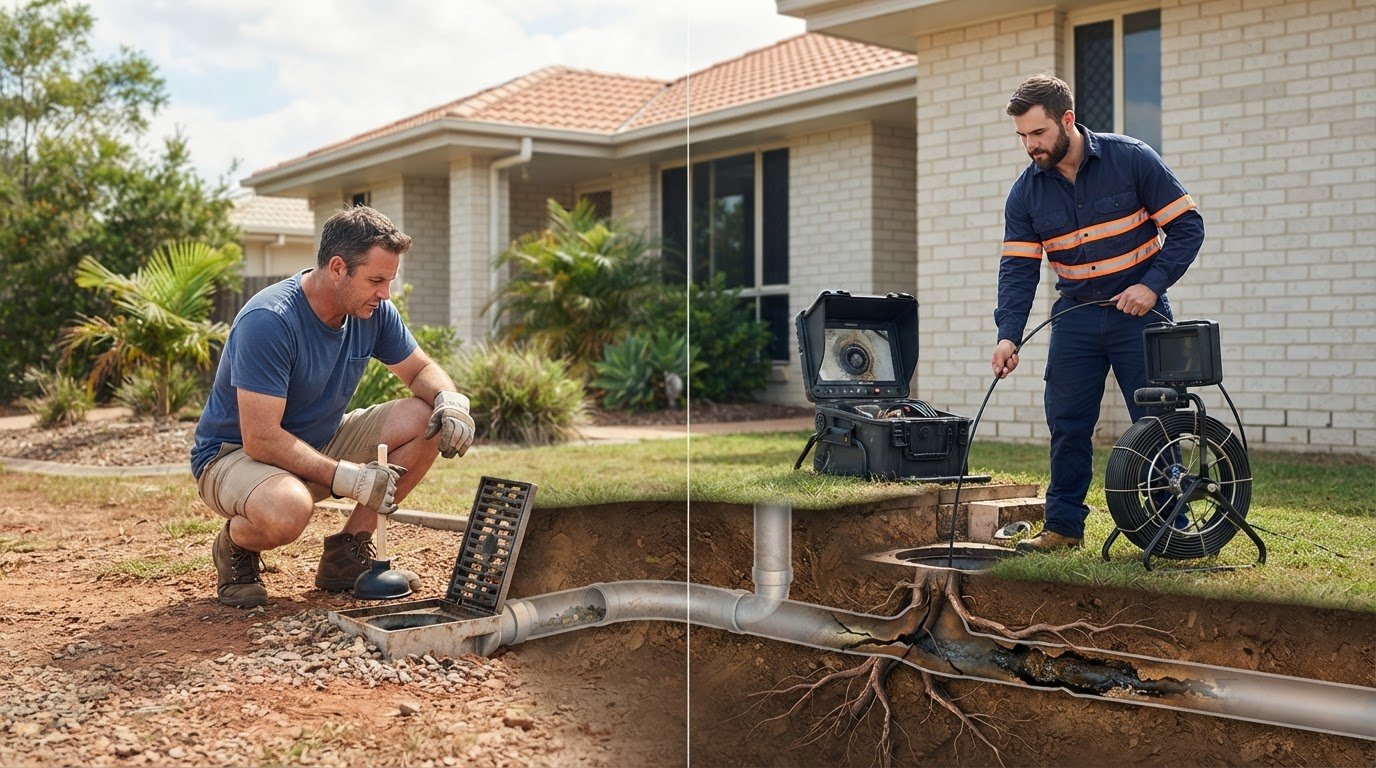
This guide covers what you can safely check at home, when to stop and call a professional, and how a plumber can investigate the cause rather than simply push the blockage out of sight. It also explains how tree roots, grease and other debris can contribute to drainage problems around Rockhampton, Yeppoon and the Capricorn Coast, and how CCTV inspection and suitable cleaning methods help assess the pipe.
Key Takeaways
- Learn which simple checks and tools may help with a minor drain issue, and when to stop before risking pipe damage.
- Understand how grease, foreign objects and tree roots can contribute to blockages around Rockhampton, Yeppoon and the Capricorn Coast.
- Compare DIY vs professional drain cleaning and see why recurring or widespread blockages need more than a quick clear.
- Recognise warning signs such as several fixtures backing up or sewage overflowing from the outdoor gully trap.
- Find out how a licensed plumber can inspect the drain, explain the proposed work and help address the cause of the blockage.
Understanding Blocked Drains: Why They Occur in Yeppoon and Rockhampton
A blocked drain is not always caused by something put down a sink or toilet. In Rockhampton and Yeppoon, everyday build-up can combine with soil movement, damaged pipes or tree roots. That can explain why the same blockage returns after a quick clear.
Kitchen grease cools and sticks to pipe walls, gradually catching food scraps. In bathrooms, hair and soap residue can collect around a snag. Toilets can block when wipes, sanitary items or other foreign objects are flushed. These are common causes, but a recurring blockage may point to a fault further along the drain.
Local environmental factors in Central Queensland
Heavy rain on the Capricorn Coast can put pressure on stormwater drainage and reveal problems such as slow runoff or pooling water. Stormwater and household sewer drains serve different purposes, so rain-related drainage trouble does not automatically mean the sewer is blocked.
Reactive clay soils can shift as moisture levels change. That movement may affect pipe alignment, particularly where older earthenware pipes have already cracked or joints have weakened. Tree roots also seek moisture and can enter through small gaps in underground sewer lines. Once inside, they can catch waste and restrict flow. The tree species and risk vary by property, so do not assume a particular tree is responsible without an inspection.
The anatomy of a blocked pipe
A small crack, uneven joint or root intrusion creates a snag point. Grease, hair and other debris catch there, narrowing the opening over time until wastewater drains slowly or backs up. This differs from a simple, localised clog that clears and does not return. A structural blockage involves damage or a change in the pipe itself, so removing trapped material alone may not resolve the underlying fault.
Listen for gurgling after a sink, shower or toilet drains. It can mean air and water are not moving freely through the pipe. One gurgle does not confirm a serious fault, but repeated sounds, slow drainage across several fixtures or a blockage that keeps returning deserve attention.
For the DIY vs professional drain cleaning decision, the key is recognising when the issue is beyond a surface-level obstruction. A plunger may shift a minor clog, but it cannot diagnose a cracked pipe or roots underground. Different types of drain cleaners work in different ways, but none can repair structural damage. In Queensland, clearing a blockage in sanitary plumbing or drainage requires a licensed plumber. A CCTV inspection can help identify what is happening inside the line before a repair method is chosen. Learn more about blocked drain repairs.
DIY vs Professional Drain Cleaning: Common Methods, Pros, Cons and Risks
A plunger can be a sensible first step for a minor blockage close to a sink or toilet. The risk is assuming every slow drain has the same simple cause. If water keeps backing up, repeated attempts with stronger products or tools may delay diagnosis while the obstruction remains.
Plunging and simple home remedies
Choose a plunger that fits the fixture. For a toilet, use a bellows-style plunger and position its cup over the outlet to form a seal. For a basin, cover the overflow opening with a damp cloth to help maintain pressure at the waste. Use steady, controlled strokes rather than forcing the tool. Stop if the water rises, the blockage does not shift or other fixtures begin draining slowly.
Bicarbonate of soda and vinegar can fizz, but that reaction will not remove roots, repair a cracked pipe or reliably clear a solid obstruction. Warm water may help move light grease in a kitchen sink. Avoid boiling water in toilets or porcelain fixtures, and do not use it if you are unsure of the pipe material or condition. Sudden heat can damage some components.
The danger of chemical drain cleaners
Some chemical cleaners produce heat as they react. If misused, the heat may soften or deform PVC components. Splashes can also burn skin or eyes, and cleaner left in a drain can expose the next person working on it. Follow the product label, keep the area ventilated and never mix products. Do not plunge after adding chemicals, as liquid may splash back.
A chemical product may clear a narrow path through a soft build-up, but it will not fix damaged pipework or stop roots entering a line. If you have already used a cleaner, tell the plumber what it was before they work on the drain.
Know when to stop DIY attempts
A handheld drain snake may retrieve hair close to an accessible waste, but forcing it can scratch toilet porcelain, damage pipework or leave the tool stuck. Do not push it into a drain if you cannot control its direction or feel it meeting resistance.
DIY tools are best kept to minor, nearby obstructions. A quick clear that lasts only a few days can leave the underlying problem unresolved, with the next backup arriving at a less convenient time. In Queensland, clearing a blockage in sanitary plumbing or drainage is regulated work for a licensed plumber. The practical difference in DIY vs professional drain cleaning is knowing when a simple attempt has reached its limit. For a recurring or stubborn blockage, a professional assessment can identify the next step.
How Professional Drainage Tech Surpasses DIY Tools
A drain that clears briefly but blocks again needs more than another attempt to push debris along. Professional equipment helps identify what is happening inside the pipe, then guides the choice of cleaning method. That matters if the line contains roots, a crack or a section that has shifted out of alignment.
CCTV diagnostics: see the fault before deciding what to do
A plumber can feed a CCTV camera into an accessible drain to inspect the pipe’s interior. The footage may reveal root intrusion, cracks, heavy build-up or a collapsed section. This helps distinguish a removable obstruction from damage that cleaning alone will not fix. The camera can also help locate the affected section, reducing guesswork before any excavation is considered.
Your plumber should explain what the inspection shows and set out a clear scope of work before starting the agreed repair. Ask what has been found, which options are suitable and whether the pipe’s condition limits the cleaning method. You can read more about blocked drain repairs.
High-pressure water jetting and mechanical snakes
A mechanical snake can break through or retrieve some obstructions, but it may only open a narrow path through a build-up. High-pressure water jetting sends controlled water through a suitable nozzle to clear debris and wash residue from the pipe walls. Some specialist jetting heads can cut through root growth, but roots may return if gaps or damage in the pipe let them in.
Jetting is not the right answer for every drain. The pipe’s material and condition need to be considered first. Applying high pressure to a fragile or damaged line could make the fault worse, so a CCTV inspection can inform whether jetting is appropriate. Neither method repairs a cracked or collapsed pipe.
There is no single tool that suits every blockage. In the DIY vs professional drain cleaning decision, the professional advantage is the sequence: inspect, diagnose, then choose a method based on what the pipe can safely tolerate. A licensed plumber can also carry out regulated drainage work in line with applicable Queensland requirements and relevant plumbing standards, including the AS/NZS 3500 series.
For homeowners in Rockhampton, Yeppoon, Gracemere and Emu Park, that approach can replace guesswork with a visible diagnosis and an explained repair plan. Cleaning may restore flow, while identifying the cause helps guide the next step and future preventative maintenance.
The Tipping Point: When to Call a Licensed Plumber
Stop DIY attempts if several fixtures start backing up at once. A toilet that gurgles when the shower drains, or water rising in a floor waste when you run the washing machine, can point to a shared drain or main drain problem rather than separate fixture clogs.
Act promptly if sewage is overflowing from the outdoor gully trap. Keep people and pets away from the wastewater, avoid using taps, toilets and appliances that drain into the affected line, and arrange professional help. A plunger will not fix a damaged pipe or a blockage further down the system.
Does the blockage clear, then return within days? That pattern suggests the obstruction may still be present or there could be an underlying fault, such as root intrusion or a damaged, misaligned or collapsed pipe. Repeatedly forcing a DIY tool into the drain can make diagnosis harder and may damage pipework.
Check the signs, but do not assume the cause
Wet patches in the yard, unexplained dampness or new cracks near a building can be warning signs of a drainage or other water issue, but they do not prove a sewer pipe has failed. Avoid digging to investigate. A licensed plumber can assess the symptoms and inspect the drain before recommending work.
Stormwater and sewer drains carry different water. Pooling after rain or slow downpipes needs a different assessment from wastewater backing up inside. Note where water appears and whether the problem follows rainfall or household use. For drainage concerns in the region, you can contact a plumber in Rockhampton.
Stop and call checklist
- Water has not shifted after three controlled plunging attempts. Stop rather than applying more force or adding chemical cleaner.
- You can smell raw sewage inside. Avoid contact with wastewater and have the drain checked.
- More than one fixture is affected, the gully trap is overflowing, or the blockage keeps returning.
- You suspect roots or pipe damage, or notice wet ground that may be linked to a drain.
Clearing a blockage in sanitary plumbing or drainage is regulated work in Queensland and must be carried out by a licensed plumber. If you suspect gas near a drain, do not treat it as a drain blockage or investigate with a flame. Move away from the area and contact the appropriate gas emergency service.
In the DIY vs professional drain cleaning decision, these warning signs mark the point to stop and get a proper diagnosis. A plumber can explain the findings and agree on a clear scope of work before starting.
Professional Drainage Solutions in Rockhampton and Yeppoon
A considered drain repair starts with a clear explanation of what is wrong, not just a quick attempt to restore flow. CQR Plumbing uses CCTV inspections to assess the pipe and high-pressure water jetting where the pipe’s condition and blockage make it suitable. The inspection helps distinguish a build-up that can be cleared from damage that may need a different repair.
Before work begins, ask for a clear scope: what the plumber found, what they propose to do and what the work involves. After the job, straightforward reporting gives you a useful record of the issue and work completed. That can help homeowners, landlords and property managers arranging maintenance in Rockhampton, Yeppoon and the wider Capricorn Coast region.
Local service and preventative maintenance
Clear communication about the property, findings and next steps helps you understand the work being proposed. CQR Plumbing provides blocked drain repairs in Rockhampton and Yeppoon, with 24/7 response. If you are in Gracemere or Emu Park, confirm service availability and the expected response time for your address when you get in touch.
Preventative maintenance does not mean treating every slow drain as an emergency. Watch for recurring slow drainage, gurgling or a blockage that returns after clearing. Note which fixtures are affected and whether the problem follows heavy rain or household use. That information can help a plumber assess the issue and decide whether an inspection is warranted before the next backup.
Roof and gutter drainage is separate from household sewer drainage. If the issue is rainwater pooling or gutters overflowing, it needs a stormwater assessment rather than the same approach used for a sewer blockage. If you are unsure which system is affected, describe where the water appears and when it happens.
Licensed work and repairs that address the cause
In Queensland, clearing a blockage in sanitary plumbing or drainage is regulated work that must be carried out by a licensed plumber. Check that the person you engage holds the relevant QBCC licence for the work. Using a licensed professional supports compliant work and gives you a clear point of accountability. For insurance or warranty questions, check the terms of your policy or product and keep records of the work.
DIY methods can sometimes shift a minor obstruction, but they cannot show whether roots, a damaged joint or another fault is behind a recurring blockage. A camera inspection and suitable cleaning method help guide the work instead of relying on repeated surface clears. No repair should be described as permanent before the pipe condition and cause are understood.
Choose the Right Next Step for Your Drain
The practical rule is simple: try a plunger only for a minor, localised blockage. If the problem keeps returning, affects several fixtures or involves wastewater, stop DIY attempts and arrange a professional assessment. A recurring drain issue needs a clear diagnosis, not another temporary clear.
That is the key difference in DIY vs professional drain cleaning. Knowing the likely cause helps you choose a safer next step and understand what work may be needed. For persistent blockages, CQR Plumbing uses CCTV inspections to assess the drain and explain the proposed work before it starts.
For homes and properties in Rockhampton, Yeppoon, Gracemere, Emu Park and the Capricorn Coast, CQR Plumbing offers blocked drain repairs and 24/7 emergency response. Ask questions, understand the scope and choose an approach based on the condition of your pipes.
With the right information, you can act confidently and take better care of your home’s drainage.
Frequently Asked Questions
Is it safe to use chemical drain cleaners on my PVC pipes?
Not always. Some chemical cleaners produce heat as they react, which may soften or deform PVC pipework, particularly if the product is misused or left in the drain. They can also cause serious burns if splashed. Check the label and do not mix products. If a cleaner has not cleared the blockage, do not add another chemical or plunge, as liquid may splash back. Tell a plumber what you have used before they work on the drain.
What is the most effective DIY way to clear a minor sink blockage?
For a minor obstruction near the sink waste, a correctly sized plunger may help. Cover the overflow with a damp cloth, place the plunger over the waste to form a seal, then use controlled strokes. Stop if water rises, the blockage does not shift or other fixtures are affected. Do not combine plunging with chemical cleaner. In Queensland, clearing a blockage in sanitary plumbing or drainage is regulated work for a licensed plumber, so seek professional advice if it persists.
Why does my drain keep blocking every few months after I clear it?
A blockage that returns often means the cause has not been removed. Grease or debris may remain further along the pipe, or roots, a damaged joint or misalignment may be catching waste. A quick clear can restore flow without revealing the underlying issue. In the DIY vs professional drain cleaning decision, repeated blockages are a sign to stop repeating the same fix. A licensed plumber can inspect the line, including with a CCTV camera, to identify what is happening.
Can a blocked drain cause structural damage to my Rockhampton home?
It can contribute to property damage if wastewater escapes from a damaged pipe or repeated overflow reaches building materials. Watch for persistent damp patches, unexplained wet ground, sewage smells or water backing up indoors. These signs do not confirm structural damage, but they need prompt investigation. Avoid digging around the pipe yourself. In Rockhampton, a licensed plumber can assess the drainage issue and identify whether a leak or blockage is contributing to the problem.
What should I do if my outdoor gully trap is overflowing with sewage?
Keep people and pets away from the wastewater, and avoid contact with it. Stop using toilets, sinks, showers and appliances that drain into the affected line, as more water may worsen the overflow. Do not try to open or clear the drain yourself. Contact a licensed plumber to assess the blockage. If sewage is entering the home or the overflow is spreading, explain that clearly when arranging emergency plumbing so the situation can be understood.
How does a CCTV drain camera help save money on repairs?
A CCTV camera shows the inside of the drain, helping a plumber locate a blockage and identify whether roots, a crack or another fault is involved. That information can guide the repair plan and reduce guesswork about where to investigate. It may also help avoid excavation that is not needed, though the camera cannot guarantee a particular repair outcome. Ask the plumber to explain what the footage shows and what work they recommend before proceeding.
Is a blocked stormwater drain the same as a blocked sewer line?
No. Stormwater drainage carries rainwater away from areas such as roofs and yards, while sewer pipes carry wastewater from fixtures inside the home. Pooling after rain or overflowing gutters may point to stormwater trouble; sewage smells or wastewater backing up indoors suggest a sewer issue. The systems need different investigations and repair approaches. Note where water appears and whether the problem follows rainfall or household use, then describe those details when seeking help.
Do I need a licensed plumber to fix a simple blocked toilet in Yeppoon?
In Queensland, clearing a blockage in sanitary plumbing or drainage is regulated work and requires a licensed plumber. A minor toilet obstruction may look straightforward, but if clearing it involves working on the sanitary drain, do not dismantle or alter pipework yourself. Stop if plunging does not resolve the issue, other fixtures are affected or wastewater backs up. A licensed plumber serving Yeppoon can assess the cause and explain the work needed before starting.
Disclaimer
The information in this article is provided for general educational purposes only and should not be relied upon as professional plumbing, gasfitting, or legal advice. Every property and plumbing system is different, and the information may not be applicable to your specific circumstances. CQR Plumbing recommends that all plumbing and gasfitting work be inspected and carried out by a licensed professional in accordance with applicable Australian Standards and Queensland regulations. If you require advice specific to your property, please contact CQR Plumbing for an assessment.