Electric Hot Water Replacement and System Options in Rockhampton
In Rockhampton, an electric storage hot water system typically lasts 8 to 12 years, and inconsistent temperatures, reduced pressure, unusual noises, leaks or rust-coloured water can signal it needs attention. For electric hot water system replacement in Rockhampton, the right choice depends on the unit’s condition, your household’s hot water use and whether you want to stay with electric storage or consider solar or a heat pump.
A sudden loss of hot water or a leak around the tank can disrupt your day, and it may not be obvious whether repair is enough. The system’s age matters, but so do the fault, how often repairs are needed and whether the system reliably meets your household’s needs.
This guide covers warning signs, how to weigh repair against replacement, and what to consider when comparing electric, solar and heat-pump systems in Rockhampton. You’ll also see how household size and peak demand affect system selection, so you can understand your options before deciding what to do next.
Key Takeaways
- Inconsistent temperatures, leaks, unusual noises or rust-coloured water can indicate a fault; the system’s age and repair history help guide the next step.
- Choose storage capacity around household size, water use and when demand peaks, rather than relying on bedroom count alone.
- Compare electric, solar and heat-pump systems by how they heat water and how well each option suits your household and property.
- Regular servicing can help identify wear before it develops into a breakdown; leave repairs and installation work to a licensed professional.
- CQR Plumbing provides hot water system repairs and installations for households deciding whether to restore an existing unit or replace it.
What types of hot water systems do you install and service?
Households in Rockhampton, Yeppoon, Gracemere, Emu Park and surrounding Central Queensland regions can choose electric storage, solar or heat-pump hot water systems. The right fit depends on household demand, available space, existing connections and how you want water heated. A like-for-like replacement may use the current position and connections, while changing system type can require different plumbing or electrical arrangements.
For an electric storage replacement, note the existing tank’s location, dimensions and connection points before selecting a unit. An installer can assess access, connected pipework and whether the electrical setup suits the replacement. These details help define the work and identify practical issues before the old unit is removed.
In Queensland, permits and technical requirements depend on the work, including whether plumbing or electrical connections will change. Have the proposed scope assessed before work starts, and ensure appropriately licensed tradespeople handle the relevant plumbing and electrical work.
Electric hot water system replacement in Rockhampton involves plumbing installation work. Where electrical work is required, an appropriately qualified electrician should handle that part. A site assessment can identify the plumbing and electrical tasks involved.
Replacement time depends on access, the condition of existing connections and whether the new system changes the setup. The work typically involves isolating services, draining and removing the old unit, positioning and connecting the replacement, then testing its operation and connections.
Solar hot water replacement involves roof collectors and a backup heating source. The assessment should consider roof layout, collector position, tank location and existing pipework. Backup heating can support hot water supply when sunlight is limited, while the property’s layout helps determine how the system can be connected.
Rockhampton’s warm climate may suit solar heating, but roof exposure and household use still matter. Water quality can affect components over time, so follow the system’s maintenance guidance and watch for leaks, unusual sounds or slower heating. These changes can indicate when an inspection is useful.
Warranty coverage depends on the system selected and the manufacturer’s terms. Keep the product documents and installation records together, and follow the stated care instructions. A qualified professional can inspect the unit and connections during servicing, helping identify wear without assuming every fault requires full replacement.
For local information about hot water work, visit Rockhampton plumbing services.
Choosing the best hot water system in Rockhampton
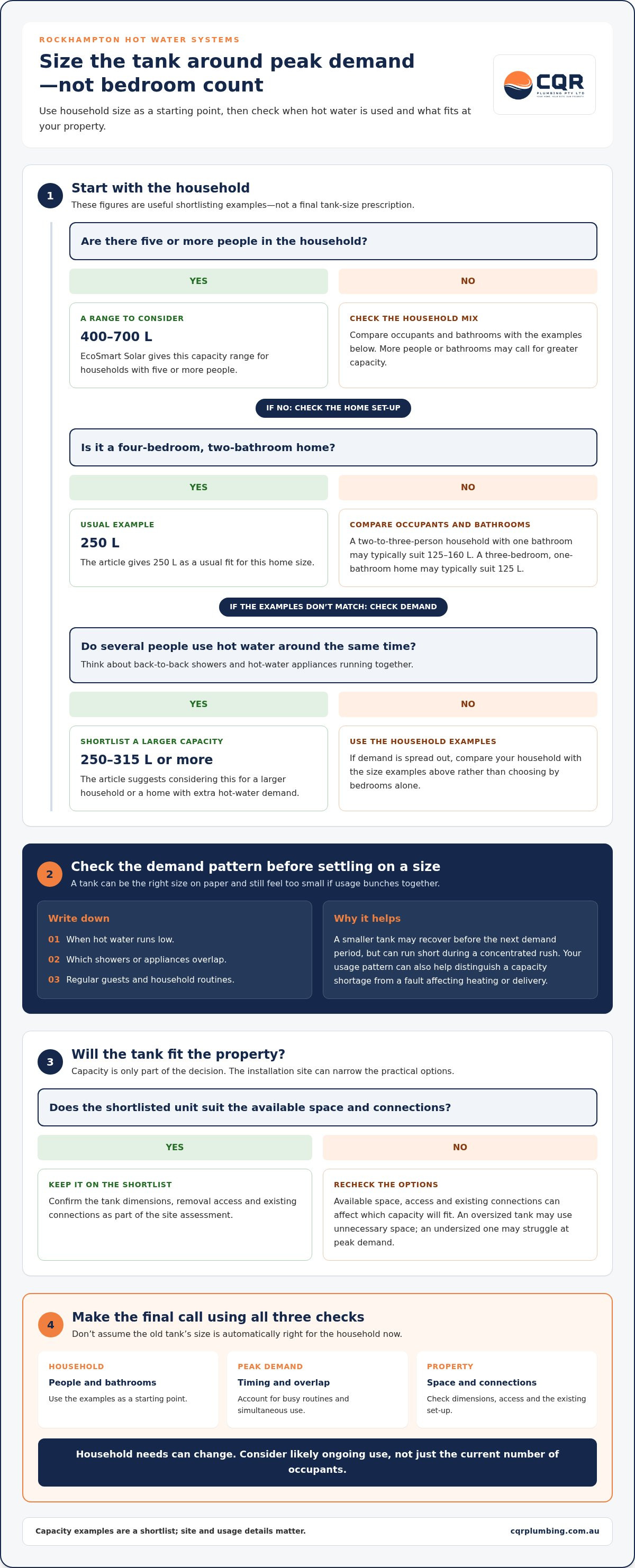
For a Rockhampton household of two to three people with one bathroom, 125-160 L is a typical fit. A four-bedroom, two-bathroom home usually suits 250 L, while larger homes may need 315 L or more.
Sizing by Household Size
Household size gives you a starting point, not a final tank size. A three-bedroom, one-bathroom home may typically suit 125 L, while a four-bedroom, two-bathroom home usually needs 250 L. Homes with more occupants or bathrooms may need greater capacity. For households with five or more people, EcoSmart Solar gives a 400-700 L capacity range to consider.
Use these examples to shortlist options, then compare them with your household’s hot water use. The number of bedrooms alone won’t show how many showers happen close together or whether hot water is used at the same time. In Rockhampton or Yeppoon, note the regular occupants, bathrooms and busy morning routines before choosing a replacement tank.
Capacity for Household Hot Water Use
Capacity should match daily use and peak demand, especially when several people shower or run hot-water appliances around the same time. A smaller tank may recover before the next demand period, but can run short during a concentrated rush. A larger household or a home with extra hot-water demand should consider 250-315 L or more.
Before choosing, write down when hot water runs low and which activities overlap. Include regular guests, school or work routines, and whether bathrooms are used at the same time. These details can help distinguish a capacity shortage from a fault affecting heating or delivery, and make replacement options easier to compare.
Consider the installation site too. Available space, tank dimensions, removal access and existing connections can affect which capacity will fit. An oversized tank may take up unnecessary space, while an undersized one may struggle to meet peak demand. Match the replacement to both the property and the people using it.
Hot water needs can change as a household grows or routines shift. Consider likely ongoing use, not just the current number of occupants. Because a system is a long-term purchase, capacity matters: choosing solely by the old tank’s size may repeat a mismatch that has caused shortages or left more capacity than needed.
For a tailored assessment of household requirements and installation needs, you can request a hot water system quote.
Electric, solar and heat-pump system options
Compare electric storage, solar and heat-pump systems by how each supplies energy for heating water. The choice affects equipment location, connections and how the system fits your household’s routine. Focus on what matters at your property rather than assuming one technology suits every Rockhampton home.
An electric storage unit uses an element to heat water held in a tank. It may suit households retaining an existing electric setup, but the tank still needs a suitable position and connections. Consider whether its current location provides practical access for installation and ongoing maintenance.
A heat pump draws heat from surrounding air or ground to warm stored water. Its outdoor position matters: allow for suitable airflow and consider the unit’s location in relation to living areas. Performance is linked to conditions around the unit, so the installer should assess the actual site rather than select equipment by capacity alone.
Solar hot water uses roof-mounted collectors to capture sunlight for heating water. Roof direction, shade, mounting space and the route between collectors and the tank all affect planning. Check whether trees or roof features shade the collector area, and consider whether the tank can be positioned to suit the existing plumbing.
For any system, compare the energy source with your household’s usage pattern. A home that needs hot water at predictable times may have different priorities from one with demand throughout the day. Consider your usual routine and possible installation locations before deciding which option suits the property.
- Electric storage: Consider the tank position, connection layout and existing electric setup.
- Solar: Assess roof exposure, shading and the practical route to the storage tank.
- Heat pump: Review outdoor placement, airflow and how the unit fits around the home.
For example, a shaded roof may make solar collectors less suitable for a particular installation, while limited outdoor space can affect heat-pump placement. These are site considerations, not reasons to rule out a technology before an assessment. Available space, access and existing plumbing help determine what can be installed sensibly.
Ask for the proposed equipment location and any connection changes to be explained before work begins. This clarifies how installation may affect the property and what access might be needed later. Comparing system operation and site requirements helps you make an informed choice for your Rockhampton household.
What are the signs that my hot water system requires maintenance or replacement?
Changes in temperature, water pressure, sound or appearance can indicate a hot water fault. Consider what you notice alongside the system’s age and repair history before deciding what needs attention.
Signs of a Faulty System
Start by checking the water at the tap. Inconsistent temperature, reduced pressure or slow heating can indicate a fault, but the cause may be a component rather than the tank itself. Note when the change occurs and whether it affects one outlet or the whole home. That detail helps a licensed plumber decide what to inspect.
Listen for unusual noises and look around the unit for visible leaks. Rust-coloured water may come from corrosion inside the tank or pipework. A sulphurous smell may result from bacteria reacting with system components. Don’t open the unit or attempt electrical repairs. Note the symptoms and arrange a professional inspection.
Signs Replacement May Be Needed
Electric storage systems are estimated to last 8-12 years. Age alone doesn’t prove a tank needs replacing, but persistent leaks, visible corrosion or repeated faults can make replacement a practical option. If repairs keep returning, compare the system’s condition and repair history with the reliability you need from it.
Consider warning signs together. For example, an older tank that leaks, heats slowly and produces rust-coloured water needs prompt assessment. A temperature fluctuation may have a repairable cause, while a leaking or corroded tank points to a more serious issue. An inspection can determine whether the fault is in the tank, controls or connected plumbing.
Preventative maintenance can identify wear before it develops into failure. Most hot water systems are recommended for servicing every 5 years, while a sacrificial anode replacement is recommended every 5 years. The anode is one component to consider during routine system maintenance. A licensed plumber can inspect its condition and assess other components during servicing.
Keep a simple record of the installation date, service visits, leaks and repairs. That timeline helps distinguish a developing pattern from an isolated problem. If the system is approaching the 8-12-year lifespan estimate and faults are recurring, discuss repair and replacement options together. The right decision depends on the tank’s condition, the fault and whether repairs can restore reliable operation.
Until the system is inspected, avoid touching wet electrical components or removing covers. If water is leaking, keep clear of electrical fittings and note where it appears. Clear observations help the plumber focus the inspection and explain the next step.
Hot water system options available in Rockhampton
Homes in Rockhampton, Yeppoon, Gracemere, Emu Park and surrounding Central Queensland regions can use electric storage, solar, heat-pump or gas hot water systems. The right option depends on household demand, available energy supply, installation space and preferred heating method. Compare these practical factors rather than choosing by system type alone.
Which electric hot water brands and models are available in Rockhampton? Electric storage models vary in tank capacity, dimensions and connection requirements. Match a model to peak household demand and the available space, then compare the manufacturer’s warranty and maintenance guidance. These details help narrow the choice beyond brand name alone.
Gas water heaters can use natural gas from pipeline networks or bottled gas. Continuous-flow gas units heat water on demand, so they don’t need tank capacity selected in the same way as storage systems. They may suit homes with limited tank space, provided the property has a suitable gas supply and the system can meet household demand.
Solar hot water uses roof collectors, usually with a backup heating source for periods of reduced sunlight. Solar systems in Rockhampton typically last 10 to 20 years. Check roof layout, collector position and existing pipework before selecting a replacement. A solar hot water system also needs professional installation that suits the property and its water connections.
Queensland’s Climate Smart Energy Savers program closed to new applications in December 2023. Eligible solar and heat-pump installations may generate Small-scale Technology Certificates under the national scheme, according to the Clean Energy Regulator. That certificate scheme is separate from the closed Queensland program, so consider each pathway on its own terms.
No hot water system can guarantee uninterrupted supply if a fault, outage or demand spike occurs. A correctly sized storage tank holds heated water, while continuous-flow gas heats water as needed. Solar systems use backup heating when sunlight is insufficient. Choose according to your household’s hot water use and the backup included with the system.
For a gas system, have gas connections and appliance work handled by a licensed gas fitter. For electric units, consider the existing electrical connection, tank location and household demand. A like-for-like electric replacement may be a practical choice when the current setup still suits the property. Changing system type can require different connections and site planning.
Before deciding, compare the energy source, heating method, available space, household demand, backup arrangement and servicing needs. These factors explain why a system may suit one Rockhampton property but not another. An installation assessment can identify connection changes and establish a clear scope of work before replacement begins.
CQR Plumbing: Hot water system installations
CQR Plumbing provides hot water system installations and repairs for households considering replacement or continued maintenance. If your electric unit is leaking, heating inconsistently or repeatedly needing attention, an assessment can help determine whether repair or replacement is the practical next step.
For a new system, the work can be planned around household demand, available space and existing connections. CQR Plumbing explains the proposed work and scope before it starts, so you understand what the installation involves. Hot water system repairs are also available when a fault can be addressed without replacing the unit.
Contact CQR Plumbing to discuss your hot water system, or visit cqrplumbing.com.au.
Plan your next hot water step
An electric hot water system replacement in Rockhampton is an opportunity to make the setup work better for your household, not simply reproduce the old arrangement. Before arranging an assessment, note the current unit’s capacity and location, any recent performance changes, and when your household needs the most hot water. These details help make the conversation about replacement and installation more useful.
Think about what matters most day to day: keeping the existing energy type, changing how water is heated, or addressing a fault first. Knowing your priorities makes it easier to discuss suitable next steps without committing to an option before the site and system have been assessed.
Share what you’ve noticed and what you want from a replacement. CQR Plumbing can help you move from uncertainty to a considered plan for your home.
A well-planned decision starts with the details that matter in your home.
Frequently Asked Questions
What should I expect during electric hot water system replacement in Rockhampton?
A replacement plan should account for the existing unit, site access and connections. Before work begins, clarify which services need isolating, whether the tank’s position will change and what will happen to the removed unit. Keep the hot water area accessible and tell the installer about tight gates, stairs or other obstacles. This helps the work proceed in an orderly way.
How do electric hot water systems compare with heat pump and gas systems in Rockhampton?
Compare how each system fits your property before weighing its heating method. An electric replacement may suit an existing electric connection, while a heat pump needs a suitable outdoor position. Gas depends on a pipeline or bottled gas supply. Roof access and collector placement matter for solar. If space is limited, the available installation area may narrow the practical options more than household preference.
What Queensland rebates or incentives are available for replacing an electric hot water system?
Eligibility depends on the selected system and whether the installation meets the relevant scheme requirements. Before choosing equipment, ask for the proposed system type and any certificate-related adjustment to be itemised in the written scope. This makes it easier to compare options on the same basis. An electric-to-electric replacement may have different eligibility from a change to solar or heat-pump technology.
What are the signs an electric hot water system needs replacement rather than repair?
If every hot tap is affected, the hot water system or its supply may be the cause. If only one outlet is affected, the issue may be local to that tap or its plumbing. Note where the problem occurs and whether it changes after the system reheats. A plumber can use those observations to narrow down the diagnosis. Tank leaks or corrosion need prompt assessment, while an isolated component fault may be repairable.
How does Rockhampton's climate and water quality affect electric hot water system choice and lifespan?
Electric storage systems typically last 8-12 years. Water quality can affect system components over time, so follow maintenance guidance and watch for leaks, unusual sounds or slower heating.
How much does electric hot water system replacement cost in Rockhampton, including installation?
An electric storage unit typically costs $700-$2,500 before installation, and a like-for-like electric replacement is usually the cheapest option. Installation work depends on access, existing connections and whether the setup changes.
Disclaimer
The information in this article is provided for general educational purposes only and should not be relied upon as professional plumbing, gasfitting, or legal advice. Every property and plumbing system is different, and the information may not be applicable to your specific circumstances. CQR Plumbing recommends that all plumbing and gasfitting work be inspected and carried out by a licensed professional in accordance with applicable Australian Standards and Queensland regulations. If you require advice specific to your property, please contact CQR Plumbing for an assessment.
