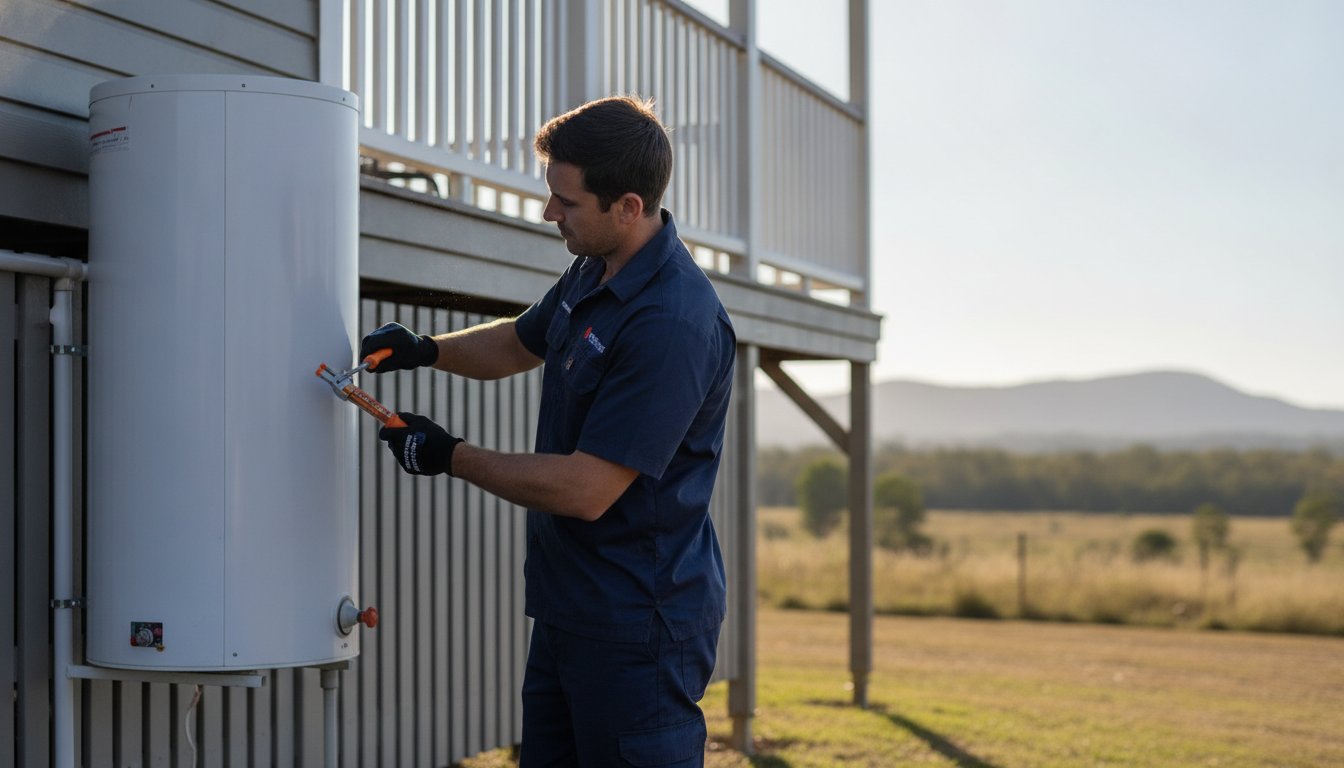
Expert Electric Hot Water Repairs in Rockhampton: The Homeowner’s Guide
What if that sudden blast of icy water in your morning shower isn't a sign that your tank is dead, but just a small component crying for help? It's a common stress for locals who aren't sure whether they need to call an electrician or a plumber when the water runs cold. We understand the dread of facing an unexpected bill or being pushed into a replacement you might not actually need. When you're looking for electric hot water repairs in Rockhampton, you deserve transparent advice that prioritises fixing the problem over making a quick sale.
In this guide, we'll show you how to diagnose common faults caused by Central Queensland’s mineral-heavy water and how to identify when a simple element swap is better than a full tank replacement. You'll learn about the expected lifespans of thermostats and valves, along with the specific maintenance steps that can add another decade to your system. By the end, you'll have a clear plan to restore your hot water quickly and keep your running costs under control.
Key Takeaways
- Learn to distinguish between a tripped circuit breaker and a failed heating element to speed up your hot water restoration time.
- Discover how mineral-heavy water in Central Queensland affects your tank and why timely maintenance is essential for electric hot water repairs Rockhampton residents can trust.
- Apply the "10-year rule" to accurately weigh up the cost of a component repair against the long-term benefits of a full system upgrade.
- Understand the critical role of the sacrificial anode in preventing internal tank rust and extending your unit's life by up to five or ten years.
- Identify which hot water faults are safe for homeowner checks and which tasks strictly require a licensed professional under Queensland plumbing regulations.
Diagnosing Common Electric Hot Water Faults in Rockhampton
Walking into a cold shower is a shock that nobody wants, but it's a reality for many locals dealing with aging systems. In Central Queensland, our specific water conditions can be quite aggressive on internal components, often leading to premature wear. Most homeowners find it difficult to tell if they're facing a minor component fix or a complete system failure. Recognising whether you have a total loss of heat or just lukewarm water is the first step in determining the right path for electric hot water repairs Rockhampton wide.
A complete lack of hot water usually points toward an electrical interruption. This might be a tripped circuit breaker in your switchboard or a failed thermostat. If the water is lukewarm, the culprit is often a faulty tempering valve or a heating element that's become "calcified" by mineral deposits. A Storage water heater needs a clean environment to transfer heat effectively. When Rockhampton’s hard water causes sediment to settle at the base of the tank, you may hear a rumbling or popping sound. This is actually the sound of water trapped beneath a layer of scale turning into steam, which is a clear signal that your system requires a professional flush or an element replacement.
Leaking water provides another set of clues. If you spot water pooling around the top of the unit, it's typically a loose fitting or a perished seal on a valve. However, water weeping from the base of the cylinder jacket is a more serious sign that the internal tank has corroded. Catching these signs early is the difference between a simple part swap and an expensive emergency replacement.
Initial Homeowner Checks Before Calling a Plumber
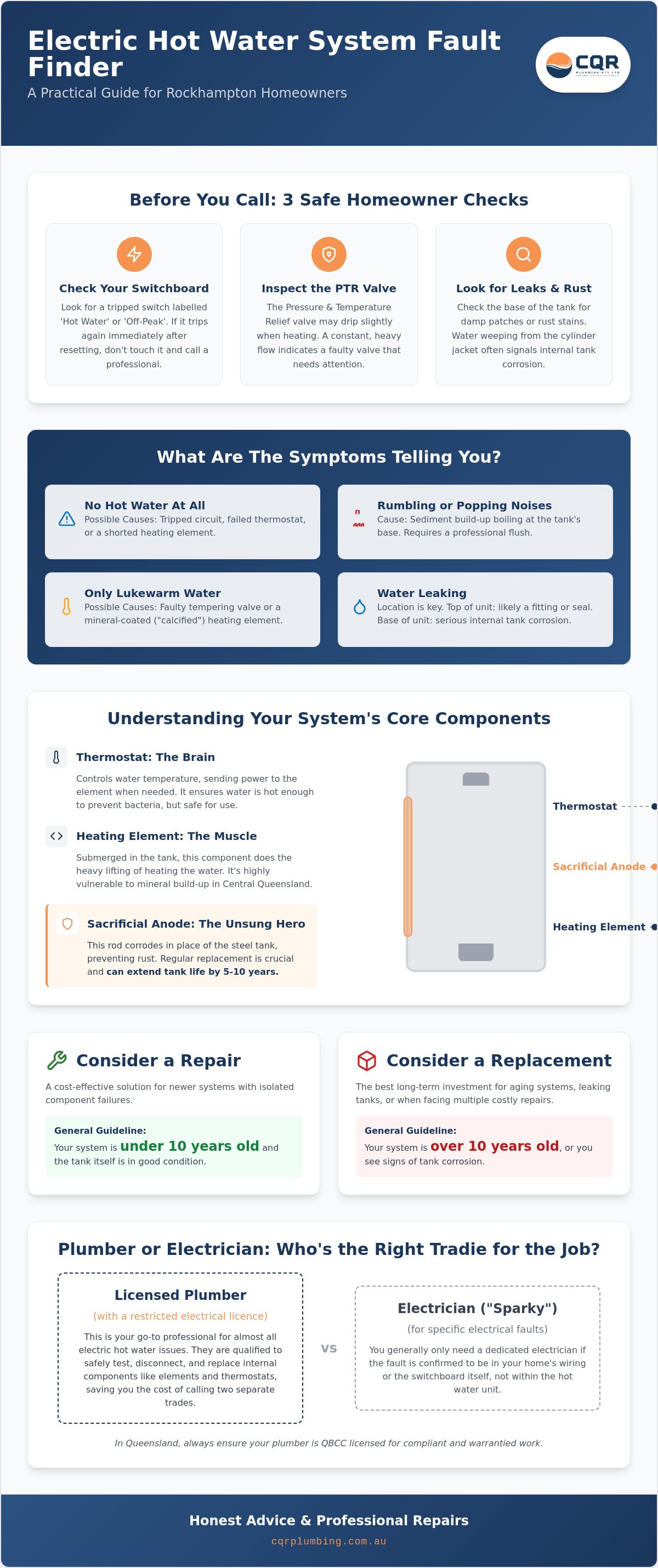
Before you call for help, there are a few safe checks you can do yourself. Start at your electrical switchboard and look for any switches labelled 'Hot Water' or 'Off-Peak' that have flicked to the 'Off' position. If it trips again immediately after you reset it, don't touch it again; this indicates a direct short that needs professional attention. Next, inspect the Pressure Temperature Relief (PTR) valve. It's normal for this to drip slightly while the tank is heating, but a constant, heavy flow means the valve is faulty. Finally, check the base of the tank for rust or damp patches, as this often indicates the vitreous enamel lining is failing.
Plumber or Electrician: Who Do You Actually Need?
A common source of confusion is whether to call a sparky or a plumber for an electric unit. While the power source is electrical, the system is a pressurised plumbing vessel. In Queensland, a licensed plumber who holds a restricted electrical licence is usually the most efficient choice. This specific qualification allows us to safely test, disconnect, and replace thermostats and elements without you needing to pay for two separate trades. You generally only need a dedicated electrician if the fault is located within the house wiring or the switchboard itself. For any hot water issues, always verify that your plumber is QBCC licensed to ensure the work is compliant and your warranty remains valid.
The Anatomy of an Electric System: Element vs. Thermostat
To understand why your hot water has disappeared, it helps to think of your electric storage unit as a giant, insulated kettle. Inside the tank, a copper or incoloy heating element sits submerged in the water. When the thermostat senses that the water temperature has dropped below your set point, it sends power to that element. The element then heats up, transferring energy directly into the water. For a broader look at energy efficiency and system types, the Australian Government's guide to hot water systems provides excellent context on how these units fit into a modern home’s energy profile.
While the element does the heavy lifting, the thermostat is the brain of the operation. It's responsible for ensuring the water reaches a safe temperature, usually around 60 degrees Celsius, to prevent bacteria growth while avoiding scalding. However, there's a third, often forgotten component: the sacrificial anode. This magnesium or aluminium rod hangs inside the tank and is designed to corrode in place of the steel tank walls. In the context of electric hot water repairs Rockhampton residents face, a depleted anode is often the root cause of tank failure, as it leaves the heating element and the tank itself vulnerable to the minerals found in our local water supply.
Heating Element Failure: Causes and Signs
In Central Queensland, mineral deposits are the primary enemy of heating elements. Over time, calcium and sediment settle at the bottom of the tank, eventually burying the element. This layer of scale acts as an insulator, forcing the element to work harder and run hotter to reach the same water temperature. Eventually, the internal wire snaps or the outer sheath splits, leading to a complete loss of heat. In some cases, we see "dry firing," which occurs if the power is turned on while the tank is empty, perhaps after a water main repair or a DIY drain-down. This causes the element to burn out almost instantly. In Rockhampton’s climate, you can generally expect a standard element to last between five and eight years before sediment buildup becomes a problem.
Thermostat Malfunctions and Safety Cut-outs
Thermostats often fail before the element does, usually because they are sensitive electrical components. Most modern thermostats include a high-limit safety cut-out switch. This is a manual reset button that "trips" if the water gets too hot, preventing the tank from boiling. If you find yourself constantly resetting this switch, the thermostat has likely lost its calibration and needs replacing. A stuck thermostat is even more dangerous, as it can cause the water to boil, resulting in steam or dangerously hot water at your taps. If you're noticing fluctuating temperatures or strange noises from your tank, it's worth having a professional inspect your thermostat and element before a small fault leads to a total system failure. Accurate testing with a multimeter is the only way to confirm if a thermostat is functioning within its safe operating range.
Repair vs. Replacement: A Comparison Framework for Homeowners
Deciding whether to patch up an old unit or invest in a new one is a common crossroads for homeowners. It comes down to balancing an immediate fix against the risk of a major failure just months down the track. To make this easier, I always suggest the "10-Year Rule". Most electric storage cylinders are designed with a lifespan of about 10 to 12 years. If your system is approaching this milestone, any major electric hot water repairs Rockhampton residents invest in should be weighed carefully against the age of the tank itself.
A cost-benefit analysis is the best way to make an informed choice. For example, if a repair costs roughly $400 to replace an element and a thermostat, but your tank is only six years old and shows no sign of rust, that's a smart investment. It essentially resets the clock on the most common failure points. On the flip side, spending that same $400 on a 13-year-old tank that's already weeping from the base is often throwing good money after bad. Once you see internal rust or water dripping from the jacket welds, the tank is terminal and no amount of part-swapping will save it. Modern units also feature significantly better insulation than those built a decade ago, helping to retain heat longer and potentially lowering your daily running costs.
When a Repair Makes the Most Sense
Repairing is usually the best path if the unit is under seven years old or still covered by the manufacturer's tank warranty. Most major brands offer a 7 or 10-year warranty on the cylinder. If the tank is structurally sound, replacing a faulty valve or a burnt-out element is a routine task that can easily add another three to five years of service. It's a fast, effective way to get your hot water back without the upheaval and cost of a full installation.
When Replacement is the Only Logical Option
Once a cylinder starts leaking from the main body or the welded seams, it's finished. There's no way to weld an internal glass-lined tank once it fractures or corrodes through. If your system is over 12 years old and starts showing signs of internal rust, or if your family has outgrown the current capacity, an upgrade is the only logical choice. Investing in a Professional Hot Water System Installation in Rockhampton ensures you get a unit sized correctly for your household needs, backed by a fresh warranty and improved energy standards.
Preventative Maintenance for Central Queensland Water Conditions
Rockhampton’s water supply is known for its mineral content, which can be particularly tough on electric systems. When we carry out electric hot water repairs Rockhampton wide, the most common issue we see is 'kettling'. This is that rumbling or popping sound caused by calcium and magnesium buildup at the base of the cylinder. This sediment doesn't just make noise; it acts as an insulator, trapping heat and eventually burning out your element. To combat this, I recommend having a professional flush your tank every few years to clear out the sludge that settles at the base, ensuring the heating process remains efficient.
Safety is just as important as efficiency. Every electric system must be fitted with a tempering valve, which is a legal requirement under Australian plumbing standards. This valve mixes cold water with the hot water leaving your tank to ensure it arrives at your taps at a safe 50 degrees Celsius. While the water inside the tank must stay at 60 degrees to kill bacteria like Legionella, the tempering valve prevents accidental scalding, which is vital for households with children or elderly residents. If your water feels too hot or fluctuates wildly, the tempering valve is often the first place we look.
The 5-Year Anode Check: A Local Necessity
The sacrificial anode is your system's unsung hero. It is a magnesium or aluminium rod that attracts corrosive elements in the water, sacrificing itself to prevent the steel tank from rusting from the inside out. In Central Queensland, these rods often disappear faster than the manufacturer predicts due to our specific water chemistry. Once the anode has completely dissolved, the water starts attacking your tank walls and heating element. Checking and replacing your anode every three to five years is a simple, cost-effective swap that can literally double the life of your hot water system.
Homeowner Maintenance: The 6-Month PTR Valve Test
The Pressure Temperature Relief (PTR) valve is a critical safety component that manages the pressure increases occurring naturally as water expands during heating. You should test this valve every six months to ensure it hasn't seized up. Simply lift the small lever on the valve for about five seconds. You should hear water rushing through the drain line. If the lever is stuck, or if water continues to drip heavily after you release it, the valve is faulty and needs immediate replacement. For more indicators that your system is struggling, check out our guide on 7 Signs of a Failing Hot Water System to stay ahead of potential breakdowns.
Don't wait for a flood or an icy shower to take action. You can book a preventative maintenance check today to ensure your system is protected against Rockhampton’s harsh water conditions.
Professional Electric Hot Water Solutions with CQR Plumbing
Hot water failure never happens at a convenient time. It's usually a Sunday night or right before a busy work week when your system decides to pack it in. Because we specialise in reactive maintenance, we've structured our service to handle these high-pressure situations with speed and precision. We provide a 24/7 emergency response across Rockhampton and the Capricorn Coast, ensuring you aren't left shivering through cold showers for days on end. Our goal is always a first-time fix, which is why we arrive with the diagnostic tools and common spare parts needed to get your system back online immediately.
Transparency is the backbone of how we handle electric hot water repairs Rockhampton wide. We don't believe in guesswork or "parts cannon" plumbing where components are replaced until the problem disappears. Instead, we use multimeters and pressure testing equipment to pinpoint the exact fault, whether it's a burnt-out element, a faulty thermostat, or a failed tempering valve. This methodical approach ensures you only pay for what's actually broken. We provide clear, upfront advice on whether a repair is a viable long-term solution or if your money would be better spent on a new unit, especially if the tank is showing the terminal signs of internal rust we discussed earlier.
Every repair we perform is strictly compliance-first. In Queensland, hot water work is notifiable work, and it must meet the standards set by the QBCC. By choosing a licensed professional with the right credentials, you're protecting your home's insurance and your manufacturer's warranty. We ensure every valve is correctly rated and every electrical connection is safe, giving you the peace of mind that your system will run reliably for years to come.
Why Central Queensland Trusts CQR
We've spent years in the field across Rockhampton, Yeppoon, and Gracemere, which gives us a deep understanding of local property types and water conditions. Whether you're a homeowner with a small 50-litre under-bench unit or a commercial manager looking after a large-scale storage bank, we have the technical expertise to manage the job. You can learn more about our hot water services and how we tailor our maintenance approach to suit the specific needs of Central Queensland residents.
Request a Quote for Your Hot Water Repair
Getting your hot water restored starts with an accurate assessment. When you contact us, having a few details ready can help us provide a faster service. Try to locate the compliance plate on the side of your tank to find the brand, the manufacture date, and the capacity in litres. This information allows us to check part availability before we even arrive at your door. If you're ready to get your system sorted, you can request a quote online or give us a call for immediate assistance. We'll provide a straightforward plan to get the heat back into your pipes without the stress.
Get Your Hot Water Flowing Again
Understanding the difference between a simple component fix and a terminal tank leak is the key to managing your household maintenance budget. By applying the 10-year rule and keeping a close eye on your sacrificial anode, you can avoid the stress of an unexpected breakdown. Rockhampton’s specific water conditions demand a proactive approach to prevent sediment from burning out your heating elements prematurely. Whether it's a quick valve swap or a full system upgrade, making the right choice now saves you time and money down the track.
When you find yourself without heat, don't settle for guesswork. For reliable electric hot water repairs Rockhampton families can depend on, you need a team that combines local knowledge with fully licensed, QBCC compliant workmanship. As a locally owned and operated business, we provide a 24/7 emergency hot water response to ensure you're never left in the cold for long. We're here to help you make the most informed decision for your home and your budget.
Get your hot water back today—Contact CQR Plumbing for expert repairs
You don't have to navigate plumbing faults alone. With the right maintenance and professional support, your system will be back to peak performance in no time.
Frequently Asked Questions
Is it worth repairing a 10-year-old electric hot water system?
It depends entirely on the condition of the internal cylinder. If the tank is structurally sound and isn't showing signs of rust or weeping, a minor repair like a thermostat or element swap is a sensible investment. However, if the tank is older than 12 years or has visible corrosion at the base, you're usually better off investing in a replacement to avoid a major failure shortly after the repair.
How much does it typically cost to replace an electric heating element in Rockhampton?
While the exact cost depends on the element type and the ease of access, a replacement is significantly more affordable than a full tank upgrade. You'll need to account for the licensed plumber's labour and the cost of the component. For electric hot water repairs Rockhampton residents find that a professional diagnostic check is the only way to get a firm, transparent quote that ensures the right part is fitted the first time.
Why is my electric hot water system leaking from the top?
Leaks from the top of the unit are usually caused by a loose fitting or a perished seal on a valve. It's common for the cold water expansion valve or the PTR valve to develop a leak over time. These are generally straightforward repairs that don't require a new tank, provided the water hasn't been allowed to sit and cause external corrosion to the cylinder jacket or electrical components.
How long do electric hot water systems usually last in Central Queensland?
In Central Queensland, you can generally expect an electric storage system to last between 8 and 12 years. Our local water hardness plays a major role in this timeframe, as mineral buildup can cause elements to burn out or tanks to corrode prematurely. Regular maintenance, such as checking the sacrificial anode every few years, is the most effective way to push your system toward that 12-year mark.
Can I change a hot water element myself?
No, you cannot legally or safely change a hot water element yourself in Queensland. This task involves both high-voltage electrical work and high-pressure plumbing, which strictly requires a licensed professional under Australian regulations. Attempting a DIY fix voids your insurance and manufacturer's warranty, and it poses a serious risk of electrocution or scalding. Always hire a plumber with a restricted electrical licence for these tasks.
Why does my hot water smell like rotten eggs?
This odour is usually caused by a reaction between specific minerals in the water and the sacrificial anode inside the tank. When certain bacteria react with the magnesium or aluminium rod, they produce hydrogen sulphide gas. We can often resolve this by flushing the system or replacing the standard anode with a different material better suited to local water chemistry, ensuring your hot water is fresh and odour-free.
What is a sacrificial anode and does my system have one?
A sacrificial anode is a magnesium or aluminium rod designed to corrode so your steel tank doesn't. Every electric storage system has at least one. It attracts the minerals that would otherwise cause rust in the cylinder. Because it's "sacrificed" over time, it eventually disappears. Replacing this rod every three to five years is one of the most effective ways to double the lifespan of your hot water unit.
How long does a professional hot water repair take?
Most standard electric hot water repairs Rockhampton homeowners require take between one and two hours to complete. This includes the time needed to diagnose the fault, drain the tank if an element swap is necessary, and test the unit after the new parts are fitted. If the repair is more complex or involves replacing multiple valves, it might take a bit longer, but we always aim for a fast, same-day restoration.
Disclaimer
The information in this article is provided for general educational purposes only and should not be relied upon as professional plumbing, gasfitting, or legal advice. Every property and plumbing system is different, and the information may not be applicable to your specific circumstances. CQR Plumbing recommends that all plumbing and gasfitting work be inspected and carried out by a licensed professional in accordance with applicable Australian Standards and Queensland regulations. If you require advice specific to your property, please contact CQR Plumbing for an assessment.