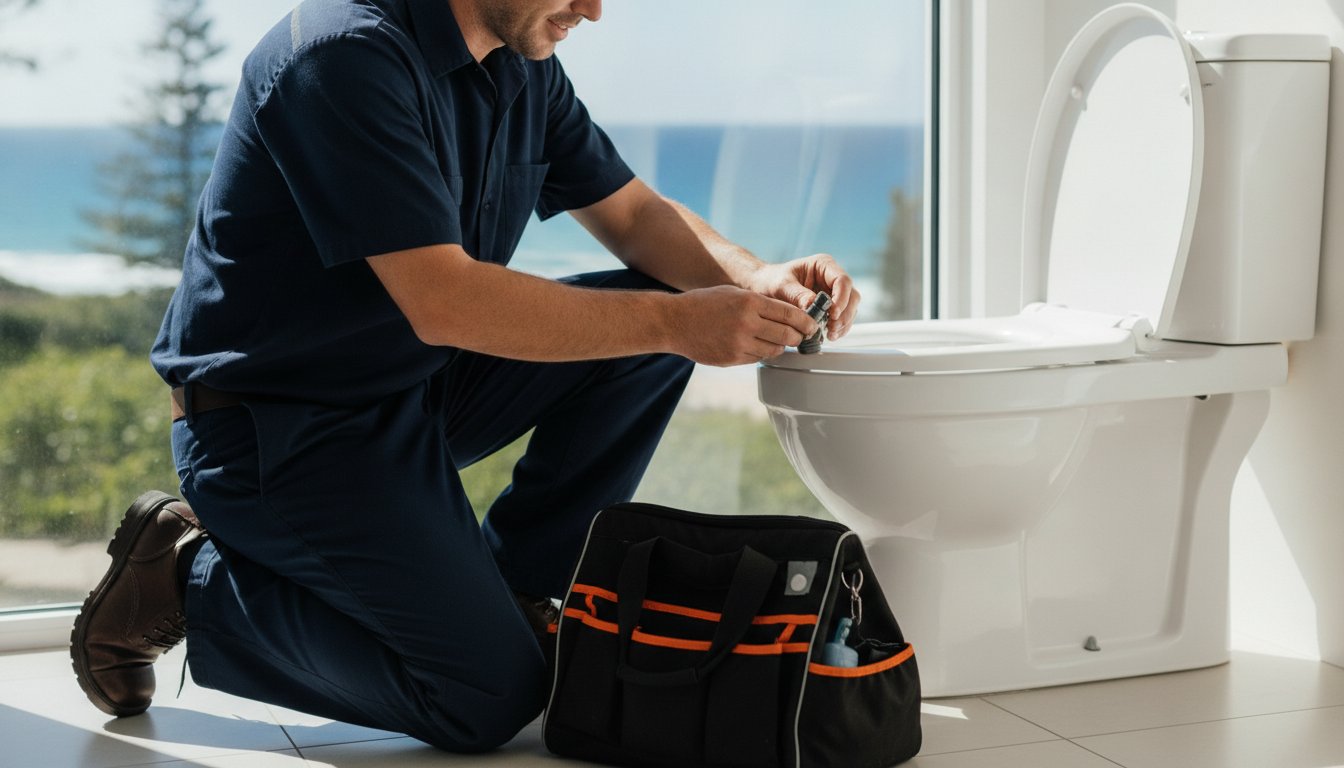
Expert Toilet Repairs Yeppoon: The Complete Guide to Fixing Leaks and Flushes
Have you ever stopped to calculate how much a silent leak is actually costing you under the tiered water pricing used by Livingstone Shire Council? It's easy to ignore a faint hissing sound or a phantom flush during the night, but these minor annoyances are often the first signs of a failing system. When seeking toilet repairs Yeppoon homeowners frequently discover that what seemed like a simple drip has been wasting hundreds of litres of water every single week.
I understand how stressful it is to worry about potential water damage to your bathroom flooring and cabinetry. This guide provides the expert insight you need to identify common faults, from worn seating washers to non-compliant inlet valves. You'll learn about the latest WELS efficiency standards and the practical steps required to ensure your repairs meet the Plumbing Code of Australia. I'll also explain how to distinguish between a quick fix and a task that requires a licensed plumber to prevent costly long-term issues. By the end of this article, you'll have the confidence to achieve a quiet, efficient toilet and lower your household water bills.
Key Takeaways
- Identify the early warning signs of cistern failure, such as phantom flushing or high-pitched whistling, to prevent unnecessary spikes in your council water rates.
- Learn how to distinguish between minor inlet valve issues and more complex outlet valve faults that require a licensed professional to ensure long-term reliability.
- Evaluate whether your existing suite is worth fixing or if modern efficiency standards make a full replacement the smarter financial choice for toilet repairs Yeppoon.
- Discover practical maintenance tips you can perform safely at home, including the "dye test" to uncover silent leaks that often go unnoticed for months.
- Understand why using high-quality, Australian-standard components is essential for maintaining compliance and protecting your home from potential water damage.
Common Signs Your Toilet Needs Professional Repair in Yeppoon
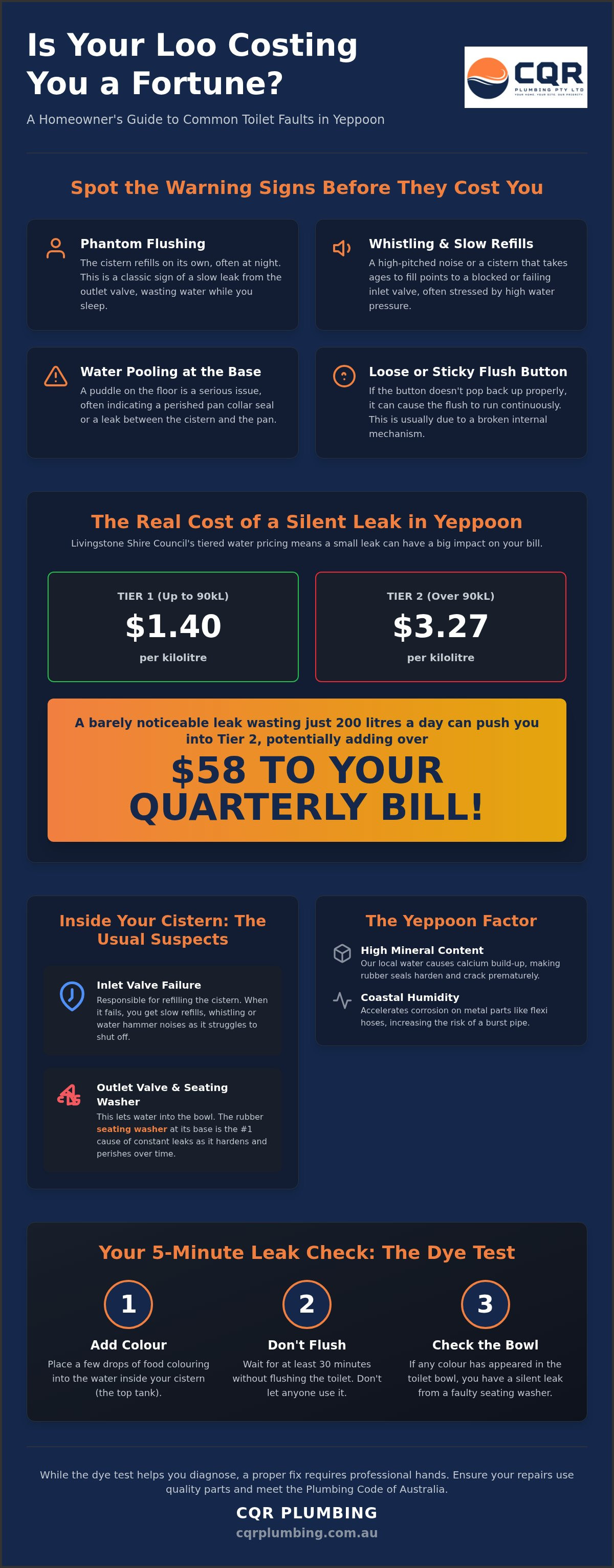
Recognising when your toilet is failing is the first step toward avoiding a flooded bathroom or a massive water bill. While some issues are obvious, others are subtle and easy to overlook until they cause structural damage. If you notice water constantly trickling into the pan after a flush, it's usually a sign that the seating washer has perished or debris is preventing the outlet valve from sealing. Understanding how a flush toilet works helps you see that even a tiny gap in this seal can waste thousands of litres over a quarter. You should also watch for these specific warning signs:
- The cistern takes an unusually long time to refill or makes a high-pitched whistling noise, which often points to a blocked or failing inlet valve.
- Phantom flushing occurs, where the toilet refills itself periodically without anyone actually using it.
- Water pools around the base of the toilet pan on the floor, suggesting a leak from the pan collar or cistern-to-pan seal.
- A loose or "sticky" flush button fails to return to its original position, often caused by a broken internal bridge or button bezel.
The Impact of Central Queensland Conditions
Yeppoon's unique environment plays a major role in how often you'll need specialised tap and toilet servicing. The mineral content in our local water supply, sourced from Water Park Creek and the Fitzroy River, can lead to calcium build-up on internal rubber components. This mineral load causes seals to harden and crack much faster than in other regions. Additionally, our coastal humidity accelerates the corrosion of external stainless steel flexi hoses. If these hoses aren't inspected regularly, the braided wire can fray and snap under pressure. In older Yeppoon homes, ground movement can also cause earthenware pipes to shift, leading to degraded pan collars that leak sewage into the floor waste or under the tiles.
The Hidden Costs of a Leaking Toilet
A minor cistern leak might seem like a small problem, but it carries a heavy price tag. In Yeppoon, the Livingstone Shire Council uses a two-tier billing system for water consumption. If a silent leak pushes your quarterly usage over 90kL, your water cost jumps from $1.40 to $3.27 per kilolitre. Beyond the bill, slow leaks often track under floor tiles or into MDF cabinetry, causing timber to swell and rot. If you notice water at the base of the pan, it could also indicate a partial blockage in the main line. This is why professional toilet repairs Yeppoon residents rely on are essential; we don't just stop the drip, we identify the root cause to protect your home's structural integrity.
Understanding Your Cistern: Components and Common Faults
To the untrained eye, the inside of a toilet cistern looks like a confusing jumble of plastic and rubber. In reality, it's a finely tuned gravity-fed system designed to manage water flow with precision. When you're dealing with toilet repairs Yeppoon residents often find that a single failing component can disrupt the entire cycle. The system relies on four main parts: the inlet valve, which fills the tank; the outlet valve, which releases the flush; the flush buttons and linkage; and the stop tap and flexi hose, which connect the unit to your home's mains water supply.
Inlet Valve Failures and Noisy Refills
The inlet valve is your cistern's gatekeeper. A worn float mechanism or a filter clogged with sediment from our local water supply can cause the cistern to refill at a snail's pace. In certain hilly parts of Yeppoon, high mains water pressure often results in a loud whistling or "hammering" sound as the valve struggles to shut off completely. While you can sometimes clean a clogged filter, a perished internal diaphragm usually means it's more cost-effective to replace the entire assembly. Modern, high-quality inlet valves are designed to handle pressure fluctuations better than the older ball-cock styles found in many Capricorn Coast homes.
The Seating Washer: The #1 Cause of Leaks
If you see water constantly running into the pan, the seating washer is almost certainly the culprit. A seating washer is the rubber seal responsible for preventing constant pan trickles. Over time, this rubber perishes, hardens, or becomes distorted due to constant immersion in water. When this happens, it can no longer form a watertight seal against the outlet valve base. This leads to common household leaks that can waste a staggering amount of water if left unchecked. While standard washers are readily available, we often recommend high-performance silicone versions that resist chemical breakdown and last significantly longer in our local climate.
Don't forget the external components either. The stop tap and flexible connector hose are the most critical safety points in your bathroom. If you notice any rust, fraying, or "kinking" on the stainless steel braid of your flexi hose, it needs immediate attention. These hoses are under constant mains pressure and a burst can lead to a catastrophic indoor flood in minutes. If you are unsure about the age or condition of your cistern's internals, it might be time to request a professional inspection to ensure your plumbing remains compliant and efficient.
Toilet Repair vs. Replacement: Making the Right Call
Deciding whether to patch up an old cistern or invest in a brand-new suite is a common dilemma for homeowners. While the vitreous china pan itself can last for decades, the internal mechanical components certainly don't. For many toilet repairs Yeppoon residents encounter, the age of the unit is the deciding factor. If your toilet belongs to a discontinued line, sourcing specific seals or linkages becomes a costly exercise in frustration. When weighing up your options, it helps to understand the long-term savings and performance gains associated with toilet retrofits and replacements.
When to Choose a Professional Repair
If your suite is less than ten years old and the porcelain is in good condition, a professional service is typically the most logical choice. Most modern toilets use standardised internal valves that are readily available and simple to install. If your leak is strictly limited to the cistern's internal washers or valves, a comprehensive service will restore it to like-new performance. This approach is ideal when you want to avoid the mess and expense of a full installation, particularly if your current pan is a "back-to-wall" model that matches your bathroom's existing footprint and décor perfectly.
When Replacement is the Smarter Investment
There are times when a repair is simply throwing good money after bad. If you discover a hairline crack in either the pan or the cistern, you're looking at a major safety hazard that requires an immediate upgrade. Porcelain doesn't just leak; it can fail catastrophically under weight if the structural integrity is compromised. You should also consider a replacement if you're still using an outdated single-flush system. Upgrading to a modern 4.5/3 litre dual-flush toilet can reduce your water consumption by more than 50% compared to older 9 or 12-litre models. If you're dealing with recurring leaks from the pan collar or internal floor seals, a fresh installation ensures a compliant, watertight connection to your home's drainage system. This is a far more permanent solution than repeatedly replacing seals on a failing unit.
Homeowner Maintenance and Preventative Checks
Preventative maintenance is the most effective way to avoid the stress of an emergency plumbing call-out. Many of the issues that lead to toilet repairs Yeppoon households face start as minor, invisible faults. By performing a few simple checks every few months, you can catch these problems early, saving money on your water bill and protecting your bathroom from potential water damage. Most of these tasks require no tools and only a few minutes of your time.
How to Perform a Toilet Dye Test
Silent leaks are a frequent problem in Central Queensland, often caused by the mineral-heavy water degrading the internal seals. Because these leaks don't make a sound, they can go unnoticed for months. The dye test is a foolproof way to identify if your outlet valve is failing. Follow these steps to check your cistern:
- Step 1: Carefully remove the cistern lid and place it on a flat, stable surface. Add about ten drops of dark food colouring into the water inside the cistern.
- Step 2: Leave the toilet alone for 15 to 20 minutes. Do not flush the toilet during this period.
- Step 3: Look into the toilet pan. If you see coloured water trickling into the bowl, your seating washer is perished and needs replacement.
Visual Inspection of the Flexi Hose
The flexible connector hose is the braided stainless steel line that connects your wall tap to the cistern. While they look sturdy, these hoses have a finite lifespan and are prone to internal corrosion. Look closely for "tea staining," which appears as small brown or orange rust spots on the metal braid. This is a clear sign that the internal structure is compromised. Most flexible connectors in Australia have a recommended lifespan of 10 years, though our coastal humidity can shorten this significantly. A burst flexi hose is a leading cause of indoor flooding in Yeppoon homes. If yours looks frayed, kinked, or shows any signs of rust, it is a high-priority repair.
Isolation Valves and Flush Buttons
Test your isolation valve (the stop tap at the wall) by turning it clockwise. It should move freely and shut off the water flow completely. If it's seized or leaking from the spindle, you won't be able to stop the water in an emergency. Additionally, keep the area around your flush buttons clean. In our coastal environment, salt air and grime can build up in the button housing, causing them to stick or fail to return to their original position. A quick wipe with a damp cloth during your regular cleaning routine prevents this mechanical friction from wearing down the internal linkage.
Professional Toilet Servicing in Yeppoon and Rockhampton
While a DIY fix might stop a drip temporarily, professional tap and toilet servicing is designed to ensure your system remains reliable for years to come. At CQR Plumbing, we take a comprehensive approach that goes far beyond simply swapping out a washer. We focus on the entire unit, from the cistern internals to the floor fixings, ensuring every component meets Australian Standards. Using high-quality, standardised parts is essential because cheap, generic alternatives often fail prematurely in our Central Queensland climate, leading to repeat call-outs and higher long-term costs.
For property managers and real estate agents, our specialised real estate plumbing services provide peace of mind and clear documentation. We understand that a leaking toilet in a rental property isn't just a maintenance issue; it's a water efficiency compliance risk. Our team ensures all installations meet the current WELS star rating requirements, which is critical for landlords who wish to pass on water consumption charges to tenants. Every professional service we conduct includes a full system pressure and leak check to identify any hairline cracks or failing seals before they become expensive emergencies.
Our Multi-Point Toilet Service Checklist
A thorough inspection is the hallmark of a trusted local professional. We don't just look at what's broken; we look at the potential for future failure. Our servicing protocol includes:
- Testing flush volumes: We adjust the internal mechanisms to ensure the half and full flushes are optimised for water efficiency and compliant with the Plumbing Code of Australia.
- Lubricating seals and linkages: We use specialised plumbing lubricants to prevent rubber seals from hardening and to ensure mechanical linkages operate without friction.
- Verifying floor fixings: A loose toilet pan can move and break the pan collar seal. We check that all fixings and pan-to-wall seals are secure and watertight.
Booking Your Yeppoon Toilet Repair
When you need reliable toilet repairs Yeppoon residents can trust, we provide a fast and efficient response. We offer 24/7 emergency support for urgent situations like overflowing toilets or major cistern failures that can't wait until morning. Our goal is to provide transparent quoting and clear communication, so you know exactly what the repair involves and how much it will cost before we start. We pride ourselves on being a dependable partner for both residential homeowners and commercial clients across the Capricorn Coast.
Protect Your Home with Expert Toilet Maintenance
Taking the time to identify a silent leak or inspect a frayed flexi hose can save you from a catastrophic indoor flood and the burden of high council water bills. We have covered how to distinguish between a simple valve service and the necessity of a full suite replacement, ensuring you make informed decisions based on safety and efficiency. For reliable toilet repairs Yeppoon homeowners can trust, it is essential to use high-quality, compliant parts that withstand our local coastal conditions.
CQR Plumbing is a locally owned Capricorn Coast business dedicated to keeping your home's plumbing in peak condition. Our fully licensed and insured maintenance experts are available for 24/7 emergency response if you face an urgent blockage or major leak. We prioritise transparent communication and long-term reliability for every residential and real estate client we serve. Stop wasting water and money.
Don't let a minor drip turn into a major expense. Reach out to your local plumbing partners and enjoy the peace of mind that comes with a quiet, efficient, and compliant bathroom.
Frequently Asked Questions
How much does it cost to fix a leaking toilet in Yeppoon?
The total cost depends on whether the issue is a simple seating washer replacement or a complete overhaul of the internal valve assemblies. Factors such as the age of your toilet suite and the availability of specialised parts also influence the final price. We provide transparent quoting after a physical inspection to ensure you only pay for the specific components required to restore your system to full Australian Standards compliance.
Why is my toilet making a whistling noise after I flush?
A whistling noise is typically caused by a vibrating internal diaphragm within the inlet valve or a filter that has become partially blocked with sediment. High mains water pressure in certain elevated areas of Yeppoon can often make this sound more pronounced. As the valve attempts to shut off, the water is forced through a restricted opening, creating that high-pitched whistle. Replacing the valve assembly usually solves the problem permanently.
Can I fix a leaking toilet cistern myself or do I need a plumber?
While you can perform basic visual checks and dye tests, most internal cistern repairs must be carried out by a licensed plumber under Queensland regulations. Any work involving the mains water connection or the internal valves requires professional expertise to ensure the installation meets the Plumbing Code of Australia. Incorrect DIY attempts often lead to slow, undetected leaks that can cause significant damage to your bathroom flooring and cabinetry.
What causes a toilet to flush by itself every few hours?
This phenomenon is known as a phantom flush and is caused by water leaking from the cistern into the pan. When the water level in the tank drops below a specific point, the float triggers the inlet valve to refill the cistern. This cycle continues until the outlet valve or seating washer is repaired. It is a major contributor to high water bills and should be addressed promptly by a professional.
How long do the internal parts of a toilet cistern typically last?
Internal cistern components like inlet and outlet valves generally have a reliable lifespan of five to ten years. However, the mineral content in our local water supply and the coastal humidity in Central Queensland can cause rubber seals and seating washers to perish in as little as three years. Regular servicing allows us to identify hardened or distorted seals early, preventing water wastage and ensuring the mechanical linkages continue to operate smoothly.
Is a leaking toilet considered a plumbing emergency?
A leak is an emergency if it is causing an active flood, cannot be isolated at the wall tap, or if it is the only toilet in your home and is unusable. We offer a 24/7 response for urgent toilet repairs Yeppoon residents might face, such as burst flexi hoses or overflowing pans. Even a silent leak is urgent because it can lead to structural rot and expensive water consumption charges.
Should I replace my old single-flush toilet with a dual-flush model?
Upgrading to a modern dual-flush model is a highly effective way to reduce your household water consumption. Older single-flush units can use up to 12 litres per flush, whereas modern WELS-rated dual-flush systems use just 3 litres for a half flush. This change significantly lowers your quarterly water charges from Livingstone Shire Council. Newer models are also more reliable and use standardised parts that are easier to service than discontinued older suites.
Why is there water pooling around the base of my toilet pan?
Water at the base of the pan often indicates a failure of the pan collar seal or the foam doughnut between the cistern and the pan. It can also be caused by a hairline crack in the vitreous china or a leaking flexible connector hose. Because this water can seep into the floor structure or under tiles, it requires a professional inspection to identify the source and prevent long-term damage to your bathroom's structural integrity.
Disclaimer
The information in this article is provided for general educational purposes only and should not be relied upon as professional plumbing, gasfitting, or legal advice. Every property and plumbing system is different, and the information may not be applicable to your specific circumstances. CQR Plumbing recommends that all plumbing and gasfitting work be inspected and carried out by a licensed professional in accordance with applicable Australian Standards and Queensland regulations. If you require advice specific to your property, please contact CQR Plumbing for an assessment.