Gas Appliance Installation Yeppoon: The Homeowner’s Safety & Compliance Checklist
Did you know that attempting a DIY gas connection in Central Queensland doesn't just risk a dangerous leak; it could also completely void your home insurance policy? When it comes to gas appliance installation Yeppoon homeowners often feel caught between the excitement of a kitchen upgrade and the confusion of local safety regulations. Whether you're installing a new gas cooktop, a high-efficiency heater, or a hot water system, the stakes are high. It isn't just about getting the burners to light; it's about ensuring every connection meets strict Australian Standards to keep your family and property safe.
We understand that the technical side of gas fitting can feel overwhelming, especially since Yeppoon relies entirely on LPG rather than a piped natural gas network. This guide ensures your new installation is handled correctly from the start. We'll walk you through the necessity of a Gas Compliance Certificate, the best practices for bottle placement under Australian Standards, and how the 2025 regulatory updates regarding compliance plates affect your property. You'll gain the practical knowledge needed to ensure your home remains a safe, leak-free environment while protecting your long-term investment.
Key Takeaways
- Verify that your installer holds a specific gas fitting endorsement from the QBCC, as a standard plumbing licence does not legally permit gas work in Queensland.
- Ensure any new appliance is compatible with LPG, as Yeppoon and the Capricorn Coast do not have access to a reticulated natural gas network.
- Protect your gas lines from coastal salt air corrosion by using high-grade copper and appropriate protective coatings, especially in suburbs like Cooee Bay.
- Prepare for your gas appliance installation Yeppoon by clearing the workspace and confirming that your gas bottle location meets current Australian safety clearances.
- Insist on a formal pressure test and a Gas Compliance Certificate upon completion to ensure your home insurance remains valid and your system is leak-free.
Essential Safety Standards for Gas Appliance Installation in Yeppoon
In Queensland, the law is very clear. Only a licensed gas fitter can perform a gas appliance installation Yeppoon. While many homeowners assume any plumber can handle the job, gas fitting is a specialised endorsement that requires specific training and certification. This distinction exists because gas is inherently volatile. A minor mistake in a joint or a poorly calibrated regulator can lead to catastrophic results. We follow AS/NZS 5601.1, which is effectively the "bible" for our industry. This standard covers everything from the required clearances between a cooktop and a rangehood to the specific ventilation needed for indoor gas heaters to prevent oxygen depletion.
Most residential jobs involve Type A appliances. These include standard domestic ovens, hot water units, and BBQs. Type B appliances are generally reserved for large-scale industrial or commercial settings. Because our region relies heavily on Liquefied Petroleum Gas (LPG), we must also adhere to AS/NZS 1596 for the safe storage and handling of cylinders. Attempting a DIY installation is illegal and dangerous. Beyond the physical risk, it almost certainly voids your home insurance. If a fire occurs and you cannot produce a valid Gas Compliance Certificate, your insurer is legally entitled to reject the claim, leaving you with no financial protection.
Why Licensing Matters on the Capricorn Coast
You can verify any tradesperson's licence through the Queensland Building and Construction Commission (QBCC) online portal. Using an unlicensed handyman might save a few dollars upfront, but it often leads to improper flueing or poor combustion. This results in carbon monoxide buildup. This gas is odourless and lethal, making professional verification a non-negotiable safety step. A licensed professional ensures the appliance is tuned correctly for the local gas supply, ensuring efficiency and safety.
Understanding Gas Pressure and Pipe Sizing
A common issue we see is homeowners buying a high-powered appliance without checking if their existing pipework can handle the load. If the pipes are too small, the gas pressure drops. This causes the appliance to underperform or soot up. A megajoule rating is the standard measure of how much gas an appliance consumes during operation. Your gas fitter will calculate the total load on your system to determine if a pipe upgrade or a new regulator is required for your gas appliance installation Yeppoon. This ensures that when you turn on the hot water while the stove is running, both appliances receive a steady, safe supply of fuel.
Your Pre-Installation Checklist: Preparing Your Home for a New Gas Appliance
Planning ahead for your gas appliance installation Yeppoon can save you significant time and prevent costly delays on the day of the fit-off. Most homeowners assume the process starts when the plumber arrives, but your preparation is what ensures a smooth, compliant installation. The most critical step is verifying your fuel type. Because Yeppoon and the Capricorn Coast do not have a reticulated natural gas network, every gas appliance in our region must be compatible with LPG (bottled gas). If you have accidentally purchased a natural gas model, it will require a conversion kit and different injectors to operate safely, which can add unexpected costs and time to the project.
Safety clearances are another major factor that we check immediately upon arrival. According to AS/NZS 5601.1, there are strict "no-go zones" around gas burners. For a standard cooktop, you generally need a minimum vertical clearance of 600mm to a rangehood grease filter and 650mm to an exhaust fan. If your overhead cupboards or splashbacks are made of combustible materials, they must be protected or moved to meet Queensland safety regulations. Ensuring these distances are correct before we arrive prevents the frustration of a "failed" installation where the appliance cannot be legally commissioned.
Selecting the Right Location
Where you place your appliance directly impacts your hip pocket. Positioning a new gas hot water system or cooktop closer to your existing gas bottle bay reduces the amount of copper piping and labour required. We also have to consider external safety distances. Gas cylinders and regulators must be kept at least 1.5 metres away from any ignition source, such as your air conditioning compressor or an external power point, and away from windows or vents where gas could enter the home in the event of a relief valve discharge. If you aren't sure if your proposed spot is legal, you can request a quote for a pre-installation site check.
Measuring Up for Success
Don't rely on the "standard" size listed on the box. If you are replacing an old unit, measure the existing cabinetry cutout carefully. Modern appliances often have different depths or wider bases that might not fit your current stone or laminate benchtop. Beyond the kitchen, we also need clear access. If the gas appliance installation Yeppoon requires running new lines through a crawl space or roof cavity, please ensure these areas are clear of obstructions. A bit of housecleaning before the tradey arrives ensures we can get straight to work and complete the job efficiently.
LPG vs. Natural Gas: Choosing the Right Setup for Yeppoon and the Capricorn Coast
Unlike major cities, Yeppoon and the wider Capricorn Coast region do not have access to a piped natural gas network. This is a common point of confusion for newcomers moving up from the south. For every gas appliance installation Yeppoon homeowners undertake, the fuel source will be Liquefied Petroleum Gas (LPG) delivered in 45kg cylinders. Using a dual-bottle setup is the industry standard here, connected by a manual or automatic changeover valve. This valve is a lifesaver; it allows one cylinder to be "in use" while the other remains "in reserve," ensuring you never get caught out with a cold shower on a Sunday night.
If you have found a bargain oven or cooktop online designed for natural gas, don't panic. Most reputable brands offer conversion kits. However, this isn't a task for a weekend warrior. A licensed fitter must replace the injectors and adjust the aeration to ensure the flame burns blue and clean. LPG has a much higher energy content than natural gas, so incorrect settings can lead to dangerous soot buildup and carbon monoxide risks. We always verify the appliance data plate before starting to ensure the conversion is performed to the manufacturer's exact specifications.
Managing Your LPG Supply
Checking your gas levels is simple once you know the trick. Pour a jug of hot tap water down the side of the cylinder. After a few seconds, run your hand down the metal. The bottle will feel cold where the liquid gas remains and warm where it is empty. The line where the temperature changes is your current gas level. To keep these heavy bottles safe, they must sit on a level, non-combustible concrete pad. This prevents the cylinders from shifting or tipping, which could snap the copper pigtail connections. Always ensure the path to your bottles is clear for the delivery truck to swap them out safely.
Coastal Durability for Gas Hardware
The salt air in suburbs like Cooee Bay, Lammermoor, and Zilzie is incredibly aggressive toward metal. Standard fittings that last decades inland can fail in just a few years here. We prioritise high-grade copper and brass fittings because they resist the pitting and "tea staining" caused by the coastal environment. It is vital to check your regulator periodically. If you notice a white, chalky powder or green corrosion around the fittings, it is a sign that the salt is winning. This corrosion can seize the internal components of the regulator, leading to inconsistent gas pressure. A quick visual check every few months as part of your home maintenance can prevent a total system failure during a gas appliance installation Yeppoon.

The Compliance Checklist: How to Verify Your Installation is Legal and Safe
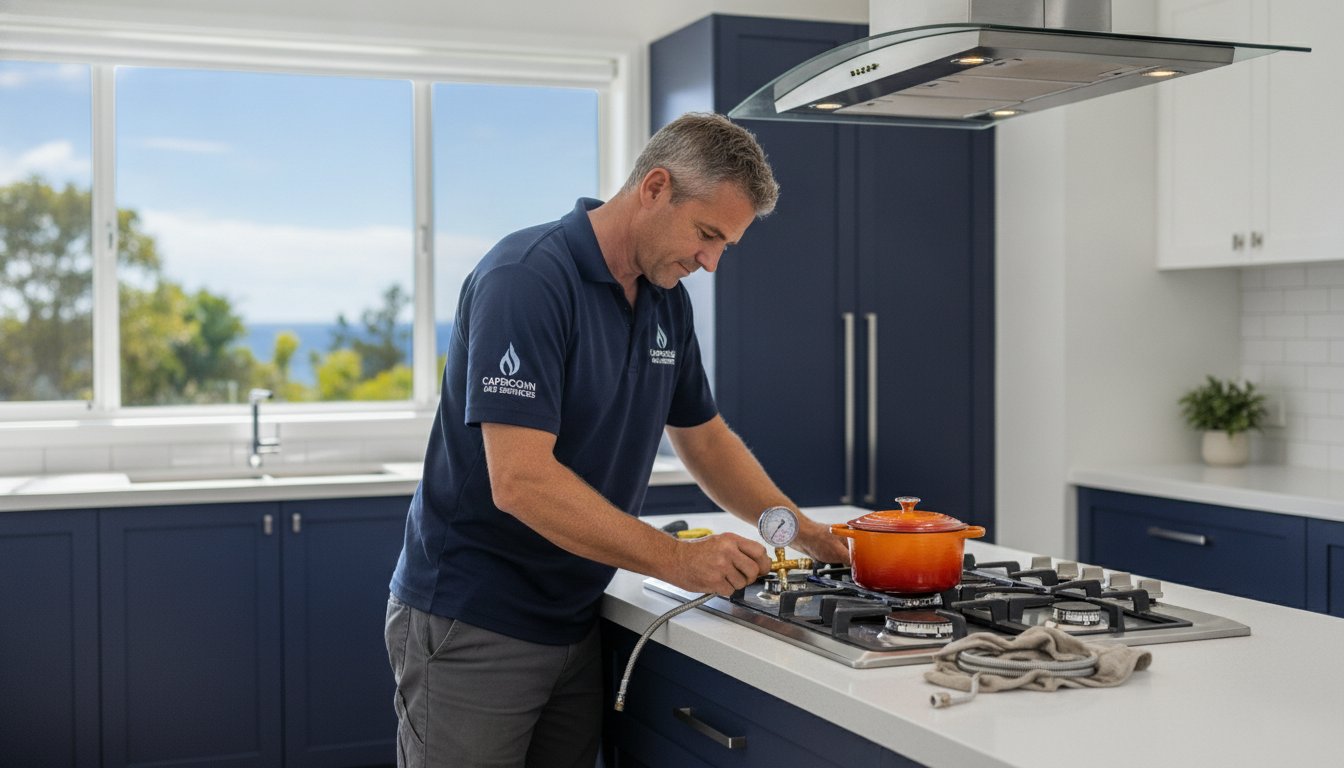
Once the physical pipework is connected for your gas appliance installation Yeppoon, the job enters its most critical phase: testing and certification. We don't just turn it on and hope for the best. A licensed fitter must perform a static pressure test using a manometer. This tool measures the gas pressure within the lines to an incredibly fine degree. If the pressure drops even slightly over a set period, it indicates a leak that must be found and fixed before any gas is introduced to the appliance. This is the only way to guarantee the integrity of every joint and fitting in your home.
Following the test, we move to commissioning. This involves firing up the appliance to ensure it is operating at the correct pressure and that the burners are tuned properly. We verify that the gas is burning efficiently and that all safety features, such as flame failure devices, are fully operational. This step is what separates a professional tradey from an amateur; it ensures the appliance doesn't just work, but works exactly as the manufacturer intended.
What Paperwork Should You Receive?
The regulatory landscape in Queensland saw a significant update in July 2025. While physical gas compliance plates were traditionally fixed inside the electrical meter box, they are no longer a mandatory requirement for most new residential installations, with the exception of caravans. Instead, the focus is now on the Gas Compliance Certificate, often referred to as a Form 4. You must receive this certificate within a few days of the job being completed. This document is your legal proof that the work meets Australian Standards. Your gas supplier will often refuse to deliver a new 45kg cylinder unless they have a record of this compliance. Store these records carefully; you will need them if you ever sell your property or need to make an insurance claim. If you have an older system and aren't sure if it is still compliant, you can request a quote for a safety inspection and certification.
Testing for Safety
We use a combination of methods to ensure your system is airtight. While electronic leak detectors are excellent for pinpointing gas in the air, the traditional soap-sud test remains a reliable way to visualise a leak at a specific joint. We also verify the aeration of the burners. An orange flame on a gas burner is a sign of incomplete combustion and potential carbon monoxide. A healthy flame should be a crisp, stable blue. Professional commissioning ensures your cooktop or hot water system runs at peak efficiency from day one, saving you money on LPG over the life of the appliance.
Professional Gas Fitting Services by CQR Plumbing
Choosing the right team for your gas appliance installation Yeppoon means looking for more than just a quick connection. At CQR Plumbing, we provide a comprehensive service that covers everything from the initial site assessment to the final commissioning of your appliance. Our licensed and insured gas fitters serve the entire region, including Yeppoon, Rockhampton, and the surrounding Capricorn Coast. We take pride in our transparent approach to every job. You won't find any "hidden nasties" in our quotes; we provide upfront, fixed pricing for appliance fit-offs so you know exactly where you stand before the work begins.
Our expertise extends well beyond simple installations. We handle the full spectrum of gas services, including high-efficiency hot water system upgrades, precision cooktop fitments, and the installation of internal gas bayonets for space heaters. Because gas safety is a 24/7 concern, we also provide a rapid response for emergency gas leak detection and repairs. If you smell gas or notice your bottle levels dropping faster than usual, our team is ready to assist at any hour to secure your property and restore your peace of mind.
Why Yeppoon Locals Trust CQR Plumbing
With over 15 years of hands-on experience in the local industry, we've seen firsthand how the coastal environment can play havoc with gas regulators and pipework. We don't just swap parts; we explain the "why" behind every repair or installation decision. This educational approach ensures you understand how to maintain your system for the long term. Whether it's selecting the right grade of copper for a beachfront home or explaining the nuances of your new appliance's warranty, we act as your trusted local guide. Learn more about our Hot Water and Gas Services to see how we can improve your home's energy efficiency.
Book Your Yeppoon Gas Installation
We've streamlined our booking process to be as efficient as the systems we install. Whether you are managing a commercial kitchen renovation or simply replacing an old domestic oven, our team provides punctual, reliable service that respects your time and property. We arrive with a fully stocked vehicle, ready to handle any unforeseen pipework adjustments on the spot. If you're ready to upgrade your home with a professional gas appliance installation Yeppoon, our team is standing by. Request a Quote for your Gas Appliance Installation today, or keep our details handy for Emergency Gas Services in Yeppoon should the need arise.
Securing Your Home with Compliant Gas Fitting
Ensuring your home is safe shouldn't be a guessing game. By now, you understand that a legal installation requires more than just connecting a hose; it demands a deep understanding of local LPG requirements and strict adherence to Australian Standards. Remember that your home insurance depends on a valid Gas Compliance Certificate, and using a licensed professional is the only way to protect your family from the risks of leaks or carbon monoxide. Every gas appliance installation Yeppoon project we undertake is backed by years of hands-on experience and a commitment to technical excellence.
Our team at CQR Plumbing is here to take the stress out of your next project. As Fully Licensed QBCC Gas Fitters, we provide the Compliant Form 4 Certification you need for total peace of mind. We also remain on call with a 24/7 Emergency Gas Leak Response to keep the Capricorn Coast safe. Whether you're ready for a new cooktop or a high-efficiency hot water system, don't leave your safety to chance. Book your licensed Yeppoon gas fitter today and enjoy the comfort of a professionally commissioned gas system.
Frequently Asked Questions
Do I need a compliance certificate for a simple gas cooktop installation in Yeppoon?
Yes, you must receive a Gas Compliance Certificate for every new or replacement gas appliance installation. In Queensland, this is typically a Form 4. This document serves as your legal proof that the work was performed by a licensed professional and adheres to Australian Standards. Without it, you may struggle to have new LPG cylinders delivered, and your home insurance provider could reject future fire related claims.
How much does it typically cost to install a gas bayonet point for a heater?
The cost of a new gas bayonet depends on several technical factors, primarily the distance from your existing gas bottles and the complexity of the pipe run. If we have to navigate through internal wall cavities or under floorboards, the labour time increases. We provide fixed, upfront quotes after a site inspection to ensure there are no surprises once the copper lines are in place.
Can a plumber install a gas hot water system, or do I need a separate gas fitter?
You need a professional who holds both a plumbing licence and a specific gas fitting endorsement. While many tradeys are plumbers, not all are legally permitted to work on gas lines. For a hot water system, the installer must safely manage the water connections, the gas supply, and the flueing requirements. Always check the back of their QBCC licence card for the gas fitting endorsement before they start.
What should I do if I smell gas near my new appliance?
Turn off the gas supply at the cylinder isolation valve immediately and open all windows to ventilate the property. Do not use light switches, torches, or mobile phones near the smell, as these can act as ignition sources. Once you have secured the bottles and exited the area, contact a licensed professional for an emergency leak detection test to identify and repair the fault safely.
How far should my gas bottles be from my air conditioning unit?
Gas cylinders must be positioned at least 1.5 metres away from any potential ignition source, including air conditioning compressors. This safety clearance is a strict requirement under Australian Standards to prevent accidental ignition if the cylinder's relief valve discharges gas. This rule also applies to external power points, pool pumps, and any openable windows or vents that lead into your home.
Can I move my own gas bottles if I am renovating my deck?
No, you cannot legally move gas cylinders or the associated pipework yourself. Even shifting the bottles a short distance requires disconnecting and re-securing the copper pigtails and regulators, which must be pressure tested for leaks upon reconnection. DIY movement often leads to stress fractures in the copper lines or improper clearances, creating a significant fire hazard for your property.
How long does a standard gas appliance installation take?
A straightforward cooktop or oven replacement usually takes between two and four hours to complete. If your gas appliance installation Yeppoon involves running new copper lines from the bottles or upgrading the regulator for a higher megajoule load, the process will take longer. We aim to complete most residential fit-offs in a single morning or afternoon visit to keep your kitchen operational.
Why is my gas bill so high after installing a new appliance?
Higher than expected gas consumption is often caused by an improperly tuned burner or a change in the appliance's megajoule rating. If the flame is burning orange rather than a crisp blue, the appliance is not burning fuel efficiently and requires recalibration. It's also worth checking if your new system, such as a high flow hot water unit, simply uses more gas than your previous model to provide better performance.
Disclaimer
The information in this article is provided for general educational purposes only and should not be relied upon as professional plumbing, gasfitting, or legal advice. Every property and plumbing system is different, and the information may not be applicable to your specific circumstances. CQR Plumbing recommends that all plumbing and gasfitting work be inspected and carried out by a licensed professional in accordance with applicable Australian Standards and Queensland regulations. If you require advice specific to your property, please contact CQR Plumbing for an assessment.