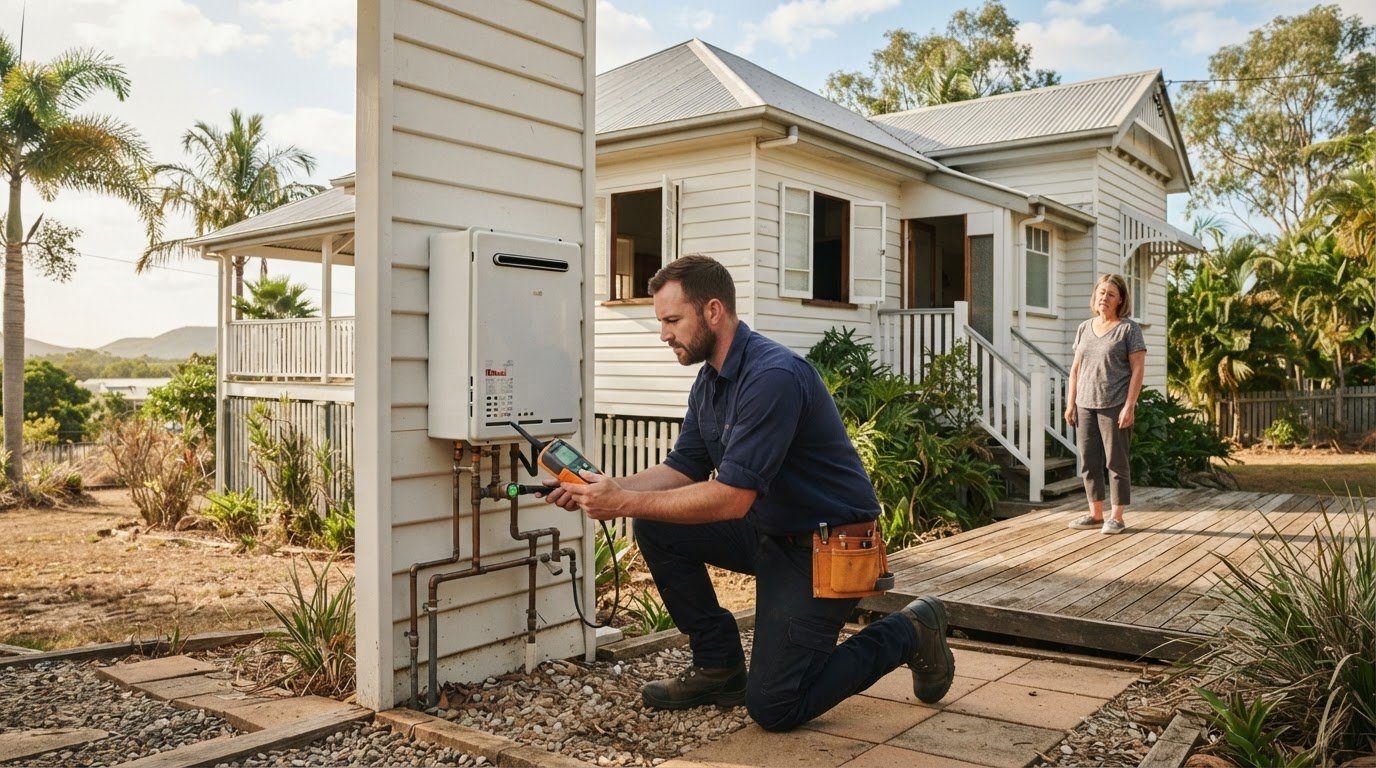
Gas Leak Detection Rockhampton: What to Do and Expect
Could a brief gas smell be a minor appliance fault, or a warning to act straight away? If you suspect a leak, treat it seriously. For gas leak detection Rockhampton residents should first avoid flames and electrical switches, then follow safety steps before arranging a professional assessment.
It’s understandable to feel unsure about what a smell means or what to do next. This guide explains how to reduce immediate risk, when to call emergency services or the gas distributor, and what a licensed gas fitter may check at your property.
The gas distributor manages the supply network. A licensed gas fitter assesses the gas installation and appliances at your property. CQR Plumbing provides licensed gas fitting and emergency gas support across Rockhampton, Yeppoon, Gracemere, Emu Park and the Capricorn Coast. You’ll also learn what an assessment may involve, how repair options should be explained, and when gas installation work may require a gas compliance certificate.
Key Takeaways
- If you suspect a leak, follow the safety steps in order and know when to call 000 or the gas distributor.
- Gas leak detection Rockhampton involves a licensed gas fitter assessing the reported signs, installation and relevant appliances.
- A gas odour, an appliance fault and a possible pipework leak can point to different issues. Don’t guess or attempt DIY gas work.
- During a visit, expect the fitter to explain their findings and proposed work before it begins.
- CQR Plumbing provides licensed gas fitting across Rockhampton, Yeppoon, Gracemere, Emu Park and the Capricorn Coast.
Suspect a Gas Leak in Rockhampton? Take These Safety Steps First
A gas smell, an appliance that isn’t working properly and immediate danger are different situations, but none should be dismissed. A smell can signal escaping gas, while an appliance fault may have another cause. Neither can be diagnosed safely from a distance. If there’s a fire, explosion or uncontrolled leak, move people away from danger and call 000.
Queensland Government guidance is clear: don’t panic, operate electrical switches or create flames. Gas is odourised to make leaks easier to notice. This overview of gas leaks explains the use of odourants and the fire and explosion risks.
What to do if you smell gas at home
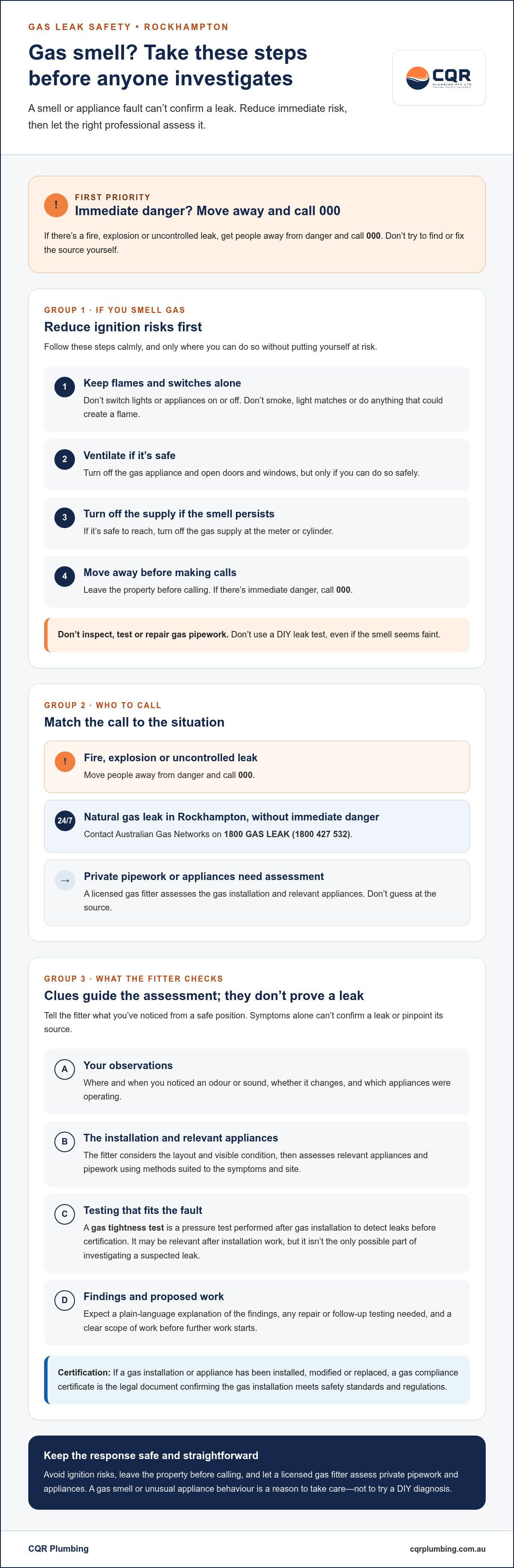
Put people’s safety first. Don’t switch lights or appliances on or off, smoke, light matches or use anything that could create a flame. Don’t inspect, test or repair gas pipework. Follow these steps calmly, only if you can do so without putting yourself at risk:
- Turn off the gas appliance and open doors and windows to ventilate the area, if it’s safe to do so.
- If the smell persists, turn off the gas supply at the meter or cylinder, if it’s safe to reach.
- Move away from the property before making calls. If there’s immediate danger, call 000.
For a natural gas leak in Rockhampton without immediate fire or danger, contact Australian Gas Networks on 1800 GAS LEAK (1800 427 532), its 24/7 emergency number. Don’t use a DIY leak test, even if the smell seems faint.
When a suspected leak needs urgent attention
A persistent gas odour, a hissing sound near a gas appliance or pipe, or an appliance concern warrants prompt attention. These signs don’t confirm a leak. Trying to identify the source yourself can increase risk. Treat the situation as a suspected leak, follow the safety steps above and let a licensed gas fitter assess private pipework and appliances.
If you’re unsure whether the issue relates to the supply network or your property’s gas installation, prioritise immediate safety. For local information about plumbing services in Rockhampton, see our Rockhampton page. Safe gas leak detection Rockhampton starts with avoiding ignition risks, then involving the right professional or emergency service.
How Professional Gas Leak Detection Works
Professional gas leak detection is a licensed gas fitter’s process for locating and assessing a suspected escape from a gas installation or appliance. The fitter aims to establish whether gas is escaping, identify the likely source and explain what needs attention. A smell or appliance fault provides useful clues, but doesn’t confirm a leak on its own.
What a licensed gas fitter may assess
The fitter will ask where and when you noticed the odour or sound, whether it changes, and which appliances were operating. They’ll consider the layout and visible condition of the installation, then assess relevant appliances and pipework using methods suited to the symptoms and site. For example, an odour noticed only near one appliance may direct attention there. Signs in several areas may call for a wider assessment.
Testing depends on the suspected fault. A licensed gas fitter selects an appropriate approach and explains what it can establish. From a safe position, tell the fitter what you’ve noticed. Don’t touch fittings, open appliance panels, apply a leak test or try to repair gas equipment. WorkSafe Queensland provides guidance on safe cylinder handling and storage in its gas cylinder safety information.
Gas tightness testing and the next steps
A gas tightness test is a pressure test performed after gas installation to detect leaks before certification. It can be relevant after installation work, but it isn’t the only possible part of investigating a suspected leak. The fitter selects tests according to the installation and reported signs. Don’t assume one test suits every fault.
After the assessment, the fitter should explain the findings in plain language, outline any repair or follow-up testing needed, and provide a clear scope of work before starting further work. If the installation or appliance has been installed, modified or replaced, a gas compliance certificate is the legal document confirming that the gas installation meets safety standards and regulations.
With gas leak detection Rockhampton, a careful assessment helps distinguish a suspected escape from an appliance issue without guesswork. If you need a licensed assessment, you can request gas fitting support from CQR Plumbing.
Gas Smell or Appliance Fault? Understand the Difference Without Guessing
A gas odour, unusual appliance behaviour or concern about pipework can have different causes, and the issues can overlap. What you notice helps a licensed gas fitter decide where to focus, but symptoms alone can’t confirm a leak or pinpoint its source. Don’t assume an appliance is safe just because it still lights or heats.
| What you notice | What it may indicate | Safe next step |
|---|---|---|
| A gas smell indoors or near an appliance | Possible escaping gas, but the odour alone doesn’t identify the source. | Follow the safety steps in the previous section. If there’s no immediate danger, arrange assessment by a licensed gas fitter. |
| An appliance is slow to start, keeps cutting out or behaves differently | An appliance fault, a gas supply issue or another problem that needs diagnosis. | Stop using the suspect appliance until you’ve received professional advice. |
| A hissing sound or concern around gas pipework | A possible issue with a connection, pipework or appliance. Sound alone can’t confirm the cause. | Don’t touch fittings or try to find the source. Move away from the area and seek appropriate professional help. |
Signs to report without trying to diagnose
Share clear observations rather than guesses. If it’s safe, note where you first noticed the smell or sound, when it occurred, whether it persisted, and which appliance was operating. Mention any recent installation, servicing or other work on the gas system. This context can help the fitter plan an assessment, but it doesn’t replace testing.
Don’t use a flame, apply a DIY leak test or handle a fitting to check for gas. Leave inspection and testing of gas equipment to a licensed professional.
Why an appliance fault still needs proper assessment
An appliance can keep operating while a fault is present, so continued operation doesn’t prove it’s safe. An irregular burner may point to an appliance problem, while an odour nearby may need a separate leak assessment. The causes can overlap, and symptoms alone aren’t enough to tell them apart. Don’t keep using a suspect appliance while waiting for advice.
A licensed gas fitter can assess an appliance fault and determine whether a separate leak assessment is also needed. For gas leak detection Rockhampton, an accurate account of what you noticed is more useful than trying to identify the fault yourself.
What to Expect During a Gas Leak Detection Visit in Rockhampton
A professional visit should follow a clear sequence: discuss what you’ve noticed, assess the relevant gas installation and appliances, carry out suitable checks, then explain the findings. The assessment depends on the reported signs and the system at your property. Gas leak detection Rockhampton isn’t a one-test-fits-all process, so the fitter should explain what they’re checking and why.
Information that helps the visit run smoothly
If it’s safe, note when the odour or appliance fault began, where you noticed it and which appliance was operating. Mention any recent appliance installation, servicing or other gas work if you know about it. These details can help the fitter focus the assessment.
Don’t gather information if doing so could put anyone at risk. If there’s immediate danger, leave the area and call emergency services first. Safety action must never wait while you look for paperwork or try to identify the source.
Assessment, findings and follow-up
The fitter will consider your account alongside the visible installation and relevant appliances. They’ll select checks suited to the concern rather than assume one test will identify every fault. Expect a plain-English explanation of what they found, what remains uncertain and whether repairs or further assessment are recommended.
Before additional work begins, a clear scope of work should set out the proposed tasks. This helps you understand what the repair involves and how it relates to the findings. The next step may differ between an appliance fault and an issue with gas pipework, so don’t assume an outcome or timeframe before the assessment.
A gas tightness test is a pressure test performed after gas installation to detect leaks before certification. It may be relevant after installation work, but it isn’t a label for every diagnostic check during a suspected leak visit. Where a gas system or appliance is installed, modified or replaced, the licensed gas fitter must issue a gas compliance certificate, a legal document confirming that the gas installation meets safety standards and regulations.
For local details, see CQR Plumbing’s Rockhampton plumbing and gas fitting services. Clear explanations and a defined scope help you understand the findings before deciding how to proceed.
Arrange Licensed Gas Leak Detection Across Rockhampton and Nearby Areas
A suspected gas leak needs a measured response: follow the safety guidance first, then arrange assessment by a licensed gas fitter. CQR Plumbing provides licensed gas fitting and 24/7 response for urgent issues across Rockhampton and nearby Central Queensland communities, including Yeppoon, Gracemere, Emu Park and the Capricorn Coast.
Gas work calls for the right training and care because faults can create serious gas safety hazards. A licensed gas fitter can assess the installation and relevant appliances, explain the findings and outline suitable next steps. CQR Plumbing carries out licensed gas work in line with relevant Australian Standards and QBCC requirements, with clear communication about the work before it begins.
Why use a licensed gas fitter for suspected leaks?
A smell or appliance concern doesn’t reveal the source by itself. A licensed gas fitter can assess the reported signs and gas system, then recommend work based on the findings rather than guesswork. This helps distinguish a possible leak from an appliance fault and keeps gas work in the hands of a professional qualified to perform it. A remote description can’t provide a diagnosis; the on-site assessment guides the next step.
Request local gas support
When requesting service, describe what you noticed, where it occurred and which appliance or area is involved. Include your property location and mention any recent gas appliance or installation work if you know about it. Clear details help CQR Plumbing understand the concern and explain the next steps. They should never delay urgent safety action: if there’s immediate danger, move away and call emergency services.
For urgent plumbing issues, see CQR Plumbing’s 24/7 emergency plumbing support. For gas leak detection Rockhampton, CQR Plumbing provides local licensed gas fitting, straightforward explanations and a clear scope of work before proposed repairs begin.
Take the Next Step with Confidence
If you notice a gas odour or an appliance behaving unusually, don’t try to confirm the cause yourself. Follow the safety steps first, then have a licensed gas fitter assess the installation and relevant appliances. Symptoms can guide the investigation, but they can’t confirm a leak or show where it’s coming from.
For gas leak detection Rockhampton homeowners can expect the fitter to explain the findings and proposed work before it starts. CQR Plumbing provides licensed gas fitting and 24/7 response for urgent issues. Where gas installation work calls for it, a gas tightness test is a pressure test performed after installation to detect leaks before certification. A gas compliance certificate is provided where applicable.
Clear information about what you noticed and where you’re located helps get the conversation started. If there’s immediate danger, move away and call emergency services before arranging a service visit.
With the right safety steps and a professional assessment, you can move forward with greater clarity.
Frequently Asked Questions
What should I do if I smell gas in my house in Rockhampton?
Prioritise safety. Don’t panic, operate electrical switches or light flames. Turn off the gas appliance and open doors and windows to ventilate, if safe. If the smell persists, turn off the supply at the meter or cylinder only if it’s safe. For a fire, explosion or uncontrolled leak, move away and call 000. For a natural gas leak without immediate danger, call Australian Gas Networks on 1800 GAS LEAK (1800 427 532).
Can I check for a gas leak myself?
No. Don’t use a flame, handle gas fittings, test pipework or attempt repairs. You can tell a licensed gas fitter what you noticed, where and when, but only if you can do so safely. A smell, sound or appliance fault can’t confirm a leak or identify its source. Follow official emergency guidance first, then have a licensed gas fitter assess the installation and relevant appliances.
How does a licensed gas fitter detect a gas leak?
A licensed gas fitter considers your reported symptoms, the gas installation and relevant appliances, then selects professional checks suited to the suspected fault and site. There isn’t one method for every situation. A gas tightness test is a pressure test performed after gas installation to detect leaks before certification. It isn’t a general name for every diagnostic test used during a suspected leak investigation.
What happens during a gas leak detection visit?
The fitter will discuss what you’ve noticed, assess the relevant installation and appliances, and carry out suitable testing where appropriate. They’ll explain the findings in plain language and outline any recommended repairs or follow-up. Before additional work starts, expect a clear scope of work describing the proposed tasks. The visit, repair outcome and any certification depend on the circumstances, so don’t assume a fixed duration or result.
Is a gas smell always a gas leak?
No. A smell alone can’t confirm whether gas is escaping or show where it may be coming from. Don’t dismiss the odour or try to locate its source yourself. Avoid electrical switches and flames, turn off the appliance and ventilate the area. If the smell persists, turn off the supply if it’s safe. For immediate danger, call 000; otherwise, arrange assessment by a licensed gas fitter.
Do I need a gas compliance certificate after gas leak repairs?
It depends on the work performed. A gas compliance certificate is a legal document confirming that a gas installation meets safety standards and regulations. In Queensland, a licensed gas fitter must issue one after installing, modifying or replacing a gas system or appliance. That doesn’t mean every leak repair has the same certification outcome. The fitter can explain whether the work carried out requires a certificate.
Does CQR Plumbing provide gas leak support in Rockhampton and nearby areas?
Yes. CQR Plumbing provides licensed gas fitting and 24/7 response for urgent issues across Rockhampton and nearby communities, including Yeppoon, Gracemere and Emu Park, as well as the Capricorn Coast. Describe what you’ve noticed and give your property location when requesting help. If there’s immediate danger, move away and call 000 first. For service enquiries, you can request gas leak support.
Disclaimer
The information in this article is provided for general educational purposes only and should not be relied upon as professional plumbing, gasfitting, or legal advice. Every property and plumbing system is different, and the information may not be applicable to your specific circumstances. CQR Plumbing recommends that all plumbing and gasfitting work be inspected and carried out by a licensed professional in accordance with applicable Australian Standards and Queensland regulations. If you require advice specific to your property, please contact CQR Plumbing for an assessment.