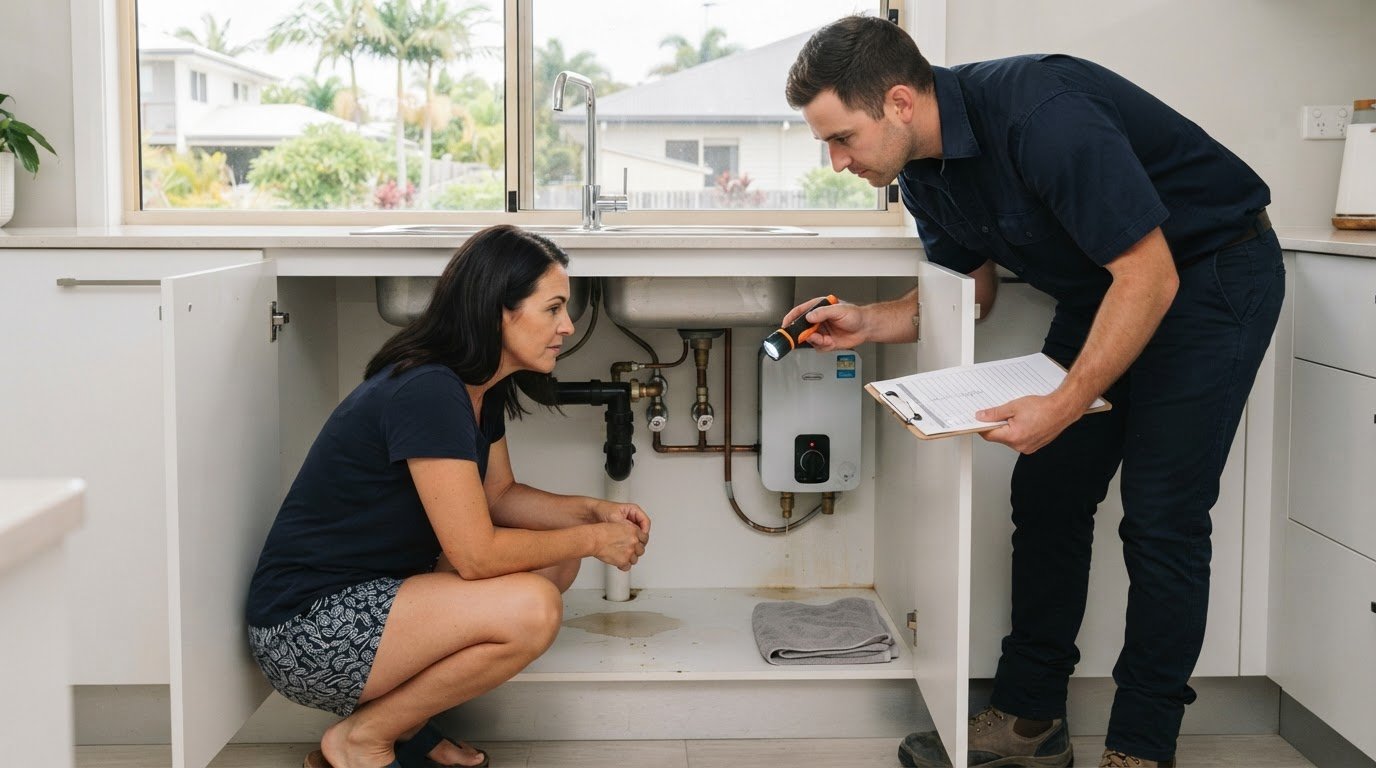
Home Plumbing Safety Check in Rockhampton: A Practical Homeowner Checklist
Could a small damp patch be the first sign of a plumbing fault that’s quietly damaging your home? A home plumbing safety check Rockhampton homeowners can start with a careful visual walkthrough. A licensed plumber is needed to assess faults that aren’t safe or possible to verify yourself.
It’s easy to be unsure what needs attention now and what can wait. A drip under the sink, a toilet that keeps running or moisture near a hot water system may point to an issue worth assessing. Don’t attempt plumbing or gas repairs yourself. Note what you’ve seen and arrange professional help when needed.
This checklist explains what you can safely look over, which warning signs need prompt attention and where licensed plumbing work begins. You’ll also learn what a professional assessment can cover and how CQR Plumbing can assess reported concerns, explain the work and provide a clear scope in Rockhampton, Yeppoon, the Capricorn Coast, Gracemere and Emu Park.
Key Takeaways
- A home plumbing safety check Rockhampton homeowners can start themselves is a careful visual walkthrough, not an attempt to repair plumbing.
- Look for damp patches, dripping taps, persistent odours and unexplained water sounds, then note where and when they occur.
- Visible checks can flag symptoms, but they can’t confirm the condition of concealed pipework or diagnose every fault.
- Use the checklist to record fixture, drainage and hot water concerns without touching fittings or attempting plumbing or gas work.
- CQR Plumbing can assess reported concerns and explain relevant maintenance or repair work with a clear scope of work.
Home plumbing safety check in Rockhampton: start with these visible warning signs
A plumbing fixture can appear to work normally while showing an early warning sign. A tap may still run with a slow drip at its base, or a toilet may flush while moisture gathers around the pan. During a home plumbing safety check, Rockhampton residents can look for visible symptoms and record what they notice. These observations help describe the issue, but they don’t diagnose a fault inside a wall, under a floor or within concealed pipework.
Walk through the home when it’s quiet. Check accessible areas without moving appliances, opening fittings or removing covers. Look and listen for:
- Damp patches, bubbling paint, water marks or swollen material near plumbing.
- Drips from taps or exposed pipe connections, including when the fitting is turned off.
- Persistent unpleasant odours near sinks, floor wastes or toilets.
- Unexplained running, hissing or trickling sounds when taps and appliances aren’t in use.
Make a brief note of the location, when the symptom occurs and whether other fixtures are affected. For example, a sound heard only after flushing a toilet is useful information for a plumber, but it doesn’t confirm the cause.
What to look for around taps, toilets and visible pipework
Look around tap bases and handles, beneath accessible sinks, and around the toilet base and cistern. Check for active drips, corrosion, staining or dampness. Don’t pull on pipework or tighten fittings as part of the check. Note whether moisture returns after the area appears dry, and whether it follows use of one fixture or several. These details can help a licensed plumber narrow down what needs assessment.
Keep the inspection visual. A dry patch doesn’t prove the pipework behind it is sound, and an occasional drip may not resolve on its own. A general overview of plumbing work and safety can provide background, but only an appropriate inspection can assess a specific fault. CQR Plumbing serves Rockhampton; details of its Rockhampton plumbing services are available here.
When a plumbing warning sign needs prompt attention
Seek help for an active leak, sudden loss of water or dampness that is spreading quickly. A sewage smell or wastewater backing up through a fixture also needs prompt professional assessment. If water is near electrical outlets, appliances or wiring, keep clear and don’t touch wet equipment. Avoid using an affected fixture if doing so could worsen a backup, and describe the symptoms clearly when arranging assistance.
Don’t try to trace a leak by opening walls or dismantling a fitting. A licensed plumber can assess the reported signs and determine suitable inspection or repair steps. Your role is to observe safely and share what you’ve noticed, not to confirm the condition of concealed plumbing.
What a home plumbing safety check can assess beyond a quick walkthrough
A home plumbing safety check is a professional assessment of accessible plumbing concerns and the symptoms you’ve reported. It can help clarify what may be happening around fixtures, visible pipework, drains or a hot water system. What the plumber can assess depends on the concern and access to the affected area. A visual assessment doesn’t establish the condition of concealed pipes that can’t be inspected without further work.
For a home plumbing safety check, Rockhampton homeowners can use their observations to point the plumber towards a particular fixture, sound or recurring symptom. A licensed plumber can assess the concern using suitable inspection methods and explain whether further investigation or repair is appropriate. The aim is to understand the reported issue before deciding on work, not to assume every part of the plumbing system has been tested.
What a homeowner can observe without dismantling anything
Keep your own checks to accessible fixtures and visible pipework. Note whether taps or toilets show signs of a leak, whether water drains as usual, and whether an odour or unusual noise returns. Don’t remove covers, shift connected pipework or disturb fittings. If you take a photo, do so from a safe position and include enough of the surrounding area to show where the concern is.
Useful notes describe what happens rather than guessing at the cause. For example, record whether a slow-draining sink is the only fixture affected or whether you’ve noticed symptoms elsewhere. A drain that empties slowly can have different causes, so the observation alone isn’t a diagnosis. For a hot water concern, note what you’ve seen, heard or experienced, and leave inspection or repair to a plumber.
What needs a licensed plumber to assess
Pipe alterations, plumbing repairs and concealed leaks need professional assessment. A stain on a wall, for instance, may be linked to plumbing, but its appearance alone can’t identify the source. A plumber can assess accessible areas, consider when the symptom occurs and decide whether further inspection is needed before recommending a repair. This avoids treating a visible symptom as proof of a particular fault.
Hot water issues also need a measured assessment. Changes in operation or visible moisture around a system are reasons to report the details, not to remove panels or adjust plumbing connections. For background on installation considerations, see the Rockhampton hot water installation guide.
The appropriate work depends on the findings. CQR Plumbing can assess reported plumbing concerns, explain what the plumber finds and outline a clear scope of work before repairs proceed. If you’d like a plumber to assess an issue you’ve observed, request a plumbing assessment.
DIY walkthrough or professional plumbing check: know the difference
A homeowner walkthrough and a professional plumbing check have different purposes. Your observations help identify a symptom and explain when it occurs. A licensed plumber can assess the reported concern and decide what inspection or repair may be needed. Neither a quick look nor a single visible sign confirms the condition of pipework hidden behind a wall, beneath a floor or inside a fitting.
Use this comparison to keep the boundary clear. For a home plumbing safety check, Rockhampton residents can note what they see and hear, then arrange an assessment when an issue recurs, worsens or needs investigation.
| Task | Homeowner action | When professional assessment is needed |
|---|---|---|
| Visible taps, toilets and pipework | Look for drips, dampness or staining; record the location and when it appears. | Arrange an assessment for recurring leaks or moisture that returns after the area is dry. |
| Drainage and odours | Notice whether water drains as usual and whether a smell or noise keeps coming back. | Seek advice if drainage symptoms persist, several fixtures are affected or wastewater backs up. |
| Concealed pipework | Note signs such as unexplained dampness; don’t open walls or floors. | A plumber needs to assess the likely source and determine whether further inspection is required. |
| Repairs and plumbing changes | Report the symptom. Don’t alter fittings or attempt a leak repair. | Leave repair work and plumbing alterations to a licensed plumber. |
Which checks are suitable for a homeowner?
Keep your walkthrough to looking, listening and noting changes. You can check visible areas without removing covers or disturbing connections. Record whether a symptom happens after using a particular fixture, continues when it’s idle, or affects another area. A photograph can help show the location, provided you take it from a safe position.
These checks provide clues, not certainty. A dry visible pipe doesn’t rule out a leak elsewhere, and water draining slowly doesn’t identify the cause. Don’t open plumbing systems, modify fittings or try to seal a leak. Those steps can hide useful signs or make the issue harder to assess.
When should you arrange a licensed plumbing assessment?
Arrange an assessment if a leak keeps returning, dampness has no clear source or drainage symptoms persist. A licensed plumber can consider the pattern, inspect accessible areas and explain the proposed work before you decide how to proceed. The repair depends on the cause; replacing or adjusting a visible fitting may not address a fault further along the pipework.
A leaking shower is one example where the visible symptom may not show the full extent of the issue. The leaking shower repair guide explains the kind of assessment and repair considerations that can apply.
Match your next step to what you’ve observed. A small, isolated symptom may need monitoring and clear notes, while an active leak, wastewater backup or rapidly worsening dampness calls for prompt professional attention. If you’re unsure what the signs mean, arrange a plumbing assessment and have the concern explained before work begins.
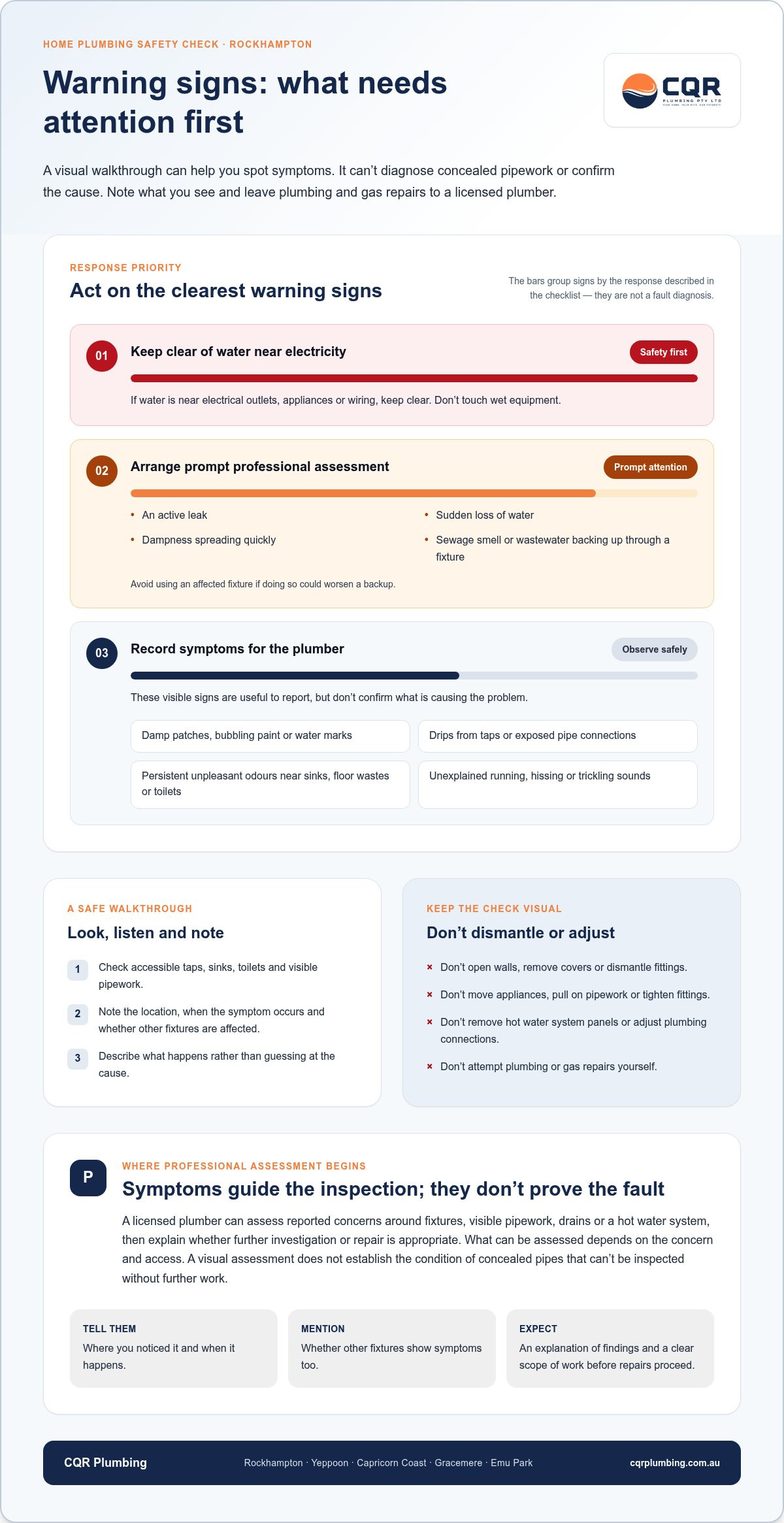
A practical plumbing safety checklist for Rockhampton homes
A consistent walkthrough helps you spot changes and explain them clearly, without turning a visual check into a DIY repair. Use this home plumbing safety check Rockhampton checklist as an observation guide. It can help you decide what to report, but it can’t confirm the condition of concealed pipework or replace a professional assessment.
- Check taps and toilets. Look for drips, moisture around tap bases, dampness at the toilet base or visible water marks near the cistern. Note which fixture is affected and whether the sign appears after use.
- Look over accessible pipework. From a safe position, check visible areas beneath sinks and around exposed connections for staining, corrosion or damp patches. Don’t remove covers, shift pipework or tighten fittings.
- Notice drainage changes. Observe whether sinks, showers and other fixtures drain as they usually do. Record recurring slow drainage, unusual noises or unpleasant odours, and note if one fixture or several are affected.
- Observe the hot water system. Look for visible moisture around the unit and note changes you’ve noticed in its operation. Don’t open panels or interfere with plumbing or gas connections; leave those checks to a qualified professional.
- Write down the pattern. Record where the concern is, when it started, how often it happens and whether it’s getting worse. List any affected fixtures and changes in water flow, drainage or hot water. A clear photo taken from a safe distance may help show the location.
Leave the area accessible for an assessment. Don’t dismantle fittings or try to conceal a leak. Details such as “dampness appears beneath the laundry sink after use” are more useful than a guess about the cause. CQR Plumbing provides plumbing services in Rockhampton, including maintenance and repairs for reported concerns.
Separate routine observations from urgent plumbing problems
A recurring drip or an occasional drainage change should be recorded and assessed according to its pattern. A burst pipe, major leak or wastewater overflow needs urgent attention. Keep clear of wet electrical areas and unsafe equipment. Don’t attempt a repair or put yourself at risk to investigate further. CQR Plumbing provides emergency plumbing response; the emergency plumbing service information outlines the next step for urgent issues.
The checklist helps you communicate what’s happening, not decide what repair is needed. A plumber can assess the reported symptoms, explain the findings and set out the relevant work before it proceeds.
Arrange a home plumbing safety check with CQR Plumbing in Rockhampton
A careful homeowner walkthrough gives a plumber useful starting information, but it can’t confirm what’s happening inside concealed pipework or establish the cause of every symptom. Pair your observations with a professional assessment of the concern. CQR Plumbing provides plumbing maintenance and repair services in Rockhampton and nearby areas, helping homeowners understand what has been found and what work may be relevant.
The assessment is guided by the issue you report and what can be safely inspected. A concern about a dripping tap may call for a different response from recurring drainage symptoms or moisture near a hot water system. The plumber can explain what the assessment covers and outline the relevant work.
What information to provide when requesting a check
A clear description helps the plumber focus on the concern. Share the property’s suburb, the affected fixture and what you’ve observed. Note when the issue began and whether it’s ongoing, intermittent or getting worse. If several fixtures are involved, list them separately. A safe photograph can help show a visible stain or damp patch, but don’t move equipment or touch unsafe areas to take one.
- Location: Identify the room, fixture and visible area affected.
- Timing: Say when you first noticed the symptom and when it tends to happen.
- Pattern: Explain whether it returns, has changed or affects more than one fixture.
- Recent changes: Mention any change you’ve noticed in water flow, drainage or hot water.
Keep the details factual. “Water appears under the laundry sink after the tap has been used” gives a clearer starting point than guessing which part has failed. Don’t dismantle fittings or wipe away recurring evidence immediately before an assessment. If the situation is urgent, such as a burst pipe or wastewater overflow, make that clear when seeking assistance rather than treating it as routine maintenance.
How CQR Plumbing can help with plumbing concerns
CQR Plumbing can assess the reported concern and explain the findings in plain language. Depending on the assessment, the next step may be maintenance, a repair or further investigation. Before work proceeds, you’ll receive a clear scope of work describing the relevant tasks. This helps you understand what is proposed.
For homeowners in Rockhampton, CQR Plumbing’s local plumbing services include maintenance and repairs for issues such as taps, toilets, drains and hot water systems. Your observations help the plumber understand the problem you want assessed; they don’t replace the professional inspection needed to decide on suitable work.
If you’ve noticed a plumbing concern and would like it assessed, you can request a plumbing quote. Describe what you’ve seen, and CQR Plumbing can explain the relevant next steps and scope of work.
Make your next plumbing check easier to act on
If you’re planning a bathroom update or changing a water-using appliance, consider plumbing needs early. Planning ahead gives you time to discuss connections, fixture locations and existing concerns before work is scheduled.
A home plumbing safety check Rockhampton homeowners carry out can also prompt useful questions before those plans take shape. CQR Plumbing can explain the plumbing work relevant to the issue assessed and provide a clear scope.
Frequently Asked Questions
What should be included in a home plumbing safety check?
The assessment should focus on the home’s plumbing concerns and relevant maintenance history. Before the visit, gather details of previous plumbing repairs, recurring faults or changes to fixtures, if you have them. This context can help explain whether a concern is new or has appeared before. The plumber can discuss which accessible areas are relevant to the reported issue and explain the assessment and proposed work.
Can I check my home plumbing myself?
Yes. Keep your checks observational and avoid deliberately putting extra demand on the system. For example, don’t run several taps or appliances at once to try to trigger a fault. Instead, pay attention during ordinary household use and note if a problem occurs after a particular activity. This provides useful information for a plumber without creating a new issue while you investigate.
When should I call a licensed plumber about a leak?
Call a licensed plumber if you can’t identify a safe, simple explanation for moisture or if a leak is affecting the home’s normal use. If it’s safe and you know how, use the relevant shut-off valve to limit water flow while arranging help. Don’t force a stiff valve or enter an unsafe area to reach it. Keep the affected area clear so the plumber can assess it.
Is a dripping tap a plumbing safety issue?
A dripping tap is not usually an immediate safety hazard, but the cause shouldn’t be guessed from the symptom alone. Internal tap components can wear or become damaged, and overtightening the handle may not stop the drip and can make operation difficult. Avoid forcing it. If the drip continues, tap servicing can identify whether a repair is suitable or whether another issue needs attention.
What happens during a professional plumbing inspection?
Expect the plumber to clarify what you’ve noticed and what you want assessed before deciding on the work. It helps to provide clear access to the affected area and keep pets or stored items away from it. If you have records of earlier repairs or know when a fixture was installed, have those details handy. The plumber can explain findings and proposed work in plain language.
How often should plumbing be checked in a home?
There isn’t a single inspection schedule that suits every household. The right timing depends on factors such as the home’s maintenance history, how heavily fixtures are used and whether issues have recurred. Watch for changes during normal use and arrange an assessment when there’s a reason to investigate. If you’re responsible for a rental property, include plumbing concerns in routine property maintenance planning.
Who can I contact for a home plumbing safety check in Rockhampton?
Contact CQR Plumbing to discuss a home plumbing concern in Rockhampton. When making an enquiry, say whether you own, manage or rent the property, and identify who can provide access if needed. CQR Plumbing serves Rockhampton and nearby Central Queensland communities, including Yeppoon, the Capricorn Coast, Gracemere and Emu Park. Request a plumbing quote and describe the issue.
Disclaimer
The information in this article is provided for general educational purposes only and should not be relied upon as professional plumbing, gasfitting, or legal advice. Every property and plumbing system is different, and the information may not be applicable to your specific circumstances. CQR Plumbing recommends that all plumbing and gasfitting work be inspected and carried out by a licensed professional in accordance with applicable Australian Standards and Queensland regulations. If you require advice specific to your property, please contact CQR Plumbing for an assessment.