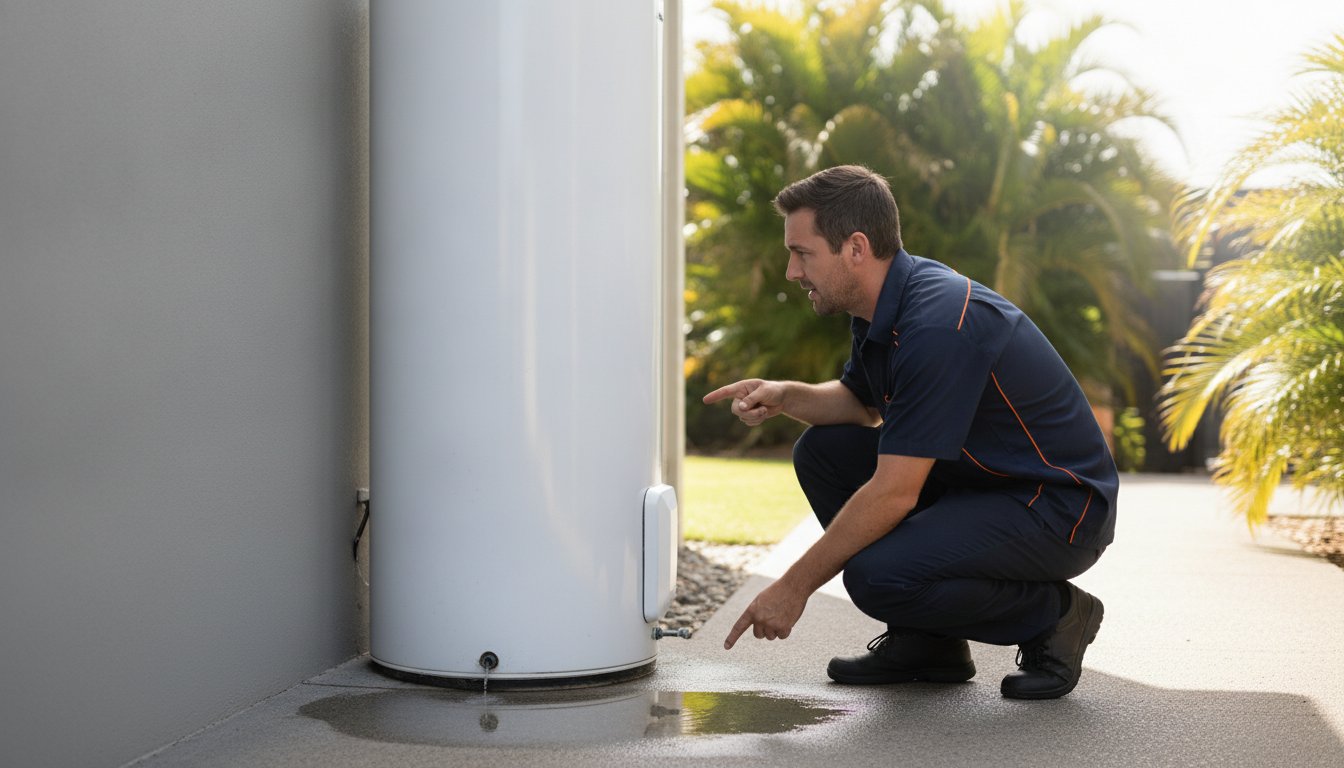
Hot Water System Leaking from Bottom? A Plumber’s Guide to Diagnosis and Repairs
Imagine walking out to the side of your house and spotting a pool of water creeping across the concrete from the base of your tank. Finding your hot water system leaking from bottom is a stressful moment that usually brings a flood of questions: is the tank finished, how much will this cost to fix, and will there be hot water for the kids' baths tonight? It's completely normal to feel a bit of anxiety about potential water damage or the prospect of a hefty replacement bill.
The good news is that a puddle doesn't always mean you need a brand-new unit. This guide will help you identify exactly where that water is coming from, how to safely isolate your system to prevent further damage, and when you can wait until Monday versus calling an emergency plumber. I will walk you through common culprits like faulty valves and perished seals, giving you the honest facts you need to make an informed decision for your home.
Key Takeaways
- Learn the immediate steps to isolate your water supply and power to stop a leak before it causes major damage to your property.
- Discover how to pinpoint the source of a hot water system leaking from bottom to tell the difference between a simple valve fix and a cracked tank.
- Understand the role of sacrificial anodes and how regular maintenance can prevent internal rust from destroying your hot water cylinder.
- Compare the long-term costs of repairing individual components versus the investment of a full, energy-efficient system upgrade.
- Identify when a leak requires an emergency call-out to ensure your home remains safe and compliant with Australian plumbing standards.
Immediate Triage: What to Do When Your Hot Water Tank is Leaking
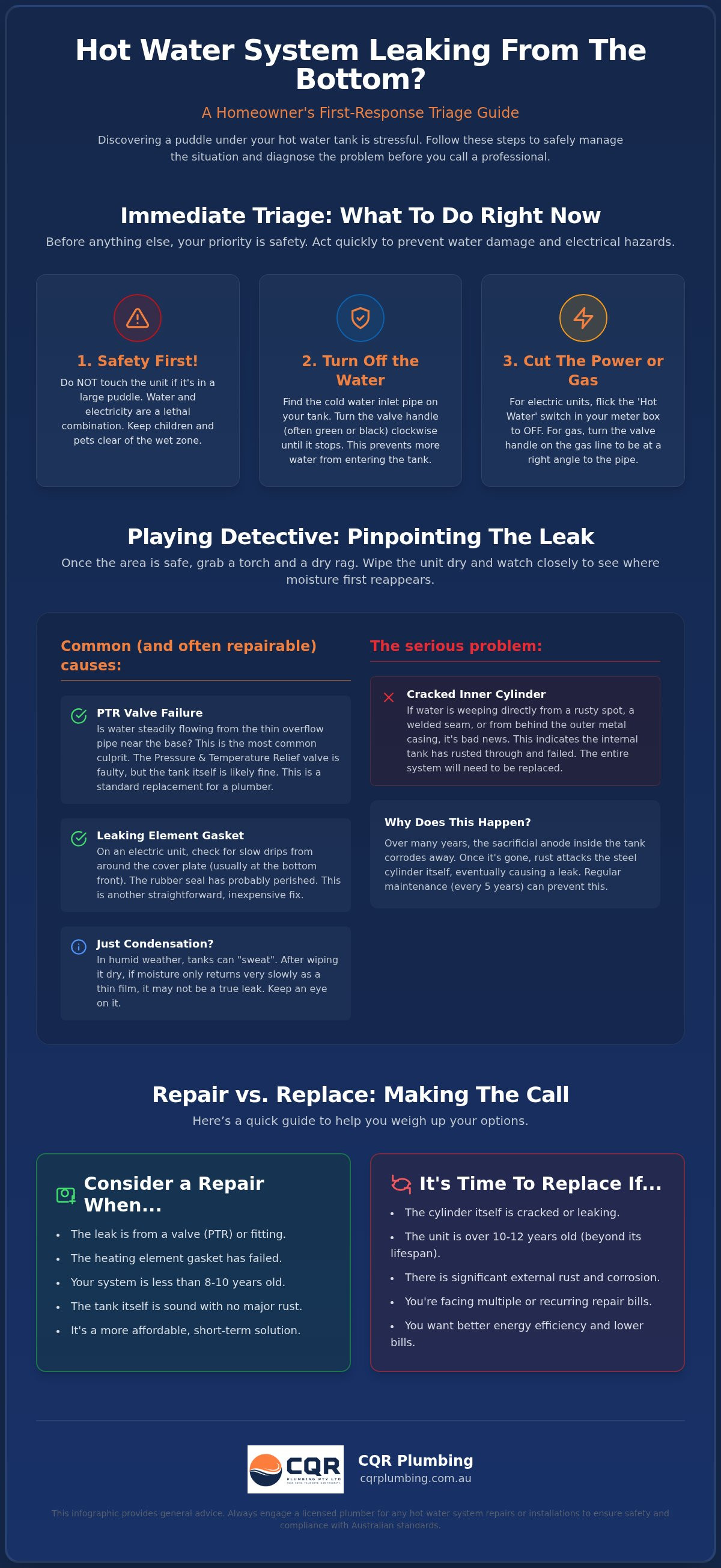
If you have just discovered your hot water system leaking from bottom, your first priority is safety. Before you grab a mop or try to inspect the damage, you must assess the environment. Electricity and water are a lethal combination. If the area around the tank is flooded or if water is spraying near the electrical cover plate, do not touch the unit. Standing in a puddle while touching a metal casing that might have an electrical fault is incredibly dangerous. Keep children and pets away from the "wet zone" until you have successfully isolated both the power and the water supply.
To stop the water from spreading, you need to isolate the tank. Look for the cold water inlet pipe, which typically enters the bottom of the unit. You should find a valve there; it is often a green or black plastic handle known as a duo valve or a cold water expansion valve. Turn this handle clockwise until it is tight. This will stop fresh water from entering the tank while allowing you to keep the cold water running in the rest of your home. If this valve is seized or missing, you will need to turn off the water at the main meter near your front boundary. Understanding how storage water heaters work is helpful here, as you will realise the tank still contains 100 to 400 litres of water that will continue to weep until the pressure drops.
Turning Off an Electric Hot Water System
Locate your electrical meter box and find the circuit breaker or switch labelled "Hot Water" or "Water Heater". Flick this switch to the 'Off' position immediately. It is much safer for a homeowner to use a modern switch than to attempt to pull an old-fashioned ceramic fuse, which can arc if it is not handled correctly. Even after the power is cut, the water inside the cylinder remains scalding hot for many hours. Do not attempt to drain the tank or unscrew any panels, as you risk severe steam burns. Isolating the power simply prevents the heating element from burning out once the water level eventually drops.
Shutting Down Gas Units Safely
For gas storage or continuous flow units, look for the gas supply line. This is usually a copper pipe with a small isolation valve featuring a yellow or red handle. Turn the handle so it sits at a right angle to the pipe to stop the gas flow. If you can smell gas—that distinct rotten egg odour—alongside the water leak, do not operate any light switches or electrical devices nearby. Move to a safe distance and contact an emergency plumber immediately. Gas leaks combined with water damage in confined spaces like laundries or cupboards are high-priority hazards that require professional equipment to resolve safely.
Diagnosing the Source: Is it the Tank, the Element, or a Valve?
Once you have secured the area and isolated the power, the next step is to play detective. A hot water system leaking from bottom can be incredibly deceptive because gravity ensures that water pools at the lowest point, regardless of where the breach actually began. Grab a high-powered torch and wipe the base of the unit dry with a rag. You are looking for the "weep point"—the exact spot where moisture first appears. If the water is coming from behind the metal jacket or a welded seam, the news is rarely good. However, if the water is originating from a specific component, you might be looking at a straightforward repair rather than a full replacement.
First, rule out condensation. In the humid conditions often experienced across the Capricorn Coast, a tank can "sweat" when cold water enters a hot cylinder. If you wipe the unit dry and the moisture takes hours to return, it might just be atmospheric. If the puddle reforms within minutes, you have a functional leak. Check the top of the tank as well; sometimes a leaking cold water inlet or hot water outlet connection allows water to run down the side of the casing, eventually pooling at the bottom and mimicking a tank failure.
Testing the Pressure Temperature Relief (PTR) Valve
The PTR valve is the most common cause of a suspected bottom leak. This brass component, usually found near the top or side of the tank, acts as a safety release to prevent the cylinder from over-pressurising. It is designed to "drip" slightly during a heating cycle. However, these valves have a limited lifespan and can become stuck in the open position due to grit or mineral build-up. Most PTR valves have a drain line that terminates near the base of the system. If you see water gushing from this pipe, the valve is stuffed, but the tank itself is likely fine. Replacing a PTR valve is a standard maintenance task that can save you the cost of a new unit.
Inspecting the Heating Element and Gasket
In the Rockhampton and Yeppoon regions, our local water contains minerals that can be tough on plumbing components. Electric storage systems feature a heating element bolted into the side of the tank, sealed by a rubber gasket. Over five to ten years, this gasket can perish or become brittle, allowing water to weep past the seal. If you notice moisture or rust stains around the plastic electrical cover at the bottom of the tank, the element seal has likely failed. You might also see signs of "burning" or electrical arcing if the water has reached the terminals. This requires a licensed plumber to drain the tank, replace the gasket, and ensure the electrical connections are safe and dry. If you are struggling to find the source of the moisture, you can arrange a professional inspection to avoid misdiagnosing a simple fix as a major disaster.
Why Hot Water Systems Leak from the Bottom: The "Why" Factor
A hot water system leaking from bottom is rarely a sudden accident; it is usually the final stage of a long-term internal battle between water chemistry and steel. Most storage tanks are constructed from heavy-duty steel with an internal glass or vitreous enamel lining designed to protect the metal from rust. However, this lining is not perfect. Over years of constant use, the steel tank expands and contracts as it heats and cools. This thermal expansion creates microscopic cracks in the glass lining, allowing water to reach the steel. Once the water makes contact with the metal, corrosion begins, eventually leading to a pinhole leak that manifests at the base of the unit.
In Central Queensland, particularly across Rockhampton and the Capricorn Coast, our water supply contains varying levels of dissolved minerals. These minerals act as an electrolyte, accelerating the natural process of electrolysis that eats away at metal. While a quality tank is built to withstand this, the typical lifespan of a standard electric storage unit in our region is between 8 and 12 years. If your system is approaching a decade of service and starts weeping from the base, you are likely seeing the cumulative effects of years of thermal stress and mineral exposure.
The Role of the Sacrificial Anode
The sacrificial anode is your tank's last line of defence. It is a long rod made of magnesium or aluminium that hangs inside the cylinder. Through a process called electrolysis, the water attacks the anode instead of the steel tank. Essentially, the rod "sacrifices" itself to keep your unit intact. In the hard water conditions often found in Yeppoon and surrounding areas, these rods can deplete rapidly. We recommend a professional inspection of the anode every 3 to 5 years. If the anode is completely dissolved, the water will immediately begin corroding the tank walls, which leads directly to the bottom-tank failures we see in the field.
Sediment Buildup and "Kettling"
Have you ever heard a popping, rumbling, or banging sound coming from your tank? This is known as "kettling," and it is caused by sediment and sludge settling at the bottom of the cylinder. Minerals like calcium and magnesium precipitate out of the water and form a thick layer of scale over the heating element and the base of the tank. This layer acts as an insulator, creating "hot spots" where the steel becomes much hotter than intended. These hot spots cause the glass lining to flake off and the steel to fatigue prematurely. Regular flushing of the tank can remove this sediment, but once the "kettling" sounds become frequent, the internal damage is often already done. Maintaining your system through routine servicing is the only way to prevent this sludge from turning your tank into a write-off.
Repair vs Replace: Making an Informed Decision
Deciding whether to patch up an old unit or invest in a new one is the most common conversation I have with homeowners. If you have found your hot water system leaking from bottom, the decision usually comes down to the age of the unit and the exact location of the breach. The "Golden Rule" in our trade is simple: if the inner steel cylinder has rusted through or cracked, the unit is a write-off. There is no such thing as "patching" a high-pressure vessel once the structural integrity is compromised. Attempting to weld a tank is not only unsafe but also fails to address the widespread internal corrosion that caused the first hole.
In Queensland, all hot water installations are considered "notifiable work" under the Plumbing and Drainage Act 2018. This means your plumber must be licensed with the QBCC and is required to lodge a Form 4 upon completion. This process ensures the work meets modern Australian Standards, which include the mandatory installation of a tempering valve to regulate water temperature. Skipping these regulations by using an unlicensed installer can void your home insurance and manufacturer warranties, leaving you unprotected if a future leak causes property damage.
When is a Repair Possible?
Repairs are a smart investment if the tank itself is sound. Replacing a faulty PTR valve, a thermostat, or a perished element gasket is a routine task that costs a fraction of a full replacement. I often see leaks from the top of the tank that look catastrophic but are actually just loose fittings or perished washers. However, if your tank is over 10 years old, I generally advise against sinking significant money into major repairs. A decade of service in Central Queensland conditions means the internal lining is likely brittle, and a second leak is often just around the corner.
Choosing a Replacement System for Yeppoon and Rockhampton
If a replacement is necessary, you have a chance to significantly lower your energy bills. Standard electric storage systems are the most common choice, but they can be expensive to run on peak electricity rates. For families on the Capricorn Coast, energy-efficient heat pumps are becoming the gold standard. These units use the ambient warmth in our air to heat your water, often paying for themselves in three to five years through reduced running costs. If you are considering an upgrade, you can learn more about Professional Hot Water System Installation in Rockhampton to see which technology suits your household's peak usage.
Professional Hot Water Repairs in Rockhampton and Yeppoon
Dealing with a hot water system leaking from bottom is a major disruption to your household, but you don't have to manage it alone. At CQR Plumbing, we specialise in reactive maintenance and insurance-compliant work tailored to the unique conditions of the Capricorn Coast. Our team doesn't just swap parts; we look at the big picture. We understand how the local water chemistry in Rockhampton and Yeppoon affects different tank linings and components. This regional expertise allows us to provide honest, practical advice on whether a repair will truly last or if a replacement is the only responsible path forward.
Our process is designed to be transparent and efficient. When we arrive, we perform a comprehensive diagnostic inspection to find the exact cause of the moisture. Once the fault is identified, we explain your options clearly, including the expected lifespan of the repair and a straightforward cost breakdown. If a new installation is required, we handle everything from the initial site assessment to the final QBCC notification. We take pride in our quiet competence, ensuring your home is left tidy and your hot water is restored with minimal friction.
24/7 Emergency Response for Hot Water Leaks
A significant tank leak won't wait for business hours, and neither should you. If your hot water system is flooding your laundry or threatening your floorboards at 2:00 am on a Sunday, you need a fast, professional response to mitigate damage. We provide 24/7 emergency support across the entire region, from Gracemere through Rockhampton and out to Emu Park. Our licensed plumbers arrive with fully stocked vehicles, ready to isolate the hazard and, in many cases, perform Expert Hot Water System Repairs in Yeppoon on the spot. Don't risk a massive water bill or structural damage by waiting until Monday morning.
Book a Hot Water Health Check
The best way to handle a hot water system leaking from bottom is to prevent it from happening in the first place. Most homeowners forget about their tank until the showers go cold, but a small investment in preventative maintenance can add years to your unit's life. Our Hot Water Health Check includes a full inspection of the sacrificial anode, a pressure test of the PTR valve, and a thorough flushing of the tank to remove mineral sediment. This simple service identifies perished gaskets and depleted rods before they turn into a terminal tank failure. If you haven't had your system serviced in the last three years, it is time to be proactive.
Restoring Your Hot Water and Peace of Mind
Finding your hot water system leaking from bottom is a significant disruption, but taking the right steps early can save you thousands. By safely isolating your unit and identifying whether the fault lies with a simple valve or the internal cylinder, you regain control over the situation. Regular maintenance, specifically replacing your sacrificial anode and flushing out sediment, remains the best defence against the harsh water conditions we face in Central Queensland.
Our team of licensed gas fitters and plumbers is ready to provide the professional support you need. We offer a 24/7 emergency response to protect your property from water damage and ensure your family isn't left without hot water. Every job we undertake is QBCC compliant, reflecting our commitment to safety, transparency, and high-quality local service.
Don't let a leaking tank ruin your week. With the right diagnosis and a bit of expert help, you'll have the hot water back on and your home back to normal in no time.
Frequently Asked Questions
Is a hot water system leaking from the bottom an emergency?
Yes, it is often an emergency if the volume of water is high or if it is pooling near electrical panels. A significant leak can damage your home's structure, cabinetry, or flooring within hours. If you notice your hot water system leaking from bottom, you should isolate the unit immediately and contact a professional to prevent a total tank burst or electrical hazard.
Can I still use my hot water if the tank is leaking from the bottom?
You should not continue to use a leaking system. If you have followed the safety steps to turn off the power and water, you won't have hot water available anyway. Using a compromised tank increases the risk of the leak worsening or the electrical components shorting out, which can be dangerous for anyone in the home.
How much does it cost to fix a leaking hot water heater in Rockhampton?
The cost depends entirely on whether you need a minor component replaced or a complete new unit. A faulty valve or a perished gasket is a relatively straightforward fix, whereas a cracked inner cylinder requires a full replacement. We provide a clear, upfront quote after a diagnostic inspection so you know exactly what the investment will be before we start work.
Why is my hot water tank leaking after a heavy storm?
Storms often cause surface water to pool around the base of outdoor units, which might look like a leak. However, heavy rain can also get behind electrical covers or cause issues with the drainage lines. If the water remains after the ground dries, it is likely an internal issue that the storm's pressure changes or moisture simply brought to your attention.
How long does a hot water system typically last in Central Queensland?
Most systems in Central Queensland last between 8 and 12 years. Our local water chemistry and high ambient temperatures mean components like valves and anodes work harder than in cooler climates. Regular servicing can push this lifespan toward the 15 year mark, but age is the primary factor in most bottom tank failures.
Can I replace the sacrificial anode myself to stop a leak?
No, replacing an anode is a preventative task, not a repair for an existing leak. If your tank is already leaking, the steel has likely corroded through, and a new anode will not fix the hole. In Queensland, all work on a hot water system must be performed by a licensed plumber to ensure it remains safe and compliant with current regulations.
What is the most energy-efficient hot water system for a Yeppoon home?
Heat pump systems are currently the most energy-efficient option for homes in Yeppoon and the Capricorn Coast. They take advantage of our warm tropical air to heat water with very little electricity. Solar hot water is also an excellent choice, though heat pumps are often easier and more cost-effective to install as a direct replacement for an old electric tank.
Does home insurance cover a leaking hot water system?
Most standard home insurance policies cover the resultant damage caused by a leak, such as ruined carpets or swollen cabinetry. They rarely pay for the replacement of the hot water unit itself, as that is considered general maintenance or wear and tear. You should check your specific Product Disclosure Statement to see if you have optional cover for appliance failure.
Disclaimer
The information in this article is provided for general educational purposes only and should not be relied upon as professional plumbing, gasfitting, or legal advice. Every property and plumbing system is different, and the information may not be applicable to your specific circumstances. CQR Plumbing recommends that all plumbing and gasfitting work be inspected and carried out by a licensed professional in accordance with applicable Australian Standards and Queensland regulations. If you require advice specific to your property, please contact CQR Plumbing for an assessment.