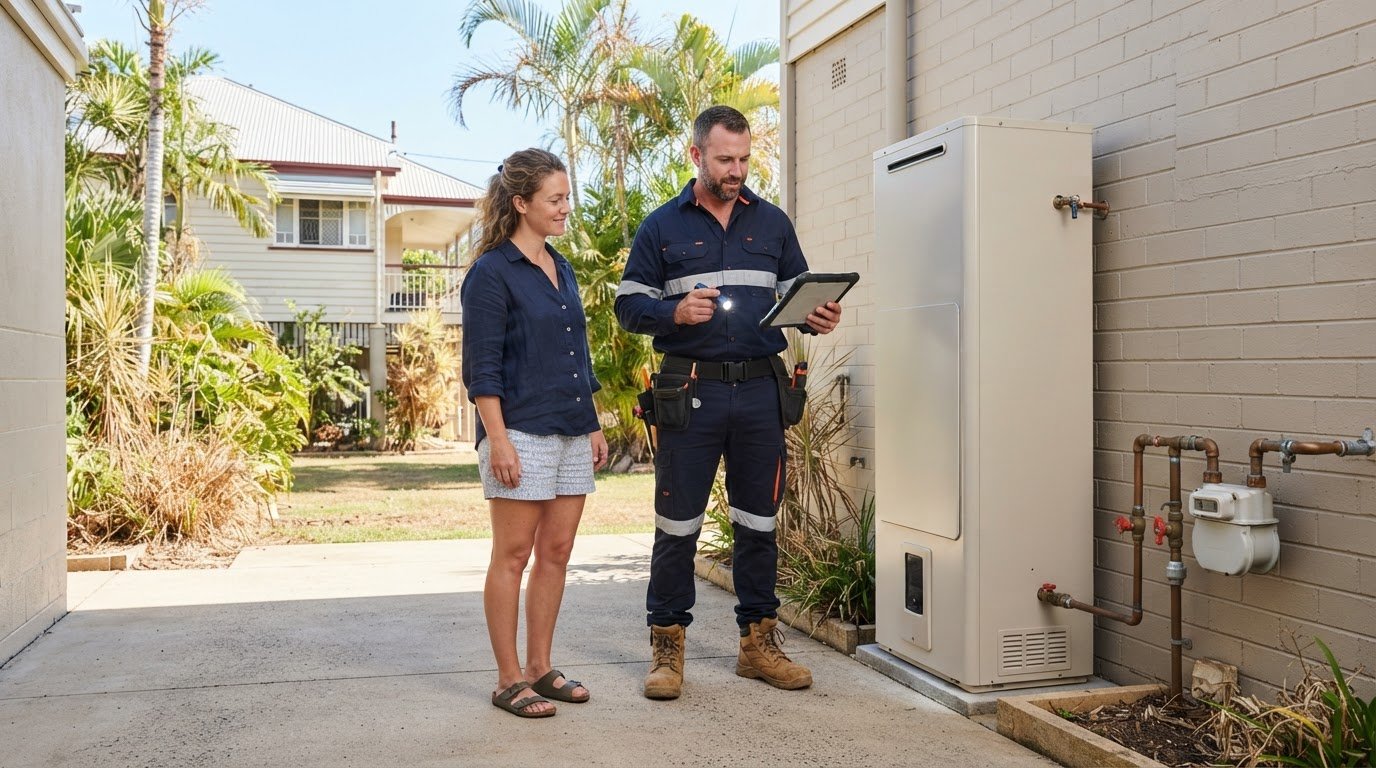
Hot Water System Pilot Light Out? Safe Checks and Next Steps
When a hot water system pilot light is out, it may be a one-off interruption or a sign of a fault that needs attention. If you’ve lost hot water, it’s understandable to want a quick fix, but a pilot that won’t stay lit can have several possible causes.
The pattern matters. A single outage may have a different cause from a pilot that repeatedly goes out. The fault could involve ignition, flame sensing or another part of the system. You can make a few safe observations, but don’t dismantle the appliance or attempt gas repairs. If you smell gas, move away from the appliance and seek emergency gas support from a safe location.
This guide explains what a pilot light does, what may cause it to go out and which checks are safe. You’ll also learn when to stop troubleshooting and arrange an assessment by a licensed gas fitter. CQR Plumbing provides hot water system repairs across Rockhampton, Yeppoon, the Capricorn Coast, Gracemere and Emu Park, explaining the fault and proposed work before repairs begin.
Key Takeaways
- A pilot light is a small flame that ignites the burner on some gas hot water systems, but not every system has a standing pilot.
- A hot water system pilot light out can have several possible causes, including problems with ignition, flame sensing, gas supply, ventilation or the condition of the appliance.
- Only follow the relighting instructions in the manual for your exact appliance. If the pilot goes out again, stop trying and arrange an assessment.
- If you suspect a gas fault, leave the area and seek emergency gas support from a safe location.
- Note what happened and when. These details can help a licensed gas fitter assess the system and explain the proposed work.
Hot water system pilot light out: what it means and what to check first
A pilot light is a small flame that ignites the main gas burner on some hot water systems. If it goes out, the burner may not fire and the water may not heat as expected. A pilot light is a separate, continuously burning flame on systems designed with a standing pilot. Other systems use electronic ignition and don’t have a pilot to relight.
A pilot-light fault means the ignition flame has gone out or isn’t operating as intended. A broader hot water fault means the system isn’t heating water, and the cause may be elsewhere. No hot water alone doesn’t confirm that the pilot is the problem. The system may use electronic ignition, or another component or interruption may be affecting operation. Treat the symptom as a clue, not a diagnosis.
How to tell whether your system has a pilot light
Start with the system label and the manufacturer’s manual. Look for wording about a standing pilot, electronic ignition or ignition instructions. If the unit has a viewing window designed for checking the flame, you may be able to see whether a pilot is burning without touching the appliance. Don’t remove a cover to look inside.
On an electronic-ignition model, there may be no continuously visible flame when the system is idle. A label, display or manual may help identify the ignition type, but layouts and indicators vary between systems. Don’t assume that instructions for another model apply. The same symptom can call for different next steps depending on the appliance design. If you can’t identify the ignition type from information visible outside the unit, note the make and model for a licensed gas fitter.
What to notice before touching the system
Make observations without adjusting gas controls or removing panels. Note whether the outage happened once or has returned, and when you first noticed the change. A pilot that repeatedly goes out is a reason to arrange an assessment, although the pattern alone won’t identify the failed part.
- Check the external label or display for a warning light, code or message, and record it exactly as shown.
- Notice any unusual sound, such as repeated clicking or a change from the system’s usual operating noise. Don’t open the unit to investigate.
- Record what has changed in the hot water supply, such as no hot water or water that becomes warm and then cools.
- Write down the system’s make and model if these details are visible without moving or opening the appliance.
These details can help a licensed gas fitter narrow down whether the issue appears to involve ignition or a wider system fault, without asking you to diagnose it. Keep clear of internal parts and gas components. CQR Plumbing provides hot water system repairs and licensed gas fitting across Rockhampton, Yeppoon, the Capricorn Coast, Gracemere and Emu Park. The proposed work is explained before it begins.
Why a gas hot water system pilot light may keep going out
A pilot that goes out once and one that repeatedly fails are different clues, but neither identifies the cause by itself. If your hot water system pilot light out problem returns after relighting, the fault could involve ignition, flame sensing, gas supply, ventilation or the general condition of the appliance. An assessment is needed to determine which explanation applies.
Possible faults around the pilot and ignition
On some models, a pilot assembly or ignition component may be worn, obstructed or unable to light the flame reliably. Other designs use a thermocouple or another flame-sensing part to detect whether the pilot is burning. If the system doesn’t register a flame correctly, it may stop gas flow to the burner. These are possible causes, not a diagnosis. A licensed gas fitter needs to inspect the appliance to identify the fault.
The pattern can help with that assessment. If the pilot lights but goes out again, tell the gas fitter how soon it happens and whether you noticed clicking, a warning indicator or a change in burner operation. If it won’t light at all, mention that too. Don’t remove panels, clean internal parts, adjust components or test gas connections yourself.
When conditions or other system faults may be involved
Some problems may sit beyond the pilot assembly. Depending on the appliance and its location, a draught or ventilation issue could affect operation. An interruption to the gas supply may also prevent the appliance from operating normally. Don’t try to confirm these faults by working on a gas line or altering the system. Leave gas components alone and report what you’ve observed.
Unusual behaviour is useful information, even if it doesn’t reveal the cause. Note whether other gas appliances are behaving differently, whether you’ve noticed changes in the hot water supply, and whether the unit displays a warning. Don’t test the hot water system by repeatedly switching it on and off. Share your observations with a licensed gas fitter, who can assess the appliance and explain the next step.
A pilot that keeps going out needs diagnosis, not repeated relighting. The recurring symptom may have an underlying cause that a reset won’t fix. Repeated attempts can also distract from signs that the appliance needs professional attention. Stop and seek help if you notice a gas smell or suspect another gas fault.
For recurring outages or unexplained changes in operation, CQR Plumbing provides hot water system repairs and licensed gas fitting in Rockhampton, Yeppoon, the Capricorn Coast, Gracemere and Emu Park. You can request help with a hot water system fault and have the proposed work explained before repairs begin.
Relighting the pilot or arranging a repair: how to choose safely
A relight may be an option only if the appliance has a standing pilot and its own manual gives clear instructions for that exact model. A hot water system pilot light out isn’t, by itself, a reason to test controls or follow steps found for another unit. Use the pattern and any safety concerns to decide whether to stop and arrange an assessment.
| What you notice | Safer next step |
|---|---|
| The pilot went out once, and the manual clearly explains how to relight this exact appliance. | You may follow the manual for one attempt, provided there’s no smell of gas and every step is clear. |
| The pilot won’t stay lit or has gone out again. | Stop trying to relight it and arrange an assessment by a licensed gas fitter. |
| You smell gas or suspect a gas supply fault. | Don’t relight or operate the appliance. Leave the area and seek emergency gas support from a safe location. |
When a manual-guided relight may be reasonable
Consider one attempt only when the manufacturer’s instructions match the appliance’s make and model, are easy to follow and describe the relighting process. Don’t rely on a video or instructions for a similar-looking unit. If the manual is missing, unclear or doesn’t match, stop and arrange professional advice. If you smell gas, don’t attempt to relight the system.
Follow the manual exactly, including its safety directions. Don’t improvise if the pilot fails to light as described. Repeated attempts, removing panels, cleaning internal parts and adjusting gas components aren’t homeowner tasks. If the pilot goes out again, leave the system off and explain what happened when arranging an assessment.
When a licensed gas fitter should diagnose the fault
Arrange a professional assessment if the pilot repeatedly goes out, won’t remain lit, or you suspect an issue with the gas supply, ignition, flame sensing or another internal component. These possibilities can’t be confirmed safely by external observation alone. A licensed gas fitter can inspect the appliance and explain the proposed work before proceeding.
No hot water doesn’t always mean the pilot is the cause. The issue may be a broader system fault, so the right next step depends on the appliance and its symptoms. CQR Plumbing’s hot water system service information covers repair and installation support. For wider context on gas appliance diagnosis, see this guide to gas appliance repairs in Rockhampton.
If you’re unsure whether the fault is safe to investigate, don’t open the appliance. You can request help with a hot water system fault and describe what you’ve observed, including whether the outage happened once or has recurred.
What to do now if your hot water system pilot light is out
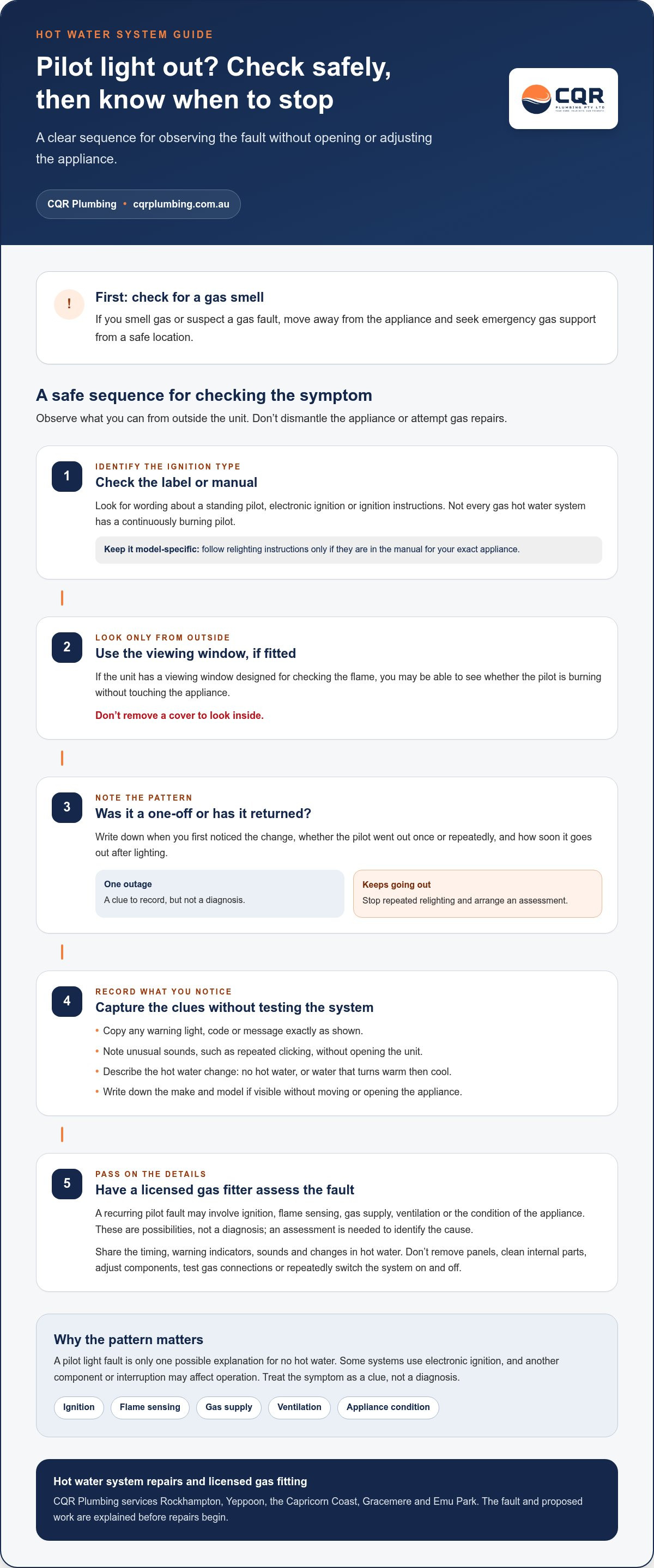
Start with safety, not the relighting controls. A hot water system pilot light out may be a straightforward outage, but first consider whether there are signs of a gas leak. If you smell gas or suspect a gas fault, don’t continue these checks. Move away from the area and seek emergency gas support from a safe location.
If there’s no smell of gas or other immediate hazard, use this sequence to gather information without opening the appliance:
- Check for a gas smell. If you notice one, leave the area. Don’t use flames, operate electrical switches or attempt to relight the system.
- Identify the appliance. Read the external label for the make and model. Note whether the system has a standing pilot or electronic ignition if this is clear from the label or display.
- Consult the manual. Check that it belongs to your exact appliance. Only follow its relighting instructions, and stop if they’re missing, unclear or don’t match the unit.
- Record the symptoms. Note when the hot water stopped, whether the pilot has gone out before, and any visible indicator or change in operation.
If you suspect a gas leak or another immediate hazard
Move away from the suspected hazard and keep others clear. Don’t light matches, smoke, operate switches or try to relight the pilot. Once you’re at a safe distance, seek emergency gas support and explain what you’ve noticed. Don’t return to inspect the appliance or try to find the source yourself.
A gas smell calls for a different response from a pilot outage with no sign of a leak. If there’s no smell or other immediate concern, you can make the external checks above and arrange an assessment if the fault persists. The absence of a smell doesn’t prove that the appliance is working safely. Don’t remove covers or handle gas components.
What details to prepare for a service call
Useful notes can help a licensed gas fitter understand what the system has been doing. Record the system type and its make and model if visible, when the pilot went out, and whether it has happened before. Include any warning light or display message exactly as shown, along with changes such as clicking, altered burner behaviour or an inconsistent hot water supply.
Stick to what you can see and hear from outside the unit. Don’t open it to look for a fault or take a photo of internal parts. If you’re unsure what an indicator means, write down its appearance rather than interpreting it. These observations help make the discussion clearer, but they don’t replace a professional diagnosis.
If the pilot keeps going out or you suspect a gas fault, leave further checks to a licensed gas fitter. CQR Plumbing provides hot water system repairs and licensed gas fitting for property owners in Rockhampton, Yeppoon, the Capricorn Coast, Gracemere and Emu Park. The issue and proposed work are explained before repairs begin.
Request help with a hot water system fault
Hot water system pilot light repairs in Rockhampton and Yeppoon
A recurring pilot issue is a reason to have the appliance assessed rather than assume it needs a particular part. For households in Rockhampton, Yeppoon, the Capricorn Coast, Gracemere and Emu Park, a local assessment can establish whether the fault appears limited to ignition or whether the wider system needs attention. Symptoms are useful background, but they can’t confirm what is happening inside the unit.
What professional diagnosis and repair should clarify
A useful assessment connects the observed fault to the recommended work. The licensed gas fitter can explain what the inspection found, what remains uncertain and why a repair or another option is being proposed. Before work starts, make sure you understand the clear scope of work and have a chance to ask questions in plain language.
For example, a pilot that goes out after lighting is a symptom, not proof that one specific component has failed. The assessment may consider the ignition and flame-sensing arrangements, along with other relevant parts of the appliance. Be cautious of a definite diagnosis based only on a brief description. The actual cause needs to be established from the system itself.
Gas compliance documentation depends on the work performed. If the assessment leads to an installation or modification, ask how the applicable documentation relates to that work. Requirements can differ according to the scope, so the paperwork should reflect what was actually done.
If repair and replacement are both being considered, the decision should take account of the system’s condition and the inspection findings, not just the pilot outage. For local owners weighing those options, the hot water system service information gives context on the available work. A hot water system installation guide may also help if replacement is part of the discussion.
How to arrange local help without guesswork
Before arranging an assessment, gather what you can see without opening the appliance: its make and model, any display message, and whether the pilot went out once or more than once. Note when the hot water changed and whether you observed unusual sounds or other changes in operation. This gives the gas fitter a clear starting point without asking you to diagnose the fault.
CQR Plumbing helps local property owners with hot water system concerns across Rockhampton, Yeppoon, the Capricorn Coast, Gracemere and Emu Park. Share your observations when requesting an assessment, and the proposed work will be explained before it begins.
Take the next step with confidence
A hot water system pilot light out can leave you unsure whether to wait, try again or arrange an assessment. You don’t need to settle on a cause yourself. Base your next step on what you’ve observed, and avoid further attempts if the fault returns or anything raises a safety concern.
Getting the issue assessed gives you a clearer basis for deciding what to do next. Take time to understand the proposed work and how it addresses the fault before agreeing to proceed. A considered decision is better than replacing parts or the system based on a guess.
With a clear next step, you can make a confident plan to restore reliable hot water.
Frequently Asked Questions
Can a power outage cause a gas hot water pilot light to go out?
It depends on the system. A standing pilot may remain alight during a power cut, while an appliance that relies on electronic controls may stop operating or need power restored before it can heat water. If a hot water system pilot light out issue appears after an outage, check the manual for your model’s ignition type and power requirements. Don’t open the unit or reset unfamiliar controls.
Can wind or a draught blow out a hot water system pilot light?
Yes, a draught may affect a pilot on some systems, depending on the appliance and its location. If the flame goes out during windy weather, note when it happens, but don’t block vents or alter the flue to shield it. Those changes can affect safe operation. If outages recur, have a licensed gas fitter assess the appliance and its ventilation rather than treating the draught as the confirmed cause.
What happens if I keep relighting a pilot light that will not stay on?
Repeated attempts can delay finding an underlying fault and may leave gas unburnt if relighting does not work as intended. Stop after the attempt permitted by the manual, and don’t keep operating the controls or dismantle the appliance. If you smell gas at any point, leave the area and seek emergency gas support from a safe location. Otherwise, arrange an assessment by a licensed gas fitter.
Can a blocked flue make a gas hot water pilot light go out?
A flue problem could affect how some appliances operate, but a pilot going out doesn’t prove the flue is blocked. Don’t climb onto the roof, probe the flue or remove appliance covers to investigate. If you notice visible damage or unusual operation, keep clear and report it to a licensed gas fitter. They can assess the flue and appliance safely, then explain any work needed.
Is it safe to use a gas hot water system after its pilot light goes out?
Don’t try to run the appliance with the pilot out unless the manufacturer’s instructions for that exact model direct you through a safe relighting procedure. If there’s a gas smell, unusual noise or visible damage, don’t operate or relight it. Move away and seek emergency gas support from a safe location. With no immediate hazard, leave the system off and arrange advice if it won’t operate normally.
How can I tell whether my hot water system uses a pilot light or electronic ignition?
Check the appliance manual for the ignition type and use its model details to make sure you’re reading the right instructions. The external data plate may help identify the model, but don’t remove a cover to inspect internal parts. If you can’t find the manual, record the model information visible from outside the unit. A licensed gas fitter can use those details to identify the system during an assessment.
Disclaimer
The information in this article is provided for general educational purposes only and should not be relied upon as professional plumbing, gasfitting, or legal advice. Every property and plumbing system is different, and the information may not be applicable to your specific circumstances. CQR Plumbing recommends that all plumbing and gasfitting work be inspected and carried out by a licensed professional in accordance with applicable Australian Standards and Queensland regulations. If you require advice specific to your property, please contact CQR Plumbing for an assessment.