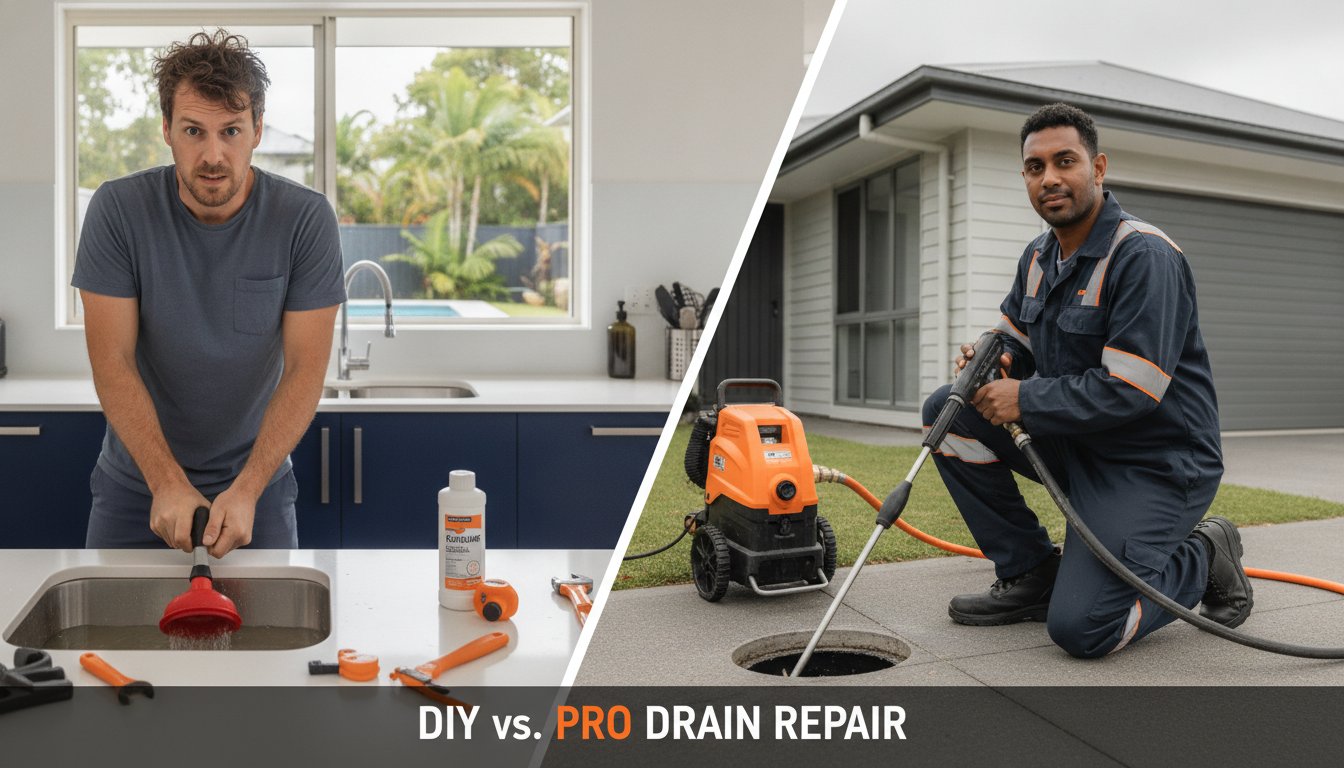
How to Fix Blocked Drains: A Plumber’s Guide to DIY and Professional Repairs
Is that gurgling sound in your kitchen sink just a minor nuisance, or is it the first warning sign of a major sewage overflow in your backyard? Most homeowners in Rockhampton and Yeppoon feel a genuine sense of dread when water starts pooling around their ankles in the shower or a foul smell begins wafting from the floor waste. It is natural to want to save on costs by learning how to fix blocked drains yourself, but the fear of making a messy situation even worse often stops you in your tracks.
I understand that you need a clear, functional home without the stress of unexpected plumbing failures. This guide will teach you how to safely clear minor household blockages using basic tools and, more importantly, help you recognise when a clog is a symptom of a much larger structural issue. We will look at common Australian drainage faults, from grease build-up to invasive tree roots, and compare simple DIY methods against professional repairs like high-pressure water jetting. By the end, you will know exactly how to restore your home's drainage and when it is time to call in a licensed professional for a permanent solution.
Key Takeaways
- Recognise early warning signs like gurgling pipes and "sewer breath" smells to address drainage issues before they cause an indoor overflow.
- Master the basics of how to fix blocked drains safely using plunging techniques and hot water flushes for minor kitchen and bathroom clogs.
- Use the "multiple fixture" rule and check your Overflow Relief Gully (ORG) to determine if a blockage requires professional intervention.
- Discover how CCTV inspections and high-pressure water jetting offer a transparent, long-term solution for invasive tree roots and heavy silt build-up.
- Establish preventative maintenance habits, such as installing sink strainers and proper grease disposal, to ensure your drainage system remains reliable.
Recognising the Signs and Common Causes of Blocked Drains
A blocked drain is essentially a restriction within your pipework that prevents waste or stormwater from flowing freely to the council main or your onsite disposal system. While it might start as a minor annoyance, a blockage is often the first sign of a developing plumbing crisis. Understanding these root causes is the first step in learning how to fix blocked drains effectively without causing further damage to your home.
Early warning signs are your best defence against a messy overflow. If you hear a distinct gurgling sound coming from your pipes after the washing machine drains or the toilet flushes, air is being forced through a partial restriction. You might also notice water pooling around your feet in the shower or a lingering "sewer breath" smell near floor wastes. These odours occur when organic matter is trapped in the pipe and begins to decay; it is a clear signal that the system is no longer self-cleansing.
In Central Queensland, particularly around Rockhampton and Yeppoon, we face unique challenges due to reactive clay soils. This soil type expands and contracts significantly based on moisture levels. This constant movement can cause older earthenware pipes to shift or crack, creating entry points for the "Big Three" culprits: wet wipes, cooking grease, and invasive tree roots. Once a pipe joint is compromised, even a tiny root hair can enter and grow into a massive root ball that catches every bit of debris passing through.
Sewer vs. Stormwater: Which one is blocked?
It is vital to distinguish between your two main drainage systems. A sewer blockage affects your internal fixtures; if your toilet, kitchen sink, or bathroom floor waste is backing up, the issue is in the sanitary drainage. Conversely, a stormwater blockage typically reveals itself during a downpour. You will see water overflowing from your gutters or soggy, sunken patches in the yard where underground pipes have collapsed or filled with silt. Australian plumbing regulations strictly prohibit connecting stormwater to the sewer system, as this can overwhelm the treatment network during heavy rain and lead to environmental contamination.
The 'Flushable' Wipe Myth
Many products marketed as "flushable" are anything but. Unlike standard toilet paper, which is designed to disintegrate within seconds of hitting the water, wet wipes are made of synthetic fibres that stay intact for years. These wipes snag on slight pipe imperfections or tree roots, quickly attracting fats and oils to form a massive obstruction. A fatberg is a congealed mass of non-biodegradable solids and grease that can eventually become as hard as concrete. Once a fatberg takes hold, simple DIY methods are rarely enough to clear the line, often requiring professional intervention to restore flow.
If you are dealing with persistent issues, you can learn more about our blocked drain services to see how we diagnose these complex underground problems.
Safe DIY Methods to Clear Minor Household Blockages
Learning how to fix blocked drains at home starts with using the most gentle, non-destructive methods first. For a kitchen sink that is draining slowly due to grease build-up, the "Hot Water Flush" is your best starting point. Simply boil a kettle and pour it slowly down the drain in two or three stages, allowing the heat to melt congealed fats. This is far safer for your plumbing than reaching for a bottle of store-bought acid.
If hot water doesn't do the trick, a mixture of bicarb soda and vinegar is a reliable, non-toxic alternative. Pour half a cup of bicarb down the drain, followed by half a cup of white vinegar. The resulting chemical reaction creates a fizzing action that can help break up organic matter without damaging your pipes. Leave it for fifteen minutes before flushing with more hot water. For a more hands-on approach, you can also clean the "P-trap"—the U-shaped pipe directly under your sink. Place a bucket underneath, unscrew the plastic nuts by hand, and clear out any accumulated hair or food scraps. It is a simple task that solves a large percentage of bathroom and kitchen clogs.
How to Use a Plunger Correctly
Many homeowners struggle with plunging because they use the wrong tool. A standard cup plunger is designed for flat surfaces like sinks and showers, while a flange plunger (which has an extra sleeve of rubber) is essential for toilets to create a proper seal. To use one effectively, follow these steps:
- Step 1: Ensure there is enough water in the basin or bowl to completely cover the head of the plunger. Without water, you cannot create the necessary seal.
- Step 2: Block the overflow vent in the sink or bath with a damp rag. If air can escape through the vent, you won't be able to apply pressure to the blockage.
- Step 3: Use firm, rhythmic strokes. The goal isn't just to push the blockage down, but to use the vacuum to pull it back and forth until it breaks apart.
The Dangers of Chemical Drain Cleaners
While supermarket shelves are full of caustic cleaners, I rarely recommend them. These chemicals work by creating an intense exothermic reaction. The heat generated can be high enough to warp modern PVC pipes or melt the lead joints found in older homes. Furthermore, these liquids are heavy and often sink to the bottom of the pipe, where they might only "burn" a tiny hole through the blockage rather than clearing it completely.
The safety risk to you is also significant. If you pour chemicals into a pipe and it doesn't clear, you are left with a basin full of high-strength acid. If the pipe bursts or splashes during a later repair attempt, it can cause severe chemical burns to your skin or eyes. If these basic DIY methods don't restore your flow, it is often safer to request a professional assessment before the situation escalates.
When DIY Fails: Identifying Serious Drainage Issues
While basic plunging can resolve a local clog in a single sink, there is a limit to how to fix blocked drains without specialised equipment. You need to know how to diagnose the difference between a simple hair clog and a systemic failure. The most reliable indicator is the "Multiple Fixture" rule. If your kitchen sink, shower, and toilet are all draining slowly at the same time, the blockage is not in an individual trap. It is located further down the main sewer line, where DIY tools simply cannot reach.
Another critical sign of a serious issue is a structural failure, such as a "bellied" pipe. This occurs when a section of the pipe sinks into the ground, often due to the reactive clay soils common in Central Queensland. This creates a low point where water and debris pool, leading to constant, recurring blockages regardless of how many times you plunge the sink. When the pipe itself has lost its gradient or collapsed, no amount of hot water or vinegar will restore the flow.
The Role of the Overflow Relief Gully (ORG)
Every modern Australian home is fitted with an Overflow Relief Gully (ORG). This is a grated drain located outside your house, usually near the bathroom or laundry. Its primary job is to act as a safety valve. If the main sewer line blocks up, the ORG is designed to allow the sewage to overflow outside in the yard rather than backing up through your shower or floor wastes inside the home. It is a vital component of your sanitary drainage system.
- Check your ORG immediately if you suspect a major blockage. If water or waste is spilling out of the grate, you have a confirmed main line issue.
- Never cover your ORG with heavy pot plants, pavers, or garden mulch. If the grate is blocked, the sewage will have nowhere to go but back up into your house.
- Ensure the ORG is at least 150mm lower than your lowest internal floor waste to maintain its effectiveness as a safety bypass.
Signs of Tree Root Damage
Tree roots are the most common cause of persistent drainage failures in older Rockhampton and Yeppoon suburbs. Roots can sense the moisture and nutrient-rich condensation on the outside of your pipes. They enter through tiny cracks or failed rubber seals and quickly expand into a thick mass. If you find yourself researching how to fix blocked drains every three to six months, you are almost certainly dealing with root intrusion. DIY snakes or chemical foams might clear a small path through the roots, but they don't remove the obstruction or seal the entry point. For a permanent solution, you can learn more about our blocked drain repairs, which use advanced technology to clear roots and assess the structural integrity of the pipe.

Professional Solutions: CCTV Inspections and High-Pressure Jetting
When basic plunging fails to restore flow, the focus shifts from clearing a temporary path to identifying a permanent resolution. There is a significant difference between "clearing" a drain and actually "fixing" it. A temporary clear might restore flow for a week, but understanding how to fix blocked drains permanently requires seeing exactly what is happening inside the pipe. This is where modern plumbing technology replaces guesswork with precision, ensuring you aren't paying for the same repair twice.
How CCTV Drain Inspections Save You Money
Using a waterproof, high-definition camera, a licensed plumber can navigate the entire length of your sanitary or stormwater drainage. This technology allows us to pinpoint the exact location and depth of a pipe break or root intrusion to within a few centimetres. It eliminates the need for expensive "exploratory digging," which can save you thousands in unnecessary excavation and landscaping repairs. You receive visual proof of the issue before any ground is broken, providing total transparency. For a deeper look at this process, read our guide on CCTV drain inspections in Rockhampton.
The Power of High-Pressure Water Jetting
While the old-fashioned "electric eel" or mechanical snake relies on a spinning metal cable to punch a hole through a blockage, high-pressure water jetting is the gold standard for modern maintenance. A jetter delivers up to 5,000 PSI of water through a specialised nozzle. This doesn't just clear the obstruction; it scours the internal walls of the pipe clean, removing grease, silt, and fine root hairs that mechanical tools often miss. This thorough cleaning process restores the pipe to its full diameter, which significantly extends the time between required services.
Jetting is also far safer for the structural integrity of your infrastructure. Mechanical eels can be aggressive, often catching on the edges of old earthenware pipes and causing further cracks or collapses. In contrast, the water jetter navigates around multiple bends with ease and uses water as the primary clearing agent, which is much gentler on aged pipework. After the process is complete, a final camera pass confirms that the line is completely clear. This documentation is invaluable for insurance claims or as a baseline for the future health of your property's assets.
Preventative Maintenance: How to Stop Drains Blocking Again
Once you have successfully navigated the process of how to fix blocked drains, your focus should shift to ensuring the issue doesn't return. Preventative maintenance isn't just about avoiding a mess; it's about protecting your property's long-term value. The most effective tool in your arsenal is a simple sink strainer. These inexpensive mesh inserts catch hair, soap scum, and food debris before they ever reach the P-trap, preventing the organic build-up that leads to slow-draining water and foul odours.
A strict "no grease" policy in the kitchen is equally vital for a healthy system. When you rinse oil or animal fats down the sink, they might be liquid while hot, but they quickly solidify inside your cold underground pipes. Over time, this creates a waxy coating that narrows the pipe diameter. Scrape your plates directly into the bin and collect cooking oils in jars for disposal instead. Additionally, be mindful of your landscaping choices. If you are planting new trees, avoid water-hungry species like figs or silver birches near your sewer and stormwater lines. Their roots are biologically programmed to find even the smallest weep of moisture in a pipe joint, leading to the structural damage discussed earlier in this guide.
Homeowner Maintenance Checklist
Establishing a routine will help you spot minor issues before they become plumbing emergencies. A yearly professional "health check" is always more cost-effective than a Sunday afternoon emergency call-out. Follow this simple schedule to keep your pipes clear:
- Monthly: Pour a full kettle of boiling water down your kitchen and bathroom drains to melt minor soap and fat residues before they harden.
- Quarterly: Inspect your Overflow Relief Gully (ORG). Clear away any leaves or garden mulch and ensure the plastic grate can pop off easily if the system surcharges.
- Annually: Schedule a professional review of your stormwater drains in Yeppoon before the summer wet season begins. Silt and debris accumulated during the dry months can cause flash flooding during a typical Capricorn Coast downpour.
When to Call CQR Plumbing
While this guide explains how to fix blocked drains of a minor nature, certain scenarios demand a licensed professional. If you have a total sewer blockage that prevents you from using any bathroom in the house, it is a health and safety priority that requires immediate attention. We provide transparent, fixed-price quoting to ensure you have a clear understanding of the repair costs before any work begins. Our team uses the latest CCTV and jetting technology to provide a permanent fix rather than a temporary patch.
Take control of your home's plumbing today and enjoy the peace of mind that comes with a clear, reliable drainage system.
Common Questions About Drainage Repairs
Can I use a pressure washer to clear my own blocked drain?
You should not use a domestic pressure washer to attempt to clear a blockage. These machines lack the specific flow rate and self-propelling nozzles required to navigate tight bends and scour pipe walls effectively. Using the wrong equipment often leads to the hose getting permanently stuck in the line, turning a simple blockage into a costly excavation project that requires professional retrieval.
How much does it typically cost to have a plumber clear a blocked drain in Rockhampton?
The cost of professional drainage services varies based on the equipment required and the time spent on site. Factors such as the depth of the blockage, whether a CCTV camera is needed for an accurate diagnosis, and if the work occurs after hours will influence the final bill. We recommend requesting a fixed-price quote to ensure total transparency and avoid any unexpected surprises once the job is complete.
Is it okay to use 'flushable' wipes if I only flush one at a time?
No, you should never flush wipes, even if you only flush them one at a time. Unlike toilet paper, which is designed to break down almost instantly, wipes are made of synthetic materials that remain intact for years. Even a single wipe can snag on a pipe joint or a small tree root, acting as a foundation for a major fatberg to form and eventually shut down your entire system.
What happens if a blocked drain is left untreated for too long?
Leaving a blockage untreated can lead to burst pipes, foundation damage, and serious health risks from raw sewage exposure. When water cannot flow, it puts constant pressure on pipe joints, which eventually fail and saturate the surrounding soil. This can cause the ground to shift, leading to cracked concrete slabs or sunken garden beds that are far more expensive to repair than a standard drain clear.
Why does my drain always block up again after I use a chemical cleaner?
Chemical cleaners usually only burn a small "pilot hole" through the blockage rather than removing the entire obstruction. Because the bulk of the debris or grease remains, it quickly catches more waste and blocks up again within weeks. These chemicals also cannot address the root cause of the issue, such as invasive tree roots or a pipe that has lost its correct gradient due to soil movement.
Do I need a council permit to repair a blocked drain on my property?
You do not need a permit to clear a blockage, but major repairs to the sanitary drainage system must be performed by a licensed plumber. In Queensland, work such as replacing sections of the main sewer line must comply with the Plumbing and Drainage Act 2018. A licensed professional will ensure all work meets the relevant Australian Standards and is reported to the local council if the repair is considered "notifiable work."
Can tree roots be permanently removed from a pipe without replacing it?
High-pressure water jetting can effectively remove tree roots and restore flow, but it is not a permanent cure if the pipe remains cracked. While the jetter scours the roots back to the pipe wall and clears the line, the roots will eventually grow back through the same entry point. To stop roots permanently, the damaged section of the pipe must be structurally repaired to seal the breach and prevent future intrusion.
What is the difference between a sewer drain and a stormwater drain?
A sewer drain carries waste from your toilets, sinks, and showers to the treatment plant, while a stormwater drain carries rainwater from your roof and yard to the street or a legal point of discharge. It's important to know the difference when learning how to fix blocked drains, as these systems must remain separate. Connecting stormwater to a sewer line is illegal and can cause significant environmental issues and system overflows during heavy rainfall.
Disclaimer
The information in this article is provided for general educational purposes only and should not be relied upon as professional plumbing, gasfitting, or legal advice. Every property and plumbing system is different, and the information may not be applicable to your specific circumstances. CQR Plumbing recommends that all plumbing and gasfitting work be inspected and carried out by a licensed professional in accordance with applicable Australian Standards and Queensland regulations. If you require advice specific to your property, please contact CQR Plumbing for an assessment.