Plumbing in Rockhampton and Yeppoon: 2026 Guide
A blocked drain can start as a slow gurgle, then become a problem that disrupts the whole household. But not every plumbing fault needs the same response, and guessing at the cause can lead to repeat issues or work you didn’t expect.
If you’re unsure whether to act now, what a plumber’s recommendation means or how much disruption to expect, you’re not alone. Good plumbing starts with an accurate diagnosis, a clear scope of work and the right professional for the job. A licensed plumber can explain what they’ve found, why a repair is recommended and what the work will involve before starting.
This 2026 guide covers common plumbing problems in Rockhampton, Yeppoon, the Capricorn Coast, Gracemere and Emu Park, including blocked drains, hot water faults, leaking taps and roof plumbing concerns. You’ll learn which warning signs need prompt attention, what diagnosis may involve and what to ask before work begins, whether you’re responsible for a home, rental or commercial property.
Key Takeaways
- One symptom can have several causes, so note what’s happening rather than relying on appearance alone to diagnose a plumbing fault.
- A licensed plumber can discuss the symptoms, inspect the affected area and explain findings before recommending work.
- Record where a leak is occurring and whether other fixtures are affected, but leave plumbing repairs that require a professional to a licensed plumber.
- Share details about access, the property and any previous repairs to help the plumber plan an inspection.
- Check that the service has relevant experience and provides a clear scope of work, especially for drainage, gas or compliance jobs.
Plumbing problems in Central Queensland: recognise the issue and choose a next step
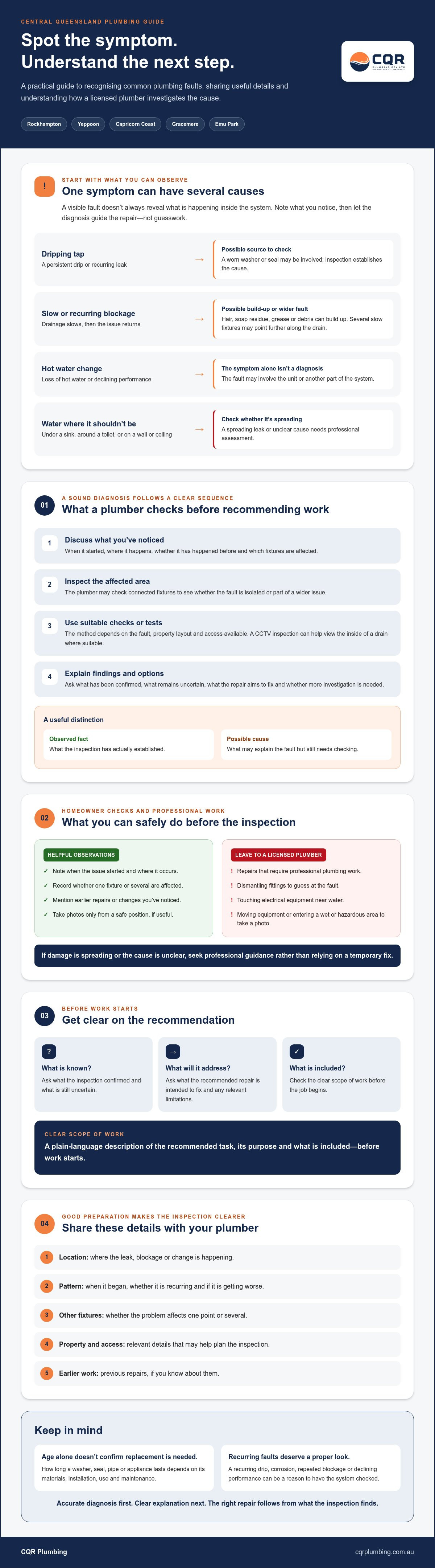
A dripping tap, recurring blockage or loss of hot water can interrupt daily routines, but the visible symptom doesn’t always show the cause. A tap may drip because a washer or seal has worn, while a drain can slow as hair, soap residue, grease or other debris builds up. A hot water fault may involve the unit or another part of the system, so it’s best not to guess from the symptom alone.
Components don’t all have a set lifespan. How long a washer, seal, pipe or appliance lasts depends on its materials, installation, use and maintenance. A recurring drip, corrosion, repeated blockage or declining performance can be a reason to have it checked, but age by itself doesn’t confirm that replacement is needed. Plumbing diagnosis means checking the symptoms, identifying the source and explaining the likely repair options. Routine preventative maintenance can help identify wear, while a spreading leak or unclear fault calls for professional assessment.
For a general overview of plumbing systems, see Wikipedia’s reference. For local service information, visit CQR Plumbing’s plumbing services page.
Which plumbing symptoms should you take seriously?
Watch for water under a sink, around a toilet or on a wall or ceiling; persistent drips; recurring blockages; or an unexpected change in water supply. Note whether the issue affects one fixture or several, and whether it’s getting worse. Don’t dismantle fittings or touch electrical equipment near water. If damage is spreading or the cause is unclear, seek professional guidance rather than relying on a temporary fix.
What information helps a plumber understand the problem?
Record when the issue started, where it occurs and whether it has happened before. Note which fixtures are affected and any changes beforehand, such as slower drainage or a new leak. Mention previous repairs if you know about them. Photos can help show a visible symptom, but take them only from a safe position and don’t move equipment or enter a wet or hazardous area.
A licensed plumber can assess the fault and explain what the inspection has established, what remains uncertain and which repair options may suit. That gives you a clearer basis for deciding what should happen next, without assuming an ageing component needs replacement before it has been checked.
How a licensed plumber diagnoses a fault before recommending work
A sound repair recommendation starts with finding out what’s causing the fault, not just treating the part that’s easiest to see. Identifying the source before choosing a repair helps avoid work that addresses a symptom but leaves the underlying problem unresolved.
The plumber’s process usually follows a clear sequence: discuss what you’ve noticed, inspect the affected area and any relevant connected fixtures, carry out suitable tests, then explain the findings. The inspection method depends on the fault, property layout and access available. A dripping tap may need a different check from a drain that repeatedly blocks.
What happens during a plumbing inspection?
The plumber will check the reported area and may look at connected fixtures to see whether the problem is isolated or part of a wider fault. For example, if more than one fixture drains slowly, the cause may be further along the drainage line rather than in a single waste outlet.
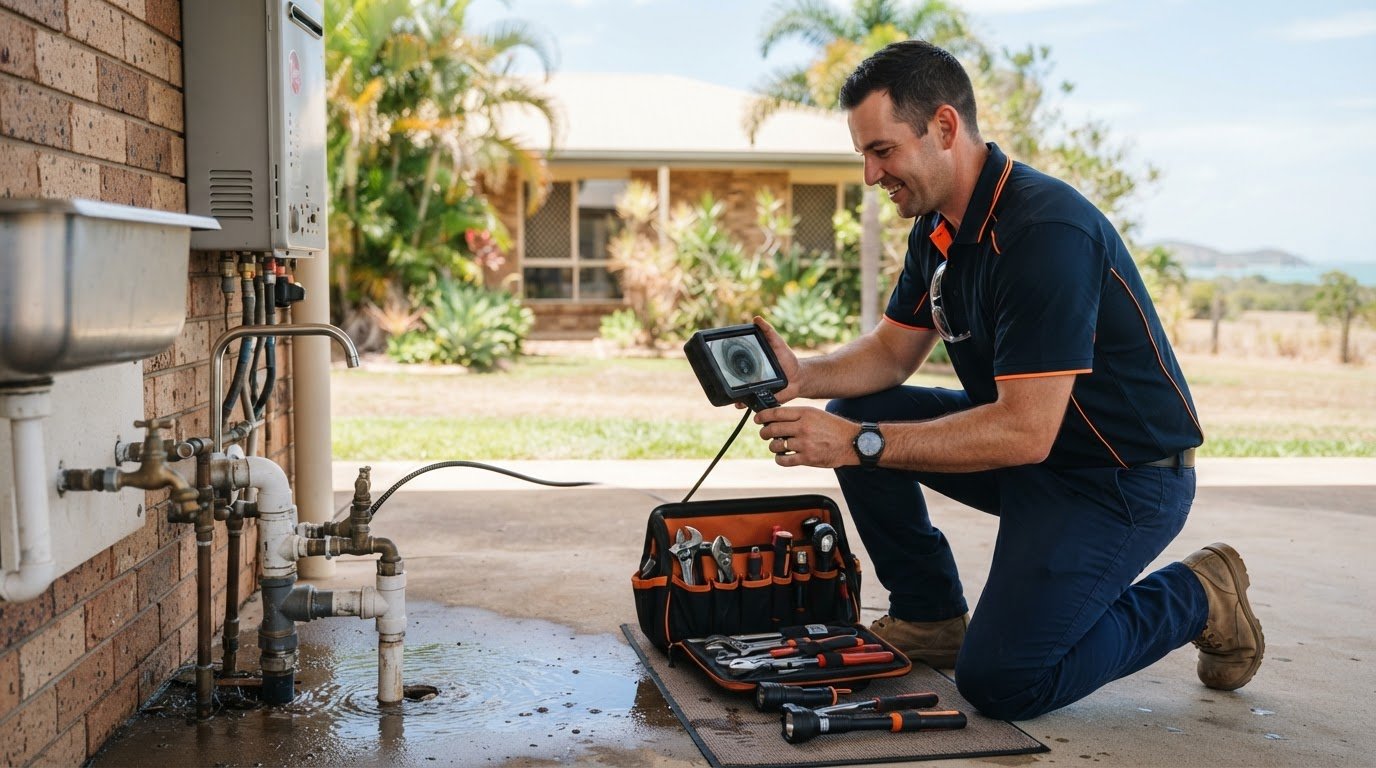
Where suitable, a CCTV inspection can help view the inside of a drain and locate an obstruction or other visible concern. It isn’t appropriate for every fault, and access or the condition of the pipe can affect what can be established. Ask what the inspection has confirmed, what it hasn’t confirmed and whether further investigation is needed.
How should a repair recommendation be explained?
A useful explanation separates observed facts from possible causes. The plumber might confirm a blockage in a particular section but explain that the reason it keeps returning still needs investigation. That distinction helps you understand what is known before deciding on the next step.
Ask the plumber to describe the repair in plain language, what it aims to fix and any relevant limitations. If more than one option is suitable, ask how the approaches differ and whether either requires additional investigation or access. A clear scope of work should state the recommended task, its purpose and what is included before work begins.
For blocked drains, CQR Plumbing uses CCTV inspections and high-pressure water jetting as part of its drainage service. The right method depends on what the inspection shows; no single approach suits every pipe or blockage. You can review the details of its general plumbing services or ask what checks are proposed for your particular fault.
For broader information about the plumbing trade, Master Plumbers Australia is an industry reference. For a specific issue, you can also send through details of the plumbing work you need assessed.
DIY checks or a licensed plumber: how to make the safer choice
You can help identify a fault without trying to repair it. Note where water is appearing, when it happens and whether other fixtures are affected. These observations give a plumber useful information while keeping you clear of work that could cause injury, damage or a repeat problem.
In Queensland, some limited tasks are classed as unregulated work, but that doesn’t make every repair suitable for DIY. Don’t dismantle pipework, attempt plumbing repairs or alter a gas appliance yourself. Gas work should be left to a professional qualified in licensed gas fitting.
| Safe homeowner checks | Work for a licensed plumber |
|---|---|
| Observe where a leak or damp patch appears, without touching wet electrical equipment. | Finding and repairing a hidden leak or a leak that’s spreading. |
| Check whether one fixture or several are affected, and note when the issue occurs. | Investigating persistent faults, repeated blockages or changes in water supply. |
| Keep people clear of wet or potentially unsafe areas and take a photo only if it’s safe. | Dismantling pipework, clearing a recurring drain fault or carrying out other plumbing repairs. |
| Visually check an appliance from a safe distance without removing covers or adjusting connections. | Installing, altering or repairing gas appliances and their connections. |
What can a homeowner safely check first?
Look, listen and record. Is the drip constant or does it happen only when a fixture is used? Is water coming from a visible connection, or appearing somewhere that doesn’t have an obvious source? Don’t pull fittings apart to find out. If a wet area is near electrical equipment, keep clear and seek appropriate help.
Some minor tasks, such as changing a shower head or tap washer, may be unregulated in Queensland. If you’re not sure whether a task is permitted or safe, check before attempting it. Don’t bypass a safety device or interfere with gas equipment.
When should you contact a licensed plumber?
Arrange professional assessment for persistent faults, hidden leaks, recurring blockages or an unexplained supply change. A licensed plumber is a tradesperson authorised by the QBCC to perform plumbing work legally in Queensland. Gas appliance work requires a professional qualified in licensed gas fitting.
A burst pipe or major leak may call for emergency plumbing. If a drain is the concern, see CQR Plumbing’s blocked drain guidance to understand the service and possible next steps. Don’t keep trying temporary fixes if the problem returns; tell the plumber what you’ve observed and what you’ve already tried.
Preparing for plumbing work in Rockhampton, Yeppoon and nearby areas
A clear enquiry helps the plumber plan what to inspect and what access may be needed. Before contacting a service, gather the basic details and mention anything that could affect the visit, such as a locked gate, a unit access arrangement or fixtures in a restricted area.
What should you have ready before making an enquiry?
Use this short checklist to describe the issue clearly:
- Property location: Give the suburb and property type, such as a house, unit, rental or commercial site. CQR Plumbing serves Rockhampton, Yeppoon and nearby communities. See its Rockhampton plumbing information for local service details.
- Symptoms and timing: Explain what’s happening, where it occurs and when you first noticed it. Say whether the problem is constant or appears only when a fixture is used.
- Affected fixtures: Identify whether one tap, toilet or drain is affected, or whether several areas have a similar issue.
- Previous work or changes: Mention repairs, renovations or fixture changes that may be relevant, if you know about them.
- Access and contacts: Explain how to reach the affected area. For a managed property, identify who can arrange access and approve work.
You don’t need to know the technical cause. Accurate observations are more useful than a guess, and can help the plumber decide what information or access will be needed to assess the fault.
Before work starts, ask what the inspection has found, what remains uncertain and what the recommended work includes. A clear scope of work should describe the task and its purpose. For work in a rental, strata property or business, confirm who needs to receive updates and any report or records required for your own arrangements.
How should residential and commercial plumbing needs differ?
At home, access may be as simple as clearing space around a leaking fixture. A commercial site may need access coordinated with staff, tenants or a site contact, especially if the affected area is in use. Agreeing on access and communication early helps minimise confusion while the fault is assessed.
For strata and property managers, planned preventative maintenance can help identify developing issues and organise work before a fault disrupts occupants. Keep a record of recurring problems and previous repairs so the next inspection has useful context. CQR Plumbing works with residential, commercial and property maintenance clients across the local area.
Choosing a local plumbing service and arranging the next step
The right service should be able to explain who will assess the fault, what experience is relevant and what work is proposed. Check that the person carrying out plumbing work is a licensed plumber, and ask whether the team has handled similar faults in properties like yours. For gas appliance work, confirm the provider has professionals qualified in licensed gas fitting.
Drainage, gas and compliance work can call for different tools and expertise. A recurring drain fault may need more than a surface-level fix; gas appliance work must be handled by a qualified professional; and testing a compliance device requires the appropriate experience. Ask what the inspection can establish and whether the proposed method suits the fault and site access.
What should you ask before work starts?
Before agreeing to a repair, make sure you understand the recommendation. Ask:
- What has the inspection confirmed, and what remains a possible cause?
- What work do you recommend, and what problem is it intended to address?
- Are there other suitable repair options, and what are their limitations?
- What access is needed, and who will receive updates or any job reporting?
- Can you provide a clear scope of work before proceeding?
A clear scope should describe the tasks to be carried out and their purpose. If the situation changes once work begins, ask for an explanation of the new finding and any change to the proposed work before agreeing to proceed. Straightforward communication helps you make an informed decision and reduces uncertainty about what the job covers.
How CQR Plumbing supports Central Queensland properties
CQR Plumbing is locally owned and operated, serving Rockhampton, Yeppoon, the Capricorn Coast, Gracemere and Emu Park. Its work covers residential, commercial and property maintenance needs, including blocked drain repairs, hot water system repairs and installations, tap and toilet servicing, roof and gutter repairs, gas appliance installation, backflow prevention testing and TMV testing.
For drainage faults, the team can use CCTV inspections and high-pressure water jetting where suitable. CQR Plumbing also provides emergency plumbing response, alongside planned maintenance for real estate and strata clients. The appropriate service depends on the issue and what an inspection establishes, so describe the symptoms and site requirements when making an enquiry.
Choose a provider who answers your questions, explains the findings in plain language and confirms the work scope before starting. That gives you a practical basis for deciding what happens next.
Take the next step with confidence
A leak, recurring blockage or loss of hot water can have more than one cause. Note what’s happening and which fixtures are affected, then let a licensed plumber assess the fault rather than relying on appearance alone.
Before agreeing to repairs, ask what the inspection has established, what remains uncertain and what the recommended work will address. A clear scope of work helps you understand the task and make an informed decision before it begins.
CQR Plumbing serves residential, commercial and property maintenance clients across Central Queensland, including Rockhampton, Yeppoon, the Capricorn Coast, Gracemere and Emu Park. The business also provides 24/7 emergency response for urgent plumbing issues, so you can ask about the appropriate next step when a problem needs prompt attention.
Share the symptoms, property details and any access requirements when you get in touch. A clear description helps the team understand what you need assessed.
With a careful diagnosis and a clearly explained scope, you can move forward knowing what the work is intended to resolve.
Frequently Asked Questions
When should I call a plumber for a leak?
Call a plumber if a leak is spreading, keeps returning, has no obvious source or is causing damage. A small visible drip can sometimes point to a fault behind a wall or under a fixture, so don’t rely on appearance alone. Keep clear of water near electrical equipment. If water is flowing heavily or damage is worsening, seek urgent professional help and explain where the leak is and what’s affected.
Can I fix a blocked drain myself, or should I call a plumber?
You can safely remove visible debris from a ground-level drain grate, but don’t dismantle pipework or keep forcing a blockage that returns. A recurring or widespread blockage may have a cause further along the drain. A licensed plumber can assess the fault and use methods such as a CCTV inspection where suitable. For persistent drainage trouble, describe which fixtures are affected and when the blockage occurs.
How do I choose a licensed plumber in Queensland?
Ask for the plumber’s QBCC licence details and check that their experience fits the job. A licensed plumber is a tradesperson authorised by the QBCC to perform plumbing work legally in Queensland. For specialised work, such as gas fitting or backflow testing, confirm the provider is qualified for that specific task. Before work starts, look for clear communication and a written clear scope of work explaining what’s proposed.
What should I tell a plumber when booking a service?
Give the property location, type of property and a concise description of the fault. Explain when it began, where it occurs, which fixtures are affected and whether the problem has happened before. Mention relevant previous repairs or changes, plus any access arrangements. For a managed property in Rockhampton, Yeppoon or nearby, identify who can arrange access and receive updates. Safe photos may also help show what you’ve observed.
Does a plumber handle gas appliance problems as well as plumbing?
Some plumbing businesses also provide gas fitting, but not every plumber is qualified for gas work. Installation, alteration or repair of a gas appliance should be handled by a professional qualified in licensed gas fitting. Ask specifically about the provider’s qualifications and experience for the appliance and work required. CQR Plumbing provides gas appliance installation; confirm that the service you need is available before arranging a visit.
Is emergency plumbing available in Rockhampton and Yeppoon?
Yes. CQR Plumbing provides 24/7 emergency response for urgent plumbing issues and serves Rockhampton, Yeppoon, the Capricorn Coast, Gracemere and Emu Park. Emergency plumbing is suited to urgent faults such as burst pipes or major leaks. When you call, describe the problem, its location and whether water is still flowing. Confirm the response arrangements for your property and the next steps with the service provider.
Disclaimer
The information in this article is provided for general educational purposes only and should not be relied upon as professional plumbing, gasfitting, or legal advice. Every property and plumbing system is different, and the information may not be applicable to your specific circumstances. CQR Plumbing recommends that all plumbing and gasfitting work be inspected and carried out by a licensed professional in accordance with applicable Australian Standards and Queensland regulations. If you require advice specific to your property, please contact CQR Plumbing for an assessment.