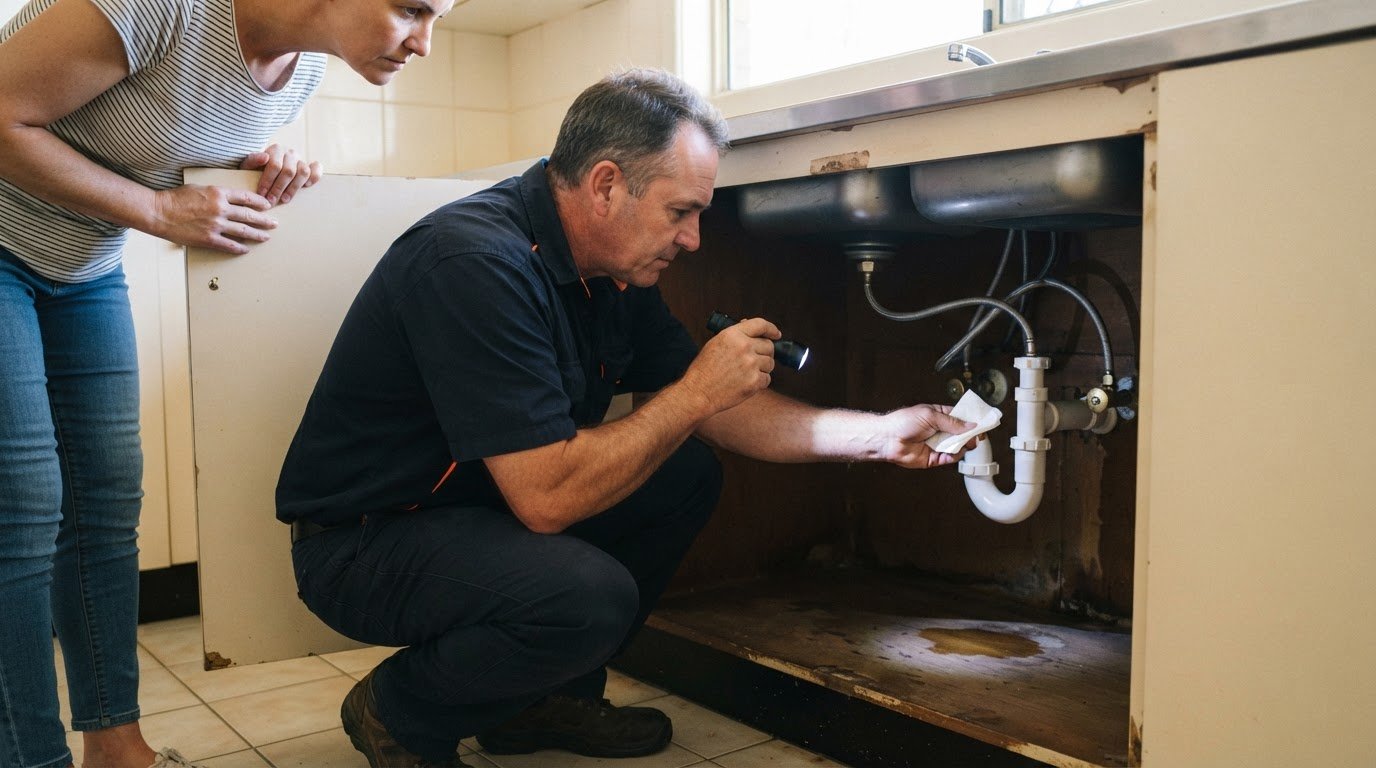
Pre-purchase plumbing checks for home buyers
A building inspection can leave important plumbing questions unanswered. If you’re buying a house, arrange to get the plumbing checked before buying so a licensed plumber can assess accessible plumbing and drainage, identify defects and recommend further investigation where needed. In Queensland, building inspectors cannot issue inspection certificates or make formal assessments of plumbing, drainage or gas work under the Plumbing and Drainage Act 2018.
It’s reasonable to want a clear picture of a property before committing. Getting plumbing checked before buying a house isn’t compulsory, but it can show you which issues need attention and provide useful information for discussions with the seller.
This guide explains what an inspection can cover, from the hot water system, leaks and pipe condition to drains, sewer and stormwater. You’ll also learn when CCTV drain inspections may help, what an inspection report can tell you, and how CQR Plumbing’s hot water system repairs and blocked drain repairs can address problems identified at a property in Rockhampton, Yeppoon, Gracemere, Emu Park or elsewhere on the Capricorn Coast.
Key Takeaways
- Arrange a plumbing inspection before finalising the purchase so defects can inform your decision and discussions with the seller.
- Use the inspection report to understand which issues need attention first and where further investigation may be needed.
- Assess the hot water system’s age and condition, and look for warning signs around the unit and its connections.
- Pay attention to dampness, discolouration and weak flooring near taps, under sinks and around toilets, as these can point to leaks.
- Include drainage, sewer and stormwater in your checks; CCTV inspection can help reveal faults below ground.
What Is a Pre-Purchase Plumbing Inspection?
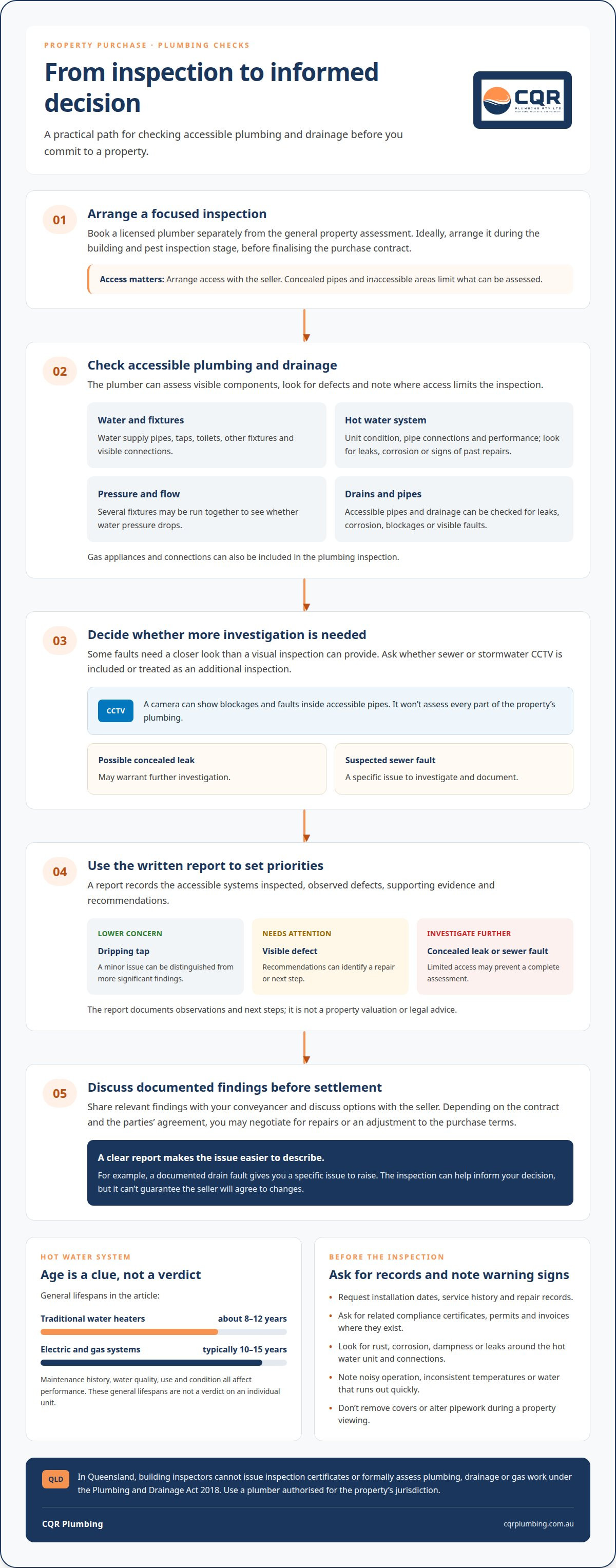
A pre-purchase plumbing inspection is a focused assessment of accessible plumbing and drainage before you buy. It can identify defects, explain what needs further investigation and help you judge whether to proceed. If you plan to get plumbing checked before buying a house, arrange an inspection separately from the general property assessment.
Inspection Scope and Plumbing Checks
A licensed plumber checks accessible water supply pipes, taps, toilets, other fixtures and the hot water system. They may run several fixtures together to see whether water pressure drops, and look for leaks, corrosion or signs of past repairs. Gas appliances and connections can also be included in the plumbing inspection.
The scope matters: concealed pipes and inaccessible areas limit what can be assessed. Ask whether sewer or stormwater CCTV is included or treated as an additional inspection. A camera can show blockages and faults inside accessible pipes, but it won’t assess every part of the property’s plumbing.
Reports and Repair Recommendations
A written report records the accessible systems inspected, observed defects and supporting evidence, then sets out priorities and recommendations. It can distinguish a minor issue, such as a dripping tap, from a concern needing further investigation, such as a suspected concealed leak or sewer fault.
Use the findings to understand the next step, not as a property valuation or legal advice. Recommendations may identify a repair, suggest specialist investigation or explain that limited access prevented a complete assessment. A purchase plumbing report helps you make decisions based on documented observations rather than a quick visual check.
Using Findings in Purchase Negotiations
If the report identifies a defect, share the relevant findings with your conveyancer and discuss options with the seller before settlement. Depending on the contract and the parties’ agreement, you may negotiate for repairs or an adjustment to the purchase terms. A clear report makes the issue easier to describe.
For example, a documented drain fault gives you a specific issue to raise rather than a broad, unsupported concern. The inspection can also help you decide whether to proceed if major defects emerge. It can’t guarantee the seller will agree to changes.
Timing, Records and Local Requirements
Arrange the inspection before finalising the purchase contract, ideally during the building and pest inspection stage. You can request access before auction or during a cooling-off period if the seller permits access and the contract timing allows it. A plumbing inspection isn’t compulsory, but it can reveal serious issues before you commit.
Ask the seller for available records of repiping, plumbing repairs, hot water replacement and renovation work. Request related compliance certificates, permits and invoices where they exist. These records help clarify what work was completed and when.
Are plumbing inspection requirements different by Australian state or territory? Yes. Licensing, certification and inspection rules vary, so use a plumber authorised for the property’s jurisdiction. In Queensland, building inspectors cannot issue inspection certificates or formally assess plumbing, drainage or gas work under the Plumbing and Drainage Act 2018.
How much does a plumbing inspection cost in Australia? The amount depends on property type and size, and whether services such as CCTV are included. To get plumbing checked before buying a house, find a licensed plumber through the relevant state or territory licensing register; in Queensland, that register is maintained by the QBCC.
What are the risks of old pipes, sewer defects or non-compliant plumbing? They can lead to restricted flow, leaks, blockages or substantial repairs after settlement. An inspection can identify visible concerns and flag where further investigation is warranted.
Checking a hot water system’s age and condition
A hot water system can appear sound while corrosion or a failing connection develops out of sight. During a purchase plumbing inspection, assess the unit’s age, visible condition, pipe connections and performance together. An older system isn’t automatically faulty, but its age helps you judge whether replacement may be approaching.
Traditional water heaters typically last about 8-12 years before requiring service. Electric and gas hot water systems typically last 10 to 15 years. These are general lifespans, not a verdict on an individual unit. Maintenance history, water quality, use and the system’s condition all affect how it performs.
Ask the seller for the installation date, service history and any repair records. Then look for the unit’s data plate, which may identify its make and model. Rust, corrosion, dampness or leaks around the tank, valves and hot and cold connections deserve attention. A noisy system, inconsistent temperatures or water that runs out quickly can also prompt further investigation.
Check the visible water lines near the system for corrosion, damage, makeshift joins or evidence of previous leaks. The pipe material and condition can help explain restricted flow or recurring faults. A plumber can assess accessible connections and note where concealed sections prevent a full view. Don’t remove covers or alter pipework during a property viewing.
How can you check for leaks, drainage problems and water pressure issues before buying? Look beneath the unit and around accessible connections for moisture, staining or corrosion, then run taps and fixtures to observe flow and drainage. A substantial pressure drop when several fixtures run together, slow drainage or gurgling may point to a hidden supply or sewer line concern that needs professional assessment.
Drainage checks matter because a hot water system is only one part of the property’s water services. Run a nearby basin or shower and watch how quickly it drains. Note whether flow changes when other fixtures operate. These observations don’t diagnose a blockage, venting issue or sewer line fault, but they give the inspector specific symptoms to investigate. Some faults stay hidden, and leaving them unexamined can make later repairs more involved.
Ask the inspector to record the unit’s observed condition, visible defects and recommended next steps. A repair may suit a local fault, while age, corrosion or repeated failures may support considering replacement. The report should distinguish observed evidence from matters requiring further investigation. It shouldn’t promise how long a system will last.
For an older unit, a documented assessment helps you discuss its condition before purchase rather than relying on appearance alone. To arrange a hot water system assessment, share the property details and any seller records available.
Checking taps and under-sink areas for leaks
A dry kitchen cupboard can still hide an intermittent leak. During a pre-purchase inspection, check accessible taps, wastes, pipe joins and cupboard floors for moisture, staining, corrosion or mould. A slow drip may leave mineral marks before water becomes obvious. These signs help a licensed plumber trace the likely source and assess whether damage extends beyond the visible area.
Run each tap and watch the spout, handles and base while water flows. Then close it and look for drips. Check beneath each basin while the tap runs, paying attention to the waste connection and joins between visible pipes. A leak can appear only when water drains, so a quick glance at an empty cupboard may miss it.
Look for damp smells, swollen cabinet panels, peeling laminate and black spotting around pipe penetrations. Pipe leaks can encourage mould and mildew and damage nearby materials. Discoloured or unstable flooring around a toilet may point to water damage below the surface. A toilet that moves when gently tested may have a weakened seal or an unsecured connection; don’t try to tighten or dismantle it during a viewing.
Flexible braided stainless steel hoses deserve particular attention beneath sinks and at toilets. Hoses over 10 years old are a replacement priority. Check for corrosion, bulging, kinks, fraying or moisture at the end connections. A hose can look acceptable at a glance while deterioration develops near a fitting, so the inspection report should record its visible condition and location.
Pipe material can also guide further investigation. Older homes may contain galvanised steel pipes, which can rust internally and restrict water flow. Copper pipe joints in older properties may include lead-based solder from before it was phased out in the 1980s. A visual inspection cannot establish the composition of every concealed join; a licensed plumber can identify accessible materials and explain whether further checks are warranted.
Discoloured water can result from a temporary disturbance or older pipes needing attention. Note whether it clears after running the tap, and tell the inspector if it returns. Don’t assume one clear sample rules out a pipe issue. The inspection report can distinguish an observed symptom from a confirmed defect and recommend follow-up where evidence is limited.
Blockages and leaks can appear together when a waste connection is damaged or poorly installed. Run a basin and observe whether water drains steadily, then check the cupboard again for fresh moisture. Record which fixture showed the symptom, whether it involved hot or cold water, and where water appeared. These details help the plumber narrow down the cause without disturbing the property.
A thorough inspection connects visible signs to their likely source rather than treating each damp patch as an isolated problem. Water under a sink may have travelled along a pipe or cabinet base before reaching the ground. Ask that the report identify the affected fixture, accessible evidence and recommended next step, especially if staining, mould or repeated leaks suggest concealed damage.
Common plumbing defects by pipe material and era
A pre-purchase inspection should assess visible leaks, corrosion, restricted flow, damaged joints, drainage faults and signs of past repairs. Pipe material and the age of the property can guide a licensed plumber’s checks, but neither alone proves a defect. The key is to connect observed symptoms with the condition of accessible sections and identify where further investigation may be needed.
Older homes may have galvanised steel water pipes. These pipes can rust internally over time, narrowing the passage and restricting water flow. A plumber can inspect accessible sections for external corrosion and compare their condition with flow at fixtures. Discoloured water may follow a temporary disturbance, but if it persists, older pipework may need further assessment.
Copper pipework has different considerations. Lead-based solder was common for copper pipe joints before it was phased out in the 1980s. In an older property, a visual inspection may identify accessible copper pipes and joints, but it cannot establish the material used in concealed connections. A licensed plumber can assess what is visible and explain whether further checks are appropriate.
Clay drainage pipes can crack at their joints and allow tree roots to enter. Root intrusion may contribute to recurring blockages or restricted drainage. Where suitable inspection access is available, a CCTV camera can show the pipe’s internal condition and help locate a defect. The camera only assesses the sections it can reach, so access points and the report’s stated scope matter.
Assess the plumbing system as a connected network, not as isolated fixtures. For example, weak flow at several taps may suggest a shared supply concern, while one slow basin may point to a local waste issue. Discoloured water, recurring leaks, damp ground or gurgling drains are useful observations to record for the inspector.
A building inspection may note visible damage, but it doesn’t replace a focused plumbing inspection. A licensed plumber can assess accessible pipework, operate fixtures and explain whether a symptom suggests a local repair or further investigation. The report should separate visible evidence from suspected hidden defects, such as a cracked drain that needs camera assessment.
During a viewing, make simple observations without dismantling fittings or disturbing the property:
- Note visible pipe materials and accessible repair patches.
- Look for corrosion, moisture, staining or discoloured water.
- Run taps and toilets, noting weak flow, slow drainage or gurgling.
- Record each symptom’s location to discuss with the plumber.
Older materials don’t automatically mean the whole system needs replacement. The decision depends on the defect’s location, condition, extent and effect on service. A localised repair may address one failed joint, while widespread corrosion or repeated drainage faults may call for broader investigation. Clear findings help you understand the plumbing system’s condition before deciding how to proceed with the purchase.
Drainage, sewer and stormwater checks
Drainage faults can stay hidden below ground while sinks, toilets and outside areas appear usable. A focused inspection looks at accessible drains, sewer pipes and stormwater paths, then recommends CCTV where suitable openings provide access. This matters because surface symptoms may not reveal whether the cause is in a local waste pipe, the property sewer or stormwater drainage.
For accessible sewer and stormwater lines, a camera inspection can uncover cracks, root intrusion, silt build-up, backfall or partial blockages. Backfall means a pipe section slopes the wrong way, so wastewater may not drain as intended. The camera view helps locate the problem and judge its extent, but only shows sections reached through available access points.
Above ground, the inspector can visually assess stormwater pipes, grates and the route rainwater takes away from the house. Look for water pooling near the building, overflowing points, damp ground or unusually healthy grass along a buried sewer route. These signs can indicate an external drainage concern, but don’t identify its exact cause without further assessment.
Inside, slow sinks, tubs or toilets can signal a clog, venting issue or sewer-line restriction. Gurgling as water drains adds useful context. Observe whether several fixtures drain slowly or just one. That distinction helps an inspector decide whether to investigate a local waste connection or shared drainage. Low water pressure is a separate supply symptom, not proof of a drain fault.
Tree roots can enter sewer pipes through joints or cracks. A lush strip of grass above the line may be a clue, particularly when paired with recurring blockages or unpleasant smells. A CCTV inspection can show whether roots are present and where they enter. The report should record the location and recommend suitable follow-up, rather than treating every symptom as a reason for pipe replacement.
Stormwater deserves its own check. A blocked or damaged line may allow rainwater to collect or spill near the property. Note visible water marks, surface flow towards the house, standing water and smells after rain. These observations guide the inspection, but a dry viewing day cannot show how every part of the system performs during heavy rainfall.
Before the inspection, ask that the scope distinguish visible checks from camera work. A camera requires suitable access, and inaccessible sections remain outside its view. Findings should identify the affected line, observed defect and whether further investigation is recommended. This gives you a clearer basis for deciding whether a local repair, drain clearing or broader assessment is appropriate.
CQR Plumbing
CQR Plumbing can help address plumbing issues identified before settlement. Once you have an inspection report, share its findings to discuss practical next steps for the property.
For example, a failing hot water system may need repair or replacement, while a leaking tap or toilet may call for servicing. CQR Plumbing provides Blocked Drain Repairs for identified drain problems. The right response depends on the fault and the plumber’s assessment, so clear findings help define the work.
Whether you’re buying in Rockhampton, Yeppoon, Gracemere, Emu Park or elsewhere on the Capricorn Coast, use the report to explain what needs attention. Contact CQR Plumbing to discuss the plumbing issues identified at the property and the next step.
Make your next property decision with clarity
Before moving towards settlement, decide which plumbing findings need action and which require more investigation. Keep the inspection report with your purchase documents so you can refer to its recommendations when planning repairs or discussing outstanding concerns. If you want to get the plumbing checked before buying a house, arrange it early enough for the findings to inform your decision.
When a report identifies work, CQR Plumbing can help with relevant next steps, including hot water system installations, Blocked Drain Repairs, and Tap and Toilet Servicing. Share the specific finding so the work can be discussed clearly and the appropriate service identified.
A clear plan for unresolved plumbing issues can help you move forward with greater confidence in your property decision.
Frequently Asked Questions
How does an inspection affect my negotiations with the seller?
An inspection gives you documented evidence to raise with the seller, but it doesn’t compel them to agree to repairs or changed terms. Be specific: identify the reported defect, its location and the recommended next step. For example, if the report recommends investigating a suspected sewer fault, discuss that finding before settlement rather than making a general request for plumbing work. Discuss your contract and any agreed changes with your conveyancer.
Should I get a plumbing inspection before buying a house in Australia?
Yes, a separate plumbing inspection is recommended if you want a clearer picture of accessible plumbing before purchase. It isn’t compulsory, but it can help uncover serious defects that a general property assessment may not examine thoroughly. Arrange it early enough for the findings to inform your decision. If the inspection identifies a concern, use the report to decide whether further investigation or a discussion with the seller is appropriate.
What does a pre-purchase plumbing inspection include in Australia?
It assesses accessible plumbing and drainage, with the scope agreed for the property. The plumber may operate fixtures, assess visible pipework and hot water equipment, and check accessible drains. CCTV can be useful for sewer or stormwater lines when suitable access is available. The report records observed issues and recommendations. Concealed pipework, inaccessible sections and areas requiring specialist investigation may need separate assessment, so read the scope alongside the findings.
Does a standard building and pest inspection cover plumbing?
A standard building and pest inspection doesn’t usually provide a thorough plumbing assessment. It may note visible symptoms, such as a damp patch or damaged flooring, but that doesn’t establish the plumbing fault’s source. In Queensland, building inspectors cannot issue inspection certificates or make formal assessments of plumbing, drainage or gas work under the Plumbing and Drainage Act 2018. A plumbing inspection addresses those systems directly.
Who pays for plumbing repairs found during a pre-purchase inspection?
The inspection doesn’t decide who pays for repairs. The sale contract and any agreement between the buyer and seller determine how a reported defect is handled. A buyer may ask the seller to complete agreed repairs or negotiate another arrangement, but the seller needn’t accept that request automatically. Before agreeing to changes, have your conveyancer explain how the proposed terms affect your contract and settlement.
Disclaimer
The information in this article is provided for general educational purposes only and should not be relied upon as professional plumbing, gasfitting, or legal advice. Every property and plumbing system is different, and the information may not be applicable to your specific circumstances. CQR Plumbing recommends that all plumbing and gasfitting work be inspected and carried out by a licensed professional in accordance with applicable Australian Standards and Queensland regulations. If you require advice specific to your property, please contact CQR Plumbing for an assessment.
