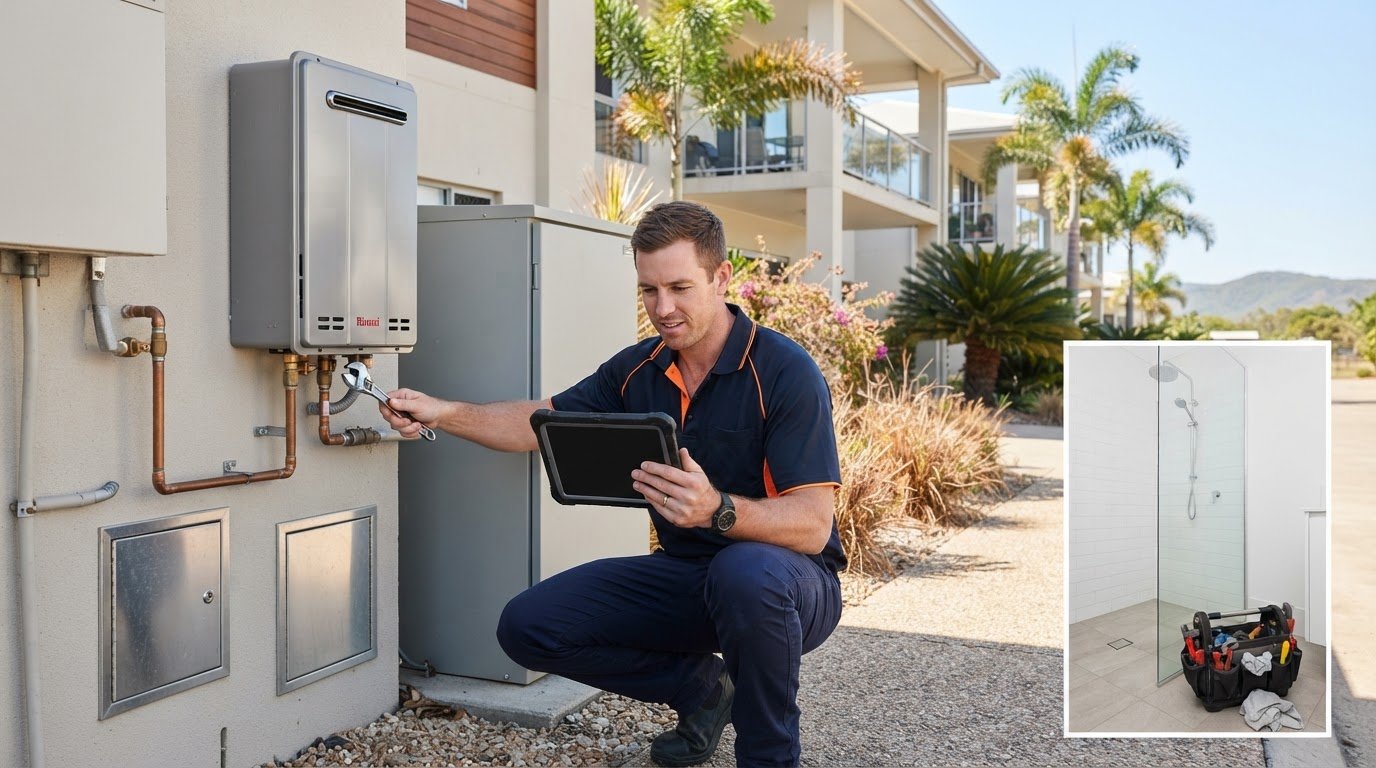
Property Maintenance Plumber Rockhampton: Owners' Guide
What if one plumbing fault could be handled without losing track of the next repair request? A leaking toilet or blocked drain can disrupt tenants and property operations, while unclear updates make it harder to coordinate the fix. A property maintenance plumber Rockhampton owners and managers can rely on should connect urgent repairs with practical follow-up.
If you oversee a home, rental, strata complex or commercial site, you need clear explanations and a workable process, not guesswork. This guide explains how to organise plumbing maintenance across Rockhampton, Yeppoon, Gracemere, Emu Park and the Capricorn Coast, and how to respond when a fault appears.
You’ll learn which warning signs need prompt attention, when work should be handled by a licensed plumber, and how planned checks can help identify issues before they interrupt day-to-day operations. We’ll also cover relevant services, from tap and toilet servicing to drainage repairs, and show how a clear scope of work and useful reporting can keep multiple jobs easier to manage.
Key Takeaways
- Separate active faults from planned maintenance, then prioritise requests by safety, water loss, disruption and risk of further damage.
- A property maintenance plumber Rockhampton owners and managers can work with can help coordinate reactive repairs and scheduled checks across different property types.
- Keep a consistent record of each fault, access arrangements, agreed work and repair outcome to make maintenance easier to track.
- Agree on a clear scope of work before repairs begin so everyone understands what will be addressed.
- For recurring drain problems or specialist testing, clear diagnosis and reporting can help guide the next maintenance decision.
When does a Rockhampton property need a maintenance plumber?
A dripping tap may seem minor, but small leaks, recurring blockages and faulty fixtures can disrupt a home, rental or workplace. Water escaping under a sink can damage a cupboard or floor; a toilet that keeps running can affect daily use and signal a fault that needs attention. Understanding how plumbing systems and their components work helps explain why a symptom in one fixture can sometimes point to a wider issue.
Separate a new fault from planned maintenance. A sudden leak, a drain that has stopped clearing or an unexpected loss of hot water calls for assessment. A routine check of taps, toilets or roof plumbing can be scheduled before a fault develops. The aim isn’t to treat every drip as an emergency. It’s to record what’s happening and act in proportion to the disruption and risk.
Priorities vary by property. In a rental, a fault affecting a tenant’s bathroom or kitchen can interfere with everyday use. In a strata building, a leak may affect shared areas or another lot, so prompt reporting and access coordination matter. A workplace may need to keep amenities available for staff and visitors. At a private home, the owner can weigh the affected area against other household needs. A Rockhampton property maintenance service can help owners and managers deal with repairs and planned checks across local properties.
Which plumbing problems should be logged early?
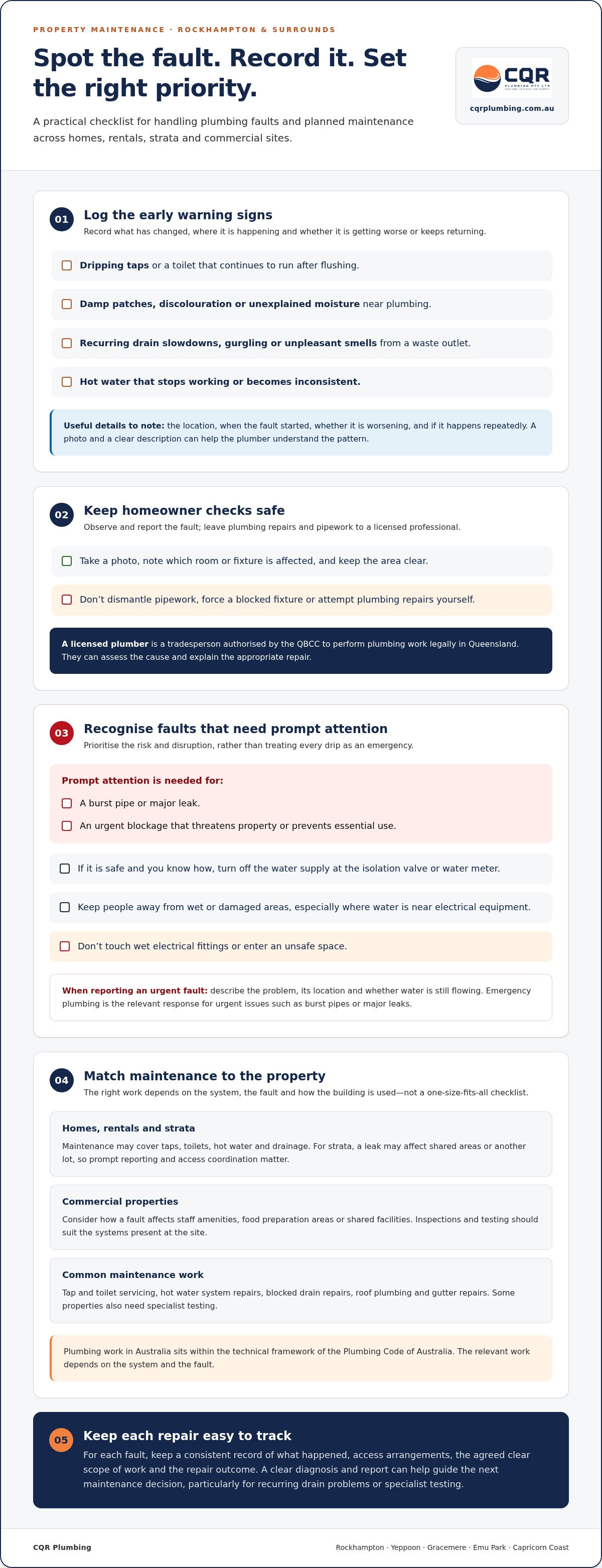
Report changes before they become harder to diagnose. Note the location, when the fault started and whether it is getting worse or happening repeatedly. A clear record helps the plumber understand the pattern, particularly when a tenant notices a problem between inspections.
- Dripping taps or a toilet that continues to run after flushing.
- Damp patches, discolouration or unexplained moisture near plumbing.
- Recurring drain slowdowns, gurgling or unpleasant smells from a waste outlet.
- Hot water that stops working or becomes inconsistent.
You can safely observe, take a photo and keep the area clear. Don’t dismantle pipework, force a blocked fixture or attempt plumbing repairs yourself. A licensed plumber, a tradesperson authorised by the QBCC to perform plumbing work legally in Queensland, can assess the cause and explain the appropriate repair.
When is a plumbing fault an emergency?
A burst pipe, major leak or urgent blockage that threatens property or prevents essential use needs prompt attention. If it’s safe and you know how, turn off the water supply at the isolation valve or water meter. Keep people away from wet or damaged areas, especially where water is near electrical equipment. Don’t touch wet electrical fittings or enter an unsafe space.
For urgent faults, emergency plumbing support is the relevant response. Give a clear description of the problem, its location and whether water is still flowing. Persistent leaks, repeated drainage issues and loss of hot water also warrant professional assessment, even if they don’t appear urgent. Early reporting helps distinguish a repair that needs attention now from work that can be planned.
What property maintenance plumbing covers across Rockhampton
Property maintenance plumbing combines reactive repairs with planned work to keep a building’s plumbing systems serviceable. The work may involve fixing a fault, checking a system or identifying why a problem keeps returning. The right scope depends on how the property is used, its fixtures and services, and the effect a fault has on occupants or operations. A private home won’t necessarily need the same checks as a commercial site.
Common maintenance can include tap and toilet servicing, hot water system repairs, blocked drain repairs, roof plumbing and gutter repairs. Some properties also need specialist testing. Plumbing work in Australia is carried out within the technical framework of the Plumbing Code of Australia (PCA). The relevant work depends on the system and the fault, rather than a standard checklist applied to every building.
Residential, rental and strata plumbing needs
In a home, a dripping tap may be an isolated fixture fault, while recurring slow drainage could point to an issue further along the waste line. A tenant’s report can help narrow down the location and impact: note which room is affected, whether other fixtures are behaving differently and if the issue comes and goes. That information gives a plumber a useful starting point for assessment.
For rentals and strata, maintenance may include taps, toilets, hot water and drainage, but not every property needs all of these services at once. Coordinated real estate and strata plumbing support can help managers address property-specific repairs and planned checks. Where several fixtures are affected, the plumber can investigate whether the symptoms share a cause before recommending a repair.
Commercial properties and compliance-related maintenance
Site use affects priorities. A fault in a staff amenity, food preparation area or shared facility may disrupt building operations differently from an issue in a low-use area. Maintenance can cover fixtures, hot water, drainage and roof plumbing, with inspections or testing selected to suit the systems present at the site.
A backflow prevention device stops contaminated water from flowing back into the potable water supply. Testing checks the device’s operation, while a thermostatic mixing valve (TMV) blends hot and cold water to deliver controlled-temperature water; TMV testing checks that it functions as intended. Testing results and reports can support facilities management by recording what was checked and any follow-up identified.
Plumbing components don’t all have the same service life. A tap washer or seal may wear with frequent use, while hot water system parts are affected by the system’s condition, use and maintenance. Rather than relying on a single age threshold, consider the component’s performance and repair history. A licensed plumber can assess whether repair remains suitable or replacement should be considered.
For drainage faults, assessment may involve CCTV inspection to view the pipe internally, or high-pressure water jetting to clear an obstruction. These methods answer different questions: an inspection helps locate or identify a problem, while jetting is used to clear a drain. CQR Plumbing provides property maintenance across Rockhampton and nearby Central Queensland communities. If you’re planning repairs or checks for a property, you can outline the plumbing work required so the scope can be considered against the site’s needs.
How to assess and prioritise plumbing maintenance requests
A useful triage process helps owners and managers distinguish an immediate threat from a fault that can be scheduled. Consider four factors: safety, active water loss, disruption to the property and the chance of further damage. A leak near electrical equipment, for example, needs a different response from a tap that drips into a basin but can still be used.
Urgency depends on the immediate risk and the extent of disruption, not simply on how visible a plumbing fault is. Use the guide below to decide what to report and what to do next. It’s a practical starting point, not a substitute for assessment by a licensed plumber.
Emergency: A burst pipe, major leak, sewage overflow or blockage affecting essential facilities. Keep people clear of unsafe areas, limit water flow only if it’s safe to do so, and seek emergency plumbing.
Prompt repair: A continuing leak, loss of hot water or drain fault that’s interfering with normal use but isn’t creating an immediate danger. Report the impact and arrange professional assessment rather than leaving it to worsen.
Planned maintenance: A minor fixture issue or check that isn’t causing active damage or significant disruption. Record it and arrange suitable work as part of routine property maintenance.
For a property maintenance plumber Rockhampton owners or managers can give useful direction by describing what’s affected, how the fault is changing and whether water is escaping. If the problem involves a shared area or affects several occupants, include that information too. It helps clarify the operational impact, especially across a managed portfolio.
What information helps diagnose a reported fault?
Ask the person reporting the issue to record the affected fixture or area, the symptoms, when they began and whether there’s visible water. Note whether the problem is constant or intermittent, and whether other fixtures are affected. A clear photo can help show a damp patch or visible leak, but only take one if it’s safe to reach the area. Don’t remove covers, dismantle pipework or try to clear a blockage with tools. A good description helps the plumber decide what to inspect first.
Which problems need investigation rather than a quick patch?
A single slow drain may clear and not return, while a blockage that keeps coming back can suggest an unresolved issue in the drain line. Repeating the same quick fix without finding the cause may leave the underlying fault in place. A plumber can assess the symptoms and decide whether further investigation is appropriate.
For recurring drain problems, CCTV inspection can show the inside of relevant pipe sections where access and conditions allow. This can help locate an obstruction or identify a visible issue, giving the plumber better information before recommending a repair. The camera view is one diagnostic tool, not a guarantee that every cause will be visible. A sound recommendation follows assessment, not guesswork; clearing a drain and repairing an underlying fault are different outcomes.
How property owners and managers can organise plumbing maintenance
A consistent process makes it easier to manage plumbing faults across a home, rental, strata building or workplace. It gives the plumber useful information before attending and leaves a record the owner or property manager can refer to later. Use these steps for each request, whether it’s a one-off repair or part of planned maintenance.
- Log the fault. Record the property address, affected area, fixture and symptoms. Include when the issue started and whether it has changed.
- Assess urgency. Note any active leak, loss of an essential service, safety concern or disruption to occupants. Use these details to help decide how quickly the issue needs attention.
- Arrange access. Confirm how the plumber can enter, who can provide access and which tenant or site contact can describe the fault.
- Agree the work. Set out the clear scope of work before work begins, including the reported problem and the task to be carried out.
- Record the outcome. Save what was found, what work was completed and any recommended follow-up.
For local property support, CQR Plumbing’s Rockhampton plumbing services cover reactive repairs and planned maintenance. A consistent record is especially useful when different people report faults or manage access across several properties.
Preparing a clear maintenance request
Include the property address, access arrangements, affected room or site area, and the tenant or facilities contact’s details. Describe what can be observed, such as water under a basin or a hot water system that isn’t supplying hot water. Don’t state an unconfirmed cause as fact. Flag any active leak, service interruption or safety concern so the request can be assessed appropriately.
Photos can help show the location or visible extent of a fault, provided it’s safe to take them. Keep clear of hazards and don’t remove fittings or dismantle plumbing to gather more information. The plumber can investigate the cause and explain whether the requested work needs to change after assessment.
Closing the job with useful records
After the repair, keep a plain-English summary of the fault found, work completed and any follow-up recommended. Add relevant reports, photos or testing results to the property’s maintenance file. This helps facilities teams and managers track what has been done, and gives the next person context if a similar fault appears.
Records can also reveal patterns. If the same drain blocks repeatedly or a hot water system develops further faults, past job notes can help the plumber compare symptoms and decide what investigation is appropriate. For a hot water system, record whether the issue was repaired or whether replacement was recommended. An installation decision should follow assessment of the existing system and the property’s requirements, rather than an assumption based on one fault.
Consistent logs make preventative maintenance more practical. They help owners plan follow-up checks around the building’s actual history, instead of relying on memory or treating every request as an isolated event.
Choosing a property maintenance plumber in Rockhampton: what CQR Plumbing does
Managing plumbing across several properties takes more than a repair visit. You need the issue assessed, the work explained and a useful record of what happened. CQR Plumbing is locally owned and operated in Central Queensland, supporting residential, rental, strata and commercial properties across Rockhampton and nearby communities, including Yeppoon, Gracemere, Emu Park and the Capricorn Coast.
For owners and managers, a property maintenance plumber Rockhampton service can link day-to-day repairs with scheduled checks, so fault history and follow-up don’t get lost between separate requests. CQR Plumbing handles reactive maintenance and emergency plumbing, with clear communication about the reported problem and the work proposed. A licensed plumber assesses plumbing faults and explains the appropriate next step before work proceeds.
Matching CQR Plumbing services to property needs
The right service depends on the fault and the property’s systems. For homes and rentals, maintenance can include hot water system repairs or installations, tap and toilet servicing, and roof plumbing and gutter repairs. A dripping tap and a hot water fault need different checks, so the reported symptoms help guide the assessment.
Recurring drainage trouble may call for more than clearing the immediate obstruction. Where appropriate, CCTV inspection helps view the inside of a drain, while high-pressure water jetting can clear a blockage. These methods serve different purposes; the plumber can explain which approach suits the issue found.
For managed sites, backflow prevention and TMV testing can be supported with reporting. A backflow prevention device helps prevent contaminated water returning to the potable water supply. A thermostatic mixing valve controls the blend of hot and cold water. Testing records can give property and facilities managers a clearer view of what was checked and whether follow-up was recommended.
One maintenance relationship can cover reactive repairs alongside scheduled checks, helping teams maintain a consistent view of faults across residential or commercial sites. The scope still depends on the property and the work required. Before work begins, CQR Plumbing explains the proposed tasks; after assessment or testing, straightforward reporting helps clarify findings and next steps without implying every property needs the same maintenance.
Requesting property maintenance support
To help assess a request, include the property location, a plain description of the fault, how urgently it is affecting the site and any access details. Note whether there’s active water loss, a service interruption or an area that needs to be kept clear. For managed properties, include the relevant tenant or site contact so access and updates can be coordinated.
CQR Plumbing provides 24/7 response for emergency plumbing. For routine or planned work, share the information available and the team can discuss the appropriate scope. No two sites are identical, and the repair approach depends on what the assessment finds.
For a maintenance request, request property maintenance support with the property and fault details.
Build a maintenance plan around your property
Use the next maintenance cycle to make decisions based on the property’s actual needs. A private home, rental portfolio and commercial site each have different patterns of use, so a useful plan should reflect what occupants rely on and which systems need attention. A property maintenance plumber Rockhampton owners work with can help turn those priorities into practical repair and maintenance tasks, without treating every building as though it needs the same checks.
For your next request, focus on the outcome you need: restore a service, investigate a fault or plan work for a suitable time. Share the property details and any access requirements, then make sure the proposed work is clear before it starts. That gives everyone involved a sound basis for the next decision.
With a clear starting point, you can keep plumbing decisions organised and make the next step with confidence.
Frequently Asked Questions
What does a property maintenance plumber do?
A property maintenance plumber handles plumbing faults and planned servicing across homes and managed sites. The work might include repairing a leaking tap, investigating a drain that keeps backing up, servicing a toilet or assessing a hot water fault. A property maintenance plumber Rockhampton owners engage can also help identify whether a reported symptom is isolated or needs further investigation, then explain the proposed work and any recommended follow-up.
Can a property manager arrange plumbing repairs for a tenant?
Yes. A property manager can coordinate a repair request, access to the property and communication between the tenant, owner and plumber, in line with the arrangements for that property. For example, they can pass on a tenant’s report that the kitchen tap leaks only when turned on, then organise access for assessment. Clear updates help everyone understand what was found and whether further work is recommended.
How should I report a plumbing fault at a rental property?
Use the property’s usual maintenance reporting process and describe what you can observe, rather than guessing at the cause. Note which room or fixture is affected, whether the fault is constant, and if it affects other areas. Include safe-to-take photos and useful access information, such as times when someone can let the plumber in. If the issue is worsening or affecting occupants’ use of the property, say so clearly.
When should a plumbing issue be treated as an emergency?
Treat a burst pipe, major uncontrolled leak or blockage that makes essential facilities unusable as urgent. Water near electrical equipment or wastewater escaping into an occupied area also requires prompt attention. Keep people away from affected spaces, and don’t touch wet electrical fittings. If you can safely reach the water isolation valve, turning off the supply may limit further water loss while emergency plumbing is arranged.
Can one plumber maintain several rental or strata properties?
Yes. A maintenance arrangement can cover requests at more than one property, while each job is still assessed according to its own fault and site conditions. For a portfolio, keep property identifiers and previous job records consistent so reports can be matched to the right address. This can help managers spot repeat issues at a particular site without assuming the same cause applies across every building.
What is the difference between a plumbing repair and preventative maintenance?
A repair addresses a fault that has already appeared; preventative maintenance is planned work intended to identify issues before they cause a larger disruption. For example, fixing a leaking toilet is reactive, while scheduling checks of plumbing fixtures is preventative. Neither approach replaces the other. A property’s history can help guide which checks are useful, while the plumber can explain any faults found and what action is appropriate.
Does property maintenance plumbing include backflow prevention and TMV testing?
It can, where the property has the relevant equipment and testing is part of its maintenance needs. Backflow prevention testing checks a backflow prevention device, while TMV testing assesses a thermostatic mixing valve. Testing and reporting give facilities or property managers a record of the checks and findings. These services are relevant to some managed and commercial sites, but not every property will have these devices installed.
Disclaimer
The information in this article is provided for general educational purposes only and should not be relied upon as professional plumbing, gasfitting, or legal advice. Every property and plumbing system is different, and the information may not be applicable to your specific circumstances. CQR Plumbing recommends that all plumbing and gasfitting work be inspected and carried out by a licensed professional in accordance with applicable Australian Standards and Queensland regulations. If you require advice specific to your property, please contact CQR Plumbing for an assessment.