Rockhampton Bathroom Renovation: Expert Plumbing Guide
What if the most expensive part of your dream bathroom isn't the freestanding stone bath or the designer tiles, but the pipework you can't even see? It's a common worry for homeowners in Central Queensland who fear that pulling up old tiles will reveal a mess of corroded pipes and non-compliant plumbing from decades ago. When you're planning the plumbing for bathroom renovation Rockhampton projects, the stakes are high; getting the infrastructure wrong leads to poor water pressure, hot water lag, or worse, a leak that ruins your new floor.
We understand that you want a modern, leak-free space without the stress of slow communication from tradies or unexpected budget blowouts. This guide will help you plan your bathroom plumbing with confidence, ensuring your project meets all QBCC and Australian Standards. You'll learn exactly what happens during the rough-in and fit-off stages, how to check your hot water compatibility, and how to avoid the costly mistakes that often catch locals off guard. By the end, you'll have a clear roadmap for a high-quality finish that stands the test of time.
Key Takeaways
- Understand why assessing your home's existing pipework and drainage is the most critical step before any tiles are removed.
- Learn how to identify hidden plumbing risks common in Central Queensland, such as rusted galvanised steel pipes in older high-set homes.
- Discover the best way to coordinate your timeline when planning the plumbing for bathroom renovation Rockhampton projects to keep other trades on track.
- Get expert advice on choosing between gas and electric hot water systems to maintain high water pressure for new "rainforest" showerheads.
- Find out how to ensure your renovation remains fully compliant with QBCC standards to protect your home insurance and property value.
Planning Your Plumbing for a Bathroom Renovation in Rockhampton
Renovating a bathroom is an exciting project, but it's easy to get distracted by tapware finishes and tile patterns while overlooking the infrastructure that makes it all work. A successful project requires a strategic look at your existing pipework, drainage, and hot water capacity long before the first tile is laid. If you only focus on the surface, you risk burying old, brittle pipes behind expensive new waterproofing. Renovation plumbing is the process of updating and relocating water and waste lines to meet modern standards. Engaging a Rockhampton plumber early in the design phase ensures your layout is actually functional and avoids design flaws that are incredibly costly to rectify once the concrete is poured or the walls are sheeted.
The Importance of a Plumbing Layout
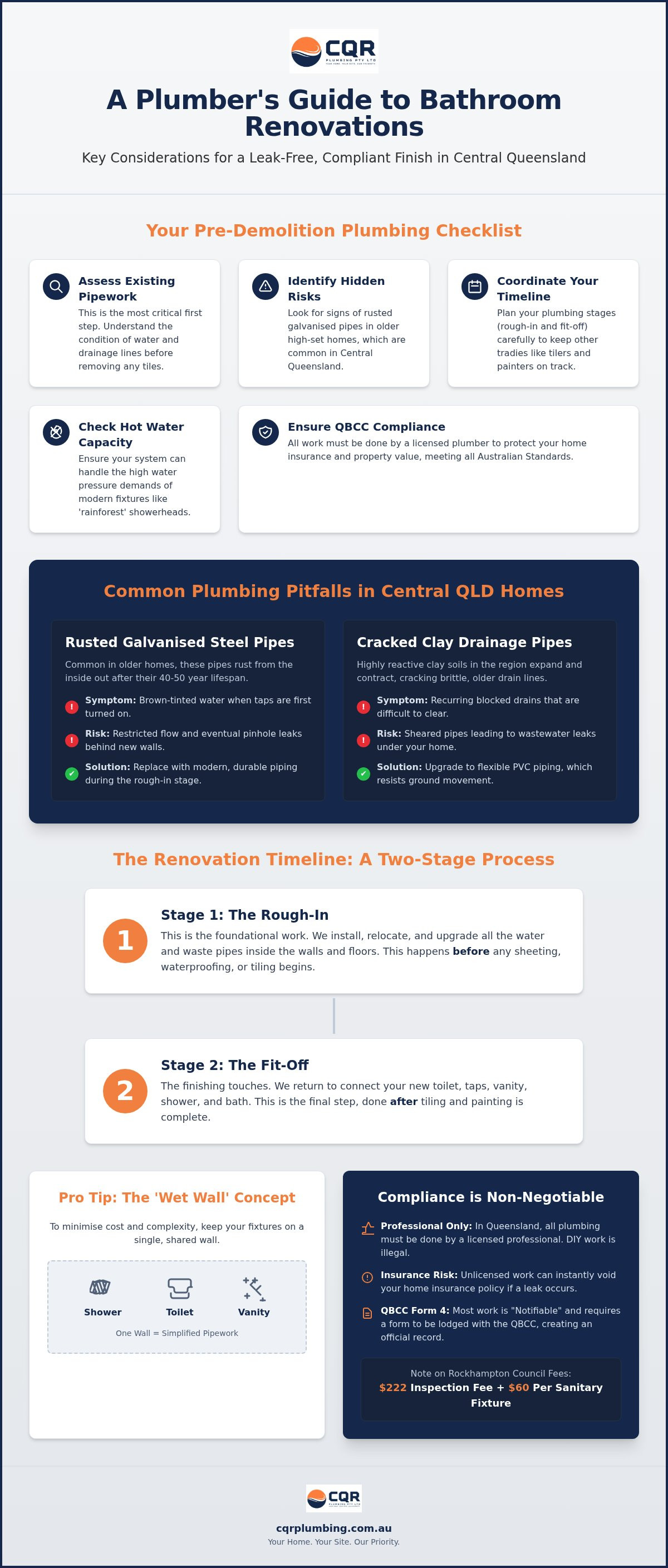
The layout of your fixtures dictates the complexity and cost of your plumbing for bathroom renovation Rockhampton projects. In many local high-set Queenslanders, we have the advantage of easy access to pipes under the floorboards; however, for slab-on-ground homes, moving a toilet or a floor waste often requires concrete cutting and trenching. This is why we often recommend the "wet wall" concept. By keeping your shower, toilet, and vanity on the same wall, you minimise the amount of new pipework required. There's a significant difference between a cosmetic refresh, where we simply swap out old taps for new ones, and a structural overhaul that involves redesigning the plumbing systems to accommodate a double vanity or a relocated walk-in shower. Always consider the existing stack location before you commit to a new floor plan.
Compliance and QBCC Requirements
In Queensland, plumbing is a highly regulated trade for good reason. Attempting DIY plumbing isn't just risky; it's illegal and can immediately void your home insurance policy if a leak occurs down the track. Every major renovation must be performed by a licensed professional to ensure compliance with the Plumbing and Drainage Act 2018. Most bathroom work falls under "Notifiable Work," which requires us to lodge a Form 4 with the QBCC within ten business days of completion. This provides you with a paper trail for the work performed, which is vital when it comes time to sell your home. Additionally, be aware of local costs; the Rockhampton Regional Council 2026/2027 fee schedule includes an inspection fee of $222.00 and a charge of $60.00 per sanitary fixture. We manage these compliance details so you don't have to worry about the red tape. If you're ready to start planning, you can request a quote to get a professional assessment of your site.
Common Plumbing Challenges in Central Queensland Homes
Rockhampton features a diverse mix of architectural styles, ranging from century-old high-set Queenslanders in The Range to modern slab-on-ground developments in Gracemere. Each housing type brings its own set of hurdles when planning the plumbing for bathroom renovation Rockhampton projects. One of the most frequent issues we encounter in older homes is the presence of galvanised steel water pipes. These pipes typically have a lifespan of about 40 to 50 years, after which they begin to rust from the inside out. This corrosion restricts water flow and eventually leads to pinhole leaks behind your new walls. If you see brown-tinted water when you first turn on the tap, it's a clear sign your pipes need replacing before the tilers arrive.
The local environment also plays a role in how your drainage performs. Many areas across Rockhampton and Gracemere sit on highly reactive clay soils. These soils expand and contract significantly with the seasons, which can cause older, brittle clay drainage pipes to crack or shear. Upgrading these to modern PVC during a renovation is the most cost-effective way to prevent future blocked drains. PVC is far more flexible and resistant to the ground movement common in Central Queensland. We always recommend a camera inspection of your main drain line before you commit to a new bathroom layout.
Renovating an Older Queenslander
Working on a high-set Queenslander offers the advantage of easy access, but it requires a tidy approach to manage exposed pipework under the floorboards. When we install modern mixer taps in these homes, we often encounter "water hammer," a loud banging noise caused by the sudden stop of water flow. Modern ceramic disc taps shut off much faster than old jumper-valve washers, which sends a shockwave through the old pipework. To fix this, we secure all lines with modern clipping systems and can install water hammer arrestors where needed. Additionally, we pay close attention to floor waste positioning. In a timber-floored home, ensuring the correct fall toward the waste is vital to prevent water pooling, which can quickly lead to rot in your subfloor.
Modern Slab Considerations
In modern homes, the plumbing is literally set in stone. Relocating a toilet or shower in a slab-on-ground house is a major undertaking that involves cutting through the concrete. To avoid this expense, we often suggest using wall-hung vanities. These create the illusion of more floor space without needing to move the existing waste pipe. If you are dealing with moisture issues in a modern build, it's worth reading our guide on leaking shower repairs Rockhampton to see if a full renovation is necessary or if a targeted repair will suffice. Before you start picking out fixtures, it's a good idea to request a quote so we can assess what's happening under your slab. We always check that new fixtures comply with the Water Efficiency Labelling and Standards (WELS) scheme to ensure your new bathroom is as efficient as it is stylish.
Upgrading Your Hot Water and Tapware for Performance
Choosing high-end fixtures is only half the battle during a remodel. If your hot water system is undersized or your water pressure is inconsistent, that designer shower will feel like a disappointment. A stunning "rainforest" showerhead is often the centrepiece of a modern design, but it’s essentially useless if your infrastructure can’t provide the necessary pressure or volume. When planning the plumbing for bathroom renovation Rockhampton projects, we always start by evaluating the heat source and delivery capacity to ensure they match your lifestyle needs.
For families in Central Queensland, we often compare gas continuous flow with electric storage systems. Gas units provide an endless supply of hot water, which is perfect if you’ve installed a deep soaking tub or a double shower. Alternatively, electric storage remains a solid choice for homeowners with large solar PV arrays who want to offset their running costs. If your current unit is approaching the end of its ten to twelve-year lifespan, a renovation is the ideal time to consider a professional Hot Water System Installation Rockhampton. This prevents the frustration of having to replace a burst tank just months after your new bathroom is finished.
Safety is another critical factor that is often overlooked. We recommend installing Thermostatic Mixing Valves (TMV) or tempering valves in any family bathroom. These devices precisely control the water temperature at the outlet to prevent accidental scalding, which is vital for households with young children or elderly residents. It’s a simple addition during the rough-in stage that provides long-term peace of mind.
Managing Water Pressure
High-end tapware usually requires a specific pressure range to function correctly, typically between 300kPa and 500kPa. If your home's pressure is too high, it can cause "water hammer," damage internal cartridges, and void the manufacturer's warranty on your new mixers. We install pressure-limiting valves at the meter or the entry point of the bathroom to protect your investment. Conversely, if you have low pressure, we need to diagnose the cause—often the old galvanised pipes mentioned earlier—before you commit to high-flow fixtures that won't perform as expected.
Selecting the Right Fixtures
Pay close attention to WELS ratings when shopping for taps and showerheads. These ratings indicate water efficiency; a 3-star showerhead uses approximately 9 litres per minute, while a 4-star unit uses 7.5 litres or less. In Rockhampton, we also have to consider the effects of relatively hard water. Selecting tapware with high-quality ceramic discs and smooth finishes makes maintenance much easier, as mineral build-up is less likely to seize the handles. Always ensure your hot water system's recovery rate or flow capacity is sufficient to support your new bathtub or double shower setup without leaving the rest of the house in the cold.
The Renovation Timeline: Rough-in to Fit-off
Coordination is the backbone of any successful build. Plumbers are typically the first trade on-site after the demolition crew and the last ones to leave before you take your first shower. Managing the plumbing for bathroom renovation Rockhampton schedules requires clear communication to ensure tilers, electricians, and waterproofers aren't left waiting. A delay in the plumbing stage ripples through the entire project, often pushing back completion dates by weeks. We work closely with your other tradies to ensure every pipe is in the right spot at the right time.
Step 1: The Demolition Stage. Before the sledgehammers come out, we must safely cap off all existing water and gas lines. This prevents accidental flooding if a pipe is struck during the removal of old tiles or wall linings. It’s also our first chance to inspect the condition of the main stack and internal lines to see if the "behind-the-wall" issues we discussed earlier actually exist. We identify any non-compliant work from previous owners now, so it doesn't cause a headache later.
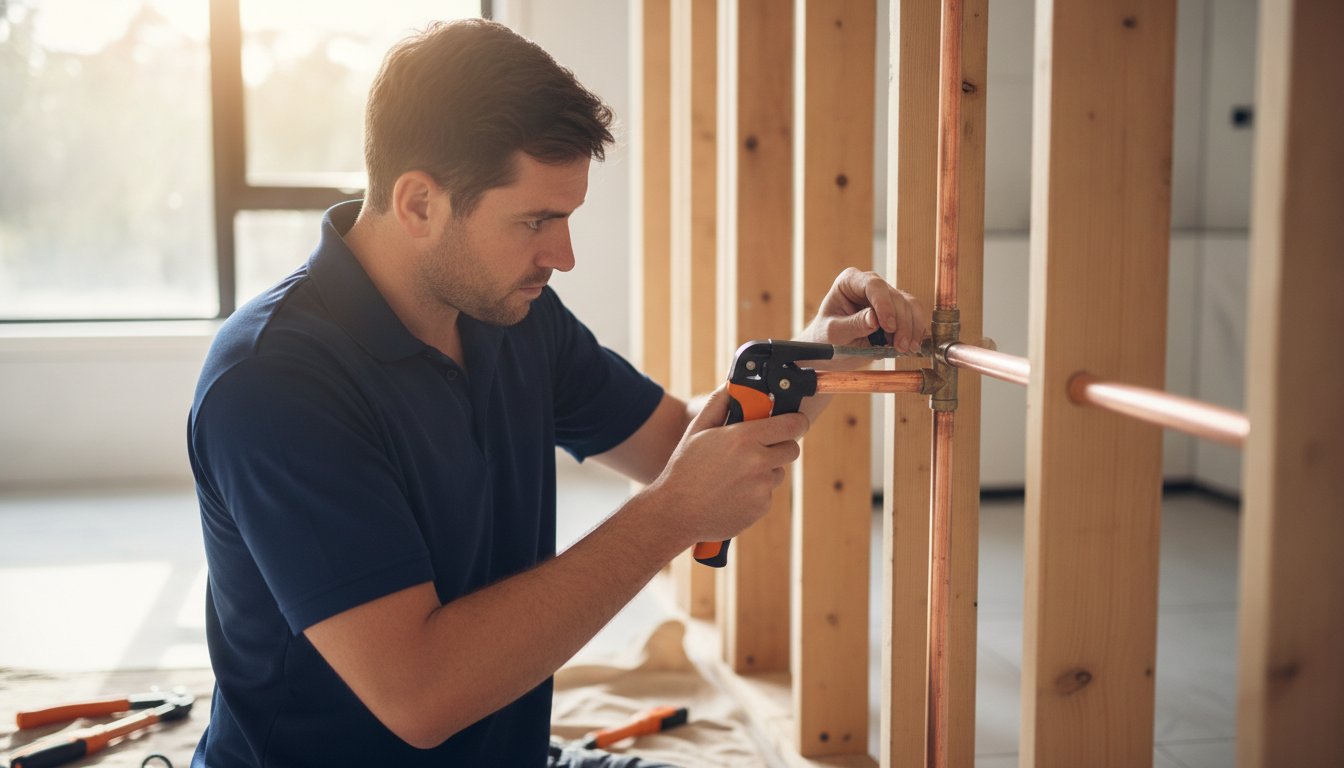
Step 2: The Rough-in. This is the most technical phase. We install the new pipework, drainage points, and mixing valves while the wall studs and floor joists are exposed. Precision here is non-negotiable. If a waste pipe is even 10mm out of alignment, your new vanity might not fit against the wall.
Step 3: The Fit-off. Once the walls are sheeted, waterproofed, and tiled, we return to install the "shiny bits." This includes the toilet suite, vanity, shower roses, and tapware. It’s the reward stage where the room finally looks like a bathroom.
What Happens During the Rough-in?
During the rough-in, we set the exact heights for your fixtures. For example, a standard shower mixer is usually positioned at 1100mm, but we adjust this based on your height and the tile layout to avoid cutting through a feature tile. If you’ve chosen an in-wall toilet, we install heavy-duty cistern brackets to ensure the pan never wobbles or stresses the tiles. Most importantly, we pressure test every joint. We use a hydrostatic test to ensure the system is 100% leak-free before the walls are closed up, protecting your new investment from hidden water damage.
The Final Fit-off and Testing
The fit-off is about more than just screwing on taps. We carefully align the P-trap under the vanity to ensure fast, odour-free drainage. We also perform a final test on the hot water temperature. As per Australian Standards, water delivered to personal hygiene areas must be tempered to a maximum of 50 degrees Celsius to prevent injury. If you’re not quite ready for a full overhaul and just need to refresh your existing space, our Tap and Toilet Servicing can resolve minor leaks and performance issues without the need for a full demolition.
Why Professional Plumbing is Non-Negotiable for Your Reno
Skipping a licensed professional is the fastest way to turn a dream renovation into a legal and financial nightmare. In Queensland, performing your own plumbing work is illegal, and for good reason. Beyond the risk of a fine, DIY plumbing immediately voids your home insurance policy. If a pipe bursts or a slow leak develops behind your new vanity, your insurer can refuse the claim because the work wasn't performed by a QBCC-licensed professional. Investing in quality plumbing for bathroom renovation Rockhampton projects is about more than just functionality; it's about protecting your biggest asset.
A professional plumber doesn't just install pipes; they diagnose the health of your entire system. We look for the subtle warning signs that a homeowner might miss, such as slight dampness in the wall studs or a vent pipe that isn't breathing correctly. Clear communication and transparent quoting are the tools we use to prevent "budget blowouts" mid-project. By identifying the need for a pressure-limiting valve or a pipe replacement during the initial site visit, we ensure the price we quote is the price you pay, with no nasty surprises once the walls are stripped bare.
Avoiding Hidden Drainage Issues
Nothing is more frustrating than finishing a $20,000 renovation only to find the floor waste gurgles every time the kitchen sink drains. This is why we often recommend a CCTV drain inspection before starting a major bathroom project. We send a high-definition camera through your lines to check for tree root intrusion or cracked pipes that could cause blocked drains Rockhampton homeowners often face in older suburbs. Fixing a collapsed line is straightforward when the floors are already up, but it's a catastrophe once the new tiles are down. We ensure your new bathroom drains fast and stays odour-free from day one.
The CQR Plumbing Difference
What sets us apart is our extensive background in maintenance. Because we spend so much time fixing other people's mistakes, we know exactly which products and installation methods actually last in Central Queensland's climate. We don't just follow the design; we provide a "maintenance-first" perspective to ensure your fixtures are easy to service in the future. Whether you are in Gracemere, Parkhurst, or out at Emu Park, we pride ourselves on showing up when we say we will. Every plumbing for bathroom renovation Rockhampton project we complete comes with the necessary compliance certificates, giving you total peace of mind that your home meets every Australian Standard.
Secure Your Home’s Future with Expert Plumbing
A successful remodel is about more than just aesthetics. It requires a solid foundation of compliant pipework and efficient drainage. By addressing the infrastructure during the rough-in stage, you avoid the hidden costs of repairing old galvanised lines or cracked clay pipes once the tiles are down. Your hot water system and water pressure must match your new high-flow fixtures to get the performance you expect.
When you choose CQR Plumbing, you're partnering with licensed QBCC plumbers and gas fitters who understand the specific challenges of Central Queensland homes. Whether you're in the middle of a major overhaul or just starting to plan the plumbing for bathroom renovation Rockhampton projects, we provide the technical expertise needed for a high-quality, leak-free finish. We serve homeowners across Rockhampton, Yeppoon, and the Capricorn Coast, offering 24/7 emergency support should anything unexpected happen during your demo.
Your dream bathroom is an investment in your home’s value. We look forward to helping you get the details right from the very start.
Frequently Asked Questions
Do I need a permit for a bathroom renovation in Rockhampton?
Most bathroom renovations in Central Queensland are classified as notifiable work rather than permit work. This means you generally don't need to lodge a full application with Rockhampton Regional Council before starting. Instead, a licensed plumber must submit a Form 4 to the QBCC within 10 business days of completing the job. Major structural changes to the sewerage system or moving the main stack may still require a specific council permit.
Can I move my toilet to the other side of the bathroom?
Yes, you can move a toilet, but the difficulty and cost depend on your home's construction. In a high-set Queenslander with timber floors, rerouting the waste pipe underneath is a relatively straightforward task for an experienced plumber. For a modern slab-on-ground home, we must cut into the concrete slab to relocate the drainage, which is a much more labour-intensive and expensive process that requires careful planning.
How much does the plumbing part of a bathroom renovation cost?
The cost of plumbing for bathroom renovation Rockhampton projects varies based on the age of your home and whether you are moving existing drainage points. A cosmetic refresh where fixtures stay in the same spot is the most budget-friendly option. A full structural overhaul involving new hot water lines and relocated wastes will be higher. We provide detailed, transparent quotes after a site inspection so you don't face unexpected budget blowouts mid-project.
Should I replace my hot water system during the renovation?
If your hot water system is approaching the ten to twelve-year mark, replacing it during a renovation is a smart preventative move. It's much more efficient to upgrade the unit while we are already on-site modifying the pipework for your new bathroom. This ensures your new high-flow showerheads have adequate pressure and prevents the risk of an old tank bursting and damaging your brand-new renovation shortly after completion.
What is the difference between a rough-in and a fit-off?
The rough-in is the technical stage where we install all the pipework and mixing valves behind the walls before they are sheeted and tiled. This is the most critical phase for ensuring everything is leak-free and correctly positioned. The fit-off is the final stage where we return to install the visible fixtures like the toilet, vanity, and tapware. Both stages must be performed by a licensed professional to meet Australian Standards.
How long does a plumber need to be on-site during a renovation?
A plumber is typically required on-site for three separate stages throughout the renovation timeline. We usually spend half a day on demolition and capping, one to two days on the rough-in, and a final day for the fit-off and testing once the tiling is complete. The exact time depends on the complexity of your new layout and whether we need to replace any old, non-compliant pipework discovered during demolition.
Can I use my existing tapware in a new bathroom?
You can reuse your existing tapware if it's still in good condition and compatible with your new basins or shower base. However, older taps often have lower WELS efficiency ratings and may not provide the performance you want in a modern space. If you choose to keep your current taps, we recommend a full service and new washers to ensure they don't leak and damage your new cabinetry.
What happens if my plumber finds old galvanised pipes?
If we find rusted galvanised steel pipes when the walls are opened, we strongly recommend replacing them with modern copper or PEX lines. Galvanised pipes rust from the inside out, which restricts water flow and eventually leads to pinhole leaks. Replacing them during the renovation is the most cost-effective way to ensure your new bathroom has great water pressure and a lifespan that matches your new tiles.
Disclaimer
The information in this article is provided for general educational purposes only and should not be relied upon as professional plumbing, gasfitting, or legal advice. Every property and plumbing system is different, and the information may not be applicable to your specific circumstances. CQR Plumbing recommends that all plumbing and gasfitting work be inspected and carried out by a licensed professional in accordance with applicable Australian Standards and Queensland regulations. If you require advice specific to your property, please contact CQR Plumbing for an assessment.