
Rockhampton Bathroom Renovation: Plumbing Guide
The most expensive mistake you'll make in your bathroom renovation isn't picking the wrong tiles or a trendy vanity; it's what's happening under the floorboards and behind the walls. When you're planning the plumbing for bathroom renovation Rockhampton projects, the excitement of a new look often clashes with the reality of aging infrastructure. Whether you're dealing with brittle clay pipes in an older high-set or planning a sleek walk-in shower in a modern villa, the technical foundation determines the lifespan of your investment.
It's completely normal to feel a bit overwhelmed by the technical requirements and the potential for hidden costs when moving fixtures. You want a space that's leak-free and compliant with the latest AS/NZS 3500 standards, not a DIY disaster that voids your insurance. This guide provides expert advice on drainage, fixture layout, and local council requirements from the perspective of experienced maintenance plumbers. We'll walk you through the difference between a simple fit-off and a complex rough-in, helping you decide when to keep your existing layout and when it's worth the investment to move your pipes.
Key Takeaways
- Learn why the rough-in phase is the most critical part of your renovation timeline for preventing long-term leaks and structural damage.
- Identify common drainage challenges in older Rockhampton homes, such as brittle clay pipes and the necessity of proper venting.
- Understand the "Footprint Rule" when planning plumbing for bathroom renovation Rockhampton projects to balance your design goals with your budget.
- Navigate local compliance requirements by learning about QBCC Form 4 lodgements and what constitutes notifiable work under Queensland law.
- Discover how professional fit-offs protect the warranties on your new tapware and ensure your bathroom meets Australian Standards.
Why Plumbing is the Foundation of Your Rockhampton Bathroom Renovation
Choosing your tiles and vanity is the fun part, but the success of your project relies on what's happening behind the scenes. A simple cosmetic refresh might involve swapping a mixer or a showerhead, but a true plumbing for bathroom renovation Rockhampton project involves structural changes. This includes moving waste lines, relocating water points, and ensuring the drainage can handle modern high-flow fixtures. High-quality Plumbing systems are complex networks that require precise installation to prevent moisture ingress and structural rot that can ruin a new bathroom in months.
The Two Stages of Renovation Plumbing: Rough-in and Fit-off
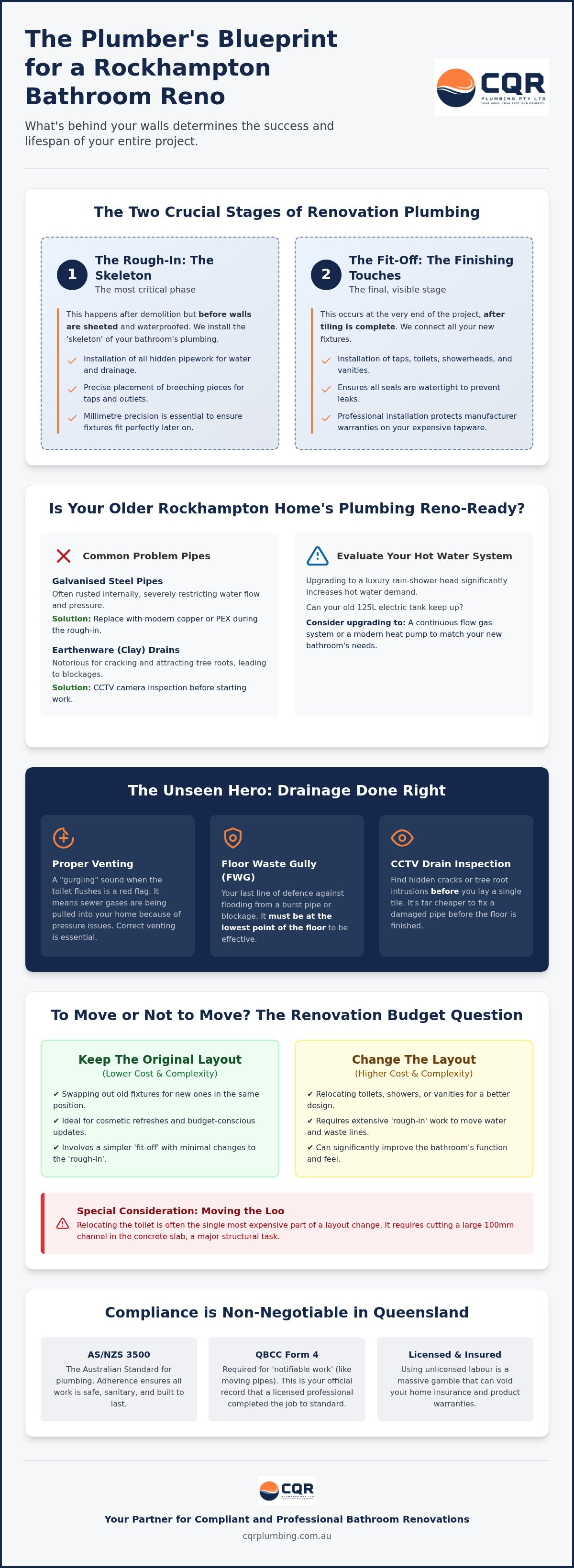
The rough-in is the most critical stage of your timeline. This occurs after demolition but before the walls are sheeted and waterproofed. We install the "skeleton" of your bathroom: the pipework, the breeching pieces for your taps, and the drainage outlets. If these are off by even a few millimetres, your vanity won't sit flush or your shower screen won't fit correctly. This is why you should never buy your fixtures before consulting your plumber. Knowing the exact specifications of your chosen toilet or vanity allows us to set the plumbing points with millimetre precision during the plumbing for bathroom renovation Rockhampton process.
The fit-off happens at the very end, once the tiling and grouting are complete. This is where we install the actual taps, toilets, and shower roses. While it's the most rewarding part to look at, its success depends entirely on the accuracy of the rough-in. A professional fit-off also ensures that expensive tapware is installed without scratches and that all seals are watertight to protect your manufacturer warranties.
Assessing Your Existing Infrastructure
Rockhampton's housing stock varies from classic high-set Queenslanders to post-war cottages. In these older homes, we often find galvanised steel pipes that are rusted internally, which severely restricts water flow and pressure. If we're already opening the walls, it's the only time to replace these with modern copper or PEX piping. We also look for old earthenware drainage stacks. These are notorious for attracting tree roots, which can lead to messy blockages just months after you've finished your beautiful new room.
Don't forget to evaluate your hot water system. If you're upgrading to a luxury rain-shower head, your old 125-litre electric tank might struggle to keep up with the increased demand. We can help you determine if your current system is sufficient or if an upgrade to a continuous flow gas system or a heat pump is necessary to support your new bathroom layout. Cutting corners with unlicensed labour is a massive gamble. In Queensland, any work involving the relocation of water or waste lines is notifiable work. At CQR Plumbing, we act as your technical partner in Rockhampton and Yeppoon, ensuring every pipe is compliant and every fit-off is perfect.
Dealing with Drainage: The Hidden Challenge in Central Queensland Homes
Drainage is the most overlooked component of a renovation until something goes wrong. In many Rockhampton "Queenslanders", you'll find external drainage stacks that were added decades after the house was built. These often lack the proper venting required by modern standards. Without a vent pipe to equalise pressure, you'll hear that tell-tale gurgling sound in the basin when the toilet flushes. It's not just a noise; it's a sign that sewer gases are being pulled into your home because the water seal in the trap has been broken. Ensuring correct venting is a core part of professional plumbing for bathroom renovation Rockhampton projects.
Before you lay a single tile, you must verify the condition of what's underneath. We use CCTV drain cameras to check for cracks or root intrusion in the main line. It's much cheaper to fix a cracked pipe now than to jackhammer up your brand-new porcelain tiles in two years. The floor waste gully (FWG) is your last line of defence against flooding. Its positioning is non-negotiable. It must be at the lowest point of the floor to catch any overflow from a burst flexi-tail or a blocked toilet. If the fall of the floor isn't correct, water will find the hallway carpet before it finds the drain.
Relocating the Loo: What You Need to Know
Moving a toilet waste pipe is often the most expensive part of a layout change, especially in post-war cottages with concrete slabs. To move a 100mm waste, we have to cut and jackhammer a trench through the slab, which can compromise structural integrity if not done carefully. If your heart is set on a new layout but the slab won't allow for trenching, we can look at alternative solutions like macerator pumps. These units sit behind the toilet and pump waste through a small-diameter pipe to the main stack. Regardless of the method, the new position must meet AS/NZS 3500 clearance rules to ensure there's enough space for both the user and future maintenance access.
Upgrading to Modern Drainage Standards
Standard shower wastes in older homes were often 40mm. Modern rain-shower heads dump a significant volume of water, and a 40mm pipe simply can't keep up, leading to a flooded bathroom floor. We recommend upgrading shower wastes to 50mm as a standard practice. Many homeowners are also moving away from traditional square floor wastes in favour of linear grates. These look sleek and allow for a single-direction fall in the tiles, which makes life easier for your tiler and reduces the risk of "lipping" on large-format tiles. If you've noticed your current drains are slow or sluggish, it's best to investigate these issues before the renovation begins. You can read more about how we handle Blocked drains Rockhampton to understand what might be lurking in your pipes. If you're ready to discuss your layout, feel free to request a quote for a technical assessment of your drainage.
Moving Fixtures vs. Keeping the Original Layout
The most significant factor in your budget is the "Footprint Rule". If you keep your toilet, shower, and vanity in their current locations, you avoid the heavy lifting of drainage relocation. This approach is the gold standard for budget-conscious plumbing for bathroom renovation Rockhampton projects. When you start moving waste points, you aren't just paying for new pipes; you're paying for the labour to chase walls or jackhammer concrete slabs. If your current layout is functional, sticking to it allows you to spend more of your budget on high-end finishes rather than hidden infrastructure.
Ranking fixtures by their difficulty to move is essential for planning. The vanity is usually the easiest to relocate because the water lines and waste pipes are often housed within the cabinetry or a non-structural wall. The shower and toilet are far more challenging. In a concrete slab home, moving a toilet waste requires precise trenching and a perfect fall to ensure everything flushes away correctly. In tight Yeppoon ensuites, we often find that reorganising the pipework within the existing wall cavities or using slimline, in-wall cisterns can create a sense of space without the need to disturb the slab.
When Moving Plumbing Makes Sense
Sometimes the original design of a home is simply poor. If your bathroom feels cramped because the toilet is the first thing you see when you open the door, or if you're constantly bumping into the vanity, a layout change is a smart investment. One of the most common upgrades we perform is removing an old shower-over-bath setup to install a standalone walk-in shower. This single change can make a small Rockhampton bathroom feel twice as large. Improving the "flow" of the room doesn't just make your daily routine easier; it significantly boosts the resale value of your property by meeting modern buyer expectations.
The Cost of "Just a Little Bit Further"
It's a common misconception that moving a tap 20cm is a "quick fix" compared to moving it two metres. In reality, if that 20cm move puts the pipe on the opposite side of a structural timber stud or requires deepening a wall cavity, the labour involved is almost identical. Wall thickness and stud placement are the silent budget killers in any renovation. We always check these elements during the planning phase to avoid surprises. If you decide that your original layout is actually the most efficient use of space, we highly recommend a professional tap and toilet servicing. This ensures that while the aesthetics are new, the internal components of your retained fixtures are in peak condition, preventing leaks from ruining your fresh tiles.
Compliance, QBCC Form 4s, and Insurance Requirements
In Queensland, most plumbing for bathroom renovation Rockhampton projects fall under the category of "notifiable work". This means that while you don't need a full council permit before starting, the work must be performed by a licensed plumber who then notifies the Queensland Building and Construction Commission (QBCC) once finished. This notification is done via a Form 4. It's a critical document that serves as your proof of compliance and professional workmanship. Your plumber is legally required to lodge this within 10 business days of completing the job.
Why does this matter to you? It's about insurance and resale. If your bathroom suffers a major leak or water damage in the future, your insurer will likely check the QBCC register to ensure the work was certified. Without a Form 4 on file, they may have grounds to void your policy and refuse the claim. The lodgement fee is currently $36.88 for electronic registration, which is paid by the plumber and typically incorporated into your quote. DIY plumbing isn't just risky; it's illegal for anything beyond changing a tap washer. Attempting your own pipe relocations can lead to heavy fines and leaves you with no recourse if things go wrong.
Waterproofing and Plumbing: The Inseparable Duo
The relationship between your plumber and waterproofer is the most important collaboration on site. We must complete the rough-in and pressure test every line before the waterproofing membrane is applied. If a plumber tries to move a pipe after the membrane is down, they risk piercing that seal, leading to catastrophic structural rot. This is a common cause of Leaking shower repairs Rockhampton homeowners face in poorly managed renovations. We coordinate closely with your other trades to ensure the sequence of work protects the integrity of your wet area.
Tempering Valves and Safety Standards
Safety is non-negotiable when upgrading your bathroom. Under the Plumbing Code of Australia 2025, hot water delivered to personal hygiene areas like bathrooms must not exceed 50°C. This prevents accidental scalding, particularly for children and the elderly. To achieve this, we install a tempering valve or a Thermostatic Mixing Valve (TMV). Even if your existing hot water system is staying in place, we must verify that the delivery temperature to your new shower and basin meets these current standards. It's a simple safety check that we perform as part of every renovation fit-off.
How CQR Plumbing Supports Your Bathroom Project
A successful renovation relies on trades that respect each other's timelines and technical requirements. At CQR Plumbing, we position ourselves as your technical partner, providing the specialised expertise needed for the rough-in, fit-off, and compliance stages of plumbing for bathroom renovation Rockhampton projects. While we don't handle the tiling or cabinetry, our role is to ensure the infrastructure behind those finishes is flawless. We provide transparent quoting for the plumbing and gas components of your project, ensuring there are no hidden surprises when the walls are finally closed up.
Timing is everything in a renovation. We understand that a delay in the plumbing rough-in can push back the waterproofer, the tiler, and the cabinet maker, causing a domino effect that adds weeks to your timeline. Our team prioritises clear communication and fast-response service to keep your project moving. During the final fit-off, we treat your high-end tapware and fixtures with the care they deserve. Professional installation doesn't just look better; it ensures your manufacturer warranties remain valid and your fixtures function exactly as intended from day one.
Working with Your Chosen Trades
We believe that clear communication between trades is the only way to avoid costly mistakes. We regularly coordinate with Rockhampton tilers to ensure floor wastes are set at the correct height for the planned tile thickness and floor fall. Likewise, we work closely with cabinet makers to ensure water points and waste outlets align perfectly with the internal shelving of your new vanity. This collaborative approach is why many builders in Yeppoon and the Capricorn Coast trust us to handle their specialised plumbing needs. By getting the technical details right during the rough-in phase, we make the job easier for every trade that follows us.
Ready to Start Your Rockhampton Bathroom Upgrade?
The first step toward a successful plumbing for bathroom renovation Rockhampton is a professional site inspection. We'll assess your existing pipes, check your drainage health, and provide a detailed report on what's possible within your chosen layout. To get the most accurate quote, we recommend having a basic fixture list ready, including the types of taps, toilets, and showers you intend to use. This allows us to calculate the exact requirements for your rough-in and ensure your hot water system is up to the task.
Building a Bathroom That Lasts
A successful renovation is about more than just aesthetics; it's about the technical precision hidden behind your tiles. We've covered why the rough-in phase is the foundation of your project and how the "Footprint Rule" can save you thousands in slab trenching costs. Remember that compliance isn't optional. Ensuring your plumber lodges a QBCC Form 4 is your best protection for insurance and future property value. When you get the plumbing for bathroom renovation Rockhampton projects right from the start, you protect your home and your budget.
As licensed Rockhampton and Yeppoon plumbers, our team provides QBCC compliant workmanship and 24/7 emergency support to keep your home running smoothly. We're here to act as your technical partner, coordinating with your tiler and builder to ensure every fixture is perfect.
Your new bathroom is a major investment. By focusing on quality drainage and compliant water systems now, you'll enjoy a leak-free space for many years to come.
Frequently Asked Questions
Do I need a permit for a bathroom renovation in Rockhampton?
Most Rockhampton bathroom renovations don't require a full council permit because the work is classified as notifiable work. Instead of a permit, your licensed plumber lodges a QBCC Form 4 once the job is finished. You only need a full council permit if you're building a brand-new extension or making significant structural changes to the building's footprint. We manage the notification process for you to ensure your project stays compliant with local regulations.
Can I move my toilet to the other side of the bathroom?
You can move a toilet, but it is often the most complex part of a renovation. If your home is on a concrete slab, we have to jackhammer a trench to relocate the 100mm waste pipe. For homes on stumps, the process is simpler as we can work from underneath. We'll assess your floor structure during the site inspection to explain the technical requirements and any potential impact on your budget.
What is a Form 4 and why did my plumber give me one?
A QBCC Form 4 is a legal document that certifies your plumbing work meets Australian Standards. It is used for notifiable work, which includes most plumbing for bathroom renovation Rockhampton projects where fixtures are moved or replaced. Your plumber lodges this with the QBCC and provides you with a copy. This document is vital for your home insurance and is often requested by solicitors during the sale of a property.
Should I replace my old copper pipes during the renovation?
We generally recommend replacing old copper or galvanised pipes while your walls are open. Copper has a long lifespan, but older pipes can suffer from pinhole leaks or internal corrosion. Replacing them during the rough-in stage is a cost-effective way to prevent future water damage that would require ripping up your new tiles. It's a small investment that provides long-term peace of mind for your renovated space.
How long does the plumbing part of a bathroom renovation take?
The plumbing component usually takes three to four days across two separate stages. The rough-in phase, where we relocate pipes and install drainage, typically takes one to two days depending on the complexity. Once the tiling is finished, the final fit-off of your taps, toilet, and shower usually takes another full day. We coordinate closely with your other trades to ensure our team is on-site exactly when needed.
Why is my new shower pressure lower than the old one?
Low pressure in a new shower is usually caused by modern water-saving flow restrictors or an incompatible hot water system. Most new showerheads are WELS-rated to limit water usage, which can feel different from older, high-flow models. In some cases, the issue is caused by old, restricted galvanised pipes that haven't been replaced. We can test your static pressure and offer solutions like removing restrictors where legal or upgrading your pipework.
Can CQR Plumbing help if I am doing a DIY renovation?
CQR Plumbing is a helpful technical partner for DIY renovators in the Rockhampton region. While you might handle the demolition and painting, Queensland law requires a licensed plumber for all water and drainage work. We can manage the rough-in and fit-off stages, ensuring your project meets all Australian Standards. This allows you to save on project management costs while knowing the critical technical components are handled by professionals.
Does my hot water system need to be upgraded for a new bathroom?
Your hot water system only needs an upgrade if your new bathroom increases demand beyond the tank's capacity. For example, if you're installing a large rain-shower or a deep soaking tub, an old 125-litre electric unit might struggle. We'll evaluate your current system's age and recovery rate during our initial consultation. If an upgrade is necessary, we can install a more efficient heat pump or continuous flow gas system to suit your needs.
Disclaimer
The information in this article is provided for general educational purposes only and should not be relied upon as professional plumbing, gasfitting, or legal advice. Every property and plumbing system is different, and the information may not be applicable to your specific circumstances. CQR Plumbing recommends that all plumbing and gasfitting work be inspected and carried out by a licensed professional in accordance with applicable Australian Standards and Queensland regulations. If you require advice specific to your property, please contact CQR Plumbing for an assessment.