
Roof Leak Repairs Rockhampton: The Professional Guide to Protecting Your Home
You wake up at 2:00 am to the sound of a tropical downpour hitting your iron roof, only to hear that dreaded "drip, drip, drip" coming from inside your ceiling. It's a scenario many locals face during the Central Queensland storm season, and the immediate fear of structural rot or mould is enough to keep anyone awake. When you're searching for roof leak repairs Rockhampton, you've likely already dealt with confusing quotes or the stress of a "patch-up" job that fails the moment the next heavy cell rolls through.
We agree that your home should be a dry sanctuary, not a source of constant worry every time the clouds turn grey. This guide will show you how to identify the true source of a leak, manage the situation safely, and ensure a professional repair that stands up to our local climate. We'll explain why effective roofing requires a water-shedding mindset rather than just plugging holes. You'll learn what to look for in a licensed professional and how to ensure your repairs comply with the NCC 2022 standards, giving you the long-term reliability your property deserves.
Key Takeaways
- Learn how Central Queensland’s intense UV levels degrade sealants and flashing, making roof penetrations the most common starting point for internal water damage.
- Understand the science of capillary action and why technical details like "turn-ups" and "turn-downs" are vital for stopping water from climbing between metal roof sheets.
- Discover why professional roof leak repairs Rockhampton fall under the plumbing trade, requiring a licensed specialist to manage stormwater and drainage compliance.
- Master the "Look Up" method for safe ground-level inspections and identify the critical steps to protect your home’s electrical safety during an active leak.
- Find out how to distinguish between a temporary "patch-up" and a methodical repair that addresses the root cause to ensure long-term structural protection.
Common Causes of Roof Leaks in Rockhampton & Central Queensland
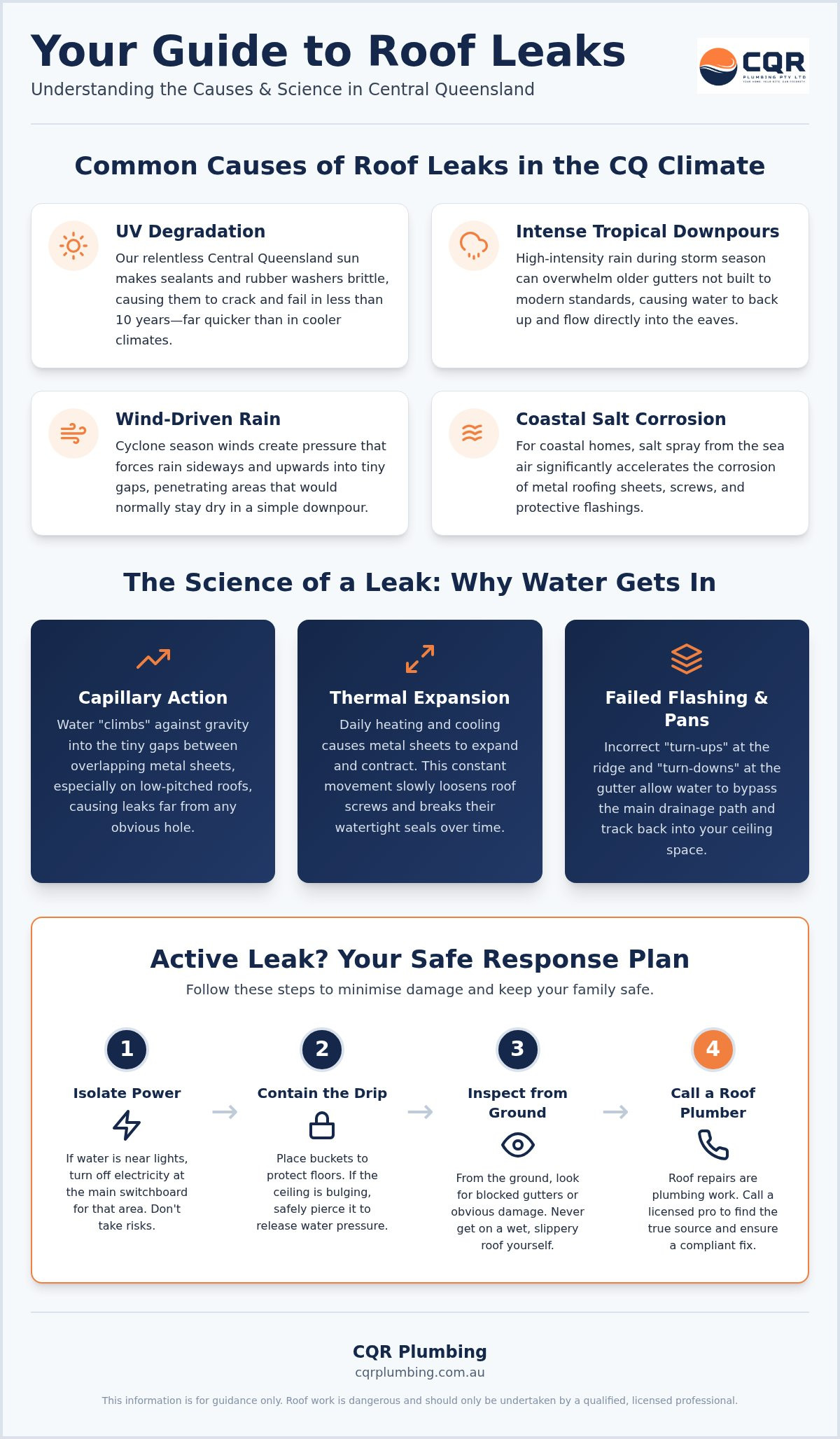
A roof leak is more than just an annoying drip; it's a failure of your home's building envelope. Most roof leak repairs Rockhampton homeowners deal with start at penetration points where the roof has been cut for pipes, vents, or skylights. In Central Queensland, our extreme UV levels act like a slow-motion blowtorch on roof sealants. Standard silicone and rubber washers that might last fifteen years in cooler climates often perish in less than ten here. They become brittle and crack under the relentless sun, leaving your home vulnerable.
When the storm season arrives, these compromised seals are immediately tested by high-intensity tropical downpours. Many older guttering systems in the region weren't designed for the rainfall intensities now specified in the NCC 2022. When gutters can't keep up, water backs up under the metal sheets and enters the eaves. We regularly find trouble spots like valley irons choked with leaf litter, poorly sealed skylights, and whirlybirds that haven't been flashed correctly. These small openings provide a direct path for moisture to enter your ceiling space.
The Impact of the CQ Storm Season
During cyclone season, high-wind events create immense pressure differentials across your roof. Wind-driven rain doesn't just fall; it's pushed horizontally, forcing its way into gaps that are perfectly watertight during a light shower. This is where The Science of Water Damage becomes a reality for homeowners. Moisture trapped in insulation or timber framing leads to structural rot and mould long before you see a visible stain on your plaster. A minor weep that seems insignificant in the dry season can quickly escalate into a disaster when a hundred millimetres of rain falls in a single afternoon.
Deterioration of Metal Roofing and Flashings
If you're living on the coast in Yeppoon or Emu Park, salt spray significantly accelerates the corrosion of metal roofing and fixings. We often see rubber "dektites" (the protective boots around plumbing pipes) that have completely disintegrated, leaving a gaping hole for water entry. On traditional Queenslanders, old lead flashings eventually fail due to decades of thermal expansion and contraction. While these materials were standard in the past, they eventually crack and require replacement with modern, compliant flashing materials to ensure your home stays dry and secure.
The Science of a Leak: How Water Finds its Way In
Water behaves in ways that often defy common sense. For many homeowners, a leak is simply a hole in a sheet of metal. In reality, water ingress is often the result of complex physics like capillary action and thermal movement. Understanding these mechanics is the first step in effective roof leak repairs Rockhampton. When we investigate a ceiling stain, we aren't just looking for a hole; we're looking for where the building envelope has been compromised by the elements.
One of the most critical defences in metal roofing is the use of "turn-ups" and "turn-downs". At the top of a roof sheet, under the ridge capping, the "valleys" of the metal profile must be turned up to stop wind-driven rain from blowing over the top. Conversely, the ends of the sheets at the gutter line are turned down to ensure water sheds directly into the gutter rather than "tracking" back along the underside of the sheet. If these small but vital steps were skipped during installation, water will eventually find its way into your roof cavity.
Thermal expansion also plays a massive role in Central Queensland. A metal roof can reach incredible temperatures, causing the sheets to expand and contract by several millimetres every single day. This constant movement acts like a slow-motion crowbar, eventually loosening roof screws and breaking the seals around washers. If your downpipes are blocked with debris, the resulting back-pressure during a storm can force water to rise above the gutter line and flow back under your eaves.
Capillary Action and Overlapping Sheets
Capillary action is a phenomenon where water "climbs" into narrow spaces against the force of gravity. In the context of your roof, this happens between the laps of metal sheets. If the roof pitch is too low or the overlap isn't sufficient for the profile, moisture gets sucked up between the sheets and drips onto your ceiling. Capillary suction is a primary cause of non-obvious leaks where water is pulled into the narrow gaps between overlapping materials by surface tension. If you suspect your roof is suffering from these technical failures, it's worth having a professional assess the situation before the next storm.
The Failure of Flashings and Penetrations
Modern additions like solar panels and antenna mounts are frequent culprits for leaks. If these systems are installed by trades who don't understand hydraulic flow, they can inadvertently create dams that trap water. Referencing the QBCC guide to roof flashings is a great way to understand the minimum standards required for a compliant installation. We often find that "hardware store" silicones have been used for quick fixes. These lack the structural integrity of professional-grade sealants and fail quickly under CQ’s UV levels. Valley irons remain the most common failure point, as they act as the high-volume highways of your roof and are the first to overflow if not maintained.
Roof Plumber vs. General Roofer: Who Should You Call?
Who exactly are you supposed to call when the rain starts coming through the cornices? In many parts of the world, any roofing contractor will do, but in Queensland, the distinction is legally defined. If the work involves "stormwater" or "roof water" management, it's a plumbing trade. While a general roofer might be skilled at laying tiles or fixing structural timber, a licensed roof plumber is trained in the science of hydraulic flow. For professional roof leak repairs Rockhampton, you need a specialist who understands how to calculate catchment areas and ensure your drainage system can handle a Central Queensland deluge.
Plumbers view your roof as a complete system rather than just a series of metal sheets. We don't just look for a hole; we calculate whether your gutters and downpipes are sized correctly for the roof's pitch and surface area. If the catchment exceeds the drainage capacity, water will eventually back up into your home regardless of how many "patches" are applied. Choosing CQR Plumbing means you're getting a technician who understands the National Construction Code and the specific requirements for local stormwater discharge.
The Legal and Insurance Aspect
Did you know that in Queensland, any building work valued at over $3,300 (including labour and materials) must be performed by a contractor holding the appropriate QBCC licence? Engaging an unlicensed handyman for roof repairs is a significant risk that many homeowners overlook. Insurance companies are notorious for scrutinising claims following a major storm event. If they discover that previous repairs weren't performed by a licensed trade, they may reject your claim for water damage entirely. Following professional advice on Preventing and Responding to Water Damage often starts with ensuring your tradespeople are fully qualified and insured. For major works, a licensed plumber can provide a compliance certificate, which acts as your ultimate proof of quality for both insurers and future property buyers.
Specialised Tools for Leak Detection
Finding a leak in a light drizzle is one thing, but finding a stubborn, intermittent leak requires specialised equipment. Professional roof plumbers use dye testing and pressure testing to simulate heavy rainfall and trace the exact path water takes through your building envelope. For homes with complex rooflines or internal box gutters, we often employ CCTV drain cameras to inspect for internal blockages or structural failures that aren't visible from the surface. This methodical approach ensures we find the root cause, not just the symptom. We move away from the "patching" mentality and toward a comprehensive "system" view, ensuring that once a leak is fixed, it stays fixed.
Emergency Steps & Preventative Maintenance for CQ Homes
Identifying a leak during a Rockhampton storm is a race against time. Your first move should be to contain the water and protect your belongings. Grab a bucket and move any electronics or furniture away from the drip. If you see water coming through a light fitting or ceiling fan, do not touch the switch. Go directly to your electrical board and isolate the power to those circuits. Once the immediate danger is managed, you can look at professional Emergency Plumbing services to mitigate the damage.
Safety is paramount, so we always suggest the "Look Up" method for homeowner inspections. You don't need to get on the roof to spot trouble. Grab a pair of binoculars and scan your roofline from the ground. Look for "teks" screws that have worked loose or flashing that appears to be lifting at the edges. Spotting these issues early is the key to managing roof leak repairs Rockhampton before they become internal disasters. If you notice anything out of place, it's best to have it assessed while the weather is still dry.
Many "leaks" we attend are actually just blocked gutters. When debris prevents water from reaching the downpipes, the gutter overflows. In many CQ homes, this water has nowhere to go but back under the roof sheets or into the eaves. Regular gutter cleaning is the most effective way to prevent these "false" leaks and ensure your drainage system works as designed. It's a simple task that can save you thousands in avoidable water damage repairs.
Your Pre-Storm Season Checklist
The Central Queensland storm season usually ramps up in November. We recommend completing these maintenance tasks by late October to ensure your home is ready for the first big cell:
- Check for loose roof screws where the rubber washers have become brittle or cracked from UV exposure.
- Confirm that downpipes are clear of silt and discharging correctly to the stormwater system.
- Inspect for overhanging tree branches that could damage metal sheets or drop excessive debris during high-wind events.
- Clear valley irons of any leaf build-up that might obstruct high-volume water flow during tropical downpours.
When to Call an Emergency Plumber
A minor drip can often wait until business hours, but some signs demand an immediate response. If your ceiling starts to sag, it's likely holding a dangerous amount of water and could collapse. Any sign of electrical sparking, burning smells, or water rushing into the house from a failed internal box gutter constitutes a genuine emergency. In these cases, a licensed plumber is needed to secure the property and prevent structural failure. Don't risk your safety by waiting if the building envelope has been severely compromised.
Professional Roof Leak Repair with CQR Plumbing
When we arrive at a property for roof leak repairs Rockhampton, we aren't just looking for where the water is dripping. We’re looking for why it’s getting in there in the first place. Slapping a bit of sealant over a visible gap is a band-aid fix that usually fails during the next heavy cell. Our methodical approach involves tracing the water path back to the entry point, whether that’s a perished washer, a poorly installed flashing, or a gutter that isn't shedding water properly. We specialise in the complete management of roof water, from minor repairs to full gutter and downpipe replacements.
The Central Queensland climate is incredibly harsh on building materials. We've seen plenty of budget fixes fail because the materials used simply couldn't handle our UV levels or the volume of rain we get in a tropical downpour. That's why we only use high-quality components that meet Australian Standards and are designed for local conditions. For our commercial clients, including property managers and strata committees, we provide detailed reporting and clear documentation. We understand that you need to know exactly what the fault was and that the repair is fully compliant for insurance purposes.
Our Process: From Quote to Completion
We believe in transparent communication from the moment you call us. Every job starts with a clear quote that explains the root cause of the leak and the steps required to fix it properly. We don’t believe in repeat call-outs for the same issue, so we focus on doing it once and doing it right. You can learn more About CQR Plumbing and our commitment to providing reliable maintenance services across the region. We treat every home as if it were our own, ensuring the building envelope is secure before we pack up our tools.
Servicing Rockhampton, Yeppoon, and Beyond
Our team is out in the field every day across Gracemere, Emu Park, and the wider Capricorn Coast. We have extensive experience working on everything from modern suburban builds to traditional Queenslander renovations. Older homes often present unique challenges with aged metal profiles and complex rooflines, but our hands-on experience means we know exactly where the common faults occur. Whether you're in the heart of Rockhampton or out on the coast, we're ready to help secure your property against the elements.
Securing Your Home Before the Next Tropical Downpour
Don't wait for a ceiling collapse to address the vulnerabilities in your building envelope. We've seen how professional roof leak repairs Rockhampton require a specialist plumbing approach to handle our unique rainfall intensities and UV exposure. By choosing a licensed professional who understands the NCC 2022 standards, you ensure that every repair is compliant and built to last. Safeguarding your property now prevents the stress of structural rot and mould later.
CQR Plumbing provides the authoritative expertise needed to keep your home dry and secure year-round. Our licensed QBCC plumbers and gas fitters specialise in reactive maintenance and insurance repairs, offering a 24/7 emergency service across Central Queensland. We focus on finding the root cause of every leak to ensure your repairs stand up to the harshest weather conditions.
Take the stress out of the next storm season by getting your roof assessed by a local expert who understands our climate. We're ready to help you maintain a dry, secure sanctuary for your family.
Frequently Asked Questions
Is a leaking roof considered an emergency plumbing repair?
A leaking roof is definitely an emergency if water enters the building envelope near electrical circuits or causes ceiling material to sag. Heavy rain in Central Queensland can quickly turn a small drip into a flood, risking structural rot and mould. We provide a 24/7 emergency response across Rockhampton and Yeppoon to secure properties before water damage escalates. If you spot water near light fittings, isolate your power immediately.
How much does it cost to fix a roof leak in Rockhampton?
The cost of repairs depends entirely on the leak's root cause and the complexity of the roof's design. While a perished washer on a roof screw is a quick fix, a failed valley iron or a rusted box gutter requires more intensive labour and materials. We provide transparent, itemised quotes after a physical inspection. This ensures you aren't paying for "patch-up" jobs that fail during the next storm season.
Can I use silicon to fix a roof leak myself?
Using standard hardware store silicon is rarely a permanent solution for roof leak repairs Rockhampton homeowners attempt. Most domestic sealants aren't designed to withstand Central Queensland's extreme UV levels and the thermal expansion of metal sheets. They eventually peel away, trapping moisture underneath and accelerating corrosion. We use professional-grade, UV-stable structural sealants that maintain their bond under intense heat and high-volume water flow, ensuring a long-term result.
Why does my roof only leak during very heavy rain?
Leaks that only appear during intense downpours often indicate a drainage capacity issue rather than a simple hole. If your gutters or downpipes are undersized or partially blocked, water backs up and flows over the internal "bead" into your eaves. High winds can also force rain horizontally under flashings that are perfectly watertight in vertical rain. We calculate your roof's catchment area to ensure your stormwater system meets current Australian Standards.
Does home insurance cover roof leak repairs in Queensland?
Most Queensland home insurance policies cover the resultant water damage to ceilings and carpets, but they often exclude the actual roof repair if it was caused by lack of maintenance. If a storm damages a sound roof, you're usually covered. However, if the leak stems from rusted gutters or perished seals that should have been replaced, the claim might be knocked back. Always check your PDS and use a licensed plumber for documentation.
How long does a typical metal roof repair take to complete?
Most minor maintenance tasks, such as replacing dektites or securing loose flashings, are completed within two to four hours. More complex projects, like replacing several metres of guttering or installing new valley irons, may take a full day or more depending on site access and weather conditions. We aim for high efficiency to ensure your home is watertight as quickly as possible, providing clear timeframes before we commence any work on-site.
What is the difference between a roofer and a roof plumber?
In Queensland, a licensed roof plumber is required for any work involving the management of stormwater, including gutters, downpipes, and metal roof sheeting. While a roofer might handle structural timber or tiles, they cannot legally perform plumbing work without the specific QBCC licence. Plumbers are trained in hydraulic flow and catchment calculations, ensuring your roof sheds water effectively without creating back-pressure that leads to internal flooding during tropical storms.
How often should I have my roof and gutters inspected in Rockhampton?
We recommend a professional inspection once every twelve months, ideally in late September or October before the November storm season begins. This allows us to identify perished washers, blocked downpipes, or loose flashings while the weather is dry. Regular maintenance is significantly cheaper than reactive repairs after a ceiling has already failed. For coastal properties in Yeppoon or Emu Park, more frequent checks help manage salt-induced corrosion on metal fixings.
Disclaimer
The information in this article is provided for general educational purposes only and should not be relied upon as professional plumbing, gasfitting, or legal advice. Every property and plumbing system is different, and the information may not be applicable to your specific circumstances. CQR Plumbing recommends that all plumbing and gasfitting work be inspected and carried out by a licensed professional in accordance with applicable Australian Standards and Queensland regulations. If you require advice specific to your property, please contact CQR Plumbing for an assessment.