TMV Testing Compliance in Queensland: A Practical Guide
What if a tempering valve still delivers water but no longer controls its temperature safely? For property and facilities managers, TMV testing compliance Queensland is more than ticking off a scheduled test. It helps confirm that a valve is operating as intended and that any faults are recorded and followed up.
It’s understandable to be unsure which requirements apply to your site, what a test involves and what records to keep. For commercial and public facilities subject to the relevant requirements, TMVs must be field-tested at intervals no longer than 12 months. Confirm the requirements for each site and device before setting a schedule, then use a consistent process to record results and manage follow-up work.
This guide explains what a TMV test checks, what information to have ready and how to organise compliance records. CQR Plumbing provides certified TMV testing across Yeppoon, Rockhampton, Gracemere, Emu Park and surrounding Central Queensland regions. Testing is completed to Australian Standards by fully licensed QBCC plumbers, with same-day compliance reports to help keep site records in order.
Key Takeaways
- Understand how a thermostatic mixing valve controls water temperature and why monitoring its condition matters for site safety and maintenance.
- Learn what a qualified tester may assess and how recorded results can identify faults that need follow-up.
- TMV testing compliance Queensland depends on the premises, installed devices and applicable requirements. Keep records for the specific site.
- Gather valve information, access details and known concerns before testing to help the visit run smoothly.
- CQR Plumbing provides certified TMV testing across Yeppoon, Rockhampton, Gracemere, Emu Park and surrounding Central Queensland regions, with same-day compliance reports.
What TMV testing compliance means for Queensland properties
A thermostatic mixing valve, or TMV, blends hot and cold water to control the temperature delivered at an outlet. In a building with shared plumbing, the valve needs to control the water reliably at the outlets it serves. TMV testing compliance Queensland is best managed as a practical process: identify each valve, assess its operation, record the result and arrange follow-up if an issue is found.
TMV testing compliance means assessing relevant valves, documenting results and following up identified faults in line with the requirements that apply to the site and device. The testing schedule is not necessarily the same for every Queensland property. The premises, installed equipment and applicable requirements all matter.
What does a thermostatic mixing valve do?
A TMV combines hot and cold water to provide controlled mixed water at an outlet. Its temperature-control role helps reduce the risk of water being delivered too hot. The Thermostatic Mixing Valve (TMV) overview explains the basic principle. Testing lets a qualified person assess whether the installed valve is operating as expected, rather than relying on its appearance or a quick check of one tap.
In a shared system, a fault can be harder to trace than an issue at a single household tap. A recorded valve location and test result help a property manager connect a concern to the right asset, arrange follow-up and keep maintenance information useful for the next inspection or service visit.
Which Queensland properties should consider TMV testing?
Commercial property owners, facilities managers and strata managers should establish whether TMVs are installed at the properties they oversee. Testing is relevant where valves are present, while specific requirements depend on the site and applicable rules. A schedule used at one building does not automatically apply to another.
Start with plumbing or maintenance records, then match each known valve to its location. If records are incomplete, note which areas need checking during the assessment. This helps distinguish a missing document from a valve that has actually been inspected, and supports clearer planning across a site portfolio.
Useful records should let you see which device was assessed, where it is located, what the result was and whether follow-up was identified. Keep these details with the site’s other maintenance information, rather than relying on an informal note or someone’s memory. Confirm the applicable requirements for each premises and device before setting a testing programme.
CQR Plumbing provides certified TMV testing for commercial, strata and facilities-management clients in Yeppoon, Rockhampton, Gracemere, Emu Park and surrounding Central Queensland regions. Work is completed to Australian Standards by fully licensed QBCC plumbers, with same-day compliance reports. See CQR Plumbing’s TMV testing service.
How TMV testing checks valve performance and identifies faults
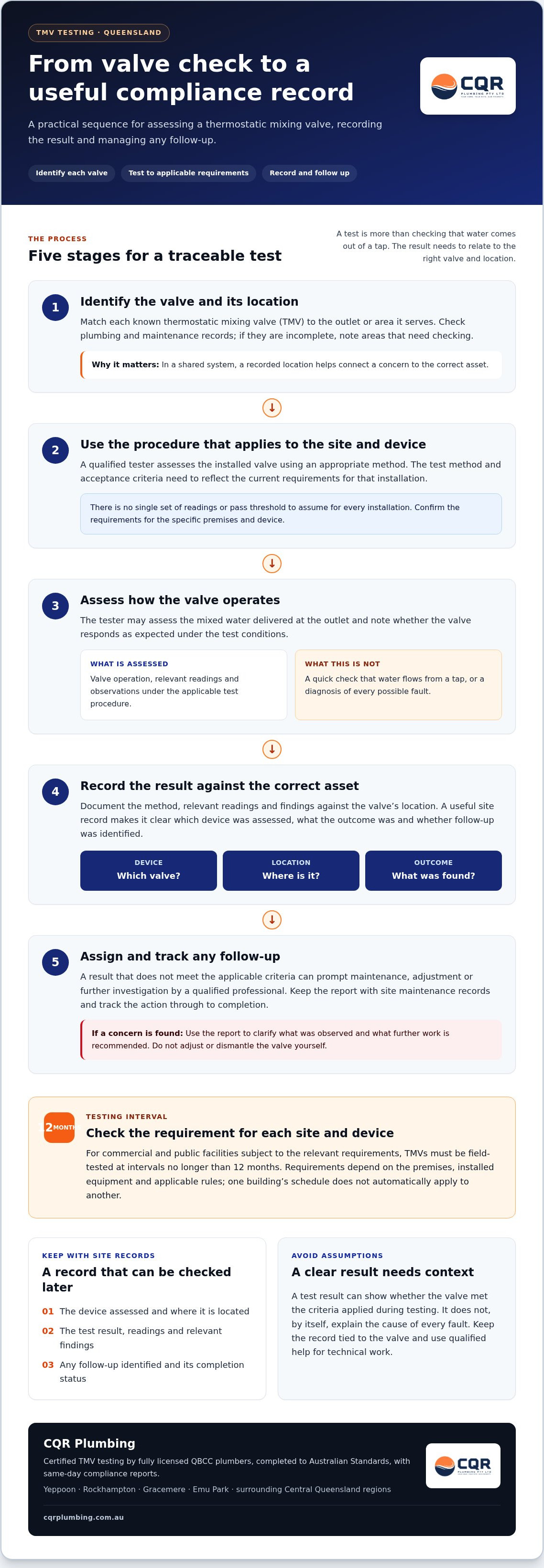
A TMV test is a structured assessment of an installed valve, not simply a quick check that water comes out of the tap. A qualified tester follows an appropriate method, observes how the valve operates and records relevant readings and findings. Test steps and acceptance criteria need to match the current requirements for the site and device, rather than being assumed to be identical for every installation.
For a property manager, the value is in connecting the tester’s observations with a clear record and practical next steps. A result can show whether the valve met the criteria applied during testing or whether maintenance or further investigation is needed. It does not, by itself, explain the cause of every fault.
What happens during a TMV test?
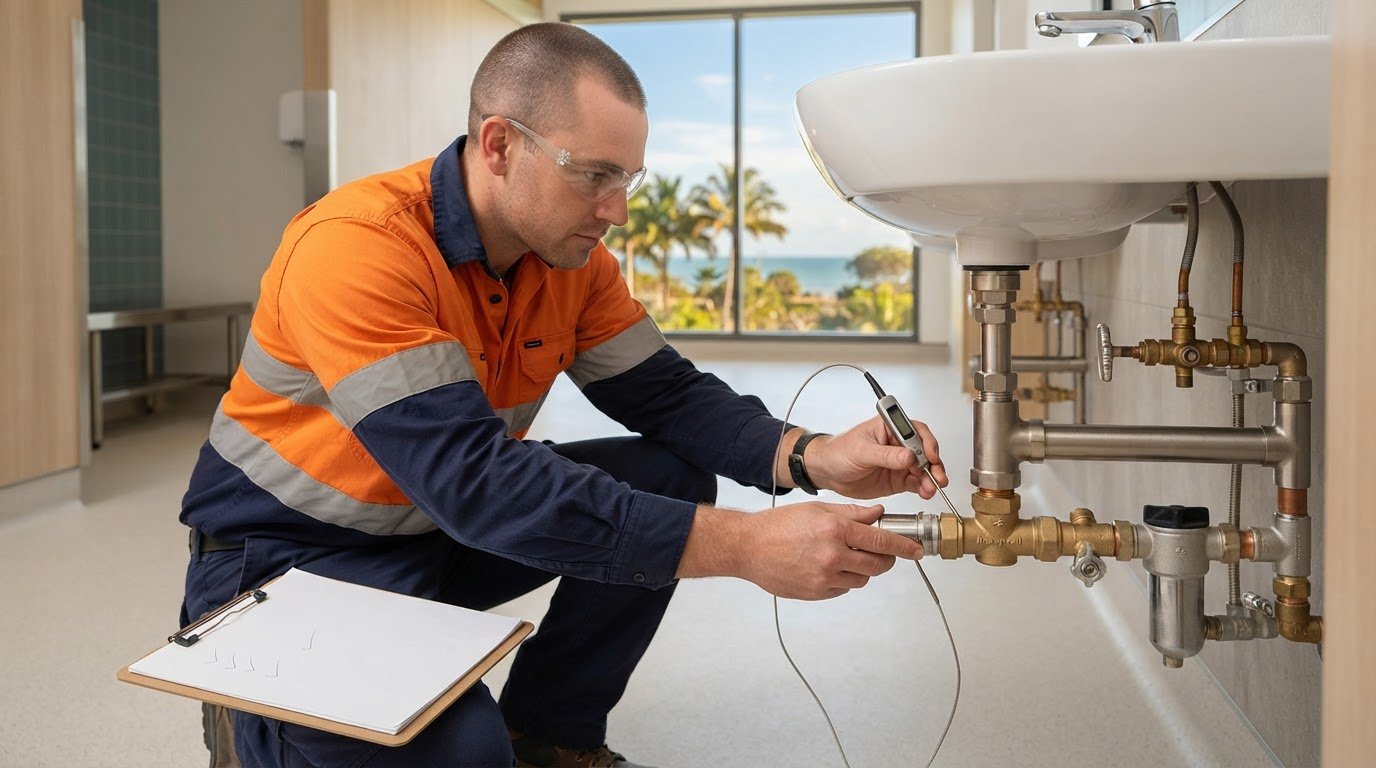
The tester identifies the valve being assessed and checks its operation using the applicable procedure. They may assess the mixed water delivered at the outlet and note whether the valve responds as expected under the test conditions. The method, readings and observations should be documented against the correct device and location so the record can be reviewed later.
There isn’t one set of readings or pass threshold to apply without considering the relevant requirements. The Queensland Legislation page for the Queensland Plumbing and Drainage Act 2002 provides legislative context, but it is not a stand-alone testing procedure. Test methods and acceptance criteria need to reflect current rules and requirements for the installation.
What can a test result tell a property manager?
A result that meets the applicable criteria gives you a documented outcome for that test. If the valve doesn’t perform as expected, the finding can prompt maintenance, adjustment or further investigation by a qualified professional. The report should explain the next step clearly, rather than leaving you with a reading and no context for site maintenance.
For example, a report might identify a valve at a particular outlet for a maintenance review. You can assign the follow-up, retain the report with the site’s records and track the action through to completion. That is more useful than a verbal update that another manager may find difficult to verify.
Keep the record tied to the valve’s location and any action taken. If a result raises a concern, don’t try to adjust or dismantle the valve yourself. Leave technical work to a qualified person, and use the report to clarify what was observed and what further work is recommended. This makes TMV testing compliance Queensland easier to manage as a sequence of assessment, documentation and follow-up, rather than a test result filed without context.
To arrange an assessment, request TMV testing and provide the site details available to you.
Queensland TMV requirements: verify intervals, responsibilities and records
A valve label or old service docket alone may not establish the current requirements for a site. The applicable approach can depend on the premises, devices installed and rules that apply to them. For TMV testing compliance Queensland, verify the requirements for each property before setting a testing schedule, rather than treating one interval as universal.
How to confirm the testing interval for a Queensland site
Check current authoritative Queensland guidance and requirements for the premises and installed devices. Separate a confirmed regulatory requirement from your organisation’s own maintenance schedule. An internal schedule may help manage upkeep, but shouldn’t be presented as the legal interval unless authoritative guidance supports that claim. If the applicable frequency hasn’t been verified, record that it needs confirmation.
Property managers can keep a short verification note with the site register: which guidance was checked, when it was checked, which premises and devices it relates to, and who confirmed the interval. This gives the next manager a clear starting point if guidance changes or the property’s plumbing assets are updated.
What TMV compliance records should a site organise?
Keep the core information together in a register, spreadsheet or maintenance system. The aim is to make it easy to match each valve to its result and any required action, even when responsibility for the property changes.
| Item to verify or record | What to capture |
|---|---|
| Applicable guidance | Source checked, date checked, premises and devices it applies to. |
| Testing interval | Verified requirement, or a note that the interval still needs confirmation. |
| Responsible party | Who arranges testing, receives the report and tracks follow-up. |
| Device and test records | Valve identification and location, test date, report and recorded outcome. |
| Follow-up actions | Work identified, person responsible and whether the action is complete. |
For example, if a report identifies a valve for maintenance review, note its location, assign the follow-up and keep the resulting work record with the original test report. A future review can then distinguish an outstanding action from work already completed. Avoid filing reports without linking them to a specific valve or area.
For property managers coordinating testing alongside other site maintenance, CQR Plumbing’s Backflow & TMV Testing service provides testing and same-day compliance reports to support the property’s maintenance records.
What to do before and after TMV testing at your property
Preparation helps the tester identify the right valves and gives your team a useful record to work from afterwards. You don’t need to inspect or adjust the plumbing yourself. Focus on gathering site information, arranging access and noting concerns reported by occupants or maintenance staff.
How can a site manager prepare for testing?
Before the visit, gather previous test reports, available device details and relevant maintenance notes. If a valve has been repaired or replaced, include records that identify the work and its location. This helps the tester match the assessment to the correct asset, particularly where several outlets or buildings share a site.
Arrange access to the relevant areas. Share sign-in procedures, restricted-room details, key arrangements and site-specific entry instructions. If access needs to be coordinated with staff or tenants, organise this in advance. Clear arrangements help the tester reach the right locations and reduce the chance that an outlet is missed because a room is unavailable.
Write down known concerns, such as a reported change in water temperature or an earlier maintenance recommendation. Describe what was noticed and where, without trying to adjust, dismantle or repair the valve. Technical work should be left to a licensed plumber.
- Gather existing reports and device or maintenance records.
- Share valve locations and practical access requirements.
- Note reported concerns and where they occur.
- Keep the work area accessible without interfering with the valve.
What should happen after the compliance report arrives?
Review the report while the site details are still familiar. Check that it identifies the tested device or location, includes the test date and records the outcome clearly. If a result or recommendation is unclear, seek an explanation before closing the maintenance record. The report is most useful when your team can match its findings to the correct valve and decide what action is needed.
File the report with the property’s maintenance records and update the site register so future managers can see what was tested and when. Where the report identifies follow-up, record the action, assign responsibility and note its status. Keep related maintenance records with the test documentation so the history stays together if responsibilities change.
For example, if a report recommends a maintenance review for a valve serving a particular area, record the location and assign the review rather than filing the report as complete. Once the work is carried out, update the record with the outcome. This handover helps prevent an item being overlooked among other site tasks.
Accurate site information and action on recorded findings give your team a practical way to manage testing. Property managers can organise access and records, but should leave valve adjustment and plumbing repairs to a licensed plumber.
Arrange certified TMV testing with CQR Plumbing in Central Queensland
CQR Plumbing provides TMV testing for commercial, strata and facilities-management properties across Yeppoon, Rockhampton, Gracemere, Emu Park and surrounding Central Queensland regions. To organise testing, share what you know about the site and the valves that need attention. If the property has several buildings or managed areas, identify the locations involved so the testing can be planned around the right assets.
Clear information at the outset helps keep the work focused on your site’s needs. CQR Plumbing’s Backflow & TMV Testing service provides certified testing and same-day compliance reports to help property teams record findings and manage follow-up.
What to include when requesting TMV testing
Share the information you have, even if the valve register isn’t complete. The property type, site location and areas involved give useful context. Previous reports or device details can help identify which valves have been assessed and where they’re situated.
- Property type and site location.
- Known TMV locations or device details, if available.
- Previous test reports or relevant maintenance records.
- Access arrangements, including any site-specific entry requirements.
- Observed operating concerns and the outlet or area involved.
If staff have reported a change in water temperature, describe what they noticed and where. That detail can help distinguish a concern at one outlet from an issue reported across the property. Don’t adjust or dismantle the valve before testing; leave technical checks and plumbing work to the licensed plumber.
How local testing supports ongoing site records
After the assessment, file the test documentation with the property’s maintenance records and link it to the relevant site and device. If the findings identify follow-up, enter the action in your maintenance system and assign responsibility. Connecting the record to the asset helps facilities and strata teams review the work later, including when site responsibilities change.
CQR Plumbing provides clear communication about the work and its findings, helping managers keep information organised and identify the next maintenance step.
Set a clear next step for your site
Make your next maintenance decision from a clear record, not an assumption. Review your site register, note any items that still need confirmation and decide who will track follow-up. This gives your team a practical starting point as property responsibilities or maintenance records change.
For property and facilities managers, organised records make future planning easier and help keep relevant information accessible to the people responsible for the site. CQR Plumbing is a member of Master Plumbers Association QLD and works with local commercial, strata and facilities-management clients.
To arrange testing, share the property details and available valve information through the request form or call CQR Plumbing on 0448 517 773.
A clear plan starts with one practical action. Your site team can build from there.
Frequently Asked Questions
What is TMV testing and what does it check?
TMV testing assesses how a thermostatic mixing valve operates after blending hot and cold water for delivery at an outlet. A qualified tester checks the installed valve using a method suited to the device and applicable requirements, then records relevant observations and results. The assessment can help identify when performance needs attention, while specific test criteria depend on the requirements for that installation.
How often do TMVs need testing in Queensland?
For commercial and public facilities subject to the relevant requirements, TMVs must be field-tested at intervals no longer than 12 months. Don’t assume that interval applies to every Queensland site or device. For TMV testing compliance Queensland, check current authoritative guidance for the particular property before setting a schedule. Keep the source and date of that check with your site records, and distinguish a confirmed requirement from your organisation’s own maintenance timetable.
Who is responsible for TMV testing in a commercial property?
The property owner or manager can coordinate testing by identifying installed valves, arranging access and keeping reports with site records. They can also assign someone to track recommendations and maintenance actions. Specific responsibilities can depend on the property and applicable requirements, so don’t assume one arrangement fits every commercial site. Clear handover notes help when management or facilities staff change.
What happens if a TMV fails a test?
If a test identifies an issue, the report should document the finding and any follow-up recommended by the tester. The next step may involve maintenance, adjustment or further investigation, depending on the reported fault. For example, a result linked to one outlet should be recorded against that location so the right asset can be revisited. Leave adjustment or repair work to a licensed plumber, rather than attempting to alter the valve yourself.
Do TMV testing reports need to be kept?
Keep TMV reports with the relevant device and maintenance records so a future manager can understand what was checked and what happened afterwards. A useful file links the report to the property, valve location, test date and any follow-up action. Retaining this history can make maintenance handovers clearer and help prevent an unresolved recommendation from being mistaken for completed work. Check the requirements that apply to your site for any specific retention period.
Can a property manager test a thermostatic mixing valve themselves?
A property manager can prepare records, arrange access and note reported changes at an outlet, but technical testing and valve adjustment should be handled by a qualified professional. A tap seeming to run normally doesn’t establish that the valve has passed an assessment. Note the affected area and what was observed, then provide that information to the tester. Don’t dismantle or alter the valve as part of a site check.
Does CQR Plumbing provide TMV testing in Rockhampton and Yeppoon?
Yes. CQR Plumbing provides TMV testing in Yeppoon, Rockhampton, Gracemere, Emu Park and surrounding Central Queensland regions. The service supports commercial, strata and facilities-management clients who need testing records for their properties. Testing is provided with same-day compliance reports, giving site teams documentation to file with maintenance records and use when reviewing any follow-up identified during the assessment.
Disclaimer
The information in this article is provided for general educational purposes only and should not be relied upon as professional plumbing, gasfitting, or legal advice. Every property and plumbing system is different, and the information may not be applicable to your specific circumstances. CQR Plumbing recommends that all plumbing and gasfitting work be inspected and carried out by a licensed professional in accordance with applicable Australian Standards and Queensland regulations. If you require advice specific to your property, please contact CQR Plumbing for an assessment.