Tree Roots in Pipes: The Rockhampton Homeowner’s Guide to Permanent Repairs
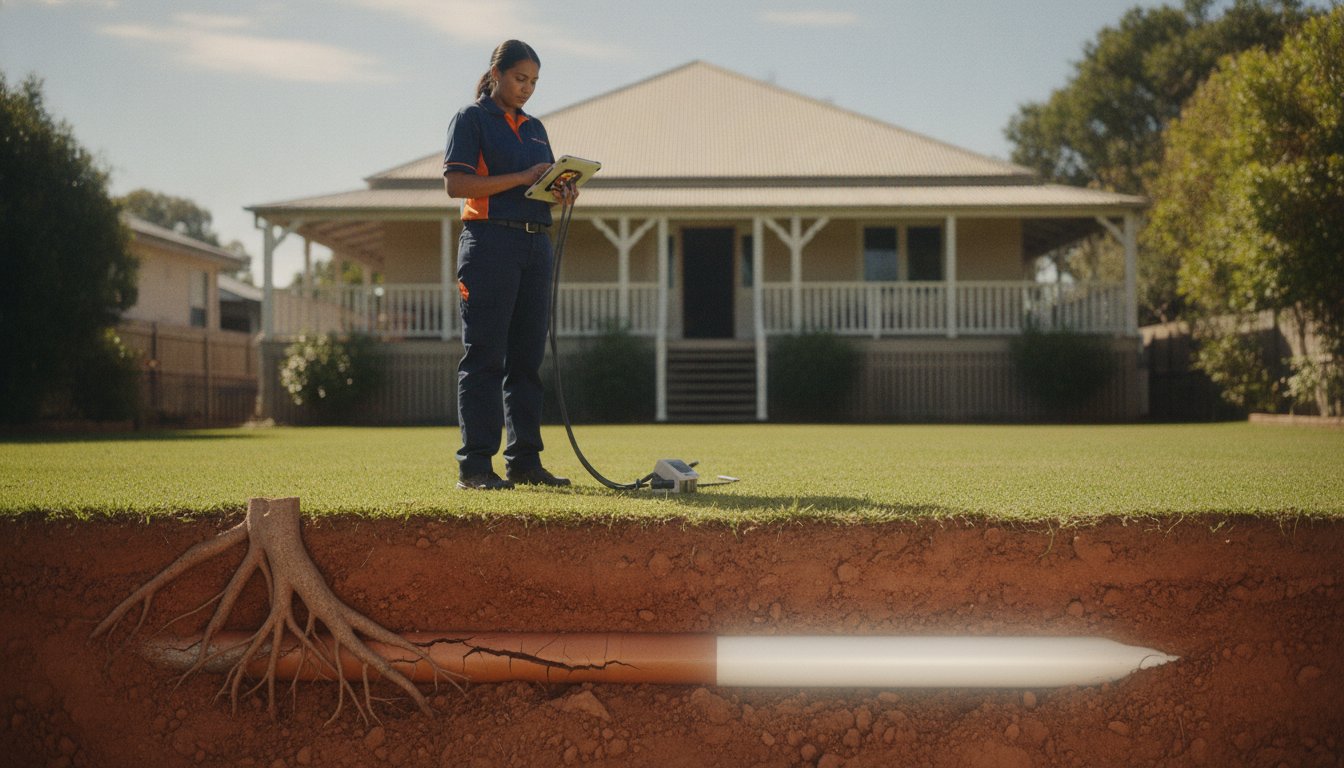
If you find yourself paying a plumber to clear the same drain every six months, you aren't actually fixing a plumbing problem. You're simply pruning a subterranean garden at a very high cost. In Central Queensland, tree root intrusion is responsible for over 50% of all sewer blockages, particularly in older suburbs like Wandal, Allenstown, and The Range. Dealing with recurring tree roots in pipes Rockhampton homeowners face is a structural issue, not a maintenance one. When roots find a microscopic crack in your earthenware or clay pipes, they don't just pass through; they move in for good.
We understand the frustration of hearing that familiar gurgle in the toilet or catching a foul scent in the backyard just months after a repair. You shouldn't have to live in fear of your driveway being excavated or your prize roses being uprooted. This guide reveals how modern plumbing technology allows us to identify the exact fault and fix it permanently without digging a single hole. You will learn about the specific environmental factors in Rockhampton that target your drainage and discover the no-dig solutions that offer long-term reliability for your home.
Key Takeaways
- Understand how Central Queensland's reactive clay soils and extreme weather cycles create the structural vulnerabilities that invite root growth into your drainage system.
- Learn why high-definition CCTV drain cameras are essential for locating the exact depth and position of a blockage before you begin any repair work.
- Compare the long-term benefits of trenchless pipe relining against traditional excavation to resolve tree roots in pipes Rockhampton homeowners deal with permanently.
- Discover why high-pressure water jetting provides a more thorough clean than a traditional electric eel when scouring root-infested pipe walls.
- Identify drain-friendly plant species for your garden to prevent future intrusion and protect your home's plumbing infrastructure for the long term.
Why Tree Roots Target Rockhampton Pipes: The Local Factor
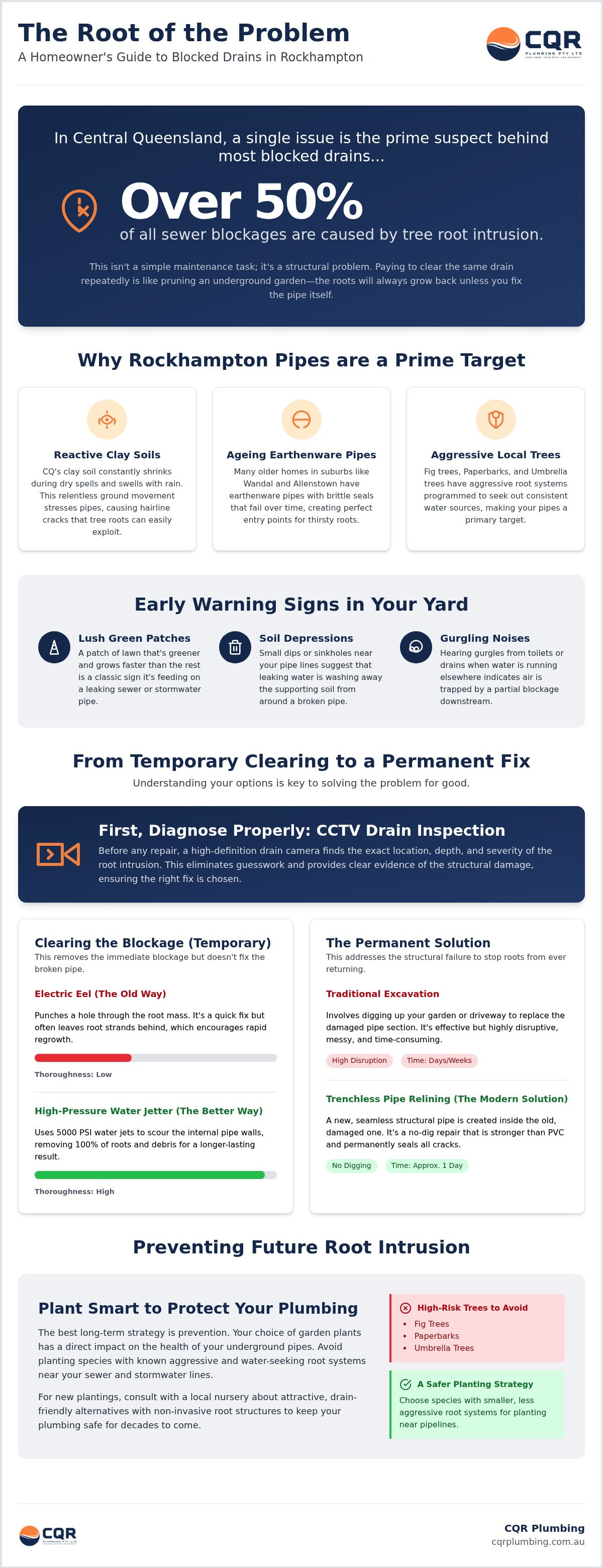
Central Queensland's climate is a double-edged sword for underground infrastructure. While we enjoy the sunshine, our reactive clay soils are constantly shifting. This ground movement is a primary driver behind the high frequency of tree roots in pipes Rockhampton homeowners report. When the soil dries out during a typical harsh winter, it shrinks and pulls away from your drainage lines. When the summer rain arrives, it swells rapidly. This relentless cycle creates immense physical stress on your plumbing, leading to fractures that act as an open invitation for thirsty vegetation.
Reactive Clay and Pipe Displacement
Older properties in Rockhampton often rely on earthenware pipes featuring 'bell and spigot' joints. These connections were originally sealed with materials that become brittle and fail over time. As the CQ soil shifts, these joints displace, creating tiny gaps. Even a hairline fracture allows moisture and nutrient-rich vapours to escape into the surrounding dry earth. Through a process known as the Root invasion of pipes, tree root systems detect this "vapour leak" and grow toward the source with surgical precision. They don't need a large hole to start; a single hair-like strand is enough to gain entry.
Aggressive local species such as Fig trees, Paperbarks, and Umbrella trees are notorious for this behaviour. Their root systems are biologically programmed to survive drought by seeking out reliable water sources. Once they find a crack, the roots enter as fine filaments. Inside the pipe, they find a perfect environment: water, oxygen, and nutrients. They expand rapidly, eventually filling the entire diameter of the pipe and causing a total blockage. Even modern PVC pipes aren't entirely immune, as severe ground movement can occasionally shear fittings or crack plastic if the bedding isn't perfectly stable.
The Warning Signs in Your Backyard
Detecting a problem early can save you from a major sewer surcharge. Keep an eye out for these local indicators that tree roots in pipes Rockhampton services may be required:
- Lush green patches: If a specific area of your lawn looks unusually vibrant or grows faster than the rest during a dry spell, it's likely feeding off a leaking pipe.
- Soil depressions: Small sinkholes or dips in the ground near your sewer or stormwater lines often indicate that water is washing away the soil bedding around a broken pipe.
- Audible gurgling: You might hear strange noises from your tap and toilet when draining the bath or running the washing machine. This is usually air trapped by a partial root obstruction further down the line.
If you notice these signs, the issue is already structural. Roots don't simply go away once they've found a water source. They will continue to grow and thicken, eventually cracking the pipe further and leading to a complete collapse if left unaddressed.
Modern Diagnostics: The Role of CCTV Drain Inspections
High-definition diagnostics have replaced guesswork in modern plumbing. When you are dealing with persistent tree roots in pipes Rockhampton homeowners often find that simply "clearing" the line isn't enough. You need to understand the underlying condition of the infrastructure to prevent the same issue from returning. A CCTV drain inspection involves threading a high-resolution camera through your sewer or stormwater lines to provide a live, bird's-eye view of the internal pipe walls. When dealing with recurring tree roots in pipes Rockhampton residents need more than a temporary fix; they need a diagnostic-led strategy.
This technology allows us to distinguish between a 'soft' blockage, such as grease or wet wipes, and a 'hard' structural intrusion. Locating the exact depth and position of a fault is critical. It ensures that if a repair is needed, we know precisely where to work, preventing unnecessary excavation of your garden or driveway. Using this data also creates a vital paper trail. A recorded CCTV report provides definitive evidence for insurance claims and property records, documenting the precise state of your assets.
What a Structural Fault Actually Looks Like
Seeing the inside of a damaged pipe for the first time can be eye-opening. Our cameras frequently reveal three main types of structural failure that require professional intervention:
- Root Mats: These occur when fine root filaments enter a joint and multiply into a dense, wool-like mass. These mats can completely colonise the pipe diameter, trapping debris and causing total blockages.
- Misaligned Joints (Offsets): As the reactive CQ soil shifts, pipe sections can move apart. This creates a lip that catches toilet paper and provides a massive entry point for aggressive roots.
- Pancaked Pipes: In severe cases, the pressure from external root growth or extreme soil movement can cause a pipe to lose its circular shape and flatten. This "pancaking" leads to total structural collapse.
Transparency in Quoting
At CQR Plumbing, we believe in total transparency. We use the recorded footage to show you the problem before any work begins. This allows us to provide accurate, fixed-price options for CQR Blocked Drain Services, so you aren't hit with unexpected costs halfway through a job. Understanding the severity of the intrusion is the first step in Preventing future root intrusion and choosing a repair method that lasts for decades rather than months.
Watching the footage alongside a licensed professional gives you the confidence that the recommended solution is necessary. If your drains are gurgling or slow to clear, you can book a professional camera inspection to see exactly what is happening beneath your property.
Clearing the Way: High-Pressure Jetting vs. The Electric Eel
When a drain overflows, the immediate goal is to restore flow as quickly as possible. For decades, the industry standard was the electric eel, or plumber's snake. This mechanical cable spins a cutting head through the blockage to break it apart. While it's effective at punching a hole through an obstruction, it often leaves behind significant root mass along the pipe walls. For modern issues with tree roots in pipes Rockhampton property owners now have access to high-pressure water jetting, which offers a far more comprehensive result.
Water jetting uses specialised nozzles to scour the entire internal diameter of the pipe. Instead of just cutting a path through the centre, the water jets strip grease and root filaments from the walls. This method is particularly effective for heavy root masses that have colonised long sections of the line. Because it uses water rather than a rigid steel cable, it also reduces the risk of further cracking or damaging fragile earthenware joints that are already under stress from soil movement.
Why We Recommend Water Jetting in CQ
High-pressure jetting is the superior choice for the dense root systems found in Central Queensland. The process doesn't just cut the roots; it flushes the debris completely out of the system. An electric eel can leave severed roots behind, which may simply snag again further down the pipe. A jetter pushes everything toward the main sewer, ensuring the line is truly clear. While these methods are excellent for restoring service, they are fundamentally maintenance tasks. To stop the intrusion for good, homeowners should investigate trenchless pipe repair methods that seal the entry points permanently.
The 'Repeat Call-out' Trap
Many homeowners fall into a frustrating cycle of reactive maintenance. When you cut a tree root, the tree responds by sending more nutrients to that specific area. This biological response causes the roots to grow back thicker and more aggressively than before. If you're calling a plumber every six months to clear the same line, you're caught in the 'repeat call-out' trap. You're paying for a temporary fix that actually makes the underlying problem worse over time.
Consider the cumulative costs of these visits. Paying for multiple emergency call-outs over several years often exceeds the price of a single, permanent repair. If you are facing a surcharging drain right now, our Emergency Plumbing team can clear the immediate blockage and provide a clear path for a diagnostic camera. This allows us to move beyond temporary clearing and toward a solution that addresses the structural failure of the pipe once and for all.
Permanent Solutions: Pipe Relining vs. Traditional Excavation
Once a CCTV camera identifies the exact point of entry, we move from reactive clearing to permanent restoration. For homeowners plagued by recurring tree roots in pipes Rockhampton services now offer advanced trenchless technology. This process, known as pipe relining, creates a "pipe within a pipe" by inserting a resin-impregnated liner into the existing line. Once the resin cures, it forms a seamless, structural barrier that is often stronger than the original pipe. Crucially, this new internal surface has no joints, which removes the primary entry point for thirsty root systems.
We also offer sectional patching for more localised issues. If the root intrusion is limited to a single displaced joint rather than the entire run, a targeted patch can seal the fault without the need for a full relining. This provides a cost-effective, no-dig alternative that maintains the structural integrity of your drainage system for decades. Both modern PVC replacements and epoxy relining are engineered for longevity, typically offering a service life of 50 years or more.
The Benefits of No-Dig Technology
The most significant advantage of trenchless repair is the preservation of your property's value and aesthetics. In Rockhampton and Yeppoon, many homes feature established gardens, expensive pavers, or concrete driveways that sit directly above sewer lines. Relining allows us to fix the pipe from a single access point, such as an existing boundary shaft or gully. Most repairs are completed in a single day, which means you don't have to deal with the noise, dust, and long-term disruption of a major construction site in your front yard.
When Excavation is Unavoidable
While trenchless methods are transformative, they are not a universal cure. Excavation remains the technically correct choice in specific scenarios. If a pipe has completely collapsed or "pancaked," there is no internal space to host a liner. Similarly, if the original pipe was installed with a "back-grade", where the pipe slopes the wrong way, relining will not fix the underlying drainage flow. In these cases, we must dig to reset the levels and ensure the system functions according to Australian Standards.
We provide objective advice based on the depth, location, and severity of the fault. If a pipe is buried shallowly in an open lawn with no obstructions, traditional excavation and replacement with modern PVC might be the most cost-effective path. However, if the fault is under a structural slab or a driveway, relining is the clear winner for both speed and long-term value.
Preventing Future Root Intrusion on the Capricorn Coast
Stopping the recurring cycle of tree roots in pipes Rockhampton residents face requires more than just high-quality repairs. It demands a proactive approach to property maintenance and landscaping. Once your pipes are sealed or relined, the goal is to ensure the surrounding environment doesn't put undue pressure on your new infrastructure. Prevention is always more cost-effective than emergency reactive maintenance, particularly in our volatile Central Queensland climate.
Landscaping for Healthy Drains
Smart garden design is your first line of defence. Aggressive species like Fig trees, Eucalypts, and large Paperbarks should never be planted near sewer or stormwater easements. Their root systems are incredibly wide-reaching and powerful enough to displace even well-laid pipes over time. If you already have these trees on your property, consider installing physical root barriers. These vertical shields are buried between the tree and the pipe to redirect root growth away from your drainage. For residents on the coast, our Yeppoon plumbing services include site inspections to help you identify high-risk trees before they cause structural damage.
You should also be mindful of what goes down your drains. So-called "flushable" wipes are a major contributor to root-related blockages. Unlike toilet paper, these wipes do not break down in the water. If there is even a tiny root filament inside your pipe, a wipe will snag on it. This creates a "snowball effect" where more debris catches, leading to a total blockage much faster than roots would alone. We recommend disposing of all wipes in the bin to protect your system's flow.
The Homeowner Maintenance Checklist
Routine inspections help you catch small issues before they become surcharging disasters. Every homeowner should know the location of their Boundary Trap and Inspection Opening (IO). Keep these areas clear of soil and mulch so they are easily accessible for a plumber during an emergency. You should also monitor for slow drainage in the shower or bathroom, as this is often the first sign that roots are beginning to colonise a line.
We recommend a professional CCTV check-up every two years for properties with large, established trees. For property managers, a scheduled preventative maintenance program is essential for long-term reliability. By documenting the condition of the pipes regularly, you can plan for repairs rather than reacting to tenant complaints. Managing tree roots in pipes Rockhampton wide is a matter of consistent vigilance and using the right local expertise to stay ahead of the CQ environment.
Secure Your Property Against Recurring Blockages
Managing tree roots in pipes Rockhampton homeowners deal with requires moving beyond temporary clearing toward permanent structural restoration. We have explored how Central Queensland's reactive soils create the entry points for root systems and why high-definition CCTV reporting and diagnostics are the only ways to identify a fault accurately. Our fully licensed and QBCC compliant plumbers provide the technical expertise needed to protect your home's infrastructure for the long term.
With our 24/7 emergency response across Central Queensland, you don't have to face a surcharging sewer alone. We combine precision technology with transparent advice to ensure your drainage remains reliable for decades. It is time to stop the cycle of recurring call-outs and choose a permanent fix that preserves your garden and your peace of mind.
Take the first step toward a root-free property and a more reliable home today.
Frequently Asked Questions
How much does it cost to clear tree roots from a drain in Rockhampton?
Clearing costs depend on the blockage severity and the equipment used. While mechanical clearing is a traditional option, high-pressure water jetting is often more efficient for dense masses. We recommend a professional assessment to determine the most cost-effective path. Every job is unique; therefore, we provide transparent, fixed price quotes after a visual inspection to ensure there are no surprises for your household budget.
Will my home insurance cover the cost of repairing root-damaged pipes?
Most standard home insurance policies in Australia exclude damage caused by tree roots. Insurers typically classify root intrusion as gradual wear and tear or a maintenance issue rather than a sudden, accidental event. It's always best to check your Product Disclosure Statement (PDS) for specific accidental damage or escape of liquid clauses. We can provide the recorded CCTV footage required by insurers if you decide to lodge a claim.
Can I use chemical root killers to fix a blocked drain myself?
Chemical root killers are rarely a permanent solution for tree roots in pipes Rockhampton properties experience. These products might kill some fine filaments, but they cannot remove the dense root mats that cause major blockages. Additionally, chemicals don't repair the structural crack in the pipe. Using them frequently can also damage the beneficial bacteria in your drainage system or harm the surrounding local environment.
What is the most common tree causing pipe blockages in Yeppoon?
Fig trees and Umbrella trees are the most frequent offenders on the Capricorn Coast and in Yeppoon. These species have incredibly thirsty, invasive root systems that can travel long distances to find a water source. In our coastal environment, these trees thrive and will quickly colonise any pipe joint that shows a sign of moisture. We suggest choosing native shrubs with non-invasive roots when landscaping near your sewer or stormwater lines.
Is pipe relining as strong as a brand-new PVC pipe?
Modern pipe relining is exceptionally durable and often carries a design life of 50 years or more. The epoxy resin creates a seamless, structural pipe within a pipe that is resistant to ground movement and chemical corrosion. Because it eliminates the joints where roots usually enter, it's often more reliable than a traditional PVC replacement that still relies on rubber-sealed connections. It is a permanent, high-strength solution for damaged infrastructure.
What happens if the root blockage is on the Council’s side of the boundary?
If a blockage occurs beyond your property boundary, it usually becomes the responsibility of the local council or water authority. In Rockhampton, Fitzroy River Water manages the main sewer lines. However, you must first engage a private plumber to prove the fault is on the council's side. We use high-definition CCTV to locate the exact position of the blockage, providing you with the evidence needed to request a council repair.
How long does a CCTV drain inspection take to complete?
A standard CCTV drain inspection usually takes between 45 and 90 minutes. This timeframe includes setting up the equipment, navigating the camera through the lines, and recording the footage for your report. If the line is heavily blocked, we may need to clear it with a jetter first to ensure the camera has a clear view. You will receive a detailed assessment of your pipe's structural integrity immediately following the inspection.
Why does my drain only seem to block up during the wet season?
Wet season blockages are common because heavy rain increases groundwater levels, which puts extra pressure on cracked pipes. This extra water can carry silt and debris into the system, snagging on existing tree roots in pipes Rockhampton homeowners might not have noticed during the dry months. Trees also experience a growth spurt during the wet season, causing root filaments to expand and tighten their grip on your drainage joints.
Disclaimer
The information in this article is provided for general educational purposes only and should not be relied upon as professional plumbing, gasfitting, or legal advice. Every property and plumbing system is different, and the information may not be applicable to your specific circumstances. CQR Plumbing recommends that all plumbing and gasfitting work be inspected and carried out by a licensed professional in accordance with applicable Australian Standards and Queensland regulations. If you require advice specific to your property, please contact CQR Plumbing for an assessment.