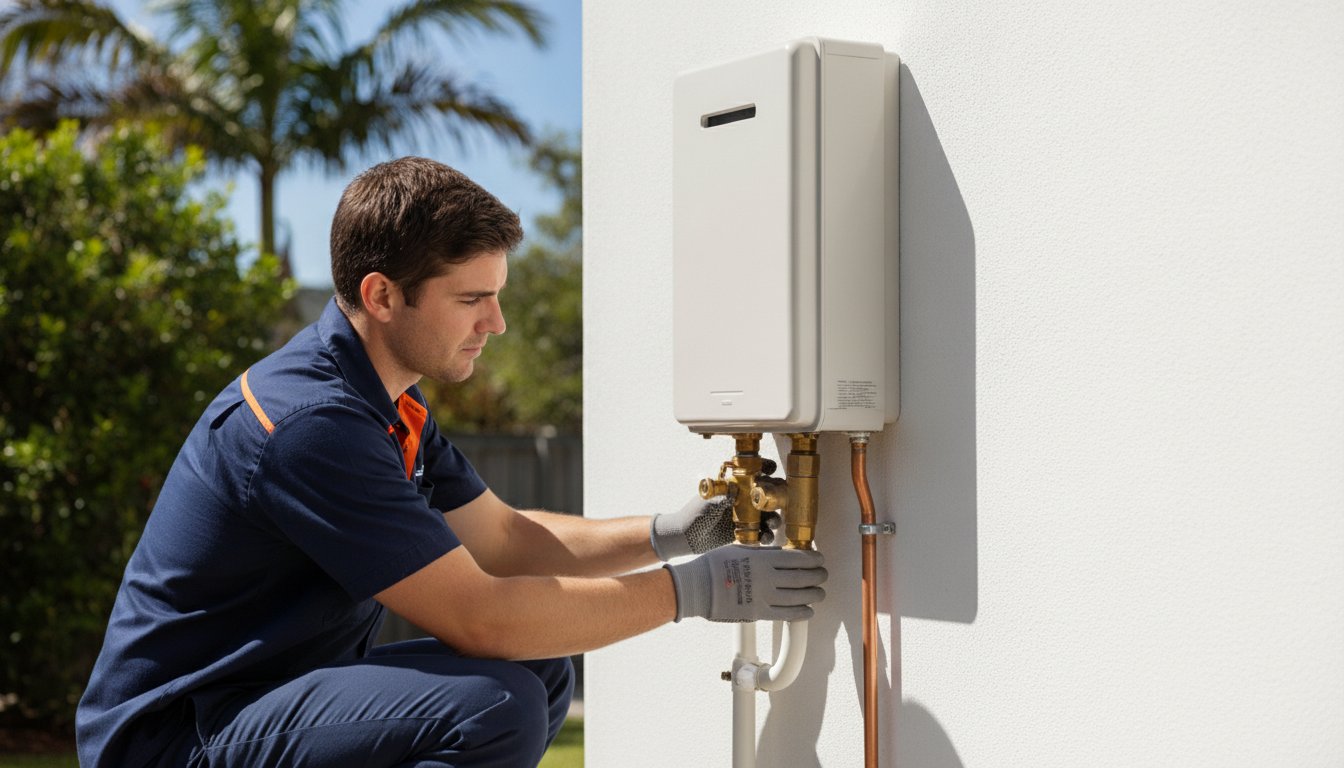
2026 Cost to Install Gas Hot Water System: Prices and Rebates
Australian homeowners usually spend $500 to $2,000 to set up a gas hot water system, averaging a market median of $1,050 across 340 surveyed industry listings. Your final out-of-pocket expenses depend on whether you are replacing an existing unit or performing a new install requiring new plumbing lines. Licensed plumbers ensure your setup meets all local safety regulations while delivering long-term efficiency. The decisions that shape that figure are which system type matches your peak demand, whether gas tariffs and rebates favour the upgrade on your block, and how you scope labour, pipework and certification before work starts.
Key Takeaways: Installing a gas hot water system typically costs between $500 and $2,000, with a market median of $1,050 for unit and labor combined.
- Market data from 340 industry listings confirms a $1,050 median for professional installation.
- Gas is not worth it for properties without mains gas or reliable LPG delivery.
- Choose continuous flow units for small households to eliminate expensive standby heat losses.
- The article details five mandatory compliance steps, including the essential gas tightness test.
Right-sizing continuous flow or storage protects supply and running costs
Continuous flow systems heat water on demand, while storage tanks keep a set volume hot and ready for large households. With clients we see that sizing a unit incorrectly leads to premature system failure. A system that is too small works constantly, which wears out internal components fast.
Typical situations and a concrete direction from the facts above:
- Smaller home with short, sharp peaks at the shower and kitchen: a continuous flow unit sized to that peak keeps components from running flat out.
- Large family drawing several taps at once: a storage tank supplies immediate high flow without waiting on heat-up.
- Tight plant room or balcony: a tankless model frees floor space; if you need instant volume at several outlets, storage remains the practical fit.
Tankless models save space, but storage tanks offer immediate high flow rates. Evaluating household demand prevents buying an oversized unit. Data gathered from market listings places the full setup expense in the $500–$2,000 range, centered around a $1,050 median; the choice still comes down to peak usage, not the sticker alone.
Before you commit, read the Rockhampton install guide. Getting this choice right supports low running costs and reliable supply.
Licensed labour, pipework and certification drive your install total
Total upfront expenses cover buying the physical heating unit along with paying for licensed trade labour. Based on 340 sample market listings, the total installation price band is typically $500–$2,000 (market median $1,050).
The unit on its own is only part of the job: licensed fitting, pipework and certification complete a usable system. Replacing a standard unit in the same position keeps labour lower. Switching system locations requires extra pipework, and running new lines raises costs quickly. Calculating total gas demand ensures pipework handles full capacity properly.
Choosing a licensed plumber ensures your system meets every safety requirement under the Queensland Building and Construction Commission (QBCC). You receive an upfront cost estimate (transparent pricing) before any work begins. The team performs checking for leaks (gas tightness test) to confirm site safety. After completing the job, you receive an official gas safety certificate (gas compliance certificate).
One Google review shows how that process lands for a homeowner who needed clear answers during a gas-related job. The situation was a works visit with questions still open; the response was plain explanations without hesitation; the outcome was a job the client was satisfied with and willing to recommend:
"Joel was pleasant young man and very satisfied with the work he performed. Also he answered all questions we asks without hesitation. We would recommend Joel to anyone who asks about getting a plumber."
Prompt answers and open communication give you confidence during a gas system upgrade. For a full local setup, book a Yeppoon installation team to manage sizing, fitting and certification end to end.
Gas vs electric: what you pay now and what you pay over time
Choosing between gas and electric hot water units depends on upfront purchase figures versus running expenses. Buying and fitting a new hot water unit generally falls in the same industry listing band used above, with $1,050 as the mid-point across those samples.
Continuous flow gas models warm water the moment you turn on the tap. Continuous gas units avoid standby heat loss entirely, unlike standard electric storage tanks. To select the right continuous system, a licensed gas fitting professional must perform a gas load calculation to confirm pipe capacity.
| System Type | Upfront Expense | Long-term Efficiency |
|---|---|---|
| Gas Continuous | Moderate | High (heats on demand) |
| Electric Storage | Lower | Lower (standby losses) |
| Solar / Heat Pump | Higher | Very High (low power use) |
Gas delivers rapid heating. For local households, an upfront cost estimate helps clarify overall value. You get reliable advice and a clear scope of work for hot water replacements. Contact us for advice matched to your usage.
How gas tariffs shape what you spend over a decade
Gas tariffs fluctuate unpredictably, making continuous operation costs for hot water units difficult to forecast over a ten-year timeframe.
In daily plumbing work, running expenses often overtake the initial purchase price of standard water heaters. Rising fuel supply tariffs increase those running costs over a decade. Before you lock in a unit, weigh your property supply limits and long-term energy goals against the install band $500–$2,000 reported in market listings.
Gas tariffs can move like a toll with uneven price hikes, so a clear scope and tariff check matter as much as the hardware price. Explore efficient hot water options when you want performance matched to how you actually use hot water. Licensed gas fitting keeps your setup safe, leak-free and fully certified.
Government rebates that lower the cost of an efficient upgrade
Government financial incentives lower your upfront installation costs when upgrading to energy-efficient hot water units.
Upgrading your system can save money over the long term. Under the small-scale renewable scheme, small-scale technology certificates offset installation costs for eligible efficient systems. The national market median price sits at $1,050 (typically $500–$2,000 according to market listings).
You must hire a licensed plumber to secure these rebates. Paperwork support and a checking for leaks help keep the job compliant. Ask for an upfront cost estimate tailored to your Rockhampton property.
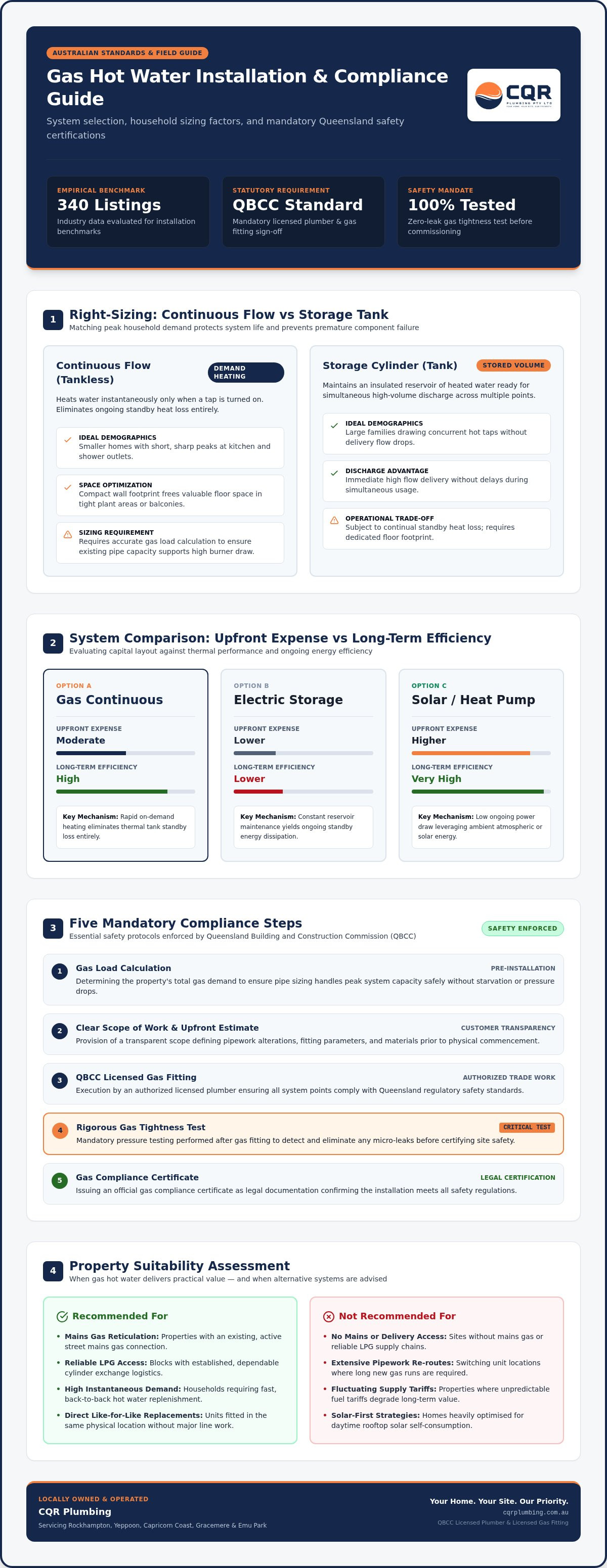
Five compliance steps that keep a gas water heater safe
Installing a gas system requires strict safety protocols to ensure compliance with Queensland regulations. Professional installation protects safety and your property investment. Market listings place typical system installation in the $500–$2,000 band.
- System sizing: A licensed plumber assesses hot water demand and conducts a gas load calculation to ensure supply pipework is adequate.
- Mounting: The tradesperson secures the unit safely to the wall or slab, maintaining correct safety clearances.
- Pipe connection: Water and gas lines are connected with correct fittings for long-term durability.
- Safety testing: A thorough process of checking for leaks verifies no gas is escaping.
- Certification: The installer issues an official gas safety certificate to confirm full regulatory compliance.
Existing pipework often requires upgrading to meet current standards during a system change, which is easy to miss until the load calculation is done.
Tip: Ensure your tradesperson executes a gas tightness test and hands over a gas compliance certificate immediately after commissioning.
When gas hot water does not suit your property
Gas hot water systems are a poor fit for homes without access to mains gas. According to market listings, system replacement costs typically $500–$2,000, so major infrastructure work can become an expensive obstacle if supply is not already there.
On service calls around Rockhampton, households on bottled LPG often pay heavily for refills when another heat source would serve them better. Solar thermal setups fit high-use families with unshaded roof space, whereas electric heat pumps suit smaller blocks lacking a gas connection. Off-grid homes also struggle with gas supply reliability during flood seasons across the Capricorn Coast.
Checking for leaks is mandatory during safety audits and can reveal hidden piping damage that makes gas conversions impractical. LPG bottle hire and supply fees can quickly swallow operational savings if you assumed reticulated gas pricing.
How to choose a gas hot water system installer you can trust
Verify that your contractor holds an active gas fitting licence and full legal authorisation before hiring them. Installing a gas unit involves serious gas safety hazards, so checking for leaks must be completed by a licensed plumber.
On site inspections around Rockhampton and Yeppoon, dangerous pipework completed by unlicensed handymen still turns up. Hire local tradespeople who calculate the total gas demand of a property (gas load calculation) correctly. Market listings place total installation fees typically at $500–$2,000.
Request an upfront cost estimate that outlines a clear scope of work before any tools touch the job. A reliable technician issues an official gas safety certificate upon completion. Certified work protects your household.
Regional freight and access on the Capricorn Coast
Delivering a hot water unit to remote properties adds freight expenses to your overall project.
Across Rockhampton and the Capricorn Coast, transport delays often catch homeowners off guard. Moving heavy continuous flow or storage tanks to outer coastal areas requires careful handling to prevent tank damage during transit. Local freight routes can push overall costs up quickly.
Distance dictates delivery logistics. Remote properties suit planned bulk freight schedules, whereas suburban replacements allow direct dispatch from local suppliers. Before ordering a new gas system, ask your installer to detail shipping fees within a clear scope of work. Rural access routes need proper transport vehicles for safe offloading. If unexpected delivery fees worry you, request a transparent pricing estimate that includes freight before work begins.
Frequently asked questions
What are the different types of gas hot water systems?
Gas hot water units come in continuous flow (instantaneous) models and storage tank designs. Continuous systems heat water on demand as it passes through a copper heat exchanger. Storage units keep a reservoir of water hot continuously using a gas burner located at the base of the tank. LPG and natural gas options exist for both configurations to suit local supply infrastructure.
How much does a gas hot water system cost?
The total cost to install a gas hot water system depends on system capacity, pipework layout, and whether you are upgrading gas line sizes. According to market listings, general installation rates across the industry typically sit between $500–$2,000. System selection and site layout drive final investment totals. Request a personalised quote from a licensed plumber for an accurate estimate for your home.
How much does it cost to run a gas hot water system?
Running expenses depend on your household water consumption, energy tariff rates, and the energy efficiency rating of the unit. Continuous flow units generally use less gas because they eliminate standby heat losses common to storage tanks. Regular preventative maintenance also keeps the burner operating efficiently and daily fuel use in check.
Is gas hot water cheaper than electric?
Gas hot water systems often cost less to run than standard electric storage units because natural gas and LPG energy rates are generally lower than peak electricity tariffs. Continuous gas models only heat water when taps open, which saves money compared with keeping an electric tank hot all day. Solar or heat pump electric units may compare differently based on usage habits and daylight hours.
Does my gas hot water specialist need to be licensed?
Yes, any person carrying out gas fitting in Queensland must hold a valid licence issued by the QBCC. Working with gas involves serious safety hazards including fire risks and toxic leaks. A qualified professional will perform a pressure test to confirm safety and issue an official gas safety certificate once the installation is finished.
Getting ready for your gas hot water upgrade
Calculating the final cost to install a gas hot water system means balancing up-front trade labour against long-term fuel tariffs, the same decisions raised at the start: system type versus peak demand, replace versus relocate, rebate eligibility, and a licensed scope you can verify. Industry data shows standard Australian installations typically $500–$2,000 according to market listings.
Fully licensed tradespeople evaluate pipe sizing and ventilation for compliance. You receive an upfront cost estimate before any work begins on your property. Every completed project includes a formal gas safety certificate for legal peace of mind.
For a detailed scope tailored to your Capricorn Coast or Central Queensland property, request a quote from CQR Plumbing today.
Disclaimer
The information in this article is provided for general educational purposes only and should not be relied upon as professional plumbing, gasfitting, or legal advice. Every property and plumbing system is different, and the information may not be applicable to your specific circumstances. CQR Plumbing recommends that all plumbing and gasfitting work be inspected and carried out by a licensed professional in accordance with applicable Australian Standards and Queensland regulations. If you require advice specific to your property, please contact CQR Plumbing for an assessment.