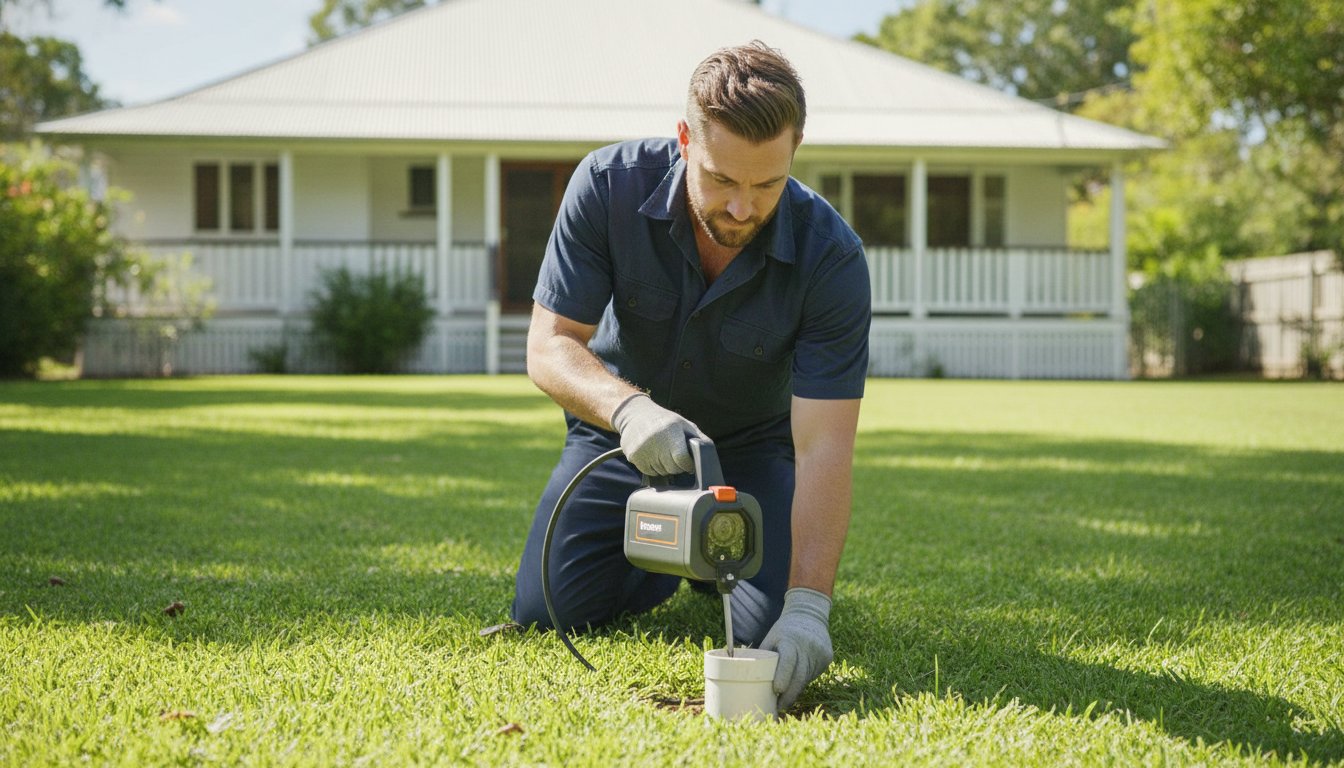
Blocked Drain Causes: A Plumber’s Guide to Why Your Pipes Clog in Central Queensland
Have you ever wondered why that stubborn kitchen sink or gurgling toilet keeps backing up despite your best efforts with a plunger and a bottle of supermarket drain cleaner? It's a common frustration for many homeowners in Central Queensland who find themselves trapped in a cycle of temporary fixes. Understanding the most common blocked drain causes is the first step toward a permanent solution rather than a messy, expensive patch-up. Whether you're dealing with a slow-draining shower or the dreaded smell of a sewage overflow, the reality is that DIY chemicals rarely address the underlying issue hiding deep within your pipework.
I know how stressful it feels when you aren't sure if a stray nappy, a build-up of grease, or invasive tree roots are to blame for your plumbing woes. This guide will walk you through exactly what is clogging your pipes and how we use CCTV drain inspections to diagnose the problem without digging up your yard. You'll learn about the impact of our local reactive clay soils on underground infrastructure and get practical advice on using high-pressure water jetting for a long-term clear. By the end of this article, you'll have a clear plan to prevent future blockages and keep your Rockhampton or Yeppoon home safe and dry.
Key Takeaways
- Identify common household blocked drain causes like cooking fats and "flushable" wipes that lead to the majority of internal pipe obstructions.
- Understand how Central Queensland's reactive clay soils and invasive tree roots can cause underground pipes to shift, crack, or collapse.
- Recognise early warning signs like gurgling sounds or slow drainage to prevent a minor nuisance from turning into a major sewage overflow.
- Learn why professional CCTV drain inspections are the only way to accurately diagnose a problem without unnecessary and expensive digging.
- Discover how high-pressure water jetting provides a long-term clearing solution compared to the temporary fix of a standard plunger.
The Usual Suspects: Common Household Causes of Blocked Drains
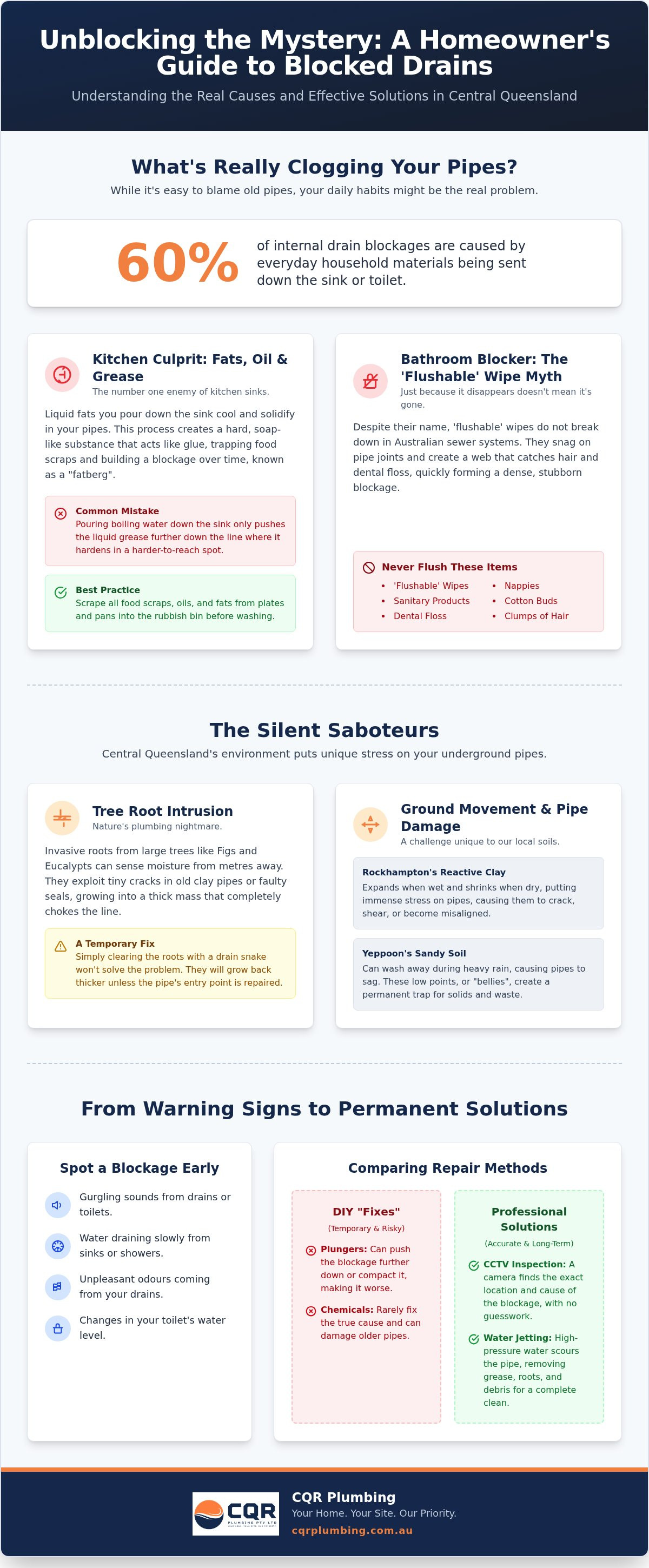
A blocked drain is an obstruction in your sanitary plumbing or stormwater system that prevents the free flow of wastewater. While many people blame tree roots or aging infrastructure, household habits are responsible for nearly 60% of internal pipe obstructions. Most of these issues stem from an "out of sight, out of mind" mentality where anything that disappears down the drain is considered gone. Unfortunately, Common causes of blocked drains often involve materials that were never meant for the sewer system.
A Fatberg is a congealed mass of grease and non-biodegradable solids that builds up over time and can eventually cause a total system failure.
Fat, Oil, and Grease (FOG): The Kitchen Culprit
When you pour liquid fat or oil down the kitchen sink, it doesn't stay liquid for long. As it hits the cold pipes underground, it undergoes saponification. This chemical process turns oils into soap-like solids that act like glue inside your pipes. These solids catch every bit of food scrap or debris that follows, slowly narrowing the pipe's diameter. Many homeowners think pouring boiling water down the sink will clear the grease, but this usually just pushes the problem further down the line where it cools and hardens in a less accessible spot. It's always better to scrape your plates into the bin rather than using the sink as a waste disposal unit.
The "Flushable" Wipe Myth and Bathroom Debris
The "flushable" wipe is one of the most misleading products on the market. In Australian sewer systems, these wipes don't break down like toilet paper. They stay intact and snag on pipe joints or rough edges. Once one wipe catches, it starts a chain reaction. Hair, dental floss, and cotton buds then weave through these wipes to create a structural web that traps everything else passing through. This is one of the most frequent blocked drain causes we see in residential properties. Items like nappies and sanitary products are even more problematic because they are designed to absorb water and expand. This expansion often causes immediate backups in boundary traps or overflow relief gullies, leading to a messy situation that requires professional blocked drain repairs.
Environmental and Structural Factors: When the Ground Moves
In Central Queensland, the earth beneath your feet is rarely static. While we often focus on what goes down the sink, environmental blocked drain causes are frequently the silent culprit behind recurring issues. It's essential to understand the difference between a standard blockage, which is a build-up of debris, and a structural failure, where the pipe has cracked or collapsed. Older homes in Rockhampton are especially susceptible because they were typically plumbed with earthenware clay pipes. Unlike modern PVC, earthenware is brittle and struggles to cope with the immense pressure of shifting soil. A licensed plumber following Australian standards will tell you that these movements are the primary reason why "quick fixes" often fail in older suburbs.
Tree roots can detect the moisture and nutrients inside a pipe from several metres away.
Tree Root Intrusion: Nature’s Plumbing Nightmare
Local species like large Figs and Eucalypts are notorious for seeking out sewer lines. These trees have powerful, invasive root systems that can exploit microscopic cracks in old clay pipes or degraded rubber seals in newer systems. Once a tiny hair-root enters the line, it thrives in the nutrient-rich environment, eventually growing into a thick mass that catches toilet paper and waste. Simply clearing these roots with a drain snake is a temporary fix. Unless you address the entry point, the roots will grow back thicker and faster than before, often leading to a complete pipe collapse that requires significant excavation.
Ground Movement and Pipe Misalignment
The specific geology of our region plays a massive role in plumbing health. Rockhampton sits on highly reactive clay that expands when wet and contracts during our dry spells. This constant movement puts incredible stress on underground infrastructure, often snapping older lines or forcing joints apart. In contrast, Yeppoon’s sandy soils present different challenges. Sand can easily wash away during heavy rain, leading to "bellies" or sagging sections in the line. These low points allow water and debris to settle, creating a permanent trap for solids that no amount of chemicals can clear. Heavy rain and stormwater surges further complicate things by forcing silt and grit into cracked pipes, accelerating the wear on your drainage system. If you suspect your pipes have shifted after a heavy storm, it's wise to arrange a professional assessment before a minor misalignment becomes a major excavation job.
Warning Signs: How to Spot a Blocked Drain Early
Catching a plumbing issue in its infancy is the difference between a routine maintenance visit and a high-stress emergency call-out. While understanding the underlying blocked drain causes is useful, recognising the physical symptoms within your home allows you to act before a total sewage overflow occurs. Most major blockages don't happen overnight; they provide several subtle warnings that homeowners often overlook or dismiss as minor quirks of an older house.
One of the first things I ask customers is whether the issue is isolated or widespread. If only your kitchen sink is slow, the problem is likely a local build-up of grease or food scraps. However, if using the washing machine causes water to rise in your shower tray, you are dealing with a main line blockage. This occurs because the high volume of water discharged by the machine cannot pass the obstruction in the main pipe, forcing it back up through the lowest floor waste in your home.
The Technical Meaning Behind the "Gurgle"
You should never ignore a gurgling sound when you flush the toilet or empty a basin. This sound is caused by air trapped in the pipes being forced back through the water seal of your traps. When a partial blockage exists, wastewater displaces the air behind it; if the plumbing vents are restricted or the pipe is nearly full of debris, that air has nowhere to go but back up through your fixtures. It's a clear signal that the system's atmospheric pressure is out of balance. If you hear this, check your Overflow Relief Gully (ORG) outside. This is the grated drain located near your external wall. If the water level is high or the grate has popped off, the blockage is deep in your sanitary line and requires professional attention.
Smells and Slow Drainage
Persistent foul odours are a major red flag. These smells usually indicate decomposing organic matter, like hair and food waste, that has become snagged on blocked drain causes like tree roots or rough pipe joints. There is a distinct difference between the smell of rotting food in a kitchen trap and the "rotten egg" scent of sewer gas. Sewer gas leaks are particularly concerning as they may indicate a dry trap or a cracked vent pipe. Keep a close eye on your drainage speed. A "slow drain" usually progresses from a five-second delay to a thirty-second wait, eventually reaching a total standstill. Addressing the problem during the slow-drain phase is significantly easier and more cost-effective than waiting for a complete backup.
Preventative Maintenance: Keeping Your Drains Flowing
A proactive approach to your plumbing can extend the life of your system by decades and significantly reduce the frequency of emergency call-outs. The simplest rule to follow is "bin it, don't flush it" for all non-organic waste, including nappies, sanitary products, and those supposedly flushable wipes. While many people reach for supermarket chemical cleaners at the first sign of a slow sink, these caustic liquids can generate excessive heat that softens or damages PVC pipes and leaches harmful toxins into the environment. Conducting a professional CCTV inspection once every two years allows owners of older properties to identify structural shifts or root entry before they become catastrophic failures.
The Homeowner’s Daily Checklist
Maintaining your drains doesn't require technical expertise, just consistent habits. Small changes in your daily routine can prevent many common blocked drain causes from taking hold. These simple steps keep your pipes clear of debris and help you spot trouble early.
- Install mesh strainers in all sinks and floor wastes to catch hair, lint, and food scraps before they enter the trap.
- Pour a bucket of hot, soapy water down your kitchen and laundry drains once a week to help emulsify minor grease build-up before it hardens.
- Walk your property regularly to monitor the area above your sewer lines for unusually lush green patches or small sinkholes, which often indicate a hidden pipe leak.
Stormwater and Gutter Care
Your stormwater system is just as vital as your sewer line, especially during the intense Central Queensland storm season. When gutters are left full of leaf litter and debris, heavy rain washes this organic matter directly into your underground stormwater drains. This silt and grit settle in low points, eventually causing a complete blockage that can lead to property flooding. Clear your gutters and downpipes at the start of every season to ensure water flows freely away from your home's foundation. For more detailed advice on protecting your roof and drainage during the wet season, see our guide on Roof Plumbing Rockhampton. Proper maintenance here prevents silt build-up, which is one of the most overlooked blocked drain causes in regional areas.
Professional Solutions: When to Call CQR Plumbing
While a plunger might clear a minor sink clog, it's merely a temporary fix for deep-seated blockages. It doesn't address the actual blocked drain causes lurking ten metres down your line. If you're facing recurring issues, you need a diagnostic approach that complies with the AS/NZS 3500 plumbing and drainage standards. Professional intervention ensures the root cause is identified and cleared, preventing the risk of a messy sewage spill inside your home. We focus on providing a permanent resolution rather than just a quick patch-up that will fail again in a few weeks.
CCTV Inspections: The Plumber’s X-Ray
We use high-definition, waterproof cameras to navigate your pipework and find the exact source of your trouble. This technology removes the guesswork entirely. We can find the precise location of a crack, a root intrusion, or a collapsed section without digging up your driveway or lawn. It truly is a case of "seeing is believing." We provide you with the footage, which is vital for insurance claims or real estate reports when buying or selling a property. For residents needing Blocked Drains Rockhampton services, this level of transparency is the gold standard for modern maintenance. It allows us to show you the problem and explain the best repair method before any work begins.
High-Pressure Water Jetting
The old "electric eel" or mechanical cable has its place, but it often just punches a small hole through a blockage rather than clearing it. High-pressure water jetting uses over 5000 PSI to scour the internal walls of the pipe clean. It doesn't just cut through tree roots; it emulsifies grease and flushes out the "sludge" that mechanical tools leave behind. Because it uses water rather than a spinning steel cable, it's far safer for older earthenware pipes that might already be fragile. This method addresses the most stubborn blocked drain causes by restoring the pipe to its full diameter. It's a faster, cleaner, and more effective way to ensure your drainage system is functioning at its peak capacity.
When the CCTV footage shows a structural failure, such as a pipe that has snapped due to our local reactive clay, we discuss permanent options. This might involve a sectional replacement or pipe relining. Our goal is to provide a long-term solution that stops the cycle of blockages, ensuring your home's drainage system remains reliable for years to come. We'll always provide an honest assessment of the condition of your pipes so you can make an informed decision about your property's infrastructure.
Take Control of Your Home’s Drainage Today
Dealing with recurring plumbing issues is a major source of stress for homeowners. By understanding the various blocked drain causes unique to Central Queensland, you can move away from temporary fixes and invest in the long-term health of your property. Whether it's managing household habits to prevent fatbergs or staying ahead of invasive tree roots in our local reactive clay, proactive maintenance is always more cost-effective than an emergency excavation.
Our team of licensed and insured local experts is ready to help you see exactly what's happening underground. We combine years of field experience with state-of-the-art CCTV and jetting technology to provide a transparent, reliable service. If you've noticed gurgling pipes or slow drainage, don't wait for a messy sewage overflow to occur. We offer a 24/7 emergency plumbing response across Rockhampton and Yeppoon to give you total peace of mind.
You don't have to guess what's clogging your pipes. With the right diagnostic tools and professional advice, you can keep your home's drainage system flowing perfectly for years to come.
Frequently Asked Questions
What is the most common cause of blocked drains in Rockhampton?
In Rockhampton, tree root intrusion is the most frequent culprit. Our local reactive clay soil shifts constantly, which often causes older earthenware pipes to crack or joints to open. Once a pipe is compromised, thirsty roots from nearby trees find their way inside to access moisture. This is one of the most persistent blocked drain causes we encounter in established suburbs, often requiring high-pressure water jetting to clear effectively.
Can I use Drano or other chemical cleaners on my blocked pipes?
I don't recommend using caustic chemical cleaners for anything more than a minor hair clog in a basin. These products generate intense heat that can soften or deform PVC pipes, leading to structural leaks. If the blockage is total, the chemicals just sit in the pipe, creating a safety hazard for the plumber who eventually has to clear it. A mechanical plunger or professional jetting is always a safer, more reliable choice.
Why does my toilet gurgle when I have a shower?
A gurgling toilet while you're showering indicates that air is being trapped and pushed back through your traps. This usually happens because there's a partial blockage further down the main sewer line. As the shower water fills the pipe, the air behind the obstruction has nowhere to go but back up through the toilet's water seal. It's a classic early warning sign that you should address before a total backup occurs.
Are "flushable" wipes actually safe for my septic or sewer system?
"Flushable" wipes are a major myth in the Australian plumbing industry. Unlike toilet paper, which is designed to disintegrate quickly, wipes are made of synthetic fibres that stay intact for years. They snag on pipe joins and catch other debris, leading to massive obstructions known as fatbergs. Whether you're on a septic system or town sewer, these wipes should always be placed in the bin to avoid expensive repairs.
How much does it cost to unblock a drain in Yeppoon?
The cost to clear a drain in Yeppoon depends on several factors, including the location of the blockage and the tools required. A simple sink clearance using a hand tool is generally cheaper than a main line blockage that requires a CCTV inspection and high-pressure water jetting. We provide transparent assessments after diagnosing the issue, ensuring you understand exactly what's needed for a long-term fix rather than a temporary patch-up.
What is an ORG and why is it important for blocked drains?
An Overflow Relief Gully (ORG) is a grated drain located outside your home, usually near the bathroom or kitchen wall. Its purpose is to act as a safety valve. If the main sewer line blocks up, the sewage should overflow from the ORG outside rather than backing up through your indoor floor wastes or shower. It's vital to keep this grate clear of pot plants or garden mulch so it can function correctly.
How do tree roots get into my PVC pipes if they are sealed?
Even though PVC is more resilient than clay, it isn't bulletproof. Ground movement in Central Queensland can cause PVC pipes to "belly" or sag, putting pressure on the rubber ring joints. If a joint is pulled apart even slightly, fine hair-roots will find the gap. Once inside, they expand rapidly. Roots can also enter through cracks caused by physical impact or poor installation practices during the home's construction phase.
Can a blocked drain cause a health risk to my family?
Yes, a blocked drain is a significant health concern. Raw sewage contains harmful bacteria, viruses, and parasites that can cause serious illness if they enter your living space. Stagnant water also creates a breeding ground for mosquitoes and can attract vermin. If you notice sewage surcharging or a persistent foul odour, it's important to have it cleared by a licensed professional to ensure your home remains a safe and hygienic environment.
Disclaimer
The information in this article is provided for general educational purposes only and should not be relied upon as professional plumbing, gasfitting, or legal advice. Every property and plumbing system is different, and the information may not be applicable to your specific circumstances. CQR Plumbing recommends that all plumbing and gasfitting work be inspected and carried out by a licensed professional in accordance with applicable Australian Standards and Queensland regulations. If you require advice specific to your property, please contact CQR Plumbing for an assessment.