
Expert Leak Detection Yeppoon: Finding and Fixing Concealed Water Leaks
Have you ever opened your quarterly Livingstone Shire Council water notice only to find a total that makes your heart sink? It's a stressful moment that many locals face, especially with the 2.78% rates increase for the 2026-2027 financial year. You likely suspect a hidden issue, but the thought of a plumber digging up your bathroom tiles or trenching through your garden just to find a "maybe" is enough to cause genuine anxiety.
The good news is that modern leak detection yeppoon doesn't have to be a destructive guessing game. We use non-invasive acoustic and thermal technology to pinpoint the exact location of concealed leaks, saving your property from structural moisture damage and protecting your bank account from runaway council charges. By finding the problem before it compromises your slab or foundations, we turn a potential disaster into a manageable fix.
In this guide, we'll explain how specialised equipment identifies hidden moisture without the mess. You'll also learn the common warning signs of a mains leak and the compliant repair options available under the latest AS/NZS 3500:2025 standards. Our goal is to give you the clarity you need to make an informed decision and get your plumbing back under control.
Key Takeaways
- Learn how to interpret your Livingstone Shire Council water notice to spot hidden leaks before they cause structural moisture damage.
- Discover how professional leak detection yeppoon services use non-invasive acoustic technology to pinpoint issues without destructive digging.
- Understand the specific risks that reactive clay soils on the Capricorn Coast pose to concrete slabs and underground pipework.
- Master a simple 15-minute DIY water meter test to confirm if you have a concealed leak before calling in the experts.
- Identify why permanent pipe repairs are more cost-effective than temporary patches for maintaining your property's long-term value.
Common Signs of Water Leaks in Yeppoon Properties
Identifying a leak early is the difference between a simple repair and a major insurance claim. In Yeppoon, our specific environmental conditions often hide leaks better than other regions. While heavy clay might force water to the surface, the sandier soil profiles found in parts of the Capricorn Coast allow water to drain away into the ground undetected. This makes professional leak detection yeppoon services essential for finding what the naked eye cannot see before structural damage takes hold.
The Red Flags in Your Water Bill
Your quarterly Livingstone Shire Council water notice is your most reliable diagnostic tool. If you notice a sudden jump in kilolitres used that doesn't align with your usual household habits, it's rarely a meter fault. Council water rates are tiered; once you exceed a certain usage threshold, the cost per kilolitre increases. With the 2.78% rates increase confirmed in the 2026-2027 budget, even a small, persistent drip can lead to a significant financial sting. Always compare your current usage to the same period from the previous year to account for seasonal variations, such as increased garden watering during a dry spell.
Visible and Audible Clues Around the Home
Walk through your property when the house is quiet and all appliances are off. A constant "hissing" or "rushing" sound behind a wall or under the floor is a classic indicator of a burst pipe. In the yard, look for patches of grass that are unnaturally green or lush compared to the rest of the lawn, especially during our dry Yeppoon summers. Inside the home, keep an eye out for these specific warnings:
- Unexplained damp patches on carpets or warped floorboards.
- Blistering paint or mould growth on skirting boards.
- A musty, earthy smell that persists despite cleaning and ventilation.
- Low water pressure at the showerhead or kitchen tap that wasn't there before.
It's easy to mistake condensation for a leak during humid afternoons. If you see moisture on a cold water pipe, wipe it dry and check it again in an hour. If the moisture returns immediately without the pipe being cold, or if it's dripping from a specific joint, you likely have a genuine plumbing failure. By utilising modern leak detection technologies, a licensed plumber can confirm the exact source without cutting into your gyprock or tiles unnecessarily. This "surgical" approach prevents the need for destructive investigative work that often costs more than the repair itself.
How Modern Leak Detection Technology Works
Gone are the days when plumbers had to smash through bathroom tiles or dig up entire driveways based on a "best guess." Modern leak detection yeppoon relies on non-invasive diagnostic tools that identify the source of the problem with surgical precision. This approach protects your property from unnecessary damage and ensures that repairs are focused exactly where they are needed. If you have already performed a DIY water meter test and confirmed the dials are spinning while your taps are off, these high-tech methods are the next logical step.
Electronic Acoustic Sensors
Water escaping from a pressurised pipe creates a specific vibration and sound profile. We use sensitive electronic microphones to amplify these frequencies, allowing us to hear a leak through several hundred millimetres of concrete slab or compacted soil. In busy Yeppoon residential areas, background noise from traffic or wind can interfere with basic equipment. Professional-grade sensors include digital filters that block out these ambient sounds, focusing purely on the high-frequency "hiss" of the leak. This technology allows us to mark the ground within centimetres of the break before a single tool is lifted.
Tracer Gas and Thermal Imaging
Some leaks are too small to create an audible sound, or they may be located in environments where acoustics are dampened. In these scenarios, we use tracer gas. We drain the water line and inject a safe, non-toxic mixture of nitrogen and hydrogen. Because hydrogen molecules are incredibly small and light, they escape through the tiniest pinhole or hairline crack and rise to the surface. We then use a "sniffer" probe to detect the gas as it emerges through the floor or lawn.
Thermal imaging cameras provide another layer of certainty. These devices see the heat signature of moisture. When a hot water line leaks, the surrounding area warms up, creating a glowing "bloom" on the camera screen. Even with cold water leaks, the evaporating moisture often creates a temperature variance that the camera can track behind gyprock walls or under cabinetry. By combining acoustic data with thermal or gas readings, we achieve 100% certainty before any cutting begins. To save your home from the "dig and hope" method, ensure you get a professional assessment that uses these specialised technologies.
Slab Leaks vs. Garden Leaks: Understanding the Difference
Not all water leaks carry the same level of risk. In the Yeppoon region, the type of soil under your feet significantly changes how a leak behaves and how quickly it can damage your property. While a leak in the garden might only hurt your wallet, a leak under your concrete slab can threaten the structural integrity of your entire home. Professional leak detection yeppoon is the only way to determine exactly where the water is escaping before the ground starts to shift and cause permanent damage.
The Hidden Danger of Slab Leaks
The Capricorn Coast is known for its reactive clay soils. These soils expand when wet and shrink as they dry out. When a pipe fails under your slab, it introduces a constant source of moisture that causes the clay to swell unevenly. This movement is a leading cause of cracked cornices, sticking doors, and visible fractures in external brickwork. It isn't just the water loss that's the problem; it's the fact that your house is effectively sitting on a shifting sponge.
Hot water lines are particularly prone to under-slab failure because the copper pipe expands and contracts every time you turn on a tap, eventually rubbing against the concrete or bedding sand until a pinhole forms. You might notice warm spots on your kitchen tiles or a hot water system that never seems to stop heating. Most insurance companies require a formal report using Acoustic leak-detection technologies before they'll approve a claim for the resulting damage, as this proves the leak was concealed and not a result of neglect.
Main Line Leaks in the Garden
In sandier coastal pockets of Yeppoon, garden leaks can be incredibly deceptive. Because the soil is so porous, thousands of kilolitres can drain away without ever creating a puddle on the surface. These leaks are often caused by aggressive tree roots or the natural degradation of older poly-pipe fittings. If left unchecked, the escaping water can wash away the fines in the soil, leading to sinkholes or the failure of nearby retaining walls. It's a silent erosion that happens right under your lawn.
It's also worth checking your stormwater drainage, as many homeowners mistake rising damp from a broken downpipe for a mains water leak. For more on managing water around your property's exterior, see our guide on Roof Plumbing Rockhampton. When we find a leak, we objectively compare repair methods. For garden leaks, a simple spot repair is usually the most logical choice. However, for slab leaks, we often recommend re-routing the line through the ceiling space. This bypass method is frequently more cost-effective than cutting into your slab and avoids the risk of a secondary leak occurring in the same aged pipework later on.
The 15-Minute DIY Water Meter Test
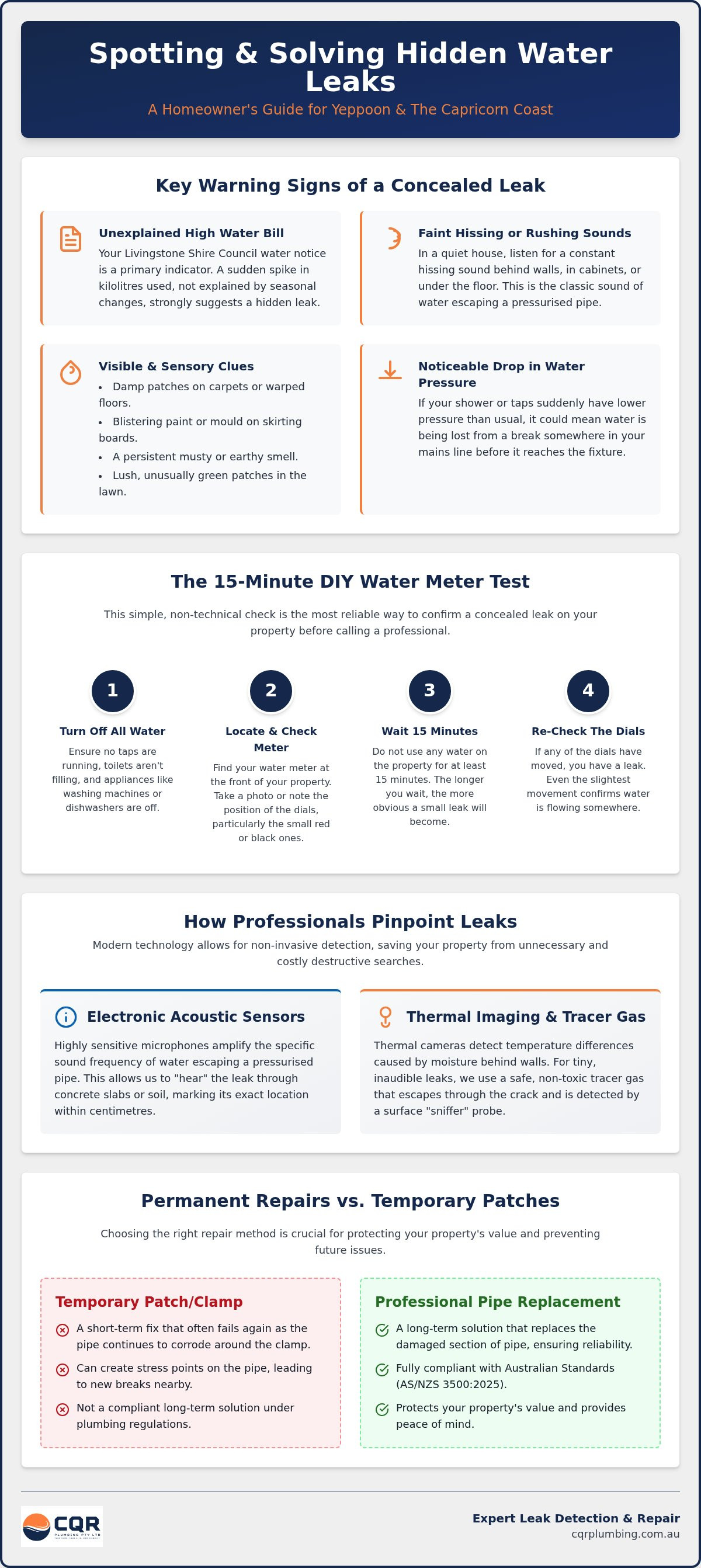
Before you commit to professional leak detection yeppoon, you can perform a simple check yourself. This 15-minute test won't tell you exactly where a pipe has failed, but it will confirm whether water is escaping your system. Most water meters in Yeppoon are located near the front boundary of your block, housed under a plastic or concrete lid. If you can't see it, look for the council stop tap near the street or a small rectangular cover in the grass.
Step-by-Step Meter Inspection
First, you must ensure no water is being used. Turn off every tap, including the garden hose. Check that the dishwasher and washing machine aren't mid-cycle, and tell everyone in the house not to flush the toilet. If you have an automatic pool leveller or an ice-making fridge, isolate these too. Once you're certain everything is off, head to the meter and lift the lid.
Look at the small dial or the rotating "star" wheel on the meter face. This is the low-flow indicator. If it's spinning, even slowly, you have an active leak. To be certain, write down the black and red numbers on the display. Leave the house for 15 to 30 minutes, ensuring no one uses water, then check the numbers again. Any change in the red digits indicates a leak that needs immediate attention.
Isolating the Problem Area
You can narrow down the location by using your house isolation valve, usually found where the main line enters the building near the front tap. Turn this valve off and check the meter again. If the meter stops spinning, the leak is inside the house, likely under the slab or in the walls. If it keeps spinning, the break is in the main line between the meter and the house. This is a common issue in our local soils where tree roots can interfere with older pipework.
For pool owners, a "bucket test" is also useful to rule out evaporation. Place a bucket of water on a pool step and mark the water level inside the bucket and the pool level on the outside. If the pool level drops significantly faster than the bucket level over 24 hours, you have a leak. Don't spend hours digging up your lawn once you've confirmed a problem. DIY checks have their limits, and once the meter confirms a loss, it's time to speak with a licensed Yeppoon plumber who has the right tools to find the exact spot.
Professional Leak Repair and Prevention
Once the leak detection yeppoon process has pinpointed the exact source of the problem, the focus shifts to the most surgical and sustainable repair method. We don't believe in "dig and hope" diagnostics, and we certainly don't believe in band-aid fixes. A common mistake is simply patching a small section of aged copper pipe. If the line is already brittle or suffering from electrolysis, a patch often creates a new stress point, leading to a secondary burst just weeks later. Our approach focuses on long-term reliability and ensuring your property remains compliant with the latest Australian standards.
Surgical Pipe Repairs and Re-routing
When a leak occurs under a concrete slab or behind a tiled wall, we always look for the least invasive solution first. In many Yeppoon homes, re-routing the affected line through the ceiling or wall cavity is a far superior option to cutting into the floor. This method avoids the mess of jackhammering and the impossible task of matching discontinued tiles or floorboards. It also replaces a compromised section of pipe with high-quality, modern materials that carry a significantly longer lifespan.
For every repair, we provide transparent, detailed invoices that clearly outline the work performed. This documentation is essential for insurance claims, as it provides the evidence needed to substantiate a "concealed leak" claim. All our work is carried out by licensed professionals and strictly adheres to AS/NZS 3500:2025, ensuring your plumbing system meets the mandatory legal requirements for safety and performance.
Preventative Maintenance for Peace of Mind
Prevention is always more cost-effective than an emergency call-out. One of the most common causes of burst pipes on the Capricorn Coast is high mains water pressure. If your home doesn't have a Pressure Limiting Valve (PLV) installed, your internal pipework and tapware are constantly under strain. Australian standards require pressure to be limited to 500kPa at the outlet; anything higher can void appliance warranties and cause premature pipe failure. We can install or service these valves to protect your entire system from future surges.
Regular maintenance is the best way to keep your council bills predictable. Small issues like a leaking cistern or a dripping tap might seem minor, but they can waste thousands of kilolitres over a year. Combining a professional pressure test with regular Tap and Toilet Servicing ensures that small drips are caught before they turn into major structural moisture problems. We recommend a quick plumbing health check every two years for older properties to ensure your fittings are still in good working order.
Protecting Your Capricorn Coast Property
A concealed water leak isn't just a drain on your finances; it's a direct threat to the structural integrity of your home. By understanding the signs of moisture damage and using a simple DIY meter test, you can take control before a small drip becomes a major insurance claim. Professional leak detection yeppoon ensures that when a problem exists, it's found without destructive digging or unnecessary guesswork.
As a locally owned and operated team, we understand how Yeppoon's reactive soils can impact your underground pipework. We use specialist electronic detection gear to pinpoint faults with surgical precision, saving you from the stress of "investigative" plumbing. Whether you've noticed a spike in your Livingstone Shire Council water notice or a damp patch on the lawn, acting quickly is the most cost-effective decision you can make.
We provide a 24/7 emergency response to ensure you're never left dealing with a burst pipe alone. Getting your plumbing back to peak condition is simpler than you think when you have the right local experts by your side.
Frequently Asked Questions
How much water can a small leak actually waste in a day?
A pinhole leak in a pressurised main can waste upwards of 2,000 litres of water every 24 hours. While a dripping tap might only lose 30 to 50 litres daily, a concealed pipe failure under your slab operates at full mains pressure constantly. This volume quickly pushes your usage into the higher cost tiers of your Livingstone Shire Council water notice, resulting in significant extra charges on your quarterly bill.
Will my home insurance cover the cost of leak detection and repair?
Most standard Australian home insurance policies cover the resultant damage caused by a leak, such as water-damaged carpets or cabinetry, but they rarely pay for the actual plumbing repair. However, many insurers will cover the cost of professional leak detection yeppoon services if the leak was hidden. Always check your Product Disclosure Statement to see if "Exploration and Access" cover is included in your specific policy.
Why is my water bill so high when I haven’t changed my habits?
A sudden spike in your water bill is almost always caused by a concealed leak if your household habits haven't changed. With the 2.78% rate increase for the 2026-2027 financial year, even a minor fault is more expensive than before. If your meter's low-flow indicator is spinning while all taps are off, you likely have a burst pipe in the garden or under the house that needs urgent attention.
Can a leaking hot water system cause a high water bill?
A leaking hot water system is a double financial hit because you're paying for both the wasted water and the energy used to heat it. A faulty Pressure Temperature Relief valve can constantly dribble water into the drain without you noticing. If you see water pooling around the base of your tank or hear a constant hissing sound, the system needs a professional service to prevent further waste.
Is it possible to have a leak if there are no wet spots on the floor?
It is very common to have a major leak without any visible wet spots on your floor or lawn. In sandier parts of the Capricorn Coast, water often drains straight down into the subsoil rather than rising to the surface. Similarly, a leak under a thick concrete slab may travel along the bedding sand for metres before causing a damp patch, making electronic leak detection yeppoon essential for finding the true source.
How long does it take for a professional to find a leak in Yeppoon?
A professional leak detection appointment typically takes between one and two hours to complete for a standard residential property. Using acoustic microphones and tracer gas, we can usually narrow down the location of a concealed leak within the first 45 minutes. This timeframe allows us to confirm the fault, pinpoint the location, and provide you with a clear explanation of the best repair options available for your home.
What should I do immediately if I suspect a major burst pipe?
If you suspect a major burst pipe, your first priority is to turn off the main water isolation valve located at your water meter. This stops the flow of water immediately and prevents further structural damage to your foundations or internal flooring. Once the water is off, open a garden tap at the lowest point of the property to drain the remaining pressure from the lines before calling for a professional repair.
Do I need to dig up my driveway to find a leak underneath it?
You don't need to dig up your driveway just to find a leak. Modern acoustic sensors are designed to listen through solid surfaces, including reinforced concrete and asphalt. We can accurately locate the sound of escaping water through the slab, allowing us to perform a targeted surgical repair. In many cases, we may even suggest re-routing the pipework entirely to avoid cutting into your driveway at all.
Disclaimer
The information in this article is provided for general educational purposes only and should not be relied upon as professional plumbing, gasfitting, or legal advice. Every property and plumbing system is different, and the information may not be applicable to your specific circumstances. CQR Plumbing recommends that all plumbing and gasfitting work be inspected and carried out by a licensed professional in accordance with applicable Australian Standards and Queensland regulations. If you require advice specific to your property, please contact CQR Plumbing for an assessment.