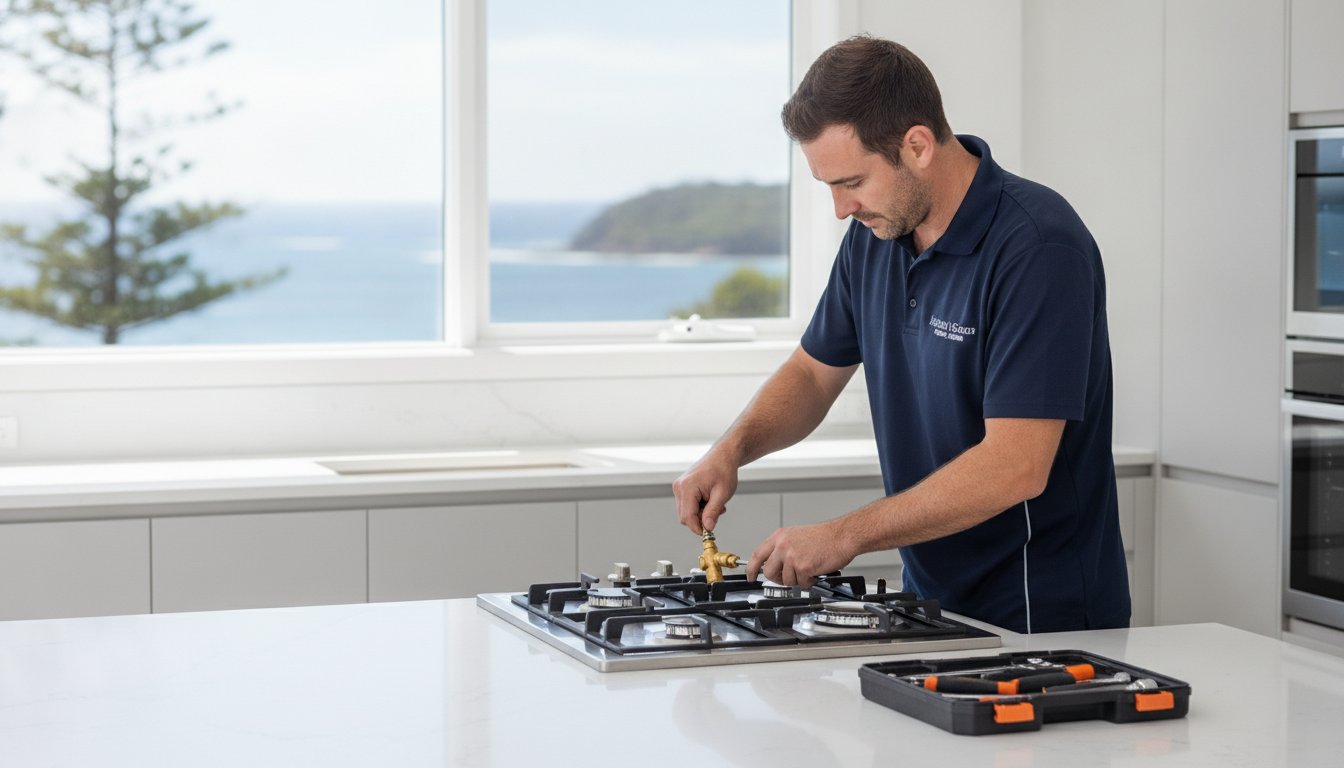
Gas Appliance Installation Rockhampton: Licensed Fitter’s Guide 2026
Would your home insurance provider still cover you if a DIY gas connection led to a house fire? It is a confronting question, but for many homeowners, the fine print regarding uncertified gas work only becomes clear when it is far too late. Whether you are upgrading your kitchen or switching to a more efficient hot water system, getting your gas appliance installation Rockhampton right the first time is about much more than just a leak-free connection; it is about legal compliance and your family's safety.
We understand the confusion that often comes with Central Queensland's mix of natural gas reticulation and LPG bottle setups. You want an appliance that performs efficiently in our humid climate without the nagging fear of a faulty valve or a missed QBCC regulation. This guide provides a clear roadmap from a licensed local gas fitter on what is required for a compliant installation in 2026. We will walk you through the essential paperwork, explain the latest Australian Standards including AS/NZS 5601.1:2022, and show you how to ensure your new appliance runs perfectly from day one.
Key Takeaways
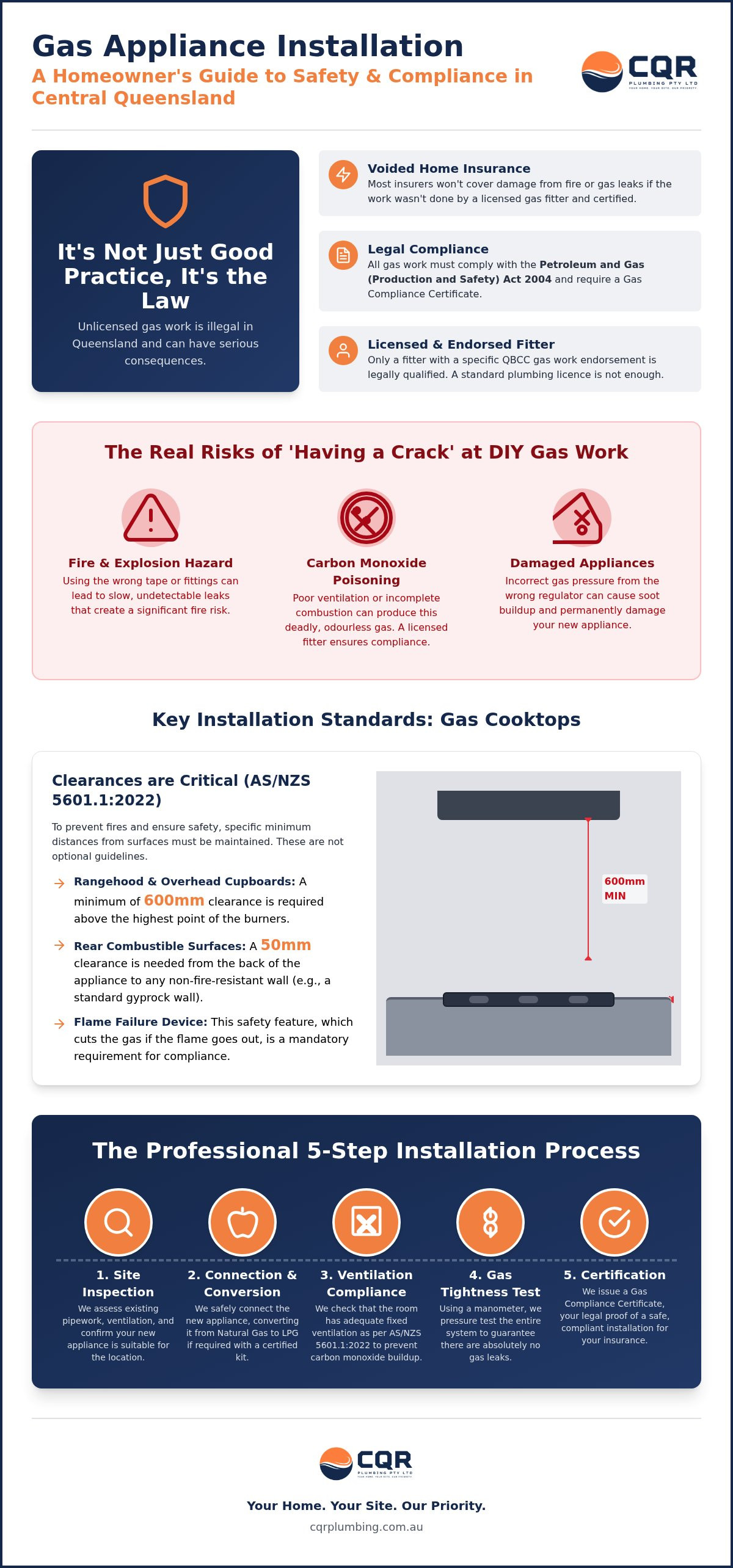
- Understand why a Gas Compliance Certificate is a legal necessity under the Petroleum and Gas (Production and Safety) Act 2004 to keep your home insurance valid.
- Discover how expert gas appliance installation Rockhampton ensures your new cooktop or oven meets the strict safety requirements of the updated AS/NZS 5601.1:2022 standards.
- Learn to distinguish between reticulated natural gas availability in the Rockhampton CBD and the LPG bottle solutions required for homes in Yeppoon or Gracemere.
- Get a clear overview of the professional installation process, from the initial site inspection to final pressure testing for a leak-free household.
- Find out why a standard plumber might not be qualified for gas work and how to verify a fitter’s QBCC endorsements before any work begins.
Why Licensed Gas Fitting is Non-Negotiable in Rockhampton
In Queensland, the line between a standard plumber and a gas fitter is strictly drawn. While your local tradie might be a champion at clearing a blocked drain, they cannot legally touch your gas lines unless they hold a specific endorsement from the Queensland Building and Construction Commission (QBCC). This isn't just bureaucratic red tape; it's a safety measure backed by the Petroleum and Gas (Production and Safety) Act 2004. If you opt for an unlicensed Rockhampton plumber for your gas appliance installation Rockhampton, you're not just risking a fine. You're potentially voiding your home insurance policy. Most insurers in Central Queensland require a valid Gas Compliance Certificate to honour a claim related to fire or gas damage. The QBCC maintains a public register where you can verify a fitter’s credentials, ensuring they have the current training to handle high-pressure systems safely.
Understanding Australian Standard AS/NZS 5601.1
The updated AS/NZS 5601.1:2022 standard dictates exactly how your gas system must be built. It covers everything from the diameter of your copper pipework to the specific volume of fresh air required for a room. We pay close attention to clearance distances; for example, a gas cooktop must sit a specific distance away from combustible surfaces and windows to prevent accidents. These rules are even more critical in our Central Queensland climate, where ventilation can be affected by heavy seasonal rains and closed-up houses. Before we sign off on any gas appliance installation Rockhampton, we perform a 'Gas Tightness Test.' This involves using a manometer to ensure the entire system is sealed and holding pressure, proving there are zero leaks before the gas is turned on.
The Risks of DIY Gas Work
The temptation to 'have a crack' at installing a bayonet point or connecting a Liquefied Petroleum Gas (LPG) bottle can be high, but the margins for error are non-existent. We often see DIYers using white thread tape intended for water pipes, which gas eventually eats through, or fitting incorrect regulators that cause erratic flame heights and soot buildup. These mistakes don't just damage the appliance; they create immediate fire hazards. Poorly ventilated kitchens are a breeding ground for carbon monoxide, an odourless gas that can be fatal if your appliance isn't burning fuel cleanly. A Gas Work Licence is the only legal authorisation for these tasks in Queensland.
Common Gas Appliances for Central Queensland Homes
Choosing the right equipment for your gas appliance installation Rockhampton depends on your family size and whether you have access to the main gas grid or rely on bottles. Living in Central Queensland means we deal with unique conditions, from high humidity to the occasional frosty morning in the hinterland. We find that homeowners who plan their gas layout carefully enjoy significantly lower running costs and better appliance performance over time.
Instantaneous Gas Hot Water Systems
Most Rockhampton families are moving toward "continuous flow" or instantaneous systems to save on space and energy. Unlike old storage tanks that keep 135 litres of water hot all day, these units only fire up when you turn on a tap. This saves significant money on your gas bill because you aren't paying to heat water you aren't using. When we install these, we look closely at the energy star rating; a 6 or 7-star unit might cost more upfront, but the long-term savings are undeniable. In Central Queensland, the mineral content in our water can be tough on heat exchangers. We find that high-quality copper or stainless steel exchangers typically last 10 to 15 years if the system is serviced regularly.
Gas Cooktop Installation Requirements
For many home chefs, gas is the only way to cook due to its instant heat control. However, safety standards are very specific about the "splash zone" around your burners. There must be a minimum clearance of 600mm between the burners and a rangehood, and 50mm from the back of the appliance to a combustible wall. If you've bought an appliance online, it might arrive set up for Natural Gas. Since many areas in Rocky and Yeppoon use LPG, a conversion kit with different sized injectors is required to ensure the flame burns blue and clean. We also test flame failure devices, which automatically cut the gas if the flame blows out, a critical feature for Queensland Government gas safety compliance.
While our winters are short, gas room heaters are a popular choice for those few weeks when the temperature drops. They provide a dry, radiant heat that's more effective than many electric alternatives. Finally, finalising a gas appliance installation Rockhampton for an outdoor area often involves installing BBQ bayonet points. This connects your barbie directly to the house gas supply, meaning you never have to rush out for a mid-cook swap bottle again. If you're planning a kitchen upgrade or outdoor area, you can request a quote to see how these connections can work in your home.
Choosing Between Natural Gas and LPG in the Rockhampton Region
Where you live in the region significantly dictates the logistics of your gas appliance installation Rockhampton. While the Rockhampton CBD and established inner suburbs often have access to reticulated natural gas, newer developments and coastal areas like Yeppoon typically rely on Liquefied Petroleum Gas (LPG) bottles. Understanding which system your property supports is the first step in planning a compliant installation. While natural gas often has a lower unit price and removes bottle rental fees, the initial connection cost to the street main can be higher than setting up an LPG system from scratch.
Natural Gas Connections in Rockhampton
Natural gas is delivered via underground street mains, providing a continuous supply without the need for bottle swaps. If your street has a gas main, we can coordinate the process of bringing that line to your property boundary. This involves installing a specific gas meter box, usually located on an external wall near the front of the house for easy access. We ensure the pipework from the meter to your appliances is sized correctly to maintain consistent pressure, especially if you're running multiple high-demand units like a large cooktop and a hot water system simultaneously. Learn more about our Rockhampton plumbing services to see how we manage these connections.
Setting Up an LPG Bottle System
For those in rural Gracemere or along the Capricorn Coast, LPG is the standard solution. This setup requires two 45kg cylinders sitting on stable, level concrete paviours or a purpose-built pad to prevent them from tipping. A common mistake we see is using 18kg bottles; while these are fine for a portable BBQ, they lack the capacity and vaporisation rate needed to power a whole-house hot water system effectively. We highly recommend installing an automatic changeover valve. This clever device switches to the second reserve bottle the moment the first one runs dry, giving you a visual indicator that it's time to order a refill without leaving you in a cold shower mid-lather.
Safety regulations for LPG are strict regarding where those bottles can sit. They must be kept away from ignition sources like air conditioning units or power points, and they cannot be placed near drains or pits where gas could pool if a leak occurred. We also install a high-quality regulator to step down the cylinder pressure to the specific level required by your appliances. Getting these infrastructure pieces right is vital for a safe, efficient gas appliance installation Rockhampton.
What to Expect During Your Gas Installation and Compliance Check
Understanding the steps involved in a professional gas appliance installation Rockhampton helps remove the guesswork and ensures you know exactly what you are paying for. A quality installation isn't just about connecting a hose; it's a methodical process designed to protect your home and ensure your appliance runs at peak efficiency. We follow a strict five-step protocol on every job to meet both Australian Standards and our own high internal benchmarks for safety and performance.
- Step 1: Site Inspection: We start by checking the integrity of your existing pipework. If we're installing a high-megajoule appliance, we must ensure your current gas lines are large enough to supply the required volume without a drop in pressure.
- Step 2: Positioning: We mount the appliance securely, paying close attention to the clearance distances mentioned earlier. This prevents heat damage to surrounding cabinetry and ensures proper ventilation.
- Step 3: Connection and Pressure Testing: Once connected, we use a manometer to perform a static and working pressure test. This confirms there are no leaks in the new joints or the existing line.
- Step 4: Commissioning: We fire up the appliance to check the burner aeration. A steady, blue flame indicates a clean burn, while a yellow flame suggests a dangerous air-to-fuel ratio that needs adjustment.
- Step 5: Certification: We finalise the digital paperwork and provide you with the necessary legal documentation.
The Gas Compliance Certificate
This document is your proof that the work was performed by a licensed professional and meets the Petroleum and Gas (Production and Safety) Act 2004. A compliance certificate is mandatory for all new gas work in Queensland. You will need this certificate if you ever sell your house or if you need to make an insurance claim following a fire or leak. It essentially transfers the legal liability of the installation from you to the licensed fitter. We recommend keeping a digital copy in your records for the entire lifespan of the appliance to avoid any future compliance headaches.
The Compliance Plate (The Plumber’s Stamp)
In the past, you would find a physical metal plate etched with installation details inside your kitchen cupboard or meter box. As of July 2025, physical gas compliance plates are no longer required for most new residential gas installations in Queensland, with the exception of caravans. The industry has moved toward a more reliable digital recording system managed through the RSHQ Portal. However, if you're buying an older home in Rockhampton or Yeppoon, checking for an existing plate is a great way to verify the history of the gas work on that property. A missing plate on an older installation can often hold up a house sale during the building and pest inspection phase.
Professional Gas Fitting Services with CQR Plumbing
We've spent years building a reputation as the go-to team for gas appliance installation Rockhampton. Our fitters live and work in the region, meaning we understand the specific local challenges, from the reticulated gas limits in the CBD to the coastal conditions in Yeppoon and the Capricorn Coast. We don't believe in hidden fees or technical jargon. Instead, we offer transparent pricing and clear communication from the moment you call us until the final compliance certificate is issued. Our goal is to provide a service that is both technically perfect and stress-free for the homeowner.
Beyond new installs, we provide 24/7 emergency support across the region. If you suspect a gas leak or your hot water system fails on a weekend, our team is ready to respond immediately. Gas safety isn't something that can wait for business hours, and our quiet competence in high-pressure situations is why local families rely on us. For those dealing with faulty equipment rather than new projects, you can read our guide on Gas Appliance Repairs Rockhampton: Licensed Experts & Compliance to understand your repair options.
Why Rockhampton Homeowners Trust CQR Plumbing
One of the biggest complaints we hear about tradies is the mess they leave behind. We've implemented a "no-mess" guarantee, ensuring your kitchen, laundry, or outdoor area is as clean as we found it. Whether we're running new copper lines for a cooktop or installing a high-efficiency hot water unit, we treat your home with respect and discipline. Our extensive experience with both LPG and Natural Gas systems means we can handle any configuration, ensuring your gas appliance installation Rockhampton is tailored to your property's specific needs. If you're ready to start your next project, request a quote for your gas installation today.
Book Your Gas Safety Audit
We often see appliances that have been neglected for years. While modern units are robust, we recommend an annual safety audit for any system over five years old. During these checks, we test for micro-leaks that aren't yet visible or smelly but could be wasting fuel and creating a hazard. We also ensure your regulators are functioning at the correct pressure; a failing regulator can cause "sooting" on your pots or erratic burner performance. It's a small, proactive investment that prevents costly emergency repairs and keeps your household safe. If it's been a while since your last professional check, contact the CQR Plumbing team for expert gas fitting.
Secure Your Home with Expert Gas Fitting
Choosing the right professional for your gas appliance installation Rockhampton is the most important decision you'll make for your family's safety and your home's insurance validity. The transition to updated Australian Standards and digital compliance through the RSHQ Portal means that DIY work or using an unendorsed plumber is no longer just a safety risk; it's a significant legal liability. Whether you are connecting to the natural gas grid in the CBD or setting up a dual-bottle LPG system in Yeppoon, precision and local knowledge are non-negotiable.
CQR Plumbing brings years of hands-on field experience to every project. As a local, family-owned business, we provide fully licensed and insured QBCC gas fitters who prioritise reliability and transparency. Our team also offers 24/7 emergency support, ensuring that professional help is always just a phone call away if you suspect a leak or a component failure.
Take the stress out of your next kitchen upgrade or hot water system swap. We look forward to helping you create a safer, more efficient home for years to come.
Frequently Asked Questions
Can I install my own gas cooktop if I bought it from a retail store?
No, you cannot legally install a gas cooktop yourself regardless of where you purchased the unit. In Queensland, all gas work must be performed by a licensed gas fitter with a specific QBCC endorsement. Attempting a DIY installation is a breach of the Petroleum and Gas (Production and Safety) Act 2004. This can lead to heavy fines and will almost certainly void your home insurance if a fire or leak occurs.
How much does gas appliance installation cost in Rockhampton?
The cost of your gas appliance installation Rockhampton depends on several factors, including the type of appliance and whether existing pipework needs upgrading. A simple cooktop swap is generally more affordable than a full hot water system installation that requires new copper lines. We provide transparent, fixed-price quotes after assessing your property's specific infrastructure, ensuring there are no hidden surprises or unexpected variations once the job is finished.
What is the difference between Natural Gas and LPG for my appliances?
Natural gas is supplied via underground street mains, while LPG (Liquefied Petroleum Gas) is stored in 45kg bottles on your property. While the appliances look identical, they operate at different pressures and require specific injectors to burn fuel correctly. If you move an appliance from a natural gas area in the Rockhampton CBD to an LPG-only suburb like Yeppoon, a licensed fitter must perform a conversion to ensure safe and efficient operation.
How long does a typical gas hot water system installation take?
A standard like-for-like gas hot water system installation usually takes between two to four hours to complete. This timeframe includes removing the old unit, mounting the new system, and performing mandatory gas tightness testing. If we need to run new gas lines or upgrade your water pipework to accommodate a high-flow instantaneous unit, the process may take a full day. We always aim to restore your hot water as quickly as possible.
What should I do if I smell gas near my new appliance?
Turn off the gas supply at the meter or bottle valve immediately and open your windows for ventilation. Do not operate any electrical switches, use a lighter, or use a phone near the suspected leak. Once you are in a safe location, call a licensed gas fitter to perform a pressure test and locate the fault. We provide 24/7 emergency support for these situations to ensure your home is made safe without delay.
Do I need a new gas certificate if I am just replacing an old oven?
Yes, you must receive a new Gas Compliance Certificate whenever a gas appliance is installed or replaced. This document confirms that the new connection has been tested and meets current Australian Standards. Even if the pipework remains the same, the act of commissioning a new appliance is considered gas work under Queensland law. This requires formal certification for your records and to satisfy your home insurance provider's requirements.
Why is there a compliance plate in my electrical meter box for gas?
Electrical meter boxes were the standard location for gas compliance plates for many years because they are protected and accessible. While physical plates are no longer mandatory for most new residential installs as of July 2025, they remain vital records for older systems. They provide a quick reference for the gas type and the licence details of the professional who performed the work, which is essential during a property inspection or sale.
Can CQR Plumbing convert my BBQ to run on my house gas supply?
Yes, we can certainly convert most modern BBQs to run on your home's reticulated gas or LPG supply. This usually involves installing a bayonet point on your deck or patio and replacing the BBQ's hose and injectors. It is a popular upgrade for our gas appliance installation Rockhampton clients because it eliminates the need for portable swap bottles. This ensures you never run out of gas halfway through a family cookout or weekend gathering.
Disclaimer
The information in this article is provided for general educational purposes only and should not be relied upon as professional plumbing, gasfitting, or legal advice. Every property and plumbing system is different, and the information may not be applicable to your specific circumstances. CQR Plumbing recommends that all plumbing and gasfitting work be inspected and carried out by a licensed professional in accordance with applicable Australian Standards and Queensland regulations. If you require advice specific to your property, please contact CQR Plumbing for an assessment.