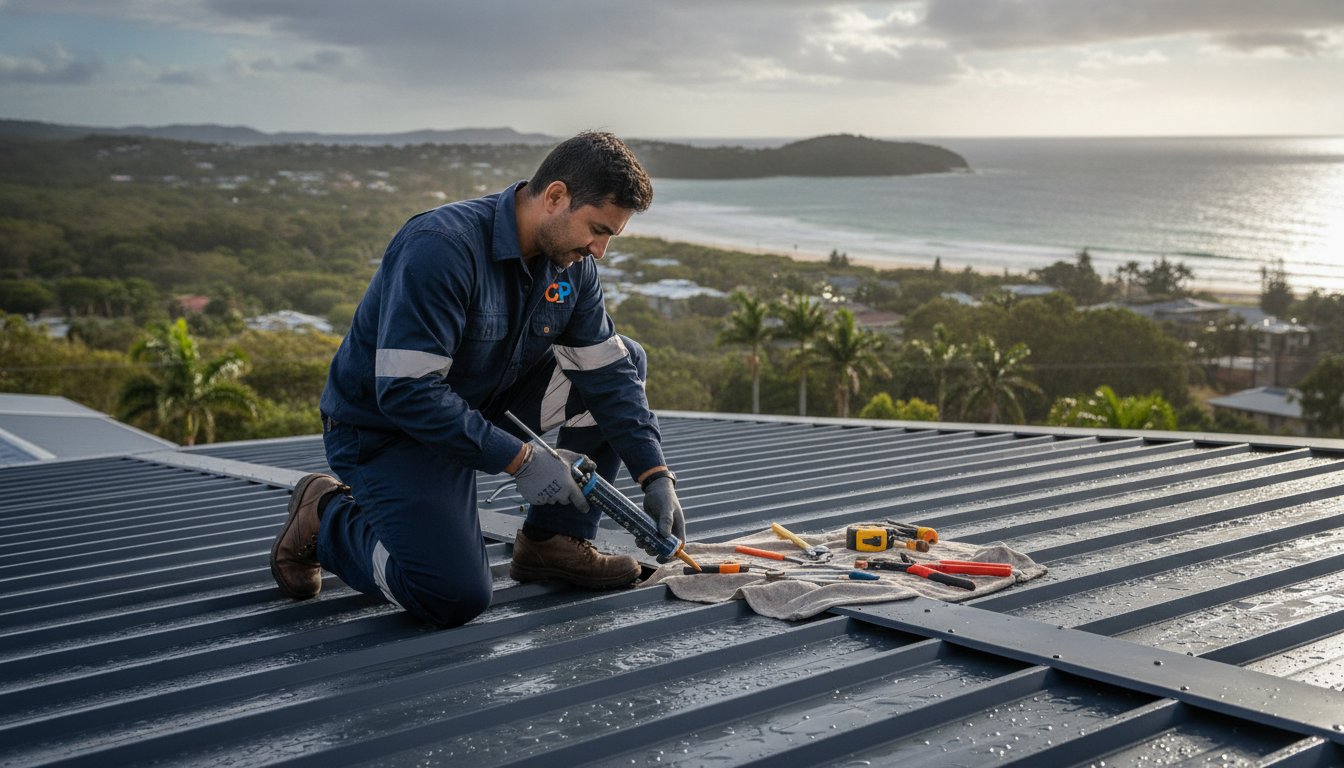
Leaking Roof Repair Yeppoon: The Complete Homeowner’s Guide to Professional Fixes
Why do so many "quick fixes" for a leaking roof in Yeppoon fail the moment the next tropical low rolls in? If you've spent your weekend perched on a ladder with a tube of sealant only to see the same damp patch return, you aren't alone. Dealing with a leaking roof repair Yeppoon is a high-stakes task because our unique coastal climate and heavy rainfall quickly expose any shortcuts or DIY errors. It's a common frustration for homeowners who want to protect their biggest asset but feel overwhelmed by the technical jargon of the building trade.
It is completely normal to feel anxious about structural water damage or confused about whether you actually need a roof tiler or a licensed roof plumber. You deserve a dry, secure home and the peace of mind that comes from a repair that lasts longer than a single season. This guide will show you how to identify the real source of water ingress and explain why a permanent fix requires a professional approach rather than just a bucket of silicone.
We will explore common faults found in local homes, from salt-corroded flashing to blocked box gutters, while clarifying the QBCC regulations that keep your home insurance valid. You will learn how to diagnose issues early and understand the practical steps a licensed professional takes to storm-proof your property for the long term.
Key Takeaways
- Learn to identify internal red flags like bubbling paint and ceiling stains, alongside external signs like cracked bedding and displaced flashings, before they cause structural damage.
- Understand why a permanent leaking roof repair Yeppoon requires a licensed roof plumber who follows AS/NZS 3500.3 standards rather than relying on temporary silicone patches.
- Discover how the Capricorn Coast’s unique climate and lush vegetation contribute to the two most common leak sources: thermal expansion in flashings and overflowing gutters.
- Find out why ground-level visual inspections are insufficient and how a systematic, professional detection process accurately locates the source of water ingress.
- Get a practical maintenance schedule for regular gutter cleaning and roof fixing inspections to ensure your home remains storm-proof against heavy tropical rainfall.
Identifying the Source of Your Leaking Roof in Yeppoon
Finding the exact entry point for a leaking roof repair Yeppoon is often more difficult than homeowners expect. Water is opportunistic; it will find the path of least resistance and won't always drip directly beneath the hole. In our tropical climate, ignoring a "minor" stain on the ceiling is a gamble you shouldn't take. Even a small, intermittent drip can lead to significant mould growth in your ceiling insulation or cause structural rot in your timber trusses over time. Early detection is the only way to prevent a simple repair from turning into a full roof replacement.
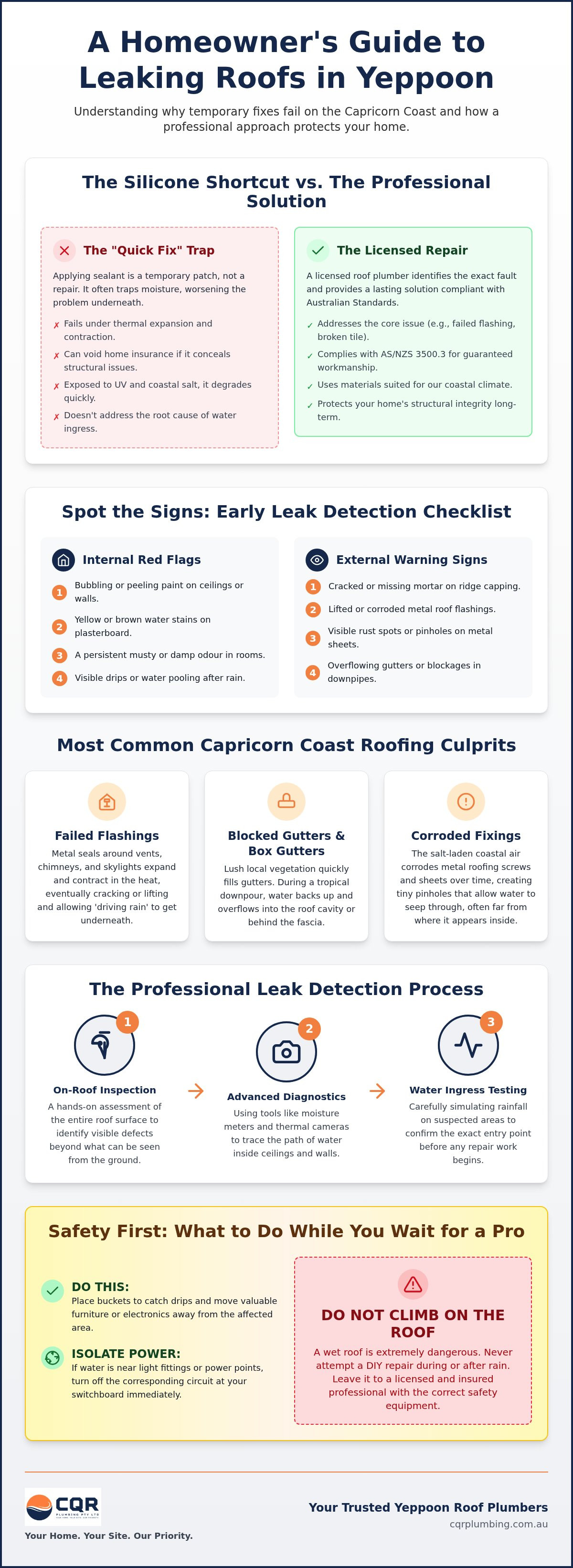
Internal signs are your first line of defence. Look for yellowish or brown water rings on your plasterboard, bubbling paint, or a heavy, musty odour in the ceiling cavity. If you notice your cornices are starting to drop or there is a damp patch high on an internal wall, water is likely pooling somewhere above you. On the outside of your home, keep an eye out for cracked mortar on ridge caps, known as bedding, or visible holes in metal roof sheets. A common culprit is often the roof flashing, which is the thin metal material used to seal joints around chimneys, vents, or where different roof sections meet. If this has lifted or corroded, water will pour in during the next storm.
Yeppoon’s coastal geography adds another layer of complexity. Our local winds are notorious for "driving" rain. This phenomenon occurs when high-velocity winds force water horizontally into tiny gaps or under the laps of metal sheets that would otherwise remain watertight during vertical rainfall. These "ghost leaks" might only appear during a specific storm direction, making them incredibly frustrating to track down without professional help.
Internal vs External Leak Symptoms
Understanding how water behaves inside your roof is vital. Water often enters at a high point and tracks along a rafter or the underside of the sarking before finally dripping onto your ceiling. This means the stain in your lounge room could be caused by a leak three metres away in the roof valley. You can usually distinguish a roof leak from a burst plumbing pipe by the timing. If the drip is constant and doesn't change with the weather, it's likely a pressure pipe. If it only occurs during Capricorn Coast downpours, you definitely need roof plumbing expertise.
Safety First: What to Do Before the Plumber Arrives
While waiting for a professional, focus on protecting your belongings from the ground. Place buckets under active drips and move furniture or electronics out of the splash zone. If water is leaking through a light fitting or pooling near a power point, go to your main switchboard and isolate the electrical circuits for that area immediately. Never attempt to climb onto a wet or slippery roof to apply a temporary tarp. Most falls happen on domestic roofs during or just after rain; it simply isn't worth the risk to your safety.
Step-by-Step Guide to Professional Leak Detection
Standing on your lawn with a pair of binoculars might help you spot a missing tile, but it won't solve a complex water ingress issue. A successful leaking roof repair Yeppoon starts with a methodical approach that goes beyond what is visible from the ground. Professional leak detection is about understanding how water travels across different surfaces and identifying where the protective barrier of your home has been compromised. Without getting onto the roof, it is impossible to see the hairline cracks in mortar or the pinholes in metal sheeting caused by coastal corrosion.
We use specialised tools like moisture meters to map out the extent of water saturation behind plasterboard and thermal imaging cameras to detect temperature variances caused by hidden moisture. These tools allow us to see what the naked eye cannot, ensuring we don't just fix the symptom but find the actual cause. We always look "uphill" from the drip point. Because water follows gravity, the entry point is often several metres higher up the roof than where the puddle appears on your floor. This is especially true for metal roofs where water can track along the underside of a sheet for a long distance before dropping onto your ceiling.
The Systematic Inspection Process
A reliable diagnosis follows a set path to ensure nothing is missed. We start in the ceiling cavity to look for light gaps, water tracks on rafters, or damp insulation. Next, we move to the roof surface to examine the flashings around skylights, vents, and chimneys where seals are most likely to fail. Finally, we conduct a drainage audit to check if gutters have the correct fall and if downpipes have the capacity to handle high-volume tropical rain. Our technicians always prioritise safe roof access to protect both your property and our staff during the inspection.
Simulated Rain Testing
Intermittent leaks are the most frustrating for homeowners. They might only appear when the wind blows from the east or during a sustained Capricorn Coast deluge. To find these "ghost leaks", we perform simulated rain testing. By using a controlled water source on specific sections of the roof, we can recreate the leak in real-time while an observer stays inside the roof space. This process is essential for providing clear proof of the fault for insurance claims or strata maintenance reports. If you're tired of "patch-up" jobs that fail during the next storm, you can arrange a professional diagnostic inspection to find a permanent solution.
Common CQ Roofing Culprits: Flashings, Gutters, and Fixings
While modern diagnostic tools are essential, understanding the physical components of your roof helps explain why leaks occur. Most calls for a leaking roof repair Yeppoon involve three primary culprits: flashings, gutters, and fixings. These components are the most vulnerable to the harsh Central Queensland sun and the corrosive coastal air. When one of these fails, the protective envelope of your home is compromised, often leading to water damage that stays hidden until the next major storm event.
Flashings are arguably the most common source of leaks we encounter. They are designed to seal joints and penetrations, but they face a constant battle with thermal expansion. In Yeppoon, metal roof temperatures can fluctuate by forty degrees or more between a midday sun and a cool evening. This constant "breathing" causes metal sheets to move, which can eventually tear sealants or pull flashings away from walls and chimneys. Once that seal is broken, even a tiny gap becomes an entry point for wind-driven rain.
Valley gutters and eaves gutters are also high-risk areas. Yeppoon’s lush vegetation, particularly gum trees and palms, produces a constant stream of debris. When leaves and silt build up in a valley gutter, they create a dam. During a typical tropical downpour, water cannot escape fast enough and overtops the internal baffle of the valley, flowing directly into your ceiling space. Similarly, if your eaves gutters are full, water can back up under the bottom edge of the roof sheets, bypassing your sarking entirely.
The Impact of Salt Air on Yeppoon Roofs
Living near the ocean means your roof fixings are under constant attack from salt spray. Standard galvanised screws often fail prematurely on the Capricorn Coast, leading to rusted heads and perished rubber washers. Once a washer cracks or "perishes", water can seep down the shank of the screw. We look for "tea staining", a light brown discolouration on fixings, which is an early warning sign of corrosion. Upgrading to 316 stainless steel fixings or using Colorbond Ultra grade materials is a practical way to extend the lifespan of your roof in a coastal environment.
Stormwater Drainage Bottlenecks
A roof is only as good as the drainage system attached to it. Many older homes in the region have undersized downpipes that simply cannot cope with the volume of water produced during a CQ storm. If your downpipes are clear but your gutters still overflow, the system capacity is likely the issue. It's also vital to ensure your ground-level drainage is functioning. The critical role of blocked drain repairs cannot be understated; if water cannot leave the site through the stormwater pipes, it will back up into the gutters and eventually find a way into your home.
The Repair Process: What to Expect from a Licensed Yeppoon Roof Plumber
When you book a leaking roof repair Yeppoon, you aren't just paying for someone to climb a ladder with a tube of sealant. You are hiring a specialist who operates under the strict guidelines of AS/NZS 3500.3, the Australian standard for stormwater drainage. In Queensland, any work involving the roof "envelope", including flashings, gutters, and downpipes, requires a licensed roof plumber. This ensures that every repair is not only watertight but also structurally compliant with the high-wind requirements of the Capricorn Coast.
One of the most common issues we see is the "silicone trap". While many handymen use silicone as a primary fix, a professional plumber knows it is only a secondary sealant. A permanent repair relies on mechanical fixings, correct material overlaps, and custom-folded metal flashings to create a physical barrier against water. Because silicone eventually degrades under the intense CQ sun, relying on it for a primary seal is a recipe for a recurring leak. We focus on replacing damaged metal sheets and installing flashings that are tailored to the specific pitch and profile of your roof.
The process begins with a thorough site preparation to ensure safe access. We then remove the compromised components, whether it is a rusted valley gutter or a perished skylight flashing. By custom-folding new flashings to suit your home's unique layout, we eliminate the gaps that generic, off-the-shelf products often leave behind. This level of precision is what prevents water from tracking into your ceiling during the next heavy downpour.
Permanent Fixes vs Temporary Patches
Determining whether you need a localised repair or a broader replacement depends on the age and condition of your roof. If the leak is isolated to a single penetration or a few rusted fixings, a targeted repair is highly effective and cost-efficient. However, in exposed areas like Pacific Heights, we often implement "over-flashing" techniques. This involves extending the metal coverage further under the roof sheets to provide an extra layer of protection against wind-driven rain, which can force water uphill during a storm.
Compliance and Warranty
In Queensland, the QBCC regulates all plumbing and roofing work to protect homeowners. For significant repairs, a licensed plumber provides a Form 16 Inspection Certificate, which is a critical document for your property records and insurance compliance. Attempting a DIY repair or hiring an unlicensed contractor can void your home insurance policy if a leak causes major damage later. At CQR Plumbing, we ensure every job meets these rigorous standards, providing you with a workmanship guarantee that temporary "patch-up" jobs simply cannot offer.
Preventing Future Leaks: Maintenance for the Capricorn Coast
Living on the Capricorn Coast is a privilege, but our environment is incredibly hard on building materials. Contrary to what some might claim, no roof in a tropical coastal zone is truly "maintenance-free." A proactive approach is the only way to avoid the stress and expense of a major leaking roof repair Yeppoon. By establishing a simple maintenance routine, you can extend the lifespan of your roof components and ensure your home remains a dry sanctuary during our intense summer storm season. Ignoring these small tasks often leads to the very structural rot and water damage we discussed in earlier sections.
Annual gutter cleaning is the most effective task a homeowner can perform. When gutters are choked with leaf litter and silt, water cannot flow to the downpipes. Instead, it pools and backs up under the eaves, often bypassing the sarking and entering the wall cavity. This doesn't just cause ceiling stains; it can lead to internal wall damage that is difficult and costly to fix. Every two years, you should also have your roof fixings inspected. In our salt-air environment, rubber washers perish and screw heads corrode much faster than they do inland. Replacing a few dozen screws is a minor cost compared to the extensive repairs required after a failed fixing allows water to track down a rafter.
Vegetation management is equally important for long-term roof health. Overhanging branches don't just drop leaves; they can scrape against metal sheets during high winds, removing the protective Colorbond coating and inviting rust. Trimming these back reduces the debris load on your gutters and prevents physical impact damage during cyclonic events. We often see "tea staining" on metal sheets where wet leaves have sat for months, creating a localized corrosive environment that eats through the metal long before the rest of the roof shows age.
Storm-Proofing Your Yeppoon Property
Before the wet season arrives in November, check the integrity of your "whirlybirds" and roof vents. These penetrations are common failure points because they rely on mechanical seals that can loosen due to constant vibration in high winds. Ensure your valley gutters are clear of silt, as even a small amount of sediment can slow down water flow enough to cause an overflow during a typical CQ downpour. For a deeper dive into protecting your home, see our Pillar Guide on Roof Plumbing Rockhampton, which covers advanced storm-proofing strategies for the region.
When to Call in the Pros
There is a significant difference between a quick gutter clear and a professional roof plumbing audit. While a homeowner can safely clear leaves from the ground or a steady ladder, a professional audit involves checking the structural integrity of flashings and identifying early-stage corrosion that isn't visible to the untrained eye. We check the "laps" of your roof sheets for capillary action, where water is sucked upwards between sheets, a common issue in older Yeppoon homes. Preventative maintenance is always more affordable than an emergency call-out in the middle of a cyclone. Ready to secure your home? Request a quote from CQR Plumbing today.
Protect Your Home Before the Next Tropical Downpour
Yeppoon's coastal weather doesn't give you a second chance when it comes to roofing. We have covered how a professional approach to leaking roof repair Yeppoon involves more than just a quick patch; it requires a systematic diagnosis of flashings, gutters, and fixings to ensure long-term durability. By choosing a licensed roof plumber, you ensure your home stays compliant with QBCC regulations and remains protected against the unique corrosive environment of the Capricorn Coast.
As locally owned experts, we understand exactly how our regional storms test the limits of your property. Whether you need an urgent 24/7 emergency response or a preventative audit, the right expertise makes all the difference. Taking action now prevents minor drips from turning into major structural water damage that could cost thousands to rectify. Our team provides fully licensed and QBCC compliant services that give you the peace of mind you deserve.
Maintaining a dry and secure home is a continuous process. With the right maintenance schedule and a trusted local professional by your side, you can face the next storm season with absolute confidence. Don't wait for the rain to start before you secure your property's first line of defence.
Frequently Asked Questions
How much does it cost to fix a leaking roof in Yeppoon?
Repair costs depend on the severity of the leak and the materials required for a permanent fix. Minor jobs like replacing perished washers or resealing a small flashing are far more affordable than moderate repairs involving valley gutters or chimney surrounds. Major work, such as fixing structural timber rot or replacing multiple metal sheets, represents a higher investment. A professional site audit is essential to provide an accurate, fixed-price quote tailored to your specific roof layout.
Can I fix a roof leak myself with silicone or tape?
You can use silicone or tape as a temporary emergency measure, but these are not permanent solutions. Silicone eventually shrinks and peels under the intense Central Queensland sun, often trapping moisture and accelerating rust. For a lasting leaking roof repair Yeppoon homeowners should rely on mechanical fixings and custom flashings installed by a licensed professional to ensure the repair remains watertight for years, not just weeks.
Is a leaking roof covered by my home insurance in Queensland?
Queensland insurance policies generally cover accidental damage caused by sudden events like storms or cyclones. However, they rarely cover leaks resulting from a lack of maintenance, such as rusted gutters or aged fixings. If a pre-existing issue caused the water ingress, your claim might be rejected. Keeping documentation of regular professional inspections helps prove you have maintained the property, which is vital for a smooth insurance process after a major weather event.
What is the difference between a roofer and a roof plumber?
A roofer generally handles the installation of tiles or shingles, while a roof plumber is a licensed specialist responsible for anything related to water management on metal roofs. This includes gutters, downpipes, flashings, and rainheads. In Queensland, roof plumbing is a specialised trade under QBCC licensing. If your metal roof is leaking or your gutters are overflowing, you specifically need a roof plumber to ensure your stormwater system is compliant and functional.
How long does a typical roof repair take to complete?
Most minor repairs, such as replacing rusted fixings or resealing a vent, are completed within a few hours. Moderate jobs like replacing a valley gutter or several metal sheets typically take a full day. Major structural work or larger sections of roof replacement can extend over several days. We always aim for efficiency to minimise disruption to your household, ensuring your home is watertight before we leave the site each afternoon.
Why does my roof only leak during heavy tropical storms?
High-volume tropical storms create a surging effect in gutters and high wind speeds that drive rain horizontally. During these events, water can be forced under the laps of your metal sheets or through tiny gaps in aged flashings that remain watertight during normal vertical rain. This often suggests your roof drainage is being overwhelmed or that your flashings lack the necessary height to cope with wind-driven water ingress common in Yeppoon.
Should I repair or replace my metal roof if it has rust spots?
Isolated surface rust can often be treated and the affected fixings or flashings replaced to extend the roof's life. However, if you see perforations or widespread rust along the laps where sheets overlap, replacement is usually the safer, more cost-effective long-term option. Patching structural rust is only a temporary fix that rarely stops the spread of corrosion in our salty coastal air, eventually leading to more significant internal damage.
How often should I have my roof inspected on the Capricorn Coast?
We recommend a professional inspection once a year, ideally before the storm season begins in November. Living on the Capricorn Coast means your roof faces constant salt spray and intense humidity, which accelerates the perishing of rubber washers and the corrosion of metal fixings. Regular checks allow us to catch minor issues like blocked gutters or loose flashings before they turn into expensive emergency repairs during a cyclone or heavy rain event.
Disclaimer
The information in this article is provided for general educational purposes only and should not be relied upon as professional plumbing, gasfitting, or legal advice. Every property and plumbing system is different, and the information may not be applicable to your specific circumstances. CQR Plumbing recommends that all plumbing and gasfitting work be inspected and carried out by a licensed professional in accordance with applicable Australian Standards and Queensland regulations. If you require advice specific to your property, please contact CQR Plumbing for an assessment.